Choosing among the 10 Best Single Stage Pumps for Global Buyers requires more than comparing flow rates and purchase prices. A pump may look efficient on paper, yet perform poorly with a blocked strainer, oversized motor, or unstable suction line. The installation room matters. So does the operator’s daily routine.
The U.S. Department of Energy’s Improving Pumping System Performance sourcebook reports that pumping systems can represent a significant share of industrial electricity use, especially when throttling and oversized equipment remain unchecked. The International Energy Agency also identifies motor-driven systems as a major energy-efficiency opportunity worldwide. These findings make lifecycle cost, not only the invoice price, a practical buying measure.
Dr. Lev Nelik, a recognized centrifugal-pump specialist and author, repeatedly emphasizes this principle: “The pump is only one part of the system.” That sentence deserves attention. A reliable Single Stage Pump must match the liquid, temperature, pressure, duty cycle, seal arrangement, and local service capacity. Hydraulic Institute standards provide useful guidance for pump performance, testing, and selection, but standards cannot replace site experience.
This guide compares leading models for industrial, commercial, agricultural, and municipal buyers. It considers efficiency, materials, maintenance access, certification needs, spare-parts availability, and supplier support. No ranking can fit every plant. That limitation matters.
Some buyers may prefer a lower-cost model for clean water service. Others may need stainless steel construction, mechanical-seal flexibility, or continuous-duty reliability. The strongest choice is rarely the loudest marketing claim. It is the pump that performs predictably at the actual duty point.
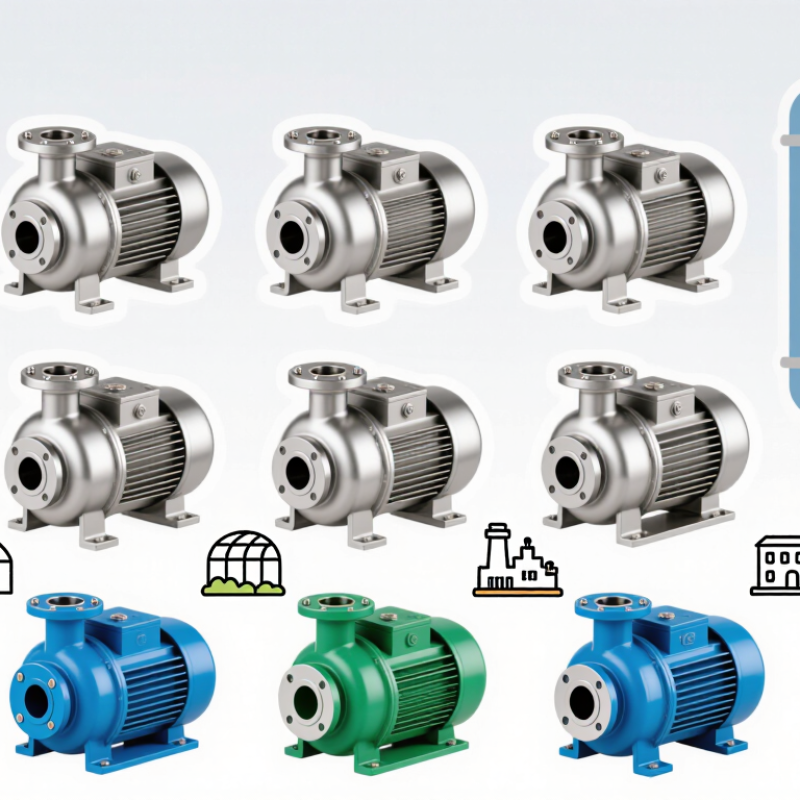
10 Best Single Stage Pumps for Global Buyers?
Single stage pumps use one impeller to move liquid and create pressure. They are usually centrifugal pumps, valued for simple construction and practical maintenance. During operation, liquid enters through the suction port and reaches the rotating impeller. The impeller increases liquid velocity. The casing then converts much of that velocity into pressure. It sounds simple.
In field evaluations, buyers often focus only on flow rate. That can cause costly selection errors. Pump head, liquid temperature, viscosity, suction conditions, and motor power also matter. A pump supplying a three-story building needs different pressure from one serving a cooling loop. Check NPSH requirements carefully, especially when the water source sits below the pump. Cavitation can sound like gravel inside the casing.
Single stage pumps support water supply, irrigation, HVAC circulation, drainage, process cooling, and selected fire protection systems. Their compact design suits equipment rooms with limited space. Materials should match the liquid, including corrosion risks and suspended particles. Local electrical rules and performance standards require attention too. A cheaper unit may consume more energy over years. The simpler design is not always the better choice. Even a careful specification can miss changing demand, so variable-speed control may deserve review.
Choosing among the 10 best single stage pumps requires more than comparing flow rates and prices. Global buyers must match each pump to local operating conditions. Check required head, flow, liquid temperature, viscosity, and solids content. A pump designed for clean water may struggle with abrasive process fluid.
Electrical compatibility matters too. Confirm voltage, frequency, motor efficiency, enclosure rating, and control requirements before ordering. Climate also changes performance. High humidity, dust, altitude, and coastal salt can affect motors and metal components. Review material compatibility carefully, especially for seals, impellers, and casings. Local certification and installation rules should be verified with a qualified engineer.
Tips: Request performance curves at your actual duty point. Ask for test records, spare-part availability, and service instructions in the local language. Compare lifecycle cost, not only purchase cost. Freight packaging, customs delays, technician access, and energy use can reshape the final budget. I have seen buyers select a cheaper pump, then lose weeks waiting for a small seal. That decision looked efficient on paper. It was not.
A reliable evaluation also considers maintenance habits in the target market. Can technicians inspect the pump safely? Are replacement bearings available nearby? Does the supplier provide clear troubleshooting guidance? Independent test data is valuable, but it should match real site conditions. Even experienced buyers can overtrust catalog figures. Field testing or a supervised trial may reveal vibration, noise, or unstable flow that specifications miss.
Top 10 Single Stage Pumps Compared by Performance and Design
Single-stage pumps differ sharply in pressure, efficiency, maintenance, and installation space. End-suction pumps offer practical performance for general water transfer and moderate flow rates. Split-case pumps usually deliver higher flow with easier bearing access. Vertical inline designs save floor space, but alignment and vibration deserve close inspection. Vertical turbine pumps suit deep wells and large water systems. Self-priming models simplify startup where air enters suction lines. Magnetic-drive pumps reduce seal leakage risks in demanding chemical service. Close-coupled pumps provide compact installation, although motor replacement can be less flexible. Regenerative turbine pumps create higher pressure from smaller packages, but efficiency may suffer. Axial-flow designs move very large volumes at low head. Mixed-flow pumps balance both needs.
Performance should be judged against the duty point, not brochure peak efficiency. The U.S. Department of Energy reports that optimized pumping systems can achieve 20% to 50% energy savings. The International Energy Agency estimates motor-driven systems consume roughly half of global electricity. That makes hydraulic efficiency important, but controls, pipe losses, and operating hours matter too. A pump running far from its best efficiency point may waste energy and suffer cavitation.
Hydraulic Institute standards support consistent testing and rating practices. I compare flow stability, head retention, NPSH margin, seal design, materials, and service access. Real installations are messier. A compact model may fit perfectly, yet its small passages can clog with sediment. I would not rank any design without checking fluid temperature, viscosity, solids, and seasonal demand. Manufacturer data still needs field verification. These are often overlooked.
Choosing among the 10 best single stage pumps starts with the duty point, not the catalog ranking. Define required flow rate in cubic meters per hour and pressure in bar. Then check whether the pump can meet both values simultaneously. A pump delivering high flow at zero pressure may fail in a long, narrow pipeline. Measure pipe length, elevation, elbows, valves, and filter losses. These details determine total dynamic head. Field experience shows that small errors in head calculations can cause persistent underperformance. It happens often.
Tips: Match the fluid type before comparing materials. Clean water, seawater, oils, chemicals, and abrasive slurries require different seals, impellers, and casing alloys. Confirm temperature, viscosity, solids concentration, and corrosion risk with the supplier. Request a performance curve, efficiency data, NPSH requirements, and tested operating range. Keep a safety margin, but avoid excessive oversizing. Oversizing can increase energy use and cycling. For international projects, verify voltage, frequency, connection standards, documentation, spare parts, and local service capability.
Selection also depends on operating behavior. If demand varies, a properly sized variable-speed drive may improve efficiency. However, controls cannot correct an incorrectly chosen pump. Review startup conditions, dry-run risk, cavitation symptoms, and maintenance access. Leave space for seal inspection and lifting equipment. I would not trust one calculation alone. Compare design estimates with site measurements after installation, because real systems often differ from drawings. That feedback may reveal an imperfect choice, but it supports safer future decisions.
Selecting single-stage pumps for global service starts with the duty point, not the catalog headline. Measure flow, total dynamic head, fluid temperature, viscosity, solids, and suction conditions. Do not guess. NPSH available must exceed NPSH required with a practical margin. The U.S. Department of Energy reports that pumping systems can consume 25–50% of industrial facility electricity. Its guidance also indicates that system improvements may reduce pumping energy by 20–50%. These figures justify checking pipe diameter, throttling losses, and oversized motors before purchase.
Installation quality often decides whether the “best” pump survives. Confirm foundation stiffness, shaft alignment, coupling guards, rotation, and dry-run protection. A pressure gauge near suction and discharge makes commissioning less subjective. The International Energy Agency reports that motor-driven systems use about half of global electricity. Motor efficiency and control strategy therefore deserve equal attention. For international orders, specify voltage, frequency, enclosure rating, certifications, flange standard, seal material, and spare-part availability. ISO 5199 can guide centrifugal pump requirements, while local electrical and pressure rules still apply.
Maintenance should be written into the purchase contract. Require vibration limits, lubrication intervals, inspection access, test records, and a clear warranty process. Check bearings, seals, alignment, and abnormal noise during scheduled rounds. Replace leakage promptly. In my experience, buyers sometimes select by lowest unit price, then pay through freight delays and incompatible spares. That is a costly blind spot. A factory test report helps, but it cannot replace site verification. Review the actual operating point after installation; systems change, and my first estimate may be wrong.
„Thanks to the LUVIR technology, the solder resist process could be switched directly from the previously used mask exposure to direct exposure. As an outstanding digital solution on the market, this technology has been able to demonstrate fast process times and superior quality on our certified conventional ink in production. This allowed us to fully digitize the solder mask process at low cost – without process or ink adjustments. An excellent benefit to our production in Rot am See.“
Ralf Göhringer (Head of Production WE Rot am See)
I would definitely recommend the Limata machine and team for a future company purchase
Michael Greenaway
Compunetics Inc.
“The Limata ldi has been amazing!! Best thing we did was buy this machine”
Richard Brady
GM
Circuitlabs
“Since 2019, we have been running the Limata X1000 LDI system (including LUVIR for solder mask imaging) in daily production as an addition to our current process with film. The machine was capable of properly exposing Taiyo PSR-4000 BN (DI) solder mask types on normal to high-copper boards using a new and unique direct imaging process. The machine operating interface is very user friendly which allowed for a quick technical training curve. The pre-registration processing reduced several seconds of production time at every print. Limata support and service staff is incomparable. They supported our team every step of the way at basically any time of the day or night, with literally, an immediate response time, customizing the software interface to best fit our Operations and needs.
We have exposed more than 8,000 prints since end of October, on various solder mask colors and some resist film panels. Limata, has proven to be very capable and innovative. They are a strong contender in the industry.
We have very much enjoyed this project, and working with the team!
Thank you Limata for the continued support and being a part of our growth.”
Bill Sezate
Vice President, GM
Summit Interconnect
As a replacement to our current contact exposure process with film, the LIMATA X2000 system including LUVIR-Technology was capable of properly exposing non-LDI solder mask types using a direct imaging process. The machine offers cutting edge software with a very intuitive operating interface which allowed for quick technician training curve. The dual drawer system combined with pre-registration processing reduced several seconds of production time at every machine cycle. Limata support and service staff is world class. They added software patches to keep production running at shortest possible response times, customized the software interface to best fit our in-house Operations system, and even wrote a step-by-step machine processing manual. As a result of the project, we have exposed more than 16,000 times on various product types and solder mask brands/colors. Limata, in a very short timeframe as a company, has definitely shown they are truly innovative and will be challenging the industry of direct imaging for the top spot.
Kevin Beattie
Process Engineer
TTM Technologies
Forest Grove Division
