Choosing the right Towel Rail Heater is not simply a matter of comparing prices. Global buyers must consider bathroom size, voltage, climate, installation method, and daily drying needs. A compact rail may suit a small apartment in London, yet feel underpowered in a colder Canadian home. Regional electrical standards also matter. So does warranty support.
Heating engineer Dan Holohan once wrote, “Comfort is the reason we heat.” That simple principle remains useful when assessing towel rails. A reliable model should warm towels evenly, resist corrosion, and operate safely in humid rooms. It should also match the user’s routine. Some households need quick morning drying. Others prefer gentle, continuous warmth.
This guide examines the Top 10 Best Towel Rail Heaters for Global Buyers through practical criteria. We consider heat output, material quality, control systems, energy use, mounting flexibility, and after-sales service. Stainless steel often offers strong moisture resistance, but its finish and weld quality still deserve inspection. Timer controls can reduce unnecessary operation. They are not magic.
Real-world experience can reveal details that specifications miss. Does the rail leave cold sections? Is the switch awkward beside a basin? Can replacement parts be found locally? These questions are easy to overlook. I have also found that “premium” designs sometimes provide disappointing heat. That is worth remembering.
The final selection is not universal. Room conditions differ. Installation quality differs too. This comparison aims to provide dependable guidance, while acknowledging those imperfections. Good buying decisions begin with accurate measurements, clear safety information, and realistic expectations.
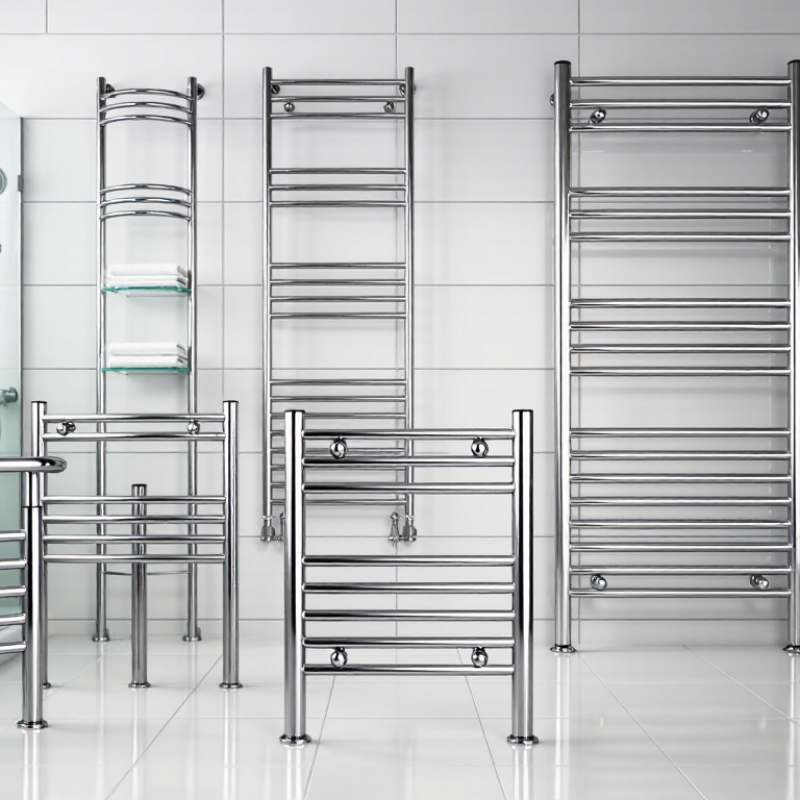
A towel rail heater suits global buyers when it works safely across different homes, climates, and electrical systems. Voltage compatibility matters first. Buyers should confirm the local supply, frequency, plug type, and installation method before comparing heat output. A 500-watt model may warm a small bathroom, but insulation, ventilation, and outdoor temperature can change performance. This matters.
The International Energy Agency reported that buildings used about 30% of global final energy in 2022. Its Buildings 2023 report also linked buildings to around 26% of global energy-related emissions. Efficient controls therefore deserve serious attention. Look for adjustable thermostats, timers, open-window detection, and low standby consumption. Independent safety testing, grounded wiring, and suitable bathroom protection ratings are equally important. An IP-rated enclosure helps resist moisture, but it does not replace correct installation by a qualified electrician.
Material choice affects long-term reliability. Powder-coated steel suits many interiors, while stainless steel can better resist humid coastal air. Check weld quality, rail spacing, maximum surface temperature, and replacement-part availability. Heating speed is useful, but even warmth matters more for drying thick towels. I would not judge a heater by wattage alone. That shortcut often fails in poorly insulated bathrooms. Regional service support, clear manuals, and a meaningful warranty also indicate a more dependable purchase. However, certification marks can differ by market, so buyers should verify approval with local authorities and current electrical standards.
Towel rail heaters use different heat sources, and each suits a different bathroom routine. Electric resistance rails warm internal fluid or metal elements when connected to power. They are practical for renovations because installation usually avoids new water pipes. A built-in thermostat can hold a steady temperature, while a timer helps dry towels during morning and evening use. Check the local voltage, frequency, plug type, and bathroom protection requirements before purchase.
Hydronic towel rails connect to a central hot-water system. Heated water circulates through the tubes, creating gentle and even warmth. They can be efficient in homes with regular heating, but performance may fall when the boiler is switched off. Dual-fuel models combine hydronic heating with an electric element. This allows towel drying in warmer months when the main heating system is inactive. Installation needs careful pipe sizing, valve selection, and professional testing for leaks.
Infrared technology heats nearby surfaces rather than warming the air first. It can provide a quick, focused sensation, although the result depends on distance and room layout. Wider rails often hold several damp towels, but more tubes do not always mean faster drying. I have found that airflow matters as much as heat; tightly folded towels may remain wet inside. Energy labels, overheat protection, corrosion-resistant finishes, and suitable ingress protection deserve close attention. No rail is perfect. A quiet timer may still need adjustment after real household use.
To evaluate the top ten towel rail heater models, begin with measurable performance rather than appearance. The International Energy Agency reports that buildings consumed about 30% of global energy in 2022. Therefore, a practical comparison should record wattage, heating time, and daily electricity use. Test each rail in a similar bathroom, with the same towel weight and starting temperature. Small details matter.
Check heat distribution across the upper, middle, and lower bars. A warm top bar does not prove effective drying. Look for stable surface temperatures, quiet controls, and useful timer settings. Models with multiple power levels may reduce waste during mild weather. However, higher wattage is not automatically better. A compact bathroom can become uncomfortable quickly.
Safety needs independent verification. Review the applicable national certification and the relevant IEC 60335-2-43 requirements for towel rails and clothes dryers. Moisture protection should match the installation zone; IEC 60529 IP ratings provide a common reference. Confirm voltage, frequency, plug type, wall clearance, and grounding requirements for each market. Corrosion resistance also deserves attention, especially near saltwater or poorly ventilated bathrooms. One weakness in this method remains: laboratory testing may not reflect a crowded family bathroom. Recheck the shortlist after real-world use.
This comparison uses practical buying criteria for international shoppers: rated heating output, rail capacity, and bathroom suitability. Higher output generally supports faster drying, while more rails provide greater hanging capacity. Buyers should also confirm local voltage compatibility, electrical safety certification, IP rating, installation requirements, and available room space before purchase.
For global buyers, safety starts before choosing a towel rail heater. Choose a model with an appropriate ingress protection rating for its bathroom location.
However, ratings alone do not make an installation safe. Local electrical rules, fixed wiring requirements, and required clearances should guide the final decision.
Use a qualified electrician near showers, baths, or wet floors.
I once underestimated how quickly a warm rail could heat a nearby towel.
That small mistake changed my installation checklist.
Energy use depends on wattage, operating time, insulation, and household routines.
A timer or thermostat can reduce unnecessary heating during empty hours.
Lower wattage may suit a small bathroom, but drying performance could be slower.
Compare actual power consumption, not only the advertised heat output.
Avoid covering the entire rail with thick towels, because airflow becomes restricted and drying takes longer.
Keep controls dry.
Never use damaged cables or loose wall fittings.
Keep towels loose.
Inspect it monthly.
Check for rust, unusual smells, or discoloured switches.
Wipe the rails with a soft, slightly damp cloth, then dry them fully.
Do not use abrasive cleaners, which can damage protective finishes.
In hard-water regions, inspect nearby fixings more often.
A small drip may reveal a larger plumbing or seal problem.
Maintenance records are useful, although many households forget to keep them.
Top 10 Best Towel Rail Heaters for Global Buyers
Regional conditions can change a towel rail heater’s performance. Check the local voltage before comparing heat output, controls, or design. Many regions use 220–240 volts, while others use 100–120 volts. Frequency can differ too. A mismatched unit may heat poorly or create a serious installation risk. Confirm whether the heater uses a plug, concealed connection, or fixed wiring. A qualified local electrician should verify the circuit.
Climate also matters. In humid coastal bathrooms, choose corrosion-resistant materials and suitable IP protection. Cold climates may need stronger output or programmable heating periods. Smaller bathrooms often warm towels quickly, but large rooms can expose weak models. I once focused too heavily on wattage during product comparisons. That was a mistake. Surface temperature, timer accuracy, and room insulation also affect daily comfort.
Regional standards deserve equal attention. Look for certification accepted in the destination market, not only a familiar mark from another country. Bathroom zones, residual-current protection, and mounting rules may vary locally. Warranty support should include clear regional contact details, realistic repair procedures, and available replacement parts. A long warranty sounds useful. Slow support is not. Buyers should keep the invoice, installation record, and model information. These details can prevent avoidable disputes when service is needed.
„Thanks to the LUVIR technology, the solder resist process could be switched directly from the previously used mask exposure to direct exposure. As an outstanding digital solution on the market, this technology has been able to demonstrate fast process times and superior quality on our certified conventional ink in production. This allowed us to fully digitize the solder mask process at low cost – without process or ink adjustments. An excellent benefit to our production in Rot am See.“
Ralf Göhringer (Head of Production WE Rot am See)
I would definitely recommend the Limata machine and team for a future company purchase
Michael Greenaway
Compunetics Inc.
“The Limata ldi has been amazing!! Best thing we did was buy this machine”
Richard Brady
GM
Circuitlabs
“Since 2019, we have been running the Limata X1000 LDI system (including LUVIR for solder mask imaging) in daily production as an addition to our current process with film. The machine was capable of properly exposing Taiyo PSR-4000 BN (DI) solder mask types on normal to high-copper boards using a new and unique direct imaging process. The machine operating interface is very user friendly which allowed for a quick technical training curve. The pre-registration processing reduced several seconds of production time at every print. Limata support and service staff is incomparable. They supported our team every step of the way at basically any time of the day or night, with literally, an immediate response time, customizing the software interface to best fit our Operations and needs.
We have exposed more than 8,000 prints since end of October, on various solder mask colors and some resist film panels. Limata, has proven to be very capable and innovative. They are a strong contender in the industry.
We have very much enjoyed this project, and working with the team!
Thank you Limata for the continued support and being a part of our growth.”
Bill Sezate
Vice President, GM
Summit Interconnect
As a replacement to our current contact exposure process with film, the LIMATA X2000 system including LUVIR-Technology was capable of properly exposing non-LDI solder mask types using a direct imaging process. The machine offers cutting edge software with a very intuitive operating interface which allowed for quick technician training curve. The dual drawer system combined with pre-registration processing reduced several seconds of production time at every machine cycle. Limata support and service staff is world class. They added software patches to keep production running at shortest possible response times, customized the software interface to best fit our in-house Operations system, and even wrote a step-by-step machine processing manual. As a result of the project, we have exposed more than 16,000 times on various product types and solder mask brands/colors. Limata, in a very short timeframe as a company, has definitely shown they are truly innovative and will be challenging the industry of direct imaging for the top spot.
Kevin Beattie
Process Engineer
TTM Technologies
Forest Grove Division
