A 515036 Hub Assembly can look like a simple replacement part, but the right choice depends on accurate vehicle fitment and dependable construction. This guide explains how to compare quality and value without treating a low price as proof of a good deal. Small details matter. Check the year, make, model, and axle position against a reliable parts catalog or the vehicle identification number. Confirm that the assembly matches the original equipment, including any applicable ABS sensor connection. Catalog listings can vary, so verify the exact application before ordering.
Quality is more than a clean box or a familiar name. Review the manufacturer’s specifications, materials, warranty terms, and seller reputation, then compare those details with the price. A properly matched hub should install without forcing or improvised changes. Follow the vehicle service manual for torque values and installation procedures, and inspect related components for wear or damage. A quiet test drive is useful, but it does not replace a careful installation check. That part is easy to miss. Even experienced buyers can overlook a connector difference or assume two similar listings are interchangeable. They are not always. The sections ahead offer practical checks for evaluating the 515036 Hub Assembly, balancing upfront cost with fit, support, and expected service life. Use them as a guide, not a substitute for vehicle-specific information.
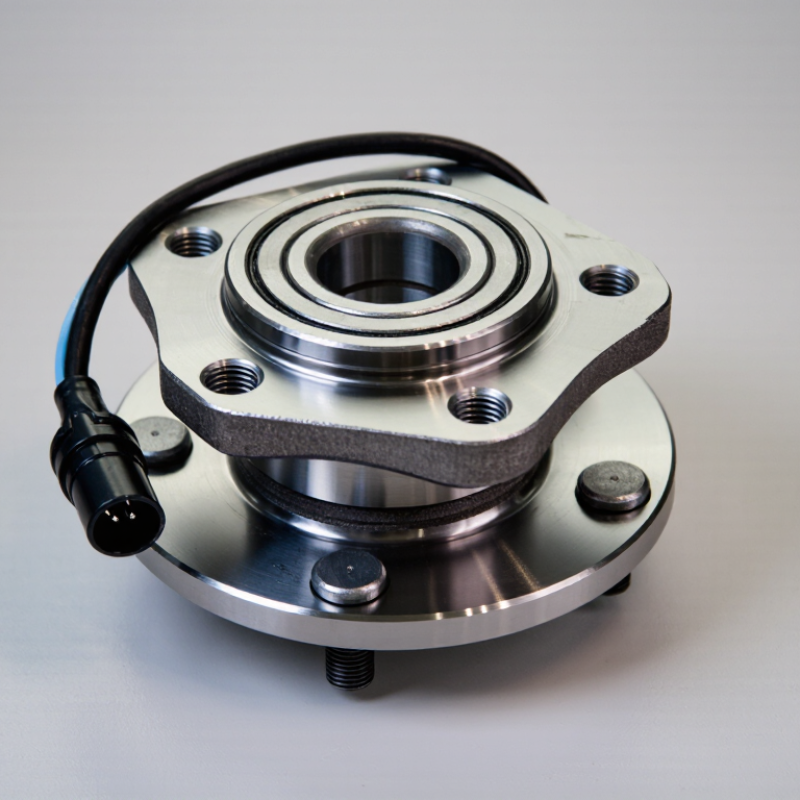
A 515036 hub assembly should be verified against the vehicle, not selected by part number alone. Start with the full 17-character VIN and confirm year, model, engine, and drivetrain. NHTSA’s VIN Decoder can help identify vehicle details, but it may not reveal every production variation. Check the original equipment number and compare it with a reliable parts catalog. Treat a cross-reference as a lead, not proof.
Position matters. Confirm front or rear, left or right, and whether the vehicle uses two-wheel or all-wheel drive. Then compare practical details: ABS connector shape, wheel-stud count, flange dimensions, and spline arrangement. A mismatch can look small on a screen and still stop installation at the lift. S&P Global Mobility reported that the average U.S. light vehicle reached 12.6 years of age in 2024, making accurate replacement fitment increasingly relevant. I still recheck the axle position. It is easy to overlook. Record the VIN, OE number, and catalog result before ordering; if those details disagree, pause and verify the application with a qualified parts professional.
Comparing a 515036 hub assembly means checking more than price. Start with the flange dimensions, bolt pattern, and center pilot diameter. These must match the vehicle’s original setup. Even a small mismatch can complicate installation or cause wheel vibration. Check the product’s application data against the vehicle identification details; part numbers alone are not enough.
Next, compare bearing construction and ABS sensor specifications. A sealed bearing helps keep out road grit and moisture, while clear sensor and connector details help confirm compatibility with the vehicle’s wiring. Check whether the assembly includes the sensor, and note the connector shape and cable routing. I’ve learned that this detail is easy to overlook. Exact specifications can vary by application, so confirm them before ordering rather than assuming every 515036 listing is identical.
Tips: Compare the flange drawing with the original part, and inspect the connector photo closely. Ask for documented dimensions if they are missing. A low price matters, but so do accurate fitment details and a sound return policy. One more check. It can save a second repair.
For a 515036 hub assembly, a bearing-life claim is more useful when its reliability basis is clear. ISO 281:2007 defines basic L10 life as the life reached by 90% of a sufficiently large group of identical bearings under stated conditions. In its calculation,
L10 = (C/P)^p million revolutions, where C is dynamic load rating, P is equivalent dynamic load, and the exponent depends on bearing type.
It is not a direct mileage promise.
A 90% rating means some bearings may fail before the calculated life. Real wheel hubs face changing loads, road shocks, heat, water, and installation differences. Small details matter. Incorrect axle-nut torque or damaged seals can undermine an otherwise sound assembly.
ISO 281 provides a useful comparison framework, but its rating depends on accurate load data and operating assumptions.
When assessing value, check that the 515036 fitment is verified for the vehicle, and review sealing, dimensional information, and installation requirements. A quiet spin on the workbench is reassuring, but it cannot reproduce pothole impacts or long-term contamination.
There is a limitation here: without verified product-specific load ratings, no reliable L10 figure can be assigned to this assembly. Treat the standard as a technical benchmark, not a guarantee.
For a 515036 hub assembly, value is more than a low purchase price. Bearing accuracy affects fit, noise, and service life. ISO 492 defines dimensional and rotational accuracy tolerance classes for rolling bearings. Check the applicable class against the product drawing or technical specification; do not assume every hub assembly is rated to the same class.
Ask for measured data, not just a statement of compliance. Useful checks may include bearing dimensions, radial runout, and axial runout, where specified. A micrometer or indicator needs suitable resolution and current calibration. Keep parts clean, let them reach a stable temperature, and measure at the locations identified in the inspection procedure. Small errors matter. Dirt can distort a reading.
A careful inspection record should identify the part, tolerance class, instrument, and result. Compare each value with the specified limits, rather than relying on feel or a quick spin test. Also confirm that the bearing specification applies to the bearing itself, not automatically to the complete hub unit. That distinction is easy to miss. Even good measurements have limits, and I would recheck any borderline result before accepting the assembly.
For a 515036 hub assembly, compare the warranty before comparing prices. Check its duration, mileage limit, covered parts, and whether labor is included. Some warranties require registration or exclude damage linked to installation. Read the exclusions, not just the headline. A long term sounds reassuring, but it does not prove the part is well made.
Look for useful quality evidence: clear product photos, dimensional details, material information, and documented testing. Confirm the connector and mounting pattern match your vehicle’s year, trim, and axle position. A part number alone may not settle every fitment question. Ask the installer to verify it before opening the package. That small check can prevent wasted labor.
Then compare total installed cost, not just the shelf price. Request an estimate that separates the assembly, labor, shop fees, and any extra hardware. Rusted mounting surfaces can add time; that possibility is easy to overlook. Ask whether the quote includes diagnosis and applicable taxes. A cheaper unit may cost more after a second visit, while an expensive one is not automatically better. Keep the receipt and warranty terms with the repair record.
Compare warranty, quality evidence, and total installed cost
Suggested decision weights—not measured product scores or market data. Compare verified, vehicle-specific quotes that include parts and labor; review the written warranty terms; and look for documented fitment and quality evidence before choosing a 515036 hub assembly.
„Thanks to the LUVIR technology, the solder resist process could be switched directly from the previously used mask exposure to direct exposure. As an outstanding digital solution on the market, this technology has been able to demonstrate fast process times and superior quality on our certified conventional ink in production. This allowed us to fully digitize the solder mask process at low cost – without process or ink adjustments. An excellent benefit to our production in Rot am See.“
Ralf Göhringer (Head of Production WE Rot am See)
I would definitely recommend the Limata machine and team for a future company purchase
Michael Greenaway
Compunetics Inc.
“The Limata ldi has been amazing!! Best thing we did was buy this machine”
Richard Brady
GM
Circuitlabs
“Since 2019, we have been running the Limata X1000 LDI system (including LUVIR for solder mask imaging) in daily production as an addition to our current process with film. The machine was capable of properly exposing Taiyo PSR-4000 BN (DI) solder mask types on normal to high-copper boards using a new and unique direct imaging process. The machine operating interface is very user friendly which allowed for a quick technical training curve. The pre-registration processing reduced several seconds of production time at every print. Limata support and service staff is incomparable. They supported our team every step of the way at basically any time of the day or night, with literally, an immediate response time, customizing the software interface to best fit our Operations and needs.
We have exposed more than 8,000 prints since end of October, on various solder mask colors and some resist film panels. Limata, has proven to be very capable and innovative. They are a strong contender in the industry.
We have very much enjoyed this project, and working with the team!
Thank you Limata for the continued support and being a part of our growth.”
Bill Sezate
Vice President, GM
Summit Interconnect
As a replacement to our current contact exposure process with film, the LIMATA X2000 system including LUVIR-Technology was capable of properly exposing non-LDI solder mask types using a direct imaging process. The machine offers cutting edge software with a very intuitive operating interface which allowed for quick technician training curve. The dual drawer system combined with pre-registration processing reduced several seconds of production time at every machine cycle. Limata support and service staff is world class. They added software patches to keep production running at shortest possible response times, customized the software interface to best fit our in-house Operations system, and even wrote a step-by-step machine processing manual. As a result of the project, we have exposed more than 16,000 times on various product types and solder mask brands/colors. Limata, in a very short timeframe as a company, has definitely shown they are truly innovative and will be challenging the industry of direct imaging for the top spot.
Kevin Beattie
Process Engineer
TTM Technologies
Forest Grove Division
