Asrs Racking is becoming a practical answer for global buyers seeking higher storage density and more consistent warehouse operations in 2026. Automated storage and retrieval systems can place pallets, cartons, or bins with controlled speed and repeatable accuracy. However, choosing the right system requires more than comparing supplier prices.
Real warehouse experience shows that aisle width, load dimensions, ceiling height, fire protection, and software compatibility affect the final result. A high-bay pallet system may suit a distribution center with steady throughput. A shuttle-based solution may perform better when product variety changes frequently. Space matters. Data matters.
This guide examines leading Asrs Racking systems for international purchasing decisions. It considers storage capacity, retrieval performance, equipment durability, warehouse management integration, installation requirements, and after-sales support. Buyers should also review local engineering standards, operator training, maintenance access, and spare-parts availability before signing a contract.
Reliable suppliers should provide verified load calculations, clear technical drawings, realistic delivery schedules, and documented testing procedures. Factory visits, reference projects, and independent inspections can reduce uncertainty. Yet no system is perfect. Forecasts may change, software integration may take longer, and expected savings can be overstated without accurate operating data. A careful evaluation connects automation goals with measurable warehouse needs. This approach helps global buyers select a system that is safe, scalable, serviceable, and commercially sensible.
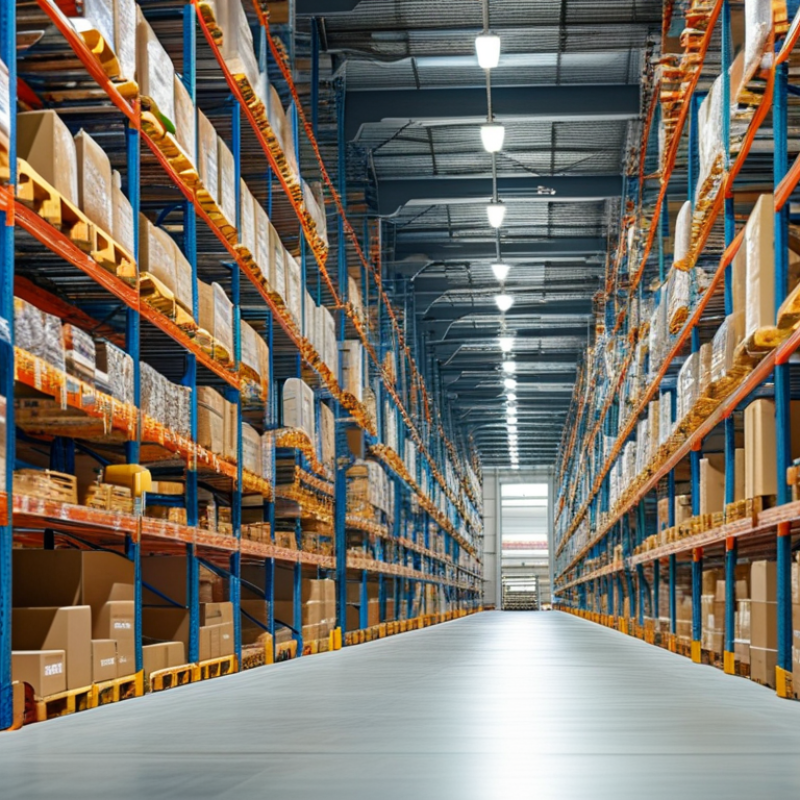
An automated storage and retrieval system, or ASRS, stores and moves goods with limited manual handling. Its racking structure usually combines storage locations, load carriers, sensors, and automated machinery. Cranes, shuttles, or lift modules place pallets or containers into assigned positions. The system then retrieves them when an order requires movement.
A warehouse management system identifies each load and records its location. A warehouse control system converts that instruction into machine movements. Scanners confirm product identity, while sensors check position, weight, and clearance. The equipment follows a defined path through vertical aisles or compact storage channels. This can increase storage density and reduce walking time for operators.
Accuracy depends on more than hardware. Correct pallet dimensions, stable loads, and reliable data are essential. During commissioning, teams should test blocked aisles, power interruptions, barcode errors, and unusual load conditions. Small mistakes can spread quickly.
Not every facility needs ASRS. Fast order volumes, high labor costs, or limited floor space may justify the investment. A simple warehouse may not. Buyers should examine throughput, ceiling height, temperature, maintenance access, and future product changes. Safety functions must be independently checked and maintained under applicable local requirements. Real operations are rarely perfect. Dust, damaged packaging, and incorrect master data still create delays. Human review remains valuable, especially when system records and physical stock disagree.
Selecting an ASRS rack starts with measurable operating conditions, not catalog height. Define pallet weight, load dimensions, storage depth, and required throughput. A system rated for 1,000 kilograms may perform poorly with unstable loads. Measure real pallets, including overhang and packaging variation. Aisle width also matters. Narrower aisles increase density, but they can restrict maintenance access and emergency planning.
MHI’s 2024 Annual Industry Report found that 55% of supply chain professionals planned to increase technology investment. This supports automation demand, but investment alone does not guarantee performance. Compare cycles per hour, retrieval accuracy, storage locations, and peak-hour capacity. Check interface compatibility with the warehouse management system. Request uptime evidence, spare-parts response times, and tested recovery procedures. ISO 3691-4 guidance is useful for reviewing automated vehicle safety, while local fire and seismic standards remain essential. I have seen designs fail because peak demand was treated like average demand. That mistake is expensive.
Tips: Ask for a full-load acceptance test. Include damaged cartons and mixed pallet heights. Verify rack deflection, anchoring, sprinkler clearance, noise, and energy use.
The 2024 MHI report also identified workforce capability as a major technology challenge. Train operators before commissioning, not afterward. A smaller system with reliable service may outperform a larger one. Recheck your assumptions yearly. Demand changes. Infrastructure does not.
Safety, Software, and Integration Considerations
For global buyers, an automated storage and retrieval system should be judged beyond storage density. Safety begins with predictable movement, guarded transfer points, clear emergency access, and routine inspection records. Operators need training that matches real tasks, not generic slides. Sensors should detect blocked aisles, misplaced loads, and unsafe human entry. Small failures matter. A damaged pallet or loose film can stop an entire aisle.
Software controls inventory accuracy and operational trust. The warehouse management system should exchange clean data with the control layer. Confirm item dimensions, weight limits, location rules, and recovery procedures before commissioning. Test power loss, network interruption, and manual retrieval scenarios. Integration often looks smooth during demonstrations, yet daily exceptions reveal weak planning. Leave room for human review. Automation cannot interpret every unusual load correctly.
Tips: Ask for a live safety test, not only a performance chart. Request event logs and response times. Verify local service skills, spare-part access, cybersecurity controls, and language support. Compare promised throughput with your busiest hour, including replenishment and order changes. One uncomfortable question helps: what happens when the software is wrong? Document that answer, then challenge it with a controlled test.
2026 Top ASRS Racking Systems for Global Buyers
Global buying decisions should begin with operating facts, not attractive equipment images. Measure daily pallets, peak hourly moves, load dimensions, turnover rates, and available building height. A system designed for 400 movements per hour may struggle during seasonal peaks. That gap becomes expensive.
Total cost includes racking, stacker cranes, conveyors, controls, software, installation, training, energy, and maintenance. For many projects, equipment may represent only part of the investment. Request a five-year ownership model in local currency and a second version in a stable reference currency. Exchange rates can distort comparisons. Do not trust a low initial quotation without checking exclusions.
Supplier selection requires more than technical capacity. Review proven installations with similar loads, climate conditions, fire protection requirements, and labor practices. Ask for documented uptime, response times, spare-parts policies, and software integration details. A reliable supplier should explain failure recovery in plain language. Vague answers are warning signs.
Visit an operating site if possible.
Check pallet damage records. Watch a maintenance task. Speak with the warehouse team, not only the sales representative. Contract terms should define acceptance tests, performance limits, cybersecurity responsibilities, and training deliverables. Some buyers focus heavily on storage density and overlook emergency access. That decision may look efficient on paper, yet create daily handling problems. Cost forecasts are never perfect, so include realistic contingency allowances and review assumptions with an independent engineer.
Global Buying Criteria, Costs, and Supplier Selection Factors
The chart shows indicative installed cost ranges for widely used ASRS formats. Costs are expressed per storage position and may vary with capacity, building height, automation scope, fire protection, local labor, software integration, and commissioning requirements. Buyers should also compare throughput, storage density, system availability, safety compliance, service coverage, spare-parts support, integration capability, and total cost of ownership.
„Thanks to the LUVIR technology, the solder resist process could be switched directly from the previously used mask exposure to direct exposure. As an outstanding digital solution on the market, this technology has been able to demonstrate fast process times and superior quality on our certified conventional ink in production. This allowed us to fully digitize the solder mask process at low cost – without process or ink adjustments. An excellent benefit to our production in Rot am See.“
Ralf Göhringer (Head of Production WE Rot am See)
I would definitely recommend the Limata machine and team for a future company purchase
Michael Greenaway
Compunetics Inc.
“The Limata ldi has been amazing!! Best thing we did was buy this machine”
Richard Brady
GM
Circuitlabs
“Since 2019, we have been running the Limata X1000 LDI system (including LUVIR for solder mask imaging) in daily production as an addition to our current process with film. The machine was capable of properly exposing Taiyo PSR-4000 BN (DI) solder mask types on normal to high-copper boards using a new and unique direct imaging process. The machine operating interface is very user friendly which allowed for a quick technical training curve. The pre-registration processing reduced several seconds of production time at every print. Limata support and service staff is incomparable. They supported our team every step of the way at basically any time of the day or night, with literally, an immediate response time, customizing the software interface to best fit our Operations and needs.
We have exposed more than 8,000 prints since end of October, on various solder mask colors and some resist film panels. Limata, has proven to be very capable and innovative. They are a strong contender in the industry.
We have very much enjoyed this project, and working with the team!
Thank you Limata for the continued support and being a part of our growth.”
Bill Sezate
Vice President, GM
Summit Interconnect
As a replacement to our current contact exposure process with film, the LIMATA X2000 system including LUVIR-Technology was capable of properly exposing non-LDI solder mask types using a direct imaging process. The machine offers cutting edge software with a very intuitive operating interface which allowed for quick technician training curve. The dual drawer system combined with pre-registration processing reduced several seconds of production time at every machine cycle. Limata support and service staff is world class. They added software patches to keep production running at shortest possible response times, customized the software interface to best fit our in-house Operations system, and even wrote a step-by-step machine processing manual. As a result of the project, we have exposed more than 16,000 times on various product types and solder mask brands/colors. Limata, in a very short timeframe as a company, has definitely shown they are truly innovative and will be challenging the industry of direct imaging for the top spot.
Kevin Beattie
Process Engineer
TTM Technologies
Forest Grove Division
