Choosing the best eccentric butterfly valve manufacturers in 2026 requires more than comparing catalog prices. Buyers need evidence from real operating conditions, verified testing, and consistent after-sales support. An eccentric butterfly valve may look simple, yet its performance depends on sealing design, shaft alignment, disc geometry, materials, and actuator compatibility.
This guide examines manufacturers through practical and technical criteria. These include pressure ratings, temperature ranges, corrosion resistance, leakage testing, certification, production capacity, and documented quality systems. It also considers experience in water treatment, chemical processing, energy, and industrial pipeline projects. A reliable manufacturer should provide traceable materials, clear dimensional drawings, inspection records, and responsive engineering support. Small details matter. A clean valve seat can prevent costly downtime.
Field experience often reveals what brochures omit. Installation access, maintenance time, coating durability, and spare-part availability can influence total ownership costs. Customer references and independent inspection records may offer stronger evidence than promotional claims. Still, no ranking is perfect. Project requirements vary, and a highly respected supplier may not suit every application.
The manufacturers discussed here are assessed for technical capability, manufacturing consistency, innovation, and long-term reliability. However, readers should verify current certifications, factory capacity, and regional service before making a purchase. Product ranges can change during 2026. Specifications may also differ between standard and customized models. Careful comparison remains necessary, even when the supplier appears trustworthy.
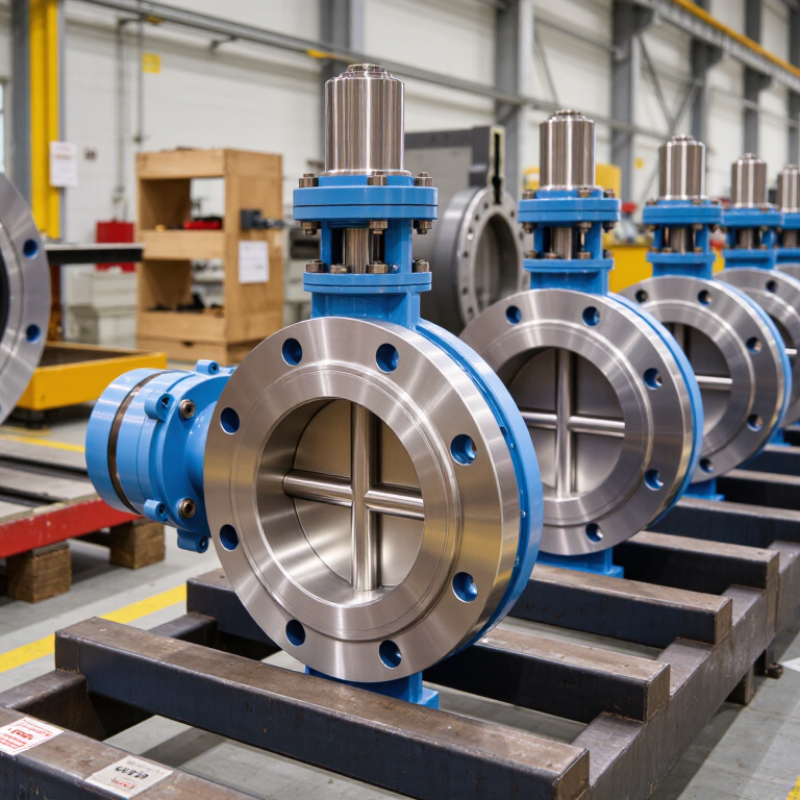
An eccentric butterfly valve has a disc and shaft positioned away from the pipe’s centerline. This offset changes how the disc meets the seat. During opening, the disc quickly moves away from the sealing surface. Less rubbing occurs. This design can reduce wear, operating torque, and seat damage.
Double-offset valves are common in water, wastewater, HVAC, and industrial pipelines. Triple-offset versions add a conical sealing geometry. They usually suit hotter, higher-pressure services. The correct choice depends on pressure class, temperature, media, and cycling frequency. A valve may look excellent on paper. Field conditions can disagree.
The U.S. Environmental Protection Agency’s 2023 Drinking Water Infrastructure Needs Survey estimates $625 billion in investment over 20 years. The figure shows why dependable flow-control equipment matters. The 2024 UN World Water Development Report also notes that 2.2 billion people lacked safely managed drinking water in 2022. These figures support careful valve selection, not careless oversizing.
A practical inspection checks shaft alignment, seat materials, actuator sizing, and pressure direction. ISO 5211 mounting compatibility also matters. Mud, sand, and poor installation can shorten service life. That part is often underestimated. Manufacturers should provide tested leakage data, material certificates, torque curves, and traceable quality records. Eccentric operation reduces contact, but it does not excuse weak engineering.
Eccentric butterfly valves move the disc away from the seat during opening. This reduces rubbing, operating torque, and seat wear.
A single-offset design suits many moderate-pressure services. Its shaft sits slightly behind the disc centerline. A double-offset valve adds a second geometric offset. The disc lifts away faster, making it useful for larger pipelines and frequent cycling.
Triple-offset valves use a conical sealing surface and a metal seat.
The sealing action is mainly rotational, not sliding. This design handles higher temperatures and demanding shutoff duties.
However, installation direction, thermal expansion, and actuator sizing require careful review. Metal seats are durable, but they may need tighter machining control than resilient seats.
Wafer, lug, and flanged bodies support different piping arrangements.
Pneumatic, electric, and hydraulic actuators should match calculated torque, not valve diameter alone.
In practical inspection, poor alignment often causes premature leakage. It is an easy detail to miss.
Reliable manufacturers should provide pressure tests, material certificates, dimensional drawings, and traceable quality records.
A valve can look robust on a workbench yet perform poorly under cycling, vibration, or dirty media. Specification reviews should question those conditions before purchase.
Evaluating eccentric butterfly valve manufacturers in 2026 requires more than comparing catalogue prices. The design should reduce disc friction during opening and closing. Ask for torque curves, seat leakage results, pressure ratings, and material certificates. Reliable manufacturers can trace body castings, shafts, seats, and coatings to production records.
Look for compliance with API 609, ISO 5752, and ISO 5211 where applicable. These standards clarify dimensions, testing, and actuator interfaces. Request independent test reports, not only factory statements.
Fortune Business Insights places the global industrial valves market above USD 77 billion in 2023, with continued growth expected through the decade. That growth increases supplier choice, but it does not guarantee quality.
Field experience matters. Review installations handling abrasive slurry, seawater, steam, or frequent cycling. Ask how the manufacturer manages cavitation, corrosion, shaft misalignment, and emergency shutoff requirements. A serious supplier should explain service intervals and provide spare-part availability for at least the expected operating life.
No scorecard is perfect. I would still weight verified test evidence above polished presentations. Lifecycle cost deserves attention: a cheaper valve can become expensive after repeated seat replacement, actuator overload, or unplanned downtime.
Supplier audits should include weld procedures, calibration records, non-destructive testing, and corrective-action history. According to Grand View Research, industrial automation and process investment remain important market drivers, making dependable valve integration increasingly valuable in 2026.
The 2026 comparison of eccentric butterfly valve manufacturers should focus on verified performance, not catalog size. Grand View Research values the global industrial valves market at more than USD 75 billion in 2023, with continued growth expected through 2030. This expansion increases supplier choice, but quality remains uneven. Leading manufacturers usually provide double-offset or triple-offset designs, documented torque curves, and traceable material certificates. Buyers should compare seat durability, pressure ratings, testing depth, and delivery stability. A polished brochure is not proof.
Field experience shows that alignment errors often cause early leakage. Reliable manufacturers machine disc and shaft assemblies carefully, then test sealing under realistic pressure conditions. API 609 and ISO 5752 provide useful reference points for dimensions, testing, and face-to-face requirements. Some suppliers also report fugitive-emission testing and fire-safe performance, where applicable. These details matter in water treatment, power generation, and process pipelines. However, a specification sheet can hide weak maintenance support. That deserves scrutiny.
Tips: Request recent factory test records, not sample documents. Check whether torque data matches your actuator selection. Ask for coating thickness and hardness values. Confirm spare-part availability near the installation site. A lower purchase price may become expensive after one shutdown. Still, reports and certificates cannot replace an experienced inspection. I would compare at least three suppliers, inspect one finished valve, and question any claim that sounds perfect.
Eccentric butterfly valves suit water treatment, HVAC systems, power plants, and chemical pipelines. Their offset disc reduces seat friction during opening. This can extend service life and lower operating torque. In corrosive service, specify compatible body, disc, shaft, and liner materials. Stainless steel may resist chemicals, but it is not universally suitable.
Standards help compare manufacturers fairly. Check API 609, ISO 10631, or EN 593 for valve design requirements. Confirm face-to-face dimensions under ISO 5752 or EN 558. Flange compatibility may require ASME B16.5 or ASME B16.47.
Pressure testing should reference ISO 5208 or API 598. Reliable suppliers should provide material certificates, pressure-test records, dimensional drawings, and traceable serial numbers. A polished brochure is not enough.
Pricing depends on diameter, pressure class, materials, actuation, coatings, and certification. A small wafer valve may cost several hundred dollars, while large, automated units can exceed several thousand. Request a complete quotation, including actuators, switches, packing, testing, freight, and spare parts. Hidden accessories can distort comparisons.
Tips: Define media, temperature, pressure, flow direction, and operating cycles before contacting suppliers. Ask for a torque calculation at minimum pressure and emergency conditions. Review maintenance access at the installation site. Field conditions are often messier than specifications. Leave a realistic safety margin, but avoid oversized valves; they may throttle poorly and waste money.
„Thanks to the LUVIR technology, the solder resist process could be switched directly from the previously used mask exposure to direct exposure. As an outstanding digital solution on the market, this technology has been able to demonstrate fast process times and superior quality on our certified conventional ink in production. This allowed us to fully digitize the solder mask process at low cost – without process or ink adjustments. An excellent benefit to our production in Rot am See.“
Ralf Göhringer (Head of Production WE Rot am See)
I would definitely recommend the Limata machine and team for a future company purchase
Michael Greenaway
Compunetics Inc.
“The Limata ldi has been amazing!! Best thing we did was buy this machine”
Richard Brady
GM
Circuitlabs
“Since 2019, we have been running the Limata X1000 LDI system (including LUVIR for solder mask imaging) in daily production as an addition to our current process with film. The machine was capable of properly exposing Taiyo PSR-4000 BN (DI) solder mask types on normal to high-copper boards using a new and unique direct imaging process. The machine operating interface is very user friendly which allowed for a quick technical training curve. The pre-registration processing reduced several seconds of production time at every print. Limata support and service staff is incomparable. They supported our team every step of the way at basically any time of the day or night, with literally, an immediate response time, customizing the software interface to best fit our Operations and needs.
We have exposed more than 8,000 prints since end of October, on various solder mask colors and some resist film panels. Limata, has proven to be very capable and innovative. They are a strong contender in the industry.
We have very much enjoyed this project, and working with the team!
Thank you Limata for the continued support and being a part of our growth.”
Bill Sezate
Vice President, GM
Summit Interconnect
As a replacement to our current contact exposure process with film, the LIMATA X2000 system including LUVIR-Technology was capable of properly exposing non-LDI solder mask types using a direct imaging process. The machine offers cutting edge software with a very intuitive operating interface which allowed for quick technician training curve. The dual drawer system combined with pre-registration processing reduced several seconds of production time at every machine cycle. Limata support and service staff is world class. They added software patches to keep production running at shortest possible response times, customized the software interface to best fit our in-house Operations system, and even wrote a step-by-step machine processing manual. As a result of the project, we have exposed more than 16,000 times on various product types and solder mask brands/colors. Limata, in a very short timeframe as a company, has definitely shown they are truly innovative and will be challenging the industry of direct imaging for the top spot.
Kevin Beattie
Process Engineer
TTM Technologies
Forest Grove Division
