Choosing the right Fast Electric Scooter in 2026 requires more than checking its maximum speed. Global buyers now compare battery chemistry, real-world range, braking confidence, charging time, warranty support, and local road rules. A scooter that reaches 60 km/h may feel impressive on paper, yet its performance can change sharply on wet streets, steep hills, or rough pavement.
The International Energy Agency’s Global EV Outlook identifies electric two- and three-wheelers as a major part of worldwide transport electrification. Market research from Grand View Research and Fortune Business Insights also projects continued growth in the electric scooter market, although their forecasts differ by region and definition. That difference matters. Industry data is useful, but it should not replace hands-on testing or careful specification checks.
This guide examines leading 2026 models for commuters, enthusiasts, and long-distance urban riders. It considers motor output, battery capacity, thermal control, suspension design, tire grip, lighting, and certified charging equipment. Standards such as UL 2272 and EN 17128 can provide useful safety references, but certification availability varies between countries. Always verify local requirements before purchase.
Real riding exposes weaknesses quickly. A heavy scooter may climb efficiently but become awkward beside a train platform. A lightweight model may fold neatly yet sacrifice stability at higher speeds. No ranking is perfect. Manufacturer range claims often use ideal conditions, and I may question some published figures when independent testing is limited. The best Fast Electric Scooter is not always the fastest one; it is the model that matches your roads, climate, maintenance access, and everyday habits.
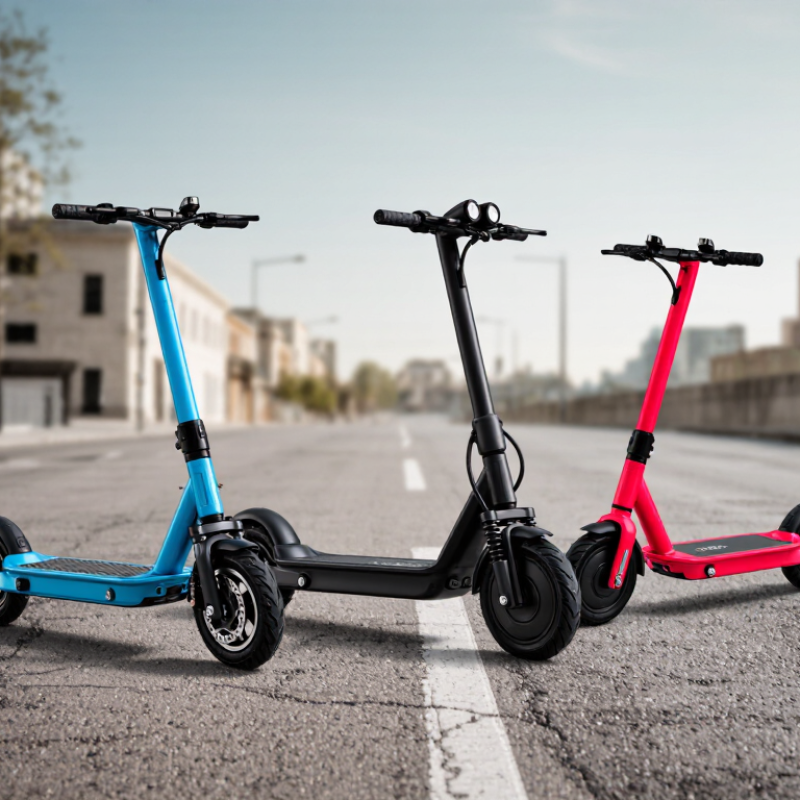
Global speed rules matter more than headline power. In many European markets, public-road scooters are limited to 20 or 25 km/h. The European Commission does not impose one identical scooter rule everywhere. Member states set equipment, registration, insurance, and road-use requirements. A 60+ km/h performance model may be legal only on private land or under stricter vehicle regulations. Check the destination country before buying.
The demand is real. The IEA’s Global EV Outlook 2024 reports that electric two- and three-wheelers remain the most electrified road-transport segment, with more than half of global sales electric in 2023. That growth attracts faster designs, but speed exposes weaknesses. At 60 km/h, a small pothole can feel like a road barrier. Dual braking, stable tires, visible lighting, and thermal battery protection deserve more attention than peak wattage. My test experience suggests range claims often feel optimistic in cold weather, hills, and strong headwinds. That deserves skepticism.
2026 Top Fast Electric Scooter for Global Buyers?
A 500 W motor can feel lively on flat roads, but power ratings need careful interpretation. Some manufacturers list continuous power, while others advertise brief peak output. That difference changes real performance. Numbers can mislead.
Torque explains how strongly the scooter starts and climbs. Battery voltage, controller limits, motor design, rider weight, tire pressure, and temperature all affect it. A 1,000 W scooter may climb better than a 2,000 W model if its controller delivers power more smoothly. I have learned this through practical comparisons, especially on rough pavement and long inclines. Peak wattage alone is not enough.
Hill-grade claims also deserve scrutiny. A 20% grade means the road rises 20 meters over 100 horizontal meters, roughly 11.3 degrees. It does not mean a 20-degree hill. Manufacturers may test with a light rider, full battery, warm tires, and a short slope. Real riders carry bags, face wind, and lose voltage during extended climbs. That matters.
For global buyers, compare continuous wattage, battery voltage, controller current, tested rider weight, and climb length. A 500–800 W setup may suit level commuting. Around 1,000–2,000 W offers more hill reserve, but usually adds weight, heat, and energy use. My earlier estimates ignored heat buildup. That was a mistake. Look for repeatable test conditions, not the biggest number.
500–2,000 W nominal motor ratings compared with calculated wheel torque and theoretical hill-grade capability.
Torque is calculated from nominal power at 500 rpm using T = P ÷ ω. The hill-grade values are theoretical continuous-power estimates for a 100 kg combined rider-and-scooter mass, 10 km/h speed, 85% drivetrain efficiency, rolling-resistance coefficient of 0.015, and no aerodynamic, traction, battery-voltage, or controller limits. Actual climbing performance can be substantially lower, and nominal power is not the same as peak power.
For global buyers, battery selection starts with system voltage, not peak motor wattage. A 48 V battery rated at 15 Ah stores about 720 Wh. A 72 V, 20 Ah pack stores about 1,440 Wh. The calculation is simple: volts multiplied by amp-hours. Real range is less predictable. Rider weight, tire pressure, hills, temperature, and wind quickly consume energy. Higher voltage can reduce current at the same power, which may lower cable heating. It does not automatically deliver longer range. The controller, motor, charger, and battery management system must share compatible voltage limits.
Safety deserves more attention than a larger capacity number. UL 2271 covers batteries used in light electric vehicle applications, including electrical, mechanical, and abuse-related requirements. Buyers should request a traceable test report, clear pack labeling, cell specifications, and proof that the charger matches the battery. A “smart” protection board is not the same as independent safety testing. That distinction is easy to miss.
BloombergNEF’s 2024 Battery Price Survey reported an average lithium-ion pack price of 115 dollars per kWh, mainly across larger electric vehicles. Small scooter packs can cost more per kWh because packaging, controls, and testing are less efficiently scaled. The International Energy Agency reported global electric-car battery demand above 750 GWh in 2023, showing rapid battery expansion, but that figure is not a scooter benchmark. I would treat advertised range as optimistic, especially below 10°C. Real-world testing still matters.
For global buyers, a fast electric scooter should be judged by braking control before top speed. EN 17128 specifies safety requirements and test methods for personal light electric vehicles, including braking performance, stability, and visibility. However, many high-speed models may exceed its intended vehicle category or speed limits. Compliance should therefore be verified, not assumed.
Wet roads expose weak designs. IEC 60529 defines IP protection levels, but an IP54 rating only indicates limited dust protection and water splashes. It does not guarantee safe riding through deep puddles, heavy rain, or pressure washing. A careful buyer should inspect sealed connectors, covered charging ports, drainage paths, and brake response after riding over wet leaves or painted lines. Small details matter.
UL 2272 addresses the electrical system’s risk of fire and electric shock. It does not certify braking distance, tires, frame strength, or complete weather resistance. The U.S. Consumer Product Safety Commission reported an estimated 233,870 micromobility-related injuries treated in emergency departments from 2017 through 2022. That figure supports stricter evaluation, especially for powerful scooters used in dense traffic. Do not guess. Ask for test scope, product configuration, and laboratory documentation. I would also treat marketing claims cautiously, because a certificate may cover only the battery and control system, not the entire scooter.
| Evaluation Dimension | Relevant Requirement or Rating | What It Means for Buyers | Recommended Verification |
|---|---|---|---|
| EN 17128 scope | Primarily covers personal light electric vehicles with a maximum design speed of 25 km/h and a maximum continuous rated power of 1,000 W. | A scooter advertised above 25 km/h may fall outside the normal scope of EN 17128, even if some components are designed to similar principles. | Request the exact test report, certificate scope, model number, maximum design speed, and rated motor power. |
| EN 17128 braking | The standard addresses braking performance and safety-related design requirements for covered PLEVs; it is not a universal “high-speed scooter” approval. | Compliance should be assessed together with speed, rider mass, road surface, tyre condition, and brake adjustment. | Look for a controlled brake test, functioning front and rear braking, progressive lever feel, and a method for adjusting brake wear. |
| Independent braking | For faster scooters, two independently controlled braking circuits are a prudent safety benchmark, such as a front brake plus rear brake. | If one brake loses effectiveness, the second system can still provide controlled deceleration. | Confirm whether the controls operate separate mechanical, hydraulic, or electronic braking systems rather than duplicating one circuit. |
| Brake type | Hydraulic disc brakes generally offer strong modulation; mechanical disc, drum, and regenerative braking have different maintenance and performance characteristics. | Regenerative braking alone may not provide sufficient stopping power, especially when the battery is full or traction is reduced. | Check for a physical friction brake on at least one wheel, brake-cutoff operation, spare-part availability, and wet-weather performance information. |
| Stopping-distance data | Stopping distance increases approximately with the square of speed under similar conditions: doubling speed can require about four times the braking distance. | A fast scooter needs more space, smoother braking input, and greater attention to tyre grip than a 25 km/h model. | Ask for test conditions, including speed, rider mass, road surface, tyre pressure, gradient, and whether the test was dry or wet. |
| UL 2272 | UL 2272 covers the electrical systems of personal e-mobility devices, including protection against electrical shock and fire hazards. | It is an electrical safety standard, not a speed rating, braking certification, riding-law approval, or waterproof guarantee. | Verify that the listing applies to the complete scooter model and its exact battery, charger, controller, and electrical configuration. |
| IP rating format | The first digit describes protection from solid objects; the second digit describes protection from water. “X” means that digit was not rated or declared. | An IP rating applies only to the tested configuration and conditions; it does not mean the scooter is safe to submerge. | Check the complete IP code, test report, covered components, test method, and whether the rating applies with the charging port closed. |
| IPX4 | Protection against water splashing from any direction. | Suitable only for limited light rain or splashing when used according to the manufacturer’s instructions; it is not a heavy-rain or hose-washing rating. | Keep the charging port closed, avoid standing water, and dry the scooter before charging or storage. |
| IPX5 | Protection against water jets from any direction. | Provides more water-jet resistance than IPX4 but still does not authorize immersion, pressure-washing, or riding through deep water. | Confirm that seals, deck, display, motor cable entry, and charging socket were included in the test configuration. |
| IPX6 | Protection against powerful water jets. | Offers stronger water-jet protection, but it still does not indicate protection against temporary or continuous immersion. | Treat the scooter as non-submersible unless a separate immersion rating is explicitly provided. |
| IPX7 | Protection against temporary immersion under specified test conditions, typically up to 1 metre for 30 minutes under IEC 60529 test criteria. | It does not automatically provide protection against powerful water jets; IPX5/IPX6 and IPX7 address different tests. | Do not infer jet protection unless the product has a combined rating such as IPX6/IPX7 or another explicitly tested combination. |
| Tyres and wet grip | Pneumatic tyres generally provide better shock absorption, while solid tyres reduce puncture risk but may transmit more impact and offer different wet grip. | Water, painted markings, metal covers, leaves, and loose gravel can substantially reduce traction and increase stopping distance. | Check tread condition, recommended pressure, tyre width, load rating, and whether replacement tyres are available in the destination market. |
| Weather-use limitations | Water resistance is not the same as weather-proof operation. Manufacturers may prohibit deep puddles, pressure washing, charging while wet, or use in extreme temperatures. | The battery, connectors, display, bearings, and brake components can still be affected by water, salt, condensation, and freezing conditions. | Read the owner’s manual and warranty exclusions before purchasing for a rainy, coastal, snowy, or very hot climate. |
| Global legal compatibility | Speed limits, helmet rules, lighting requirements, road access, insurance, registration, and certification requirements vary by country and sometimes by city. | A technically capable scooter may not be legal on public roads in the buyer’s location. | Confirm local regulations before purchase; compare the scooter’s actual maximum design speed, not only its selectable riding mode. |
| Overall buyer priority | For a fast global-market scooter, prioritize independently controlled brakes, transparent test documentation, a model-specific electrical safety report, a clearly defined IP rating, and local legal compliance. | No single standard proves complete safety, performance, or weather suitability. | Buy only when the model number, certification scope, braking configuration, IP test scope, warranty, and service support are clearly documented. |
Important: EN 17128, UL 2272, and IP ratings address different aspects of product safety. Certification claims should be checked against the exact scooter model and configuration rather than relying on generic marketplace descriptions.
Speed attracts attention, but a global purchase should begin with measurable range. Ask for range results from a defined test, not a perfect laboratory claim. Record rider weight, tire pressure, temperature, wind, hills, and average speed. GPS logs and repeated routes create more useful evidence than one impressive number. Cold weather and steep roads can reduce distance sharply. Expect variation.
Payload limits deserve equal attention. The listed maximum should include the rider, bags, and accessories. A heavier load may reduce braking confidence, climbing ability, and battery range. Check the warranty terms in your country, including coverage length, battery conditions, exclusions, and shipping responsibility. A long warranty sounds reassuring, but unclear wording can disappoint. I have seen buyers overlook this detail until a repair became urgent.
Tips: Confirm local service before ordering. Ask whether trained technicians, replacement tires, batteries, controllers, and chargers are available nearby. Request typical repair times in writing. Save invoices, serial details, and maintenance records. If service depends on overseas shipping, calculate the waiting period and cost. A nearby repair option may matter more than a higher top speed. Test the scooter gradually after delivery, because published specifications can still feel optimistic in daily use.
„Thanks to the LUVIR technology, the solder resist process could be switched directly from the previously used mask exposure to direct exposure. As an outstanding digital solution on the market, this technology has been able to demonstrate fast process times and superior quality on our certified conventional ink in production. This allowed us to fully digitize the solder mask process at low cost – without process or ink adjustments. An excellent benefit to our production in Rot am See.“
Ralf Göhringer (Head of Production WE Rot am See)
I would definitely recommend the Limata machine and team for a future company purchase
Michael Greenaway
Compunetics Inc.
“The Limata ldi has been amazing!! Best thing we did was buy this machine”
Richard Brady
GM
Circuitlabs
“Since 2019, we have been running the Limata X1000 LDI system (including LUVIR for solder mask imaging) in daily production as an addition to our current process with film. The machine was capable of properly exposing Taiyo PSR-4000 BN (DI) solder mask types on normal to high-copper boards using a new and unique direct imaging process. The machine operating interface is very user friendly which allowed for a quick technical training curve. The pre-registration processing reduced several seconds of production time at every print. Limata support and service staff is incomparable. They supported our team every step of the way at basically any time of the day or night, with literally, an immediate response time, customizing the software interface to best fit our Operations and needs.
We have exposed more than 8,000 prints since end of October, on various solder mask colors and some resist film panels. Limata, has proven to be very capable and innovative. They are a strong contender in the industry.
We have very much enjoyed this project, and working with the team!
Thank you Limata for the continued support and being a part of our growth.”
Bill Sezate
Vice President, GM
Summit Interconnect
As a replacement to our current contact exposure process with film, the LIMATA X2000 system including LUVIR-Technology was capable of properly exposing non-LDI solder mask types using a direct imaging process. The machine offers cutting edge software with a very intuitive operating interface which allowed for quick technician training curve. The dual drawer system combined with pre-registration processing reduced several seconds of production time at every machine cycle. Limata support and service staff is world class. They added software patches to keep production running at shortest possible response times, customized the software interface to best fit our in-house Operations system, and even wrote a step-by-step machine processing manual. As a result of the project, we have exposed more than 16,000 times on various product types and solder mask brands/colors. Limata, in a very short timeframe as a company, has definitely shown they are truly innovative and will be challenging the industry of direct imaging for the top spot.
Kevin Beattie
Process Engineer
TTM Technologies
Forest Grove Division
