For global buyers, selecting the right Capscrew Hex Head requires more than comparing prices or browsing product photos. A suitable choice must match the joint design, loading conditions, material, coating, and installation method. Small differences matter. Head height, wrench size, thread tolerance, and bearing surface can affect assembly quality and service life.
Dr. John Bickford, author of Handbook of Bolts and Bolted Joints, is widely respected for his fastener engineering work. He stated, “A bolted joint is only as reliable as its weakest detail.” This principle remains practical in 2026. A high-strength screw can still fail when the wrong grade, torque method, or mating material is selected. Buyers should review standards such as ISO, ASTM, and ASME requirements, while confirming certificates, dimensional reports, and production traceability with suppliers.
This guide examines the best Capscrew Hex Head types for international purchasing decisions. It compares common steel, stainless steel, and corrosion-resistant options. It also considers property classes, thread systems, surface finishes, and application environments, from indoor machinery to humid coastal equipment. Details matter.
In real procurement work, catalog descriptions are not always complete. Some listings hide coating thickness, thread fit, or test limitations. That shortcut is tempting. It is also risky. A careful buyer should request samples, inspect markings, and verify performance data before approving large quantities. No single head type suits every application. This article offers a reliable starting point, while acknowledging that final selection still depends on engineering review, operating conditions, and supplier evidence.
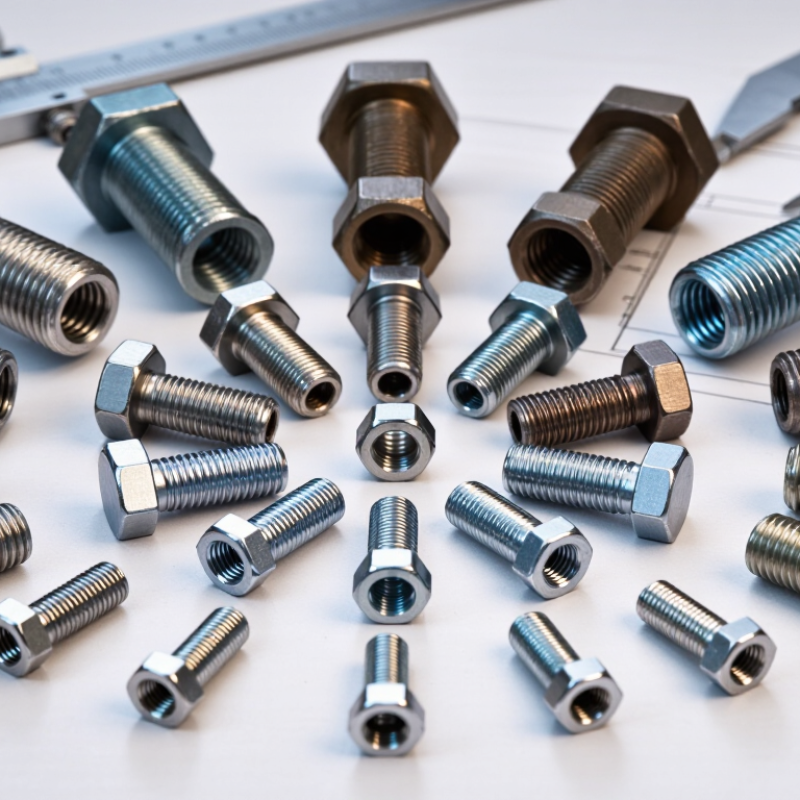
Choosing the right hex head capscrew starts with the joint, not the catalog picture. Finished hex head capscrews suit general machinery, brackets, and assemblies needing a clean, standard profile. Their six-sided head accepts common wrenches and supports dependable torque control. Heavy hex capscrews provide a larger bearing surface and stronger wrench engagement. They are useful for structural frames, thick plates, and high-load connections.
Flange capscrews include an integrated washer-like bearing surface. This design spreads clamping force and can reduce surface damage on softer materials. It also limits the need for separate washers. Socket head capscrews use an internal hex drive, making them practical in narrow spaces or recessed holes. However, their smaller head can concentrate pressure. That detail is easy to overlook. I have seen otherwise correct assemblies fail because the surrounding material was too thin.
Tips: Confirm diameter, thread pitch, length, grade, and coating before ordering. Check the actual clamping thickness, not only the drawing. Request material certificates and dimensional inspection records for critical projects. Match the driver size carefully; a worn socket can round the recess or head. For outdoor use, review corrosion exposure and coating compatibility. Torque values are guidance, not magic. Thread lubrication, surface condition, and tool accuracy can change the final clamp load. A small trial assembly often reveals problems earlier than a full shipment.
This comparison uses standard design characteristics of four commonly specified capscrew styles. A value of 1 indicates that the feature is normally present; 0 indicates that it is not normally present.
How to read the chart: Finished and heavy hex capscrews use an external six-sided wrenching head. Flange capscrews add an integral bearing flange, while socket head capscrews use an internal hexagonal drive and typically have a cylindrical head.
For global buyers, capscrew grade selection should follow ISO 898-1 mechanical data, not appearance or price alone. The standard lists nominal tensile strengths of 800 MPa for class 8.8, 1,000 MPa for 10.9, and 1,200 MPa for 12.9. Their nominal yield strengths are approximately 640, 900, and 1,080 MPa. Stronger is not always better.
Class 8.8 suits many general machinery frames, brackets, and maintenance assemblies. Class 10.9 offers higher preload capacity for compact joints and vibration-prone equipment. Class 12.9 fits highly loaded parts, but its limited ductility demands careful tightening and thread engagement.
VDI 2230 joint-design guidance stresses preload control, surface friction, and load distribution. A torque value copied from a chart can mislead.
In field purchasing, I check the property class marking, coating, thread tolerance, and test documentation. ISO 898-1 also warns that hardness and tensile properties must match the declared class. That detail matters. A small washer, rough coating, or damaged thread can change clamp force sharply. I have seen buyers select 12.9 fasteners for safety, then create brittle failures through excessive tightening. The safer decision uses calculated loads, verified friction data, and traceable inspection records. Strength alone is an incomplete specification.
For global buyers, hex head capscrew selection starts with dimensional discipline. ISO 4014 covers partially threaded metric hexagon head bolts, while ISO 4017 covers fully threaded versions. Both use metric diameters and thread pitches. ASME B18.2.1 covers inch-series hex bolts and screws, with dimensions such as head width, head height, and body length.
Do not judge fit by appearance alone. A 12 mm ISO head is not automatically equivalent to a 1/2-inch ASME head. Across-flats size, bearing surface, thread length, and tolerance can change installation clearance. ISO parts normally pair with metric nuts. ASME parts usually require compatible Unified inch threads under the applicable thread standard. Small mismatch. Serious result.
In production checks, I compare drawings with actual samples before approving a shipment. Calipers verify head dimensions, while thread gauges confirm pitch or thread form. A simple bolt-length check also matters. For ISO 4014, the unthreaded shank may affect clamping and shear positioning. For ISO 4017, full threading can improve flexibility but may change load distribution. One practical limitation is that catalog descriptions sometimes simplify these differences. Buyers should request complete dimensional tables, tolerances, material grades, and inspection records. I have seen orders delayed because “hex head” was treated as a universal specification. It is not.
Dimensional reference for selecting externally threaded hex-head fasteners. ISO 4014 specifies partially threaded products, ISO 4017 specifies fully threaded products, and ASME B18.2.1 covers inch-series square and hex bolts and screws, including hex cap screws.
| Nominal Thread | Standard Product Type | Across Flats, s (mm) | Head Height, k (mm) | Typical Thread Form | Dimensional-Fit Note |
|---|---|---|---|---|---|
| M5 | ISO 4014 / 4017 | 8 | 3.5 | M5 × 0.8 | Use an 8 mm metric socket or wrench; verify clearance around the head corners. |
| M6 | ISO 4014 / 4017 | 10 | 4.0 | M6 × 1.0 | A common general-purpose metric size; use a 10 mm driving tool. |
| M8 | ISO 4014 / 4017 | 13 | 5.3 | M8 × 1.25 | Allow for the 13 mm across-flats dimension when selecting the socket and surrounding counterbore. |
| M10 | ISO 4014 / 4017 | 16 | 6.4 | M10 × 1.5 | Check the head height where the fastener is installed beneath a cover or adjacent component. |
| M12 | ISO 4014 / 4017 | 18 | 7.5 | M12 × 1.75 | Use an 18 mm metric socket; confirm the mating nut or tapped hole uses the same pitch. |
| M16 | ISO 4014 / 4017 | 24 | 10.0 | M16 × 2.0 | The larger head requires adequate tool swing and clearance around the fastener. |
| M20 | ISO 4014 / 4017 | 30 | 12.5 | M20 × 2.5 | Confirm the assembly has sufficient wrench access and bearing-area clearance. |
| M24 | ISO 4014 / 4017 | 36 | 15.0 | M24 × 3.0 | Suitable only where the design allows the larger head envelope and installation tool size. |
| Nominal Size | Common UNC Thread | Across Flats, s (in) | Nominal Head Height, k (in) | Across Flats, s (mm approx.) | Dimensional-Fit Note |
|---|---|---|---|---|---|
| 1/4 in | 1/4-20 UNC | 7/16 | 0.172 | 11.11 | Use a 7/16 in socket; do not substitute a metric tool without checking engagement. |
| 5/16 in | 5/16-18 UNC | 1/2 | 0.218 | 12.70 | The 1/2 in across-flats head is not dimensionally interchangeable with an M12 head. |
| 3/8 in | 3/8-16 UNC | 9/16 | 0.250 | 14.29 | Verify tool clearance and the specified UNC or UNF thread series before ordering. |
| 1/2 in | 1/2-13 UNC | 3/4 | 0.312 | 19.05 | A 3/4 in socket is normally required; confirm the mating internal thread standard. |
| 5/8 in | 5/8-11 UNC | 15/16 | 0.390 | 23.81 | Allow for the larger head diameter and confirm the available installation envelope. |
| 3/4 in | 3/4-10 UNC | 1-1/8 | 0.469 | 28.58 | Check socket wall clearance, head height, and the required tightening-access space. |
| 1 in | 1-8 UNC | 1-1/2 | 0.625 | 38.10 | Use inch-series tooling and verify the full head envelope before finalizing the joint design. |
For 2026 global buyers, capscrew corrosion protection should match the installation environment, not just the purchase price. The NACE IMPACT study estimated global corrosion costs at about US$2.5 trillion annually, equal to roughly 3.4% of global GDP. That figure makes material selection a practical engineering decision.
Zinc-plated hex head capscrews suit dry indoor equipment and protected assemblies. Their bright finish is economical, but scratches and trapped moisture can expose the steel core. Zinc-aluminum flake coatings provide stronger barrier protection and avoid hydrogen charging associated with some electroplating processes. They are useful for outdoor frames, transport equipment, and moderate salt exposure. ISO 9223 atmospheric-corrosivity categories should guide the choice. Salt spray hours alone can mislead buyers.
Stainless A2 capscrews, commonly comparable to 304 stainless steel, perform well in general outdoor conditions. A4, commonly comparable to 316 stainless steel, offers better resistance in coastal or chloride-rich environments. Neither grade is corrosion-proof. Crevice deposits, contamination, and poor drainage still create rust staining. Stainless threads may also gall during installation. Use clean tools, controlled torque, and suitable anti-seize practices where permitted. ASTM F1941 and applicable fastener specifications can help verify coating thickness and performance. One purchasing mistake remains common: selecting A4 for every project. It may add cost without improving service life in a dry warehouse. Specification should reflect exposure, load, temperature, and maintenance access.
2026 Best Capscrew Hex Head Types for Global Buyers
Global buying decisions should begin with load, not appearance. Standard hex head capscrews suit general assembly and moderate clamping. Heavy hex heads provide more wrench contact for higher tightening torque. Flange hex heads spread pressure and can reduce washer use on broad surfaces. Check tensile strength, shear exposure, preload, and joint movement before selecting a type. A stronger fastener is not automatically safer. Poor thread engagement can still cause failure.
Thread compatibility often decides whether an order succeeds. Confirm metric or imperial sizing, pitch, tolerance, material, coating, and property class. Coarse threads work well in many general applications. Fine threads may support better adjustment and stronger engagement in thin sections. Request dimensional inspection records, heat-lot details, and material certificates. Traceability matters when parts enter equipment with long service intervals. It adds cost, but missing records create larger risks later. I have seen attractive low-price offers become expensive after undocumented substitutions.
Tips: Ask suppliers for samples before accepting a large MOQ. Test head dimensions, thread fit, hardness, coating consistency, and torque behavior. Compare the sample with the drawing, not memory. Set a practical MOQ based on forecast demand, packaging limits, and replacement needs. A low MOQ can reduce inventory, yet it may increase unit cost or variation. Keep one approved reference sample. Recheck it periodically. Specifications sometimes look complete, but one overlooked detail remains.
„Thanks to the LUVIR technology, the solder resist process could be switched directly from the previously used mask exposure to direct exposure. As an outstanding digital solution on the market, this technology has been able to demonstrate fast process times and superior quality on our certified conventional ink in production. This allowed us to fully digitize the solder mask process at low cost – without process or ink adjustments. An excellent benefit to our production in Rot am See.“
Ralf Göhringer (Head of Production WE Rot am See)
I would definitely recommend the Limata machine and team for a future company purchase
Michael Greenaway
Compunetics Inc.
“The Limata ldi has been amazing!! Best thing we did was buy this machine”
Richard Brady
GM
Circuitlabs
“Since 2019, we have been running the Limata X1000 LDI system (including LUVIR for solder mask imaging) in daily production as an addition to our current process with film. The machine was capable of properly exposing Taiyo PSR-4000 BN (DI) solder mask types on normal to high-copper boards using a new and unique direct imaging process. The machine operating interface is very user friendly which allowed for a quick technical training curve. The pre-registration processing reduced several seconds of production time at every print. Limata support and service staff is incomparable. They supported our team every step of the way at basically any time of the day or night, with literally, an immediate response time, customizing the software interface to best fit our Operations and needs.
We have exposed more than 8,000 prints since end of October, on various solder mask colors and some resist film panels. Limata, has proven to be very capable and innovative. They are a strong contender in the industry.
We have very much enjoyed this project, and working with the team!
Thank you Limata for the continued support and being a part of our growth.”
Bill Sezate
Vice President, GM
Summit Interconnect
As a replacement to our current contact exposure process with film, the LIMATA X2000 system including LUVIR-Technology was capable of properly exposing non-LDI solder mask types using a direct imaging process. The machine offers cutting edge software with a very intuitive operating interface which allowed for quick technician training curve. The dual drawer system combined with pre-registration processing reduced several seconds of production time at every machine cycle. Limata support and service staff is world class. They added software patches to keep production running at shortest possible response times, customized the software interface to best fit our in-house Operations system, and even wrote a step-by-step machine processing manual. As a result of the project, we have exposed more than 16,000 times on various product types and solder mask brands/colors. Limata, in a very short timeframe as a company, has definitely shown they are truly innovative and will be challenging the industry of direct imaging for the top spot.
Kevin Beattie
Process Engineer
TTM Technologies
Forest Grove Division
