Choosing the best High Speed Lifts for global projects in 2026 requires more than comparing travel speed. A fast cabin may impress on paper, yet poor traffic planning can create long queues, vibration, and uncomfortable stops. Buyers should examine rated speed, building height, passenger flow, cabin capacity, braking systems, door performance, energy use, and maintenance access. A lift reaching 8 metres per second still needs smooth acceleration and accurate floor leveling.
Dr. Albert So, a respected elevator engineer and Secretary-General of the International Association of Elevator Engineers, has said, “Elevators are the safest mode of transportation in the world.” That principle remains important. Safety must lead every purchasing decision. Independent testing, certified components, emergency communication, fire-service operation, and local regulatory compliance deserve careful verification. Global buyers should also request documented factory testing and service records, not only attractive brochures.
Real projects reveal uncomfortable details. A premium lift can underperform when spare parts arrive slowly or technicians lack local training. Climate matters too. Coastal towers may demand stronger corrosion protection, while dusty regions require thoughtful sealing and maintenance plans. No single model fits every market. This guide compares leading High Speed Lifts through performance, reliability, passenger comfort, lifecycle cost, and supplier support. Some rankings may remain debatable. Data can change. Even experienced buyers should question optimistic claims, inspect reference projects, and allow qualified consultants to validate the final choice.
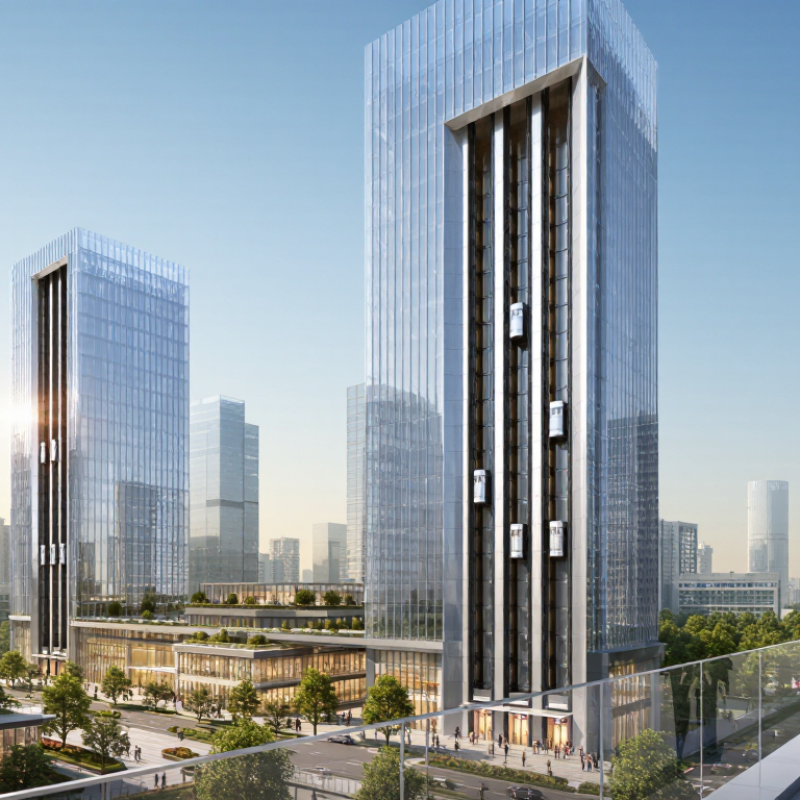
High-speed lifts typically travel above 2.5 metres per second, although project thresholds vary by market. They serve tall offices, hotels, hospitals, and residential towers. Common types include high-speed passenger lifts, shuttle lifts, service lifts, and double-deck systems. Each type responds to different traffic patterns and building layouts. Double-deck cars can move more people, but they require carefully aligned floor planning.
At the heart of a high-speed lift is a traction machine, counterweight, steel ropes, and guided car. The motor moves the car through controlled rope traction. Variable-voltage, variable-frequency drives regulate acceleration and deceleration. This reduces jolts near departure and landing. Guide rails limit sideways movement. Overspeed governors, brakes, door locks, and buffers provide layered protection under ISO 8100-1 principles. Small errors matter.
Air pressure changes can affect passengers above 30 floors. Designers may use staged lift zones, pressure-controlled lobbies, and larger ventilation paths. Regenerative drives can return braking energy to the building network. The IEA’s Buildings 2024 report states that buildings consume about 30% of global final energy. Lift efficiency therefore deserves serious attention. CIBSE Guide D:2020 also stresses traffic analysis, waiting time, and handling capacity. A faster car is not automatically a better lift. In real projects, poor dispatch logic can erase its speed advantage. That point is often underestimated.
High-speed lift selection in 2026 should begin with measurable performance, not impressive speed claims. ISO 8100-1 and ISO 8100-2 define safety and verification requirements for lift systems. They do not prescribe one universal travel speed. For global buyers, compliance must match local codes, seismic conditions, fire strategies, and building height.
Speed alone can mislead. CIBSE Guide D recommends evaluating handling capacity, interval, waiting time, acceleration, jerk, and passenger comfort together. In practice, a 10 m/s lift may perform poorly if dispatch software, door timing, or lobby planning is weak. Passengers notice the pause between floors. They also notice vibration and sudden braking. Small details matter.
Energy performance deserves equal attention. The International Energy Agency reports that buildings consume roughly 30% of global final energy. Regenerative drives, standby controls, efficient motors, and traffic-based operation can reduce avoidable consumption. ISO 25745 provides methods for measuring lift energy performance, supporting clearer comparisons between suppliers.
However, testing conditions can differ. Buyers should request measured data under realistic traffic loads, not laboratory figures alone. I would also question every “maintenance-free” claim. High-speed systems still need documented inspections, fault records, emergency operation tests, and trained local technicians. Reliability is demonstrated over time.
High-speed lifts require more than powerful motors and attractive specifications. Buyers should verify overspeed governors, emergency brakes, door interlocks, buffers, and backup communication systems. These features must match the lift’s rated speed, load, travel height, and building use.
Regulations differ by market. European projects commonly reference EN 81-20 and EN 81-50, while North American installations often follow ASME A17.1/CSA B44 requirements. Other regions may require national standards, seismic testing, fire-service operation, or local authority approval.
ISO 8100 guidance can support international planning, but it does not replace mandatory local rules. Certification should cover the complete system, not only individual components. A certificate alone is not proof of safe installation.
Tips:
Ask for test reports, risk assessments, maintenance procedures, and the certificate’s issuing authority. Confirm whether independent inspection is required before public operation. Review emergency evacuation plans with the building engineer. Check thermal limits and power-failure behavior, especially in tall buildings. Small omissions matter.
Practical site reviews often reveal gaps between factory documents and field conditions. Shaft alignment, door timing, brake response, and rescue access need physical verification. High-speed travel can increase pressure changes and passenger discomfort, even when the lift passes laboratory tests. Buyers should also inspect software updates, remote diagnostics, and cybersecurity controls. Requirements may change during construction. That possibility deserves budget and schedule space.
2026 Best High Speed Lifts for Global Buyers
Choosing a high-speed lift requires more than comparing the top travel speed. A faster car can still feel slow when doors remain open too long. Compare acceleration, braking, door cycles, and average waiting time under realistic traffic. Ask suppliers for test results with the intended load, not empty-car figures.
Capacity affects comfort, safety, and daily efficiency. A lift rated for 1,600 kilograms may perform poorly if passengers regularly carry tools, luggage, or equipment. Energy use should include movement, standby mode, lighting, ventilation, and regenerative systems. Review kilowatt-hours per trip and per day. Local electricity prices can change the result significantly. Total cost also covers installation, inspections, maintenance, spare parts, downtime, and future modernization. The cheapest quotation is rarely the cheapest building solution.
Tips: Request a five-year cost model. Check speed at full load. Compare door-opening times. Confirm local certification requirements. Visit a similar installation if possible. Independent measurements are more useful than attractive brochures.
No calculation is perfect. Traffic patterns often change after occupancy. I have seen projects overvalue speed while ignoring maintenance access and replacement delays. Reliable buyers should compare verified data, service response plans, and warranty conditions. A practical lift that moves people consistently may outperform a faster system with frequent interruptions. Safety margins, accessible controls, and stable performance deserve equal attention.
Global buyers in 2026 should treat high-speed lifts as complete transport systems, not fast cabins. Supplier selection begins with verified experience in comparable towers, local engineering capacity, and transparent test records. Ask for rated speed, traffic simulations, door-cycle data, and measured acceleration. A 6 m/s lift can still feel poor. Ride comfort matters.
Installation requires more than placing equipment in the shaft. Confirm interface drawings, pit dimensions, power quality, fire strategy, seismic requirements, and acceptance testing before shipment. ISO 8100-1 and ISO 8100-2 provide useful safety references, but local codes remain decisive. Require trained installation supervisors and a documented commissioning plan. Keep spare parts nearby. Delays are expensive.
Maintenance should be priced across the full contract period. Demand remote fault visibility, response-time commitments, inspection access, and a clear escalation route. UNEP’s 2023 Global Status Report for Buildings and Construction states that buildings consume about 30% of global final energy and create about 26% of energy-related emissions. Efficient standby controls, regenerative drives, and traffic-based dispatch can reduce waste, yet actual savings need measurement. I would not trust a glossy efficiency claim without baseline data. A 24-hour support promise also means little when technicians and parts are offshore. Evaluate local stock, technician coverage, cybersecurity controls, and training handover. Procurement teams sometimes chase maximum speed. That choice deserves a second look.
Global Buying Guide: Suppliers, Installation, Maintenance, and Support
Indicative industry planning ranges only. Actual specifications vary by project design, local regulations, traffic analysis, and supplier engineering.
„Thanks to the LUVIR technology, the solder resist process could be switched directly from the previously used mask exposure to direct exposure. As an outstanding digital solution on the market, this technology has been able to demonstrate fast process times and superior quality on our certified conventional ink in production. This allowed us to fully digitize the solder mask process at low cost – without process or ink adjustments. An excellent benefit to our production in Rot am See.“
Ralf Göhringer (Head of Production WE Rot am See)
I would definitely recommend the Limata machine and team for a future company purchase
Michael Greenaway
Compunetics Inc.
“The Limata ldi has been amazing!! Best thing we did was buy this machine”
Richard Brady
GM
Circuitlabs
“Since 2019, we have been running the Limata X1000 LDI system (including LUVIR for solder mask imaging) in daily production as an addition to our current process with film. The machine was capable of properly exposing Taiyo PSR-4000 BN (DI) solder mask types on normal to high-copper boards using a new and unique direct imaging process. The machine operating interface is very user friendly which allowed for a quick technical training curve. The pre-registration processing reduced several seconds of production time at every print. Limata support and service staff is incomparable. They supported our team every step of the way at basically any time of the day or night, with literally, an immediate response time, customizing the software interface to best fit our Operations and needs.
We have exposed more than 8,000 prints since end of October, on various solder mask colors and some resist film panels. Limata, has proven to be very capable and innovative. They are a strong contender in the industry.
We have very much enjoyed this project, and working with the team!
Thank you Limata for the continued support and being a part of our growth.”
Bill Sezate
Vice President, GM
Summit Interconnect
As a replacement to our current contact exposure process with film, the LIMATA X2000 system including LUVIR-Technology was capable of properly exposing non-LDI solder mask types using a direct imaging process. The machine offers cutting edge software with a very intuitive operating interface which allowed for quick technician training curve. The dual drawer system combined with pre-registration processing reduced several seconds of production time at every machine cycle. Limata support and service staff is world class. They added software patches to keep production running at shortest possible response times, customized the software interface to best fit our in-house Operations system, and even wrote a step-by-step machine processing manual. As a result of the project, we have exposed more than 16,000 times on various product types and solder mask brands/colors. Limata, in a very short timeframe as a company, has definitely shown they are truly innovative and will be challenging the industry of direct imaging for the top spot.
Kevin Beattie
Process Engineer
TTM Technologies
Forest Grove Division
