In 2026, a Stress Monitoring Ring can turn quiet body signals into useful daily insights. It may track heart rate variability, resting pulse, skin temperature, sleep patterns, and movement. These measurements can help reveal changes after a demanding meeting, poor sleep, or a late workout. They cannot explain every emotional reaction.
Real-world testing matters more than attractive charts. A reliable ring should feel comfortable during sleep, resist ordinary water exposure, and provide several days of battery life. Sensor accuracy depends on skin contact, finger size, movement, and individual physiology. Check independent reviews, published specifications, app quality, and data export options before buying. Marketing claims deserve careful questions.
Privacy also requires attention. Read how the manufacturer stores, processes, and shares health-related data. A clear policy is valuable, though not always easy to understand. Consider whether the ring supports Android, iOS, subscriptions, and long-term software updates. Small details matter.
No device is perfect. A ring may label excitement as stress or miss a short anxious moment. I have found that personal notes often explain patterns better than scores alone. Record caffeine, workload, exercise, and sleep beside the readings. That habit creates useful context.
This guide compares leading options through practical comfort, measurement quality, battery performance, privacy, cost, and support. It focuses on informed choices, not dramatic promises. A Stress Monitoring Ring can support self-awareness, but it should not replace professional medical advice or clinical evaluation.
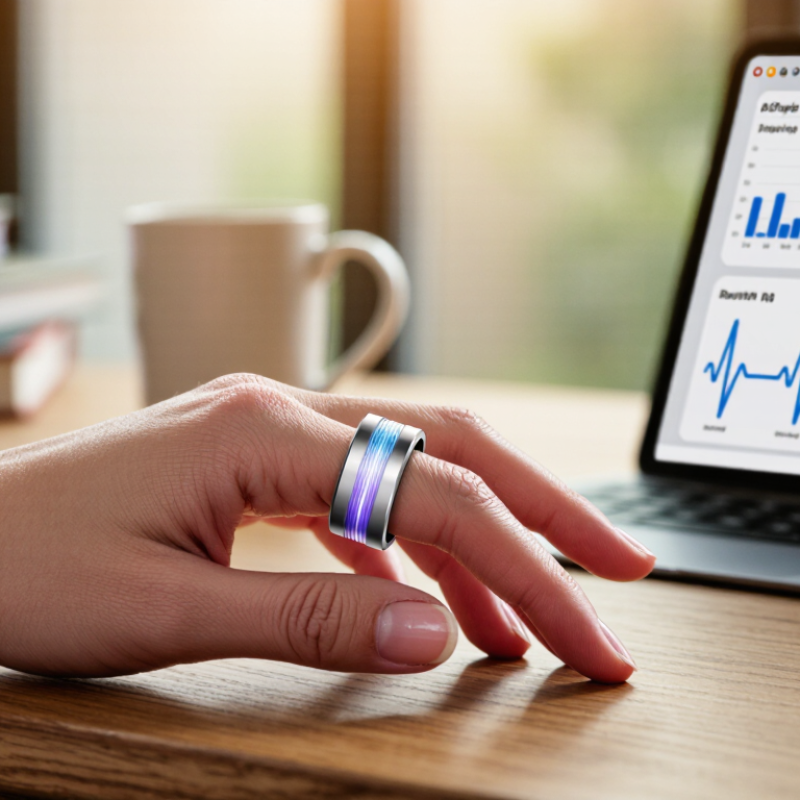
A stress monitoring ring is a small wearable device that tracks body signals linked with stress. It usually rests on your finger all day and night. Optical sensors measure changes in heart rate and heart rate variability. Some models also record skin temperature, movement, and breathing patterns. These signals may change when your body responds to pressure, poor sleep, exercise, or illness.
The ring combines these measurements and estimates your current stress level. This estimate is not a medical diagnosis. It cannot identify the exact reason behind every stressful moment. A high reading might follow a difficult meeting, a late meal, or an intense workout. Stress is personal. The same number may feel different on another day.
When choosing one, examine how clearly it explains the data. A reliable device should show trends instead of creating fear from one unusual reading. Check its comfort, battery life, sensor consistency, and data privacy controls. A ring that feels tight may disturb sleep and reduce useful results. A comfortable fit matters more than impressive claims. Try comparing readings with your sleep, workload, and mood for several weeks. The pattern may be helpful, but it may also be incomplete. Numbers can look precise while missing emotional context. A quiet walk, steady breathing, or honest rest may improve your state without producing a dramatic score.
2026 How to Choose the Best Stress Monitoring Ring?
How Stress Monitoring Rings Measure Physiological Signals
Stress is not directly visible. A ring estimates it through changing body signals. Optical sensors shine light into the finger and measure pulse-related blood volume changes. From this signal, algorithms calculate heart rate and heart rate variability. Lower variability can appear during strain, although it does not prove emotional stress.
Many rings also track skin temperature, movement, and breathing patterns. Some use electrodermal activity to detect tiny changes in sweat gland activity. A warm room, exercise, caffeine, or a loose fit can affect these readings. The data is useful, but it is not magic. Context matters.
When comparing a stress monitoring ring, check which signals it measures and how often it records them. Look for clear explanations of sensor accuracy, data storage, and measurement conditions. A reliable device should show trends across days, not exaggerate one unusual reading. I would also test its fit during sleep, walking, and desk work. My first assumption was that more data meant better insight. It does not always. Poorly explained data can create more worry than awareness. The most practical ring helps connect a high-stress reading with real details, such as a missed meal, a difficult meeting, or restless sleep.
How stress monitoring rings measure physiological signals
The chart presents a realistic resting snapshot using common physiological signals measured by wearable devices. Heart rate, heart-rate variability, skin temperature, electrodermal activity, blood oxygen saturation, and respiratory rate can provide useful context for stress estimation. Values are illustrative adult resting readings, not diagnostic thresholds, and should be interpreted together rather than individually.
A useful stress monitoring ring should measure more than a single number. Look for heart rate variability, resting heart rate, skin temperature, and sleep patterns. These signals can reveal changes in recovery, although they cannot diagnose anxiety or medical conditions. A reliable ring should explain how its readings are calculated. Vague scores are difficult to trust.
Comfort matters during real life. The ring should feel light while typing, exercising, and sleeping. Check its battery life, charging time, and water resistance. Missing data can weaken long-term insights.
I once stopped wearing a device because it felt tight at night. That small problem made its advanced features useless. Fit comes before impressive specifications.
Choose an app that shows trends, not only daily warnings. Clear charts can connect a stressful meeting with a faster resting pulse or poorer sleep. Adjustable notifications are helpful, but constant alerts may create more tension. Look for independent testing, transparent privacy policies, and options to export your data. Personal notes can improve interpretation, too. Record caffeine, illness, travel, or unusual workouts. The ring may detect a change without knowing its cause. Its feedback should support reflection, not replace professional medical advice.
Accuracy should lead your comparison, but stress is not measured directly. Most rings estimate it through heart rate variability, skin temperature, and sleep patterns.
In practice, test results can change after exercise, caffeine, or a loose fit. A 2020 study in JMIR reported an average heart-rate error of about 3.3% across several optical wearable devices. However, movement increased inconsistencies. Stanford Medicine’s 2017 evaluation also found heart-rate readings within 5% of clinical equipment, while energy estimates were far less reliable.
Treat stress scores as signals, not diagnoses.
A ring that feels tight at night may disturb sleep and encourage removal. Check its weight, inner sensors, finger size range, and skin response after several hours. Smooth edges matter when washing dishes or typing. The best design is easy to forget. That sounds simple.
A claimed seven-day battery may shrink with continuous temperature tracking, frequent syncing, or cold weather. Record actual days between charges during normal use. Three days can become frustrating.
A 2024 Deloitte connected-consumer report found that battery life remains a major concern for wearable users, alongside data privacy and comfort. Compare charging time too. A quick top-up before bed may matter more than a higher laboratory score.
I would also question unusually precise stress percentages, because independent validation standards remain uneven across devices.
How to Choose the Best Stress Monitoring Ring in 2026
How to Choose the Right Stress Monitoring Ring for Your Needs
Choosing a stress monitoring ring starts with your daily routine, not its feature list. Decide whether you need sleep insights, workout recovery, or alerts during demanding workdays. A comfortable ring should feel natural while typing, commuting, or washing your hands. Check its sizing process carefully. Finger swelling can change between a cool morning and a warm evening.
Look for sensors that track heart rate, heart rate variability, skin temperature, and movement. These signals can help identify patterns linked with stress. However, a ring cannot diagnose anxiety or medical conditions. Treat its readings as personal wellness information, not final medical evidence. Research the app’s data explanations, update history, and privacy controls. Some displays look scientific but offer little practical guidance. That is easy to overlook.
Tips: Wear the ring consistently for several weeks before judging its accuracy. Compare readings with your sleep, caffeine, workload, and mood. Keep notes on stressful meetings or restless nights. Do not chase every unusual number. Sensors can misread during loose fits, intense exercise, or cold weather. I would also question any device promising perfect stress detection. Real bodies are complicated. The best choice is accurate enough, comfortable enough, and clear about its limits.
„Thanks to the LUVIR technology, the solder resist process could be switched directly from the previously used mask exposure to direct exposure. As an outstanding digital solution on the market, this technology has been able to demonstrate fast process times and superior quality on our certified conventional ink in production. This allowed us to fully digitize the solder mask process at low cost – without process or ink adjustments. An excellent benefit to our production in Rot am See.“
Ralf Göhringer (Head of Production WE Rot am See)
I would definitely recommend the Limata machine and team for a future company purchase
Michael Greenaway
Compunetics Inc.
“The Limata ldi has been amazing!! Best thing we did was buy this machine”
Richard Brady
GM
Circuitlabs
“Since 2019, we have been running the Limata X1000 LDI system (including LUVIR for solder mask imaging) in daily production as an addition to our current process with film. The machine was capable of properly exposing Taiyo PSR-4000 BN (DI) solder mask types on normal to high-copper boards using a new and unique direct imaging process. The machine operating interface is very user friendly which allowed for a quick technical training curve. The pre-registration processing reduced several seconds of production time at every print. Limata support and service staff is incomparable. They supported our team every step of the way at basically any time of the day or night, with literally, an immediate response time, customizing the software interface to best fit our Operations and needs.
We have exposed more than 8,000 prints since end of October, on various solder mask colors and some resist film panels. Limata, has proven to be very capable and innovative. They are a strong contender in the industry.
We have very much enjoyed this project, and working with the team!
Thank you Limata for the continued support and being a part of our growth.”
Bill Sezate
Vice President, GM
Summit Interconnect
As a replacement to our current contact exposure process with film, the LIMATA X2000 system including LUVIR-Technology was capable of properly exposing non-LDI solder mask types using a direct imaging process. The machine offers cutting edge software with a very intuitive operating interface which allowed for quick technician training curve. The dual drawer system combined with pre-registration processing reduced several seconds of production time at every machine cycle. Limata support and service staff is world class. They added software patches to keep production running at shortest possible response times, customized the software interface to best fit our in-house Operations system, and even wrote a step-by-step machine processing manual. As a result of the project, we have exposed more than 16,000 times on various product types and solder mask brands/colors. Limata, in a very short timeframe as a company, has definitely shown they are truly innovative and will be challenging the industry of direct imaging for the top spot.
Kevin Beattie
Process Engineer
TTM Technologies
Forest Grove Division
