Choosing the 2026 Best Wax Flaking Conveyor for Global Buyers requires more than comparing prices and stainless-steel photographs. A reliable Wax Flaking Conveyor must handle warm wax, uneven feed rates, and continuous production without creating excessive buildup. Buyers should examine belt material, cooling performance, scraper design, drive stability, and cleaning access. These details become visible during real operation. A conveyor may look impressive in a catalog, yet struggle when wax enters at changing temperatures. That difference matters.
This guide compares practical features for factories, distributors, and engineering teams worldwide. It considers throughput, flake thickness, energy use, maintenance time, and installation requirements. Operator safety and food-contact suitability may also influence the final choice. Regional voltage, climate, spare-part availability, and technical support deserve equal attention. Small design choices can reduce stoppages. For example, an accessible tensioning system can shorten belt adjustments after a long production shift. Simple matters.
Experience suggests that the cheapest machine is rarely the lowest-cost solution over several years. However, premium pricing does not automatically prove superior performance. Buyers should request test videos, material certificates, layout drawings, and references from comparable facilities. Some suppliers provide excellent equipment but weak documentation. That weakness should not be ignored. Specifications can also be misunderstood when translations are unclear. Independent verification remains valuable, especially for international purchases. This introduction will help global buyers assess performance honestly, identify hidden risks, and select a conveyor that matches their actual wax-processing conditions rather than an idealized brochure.
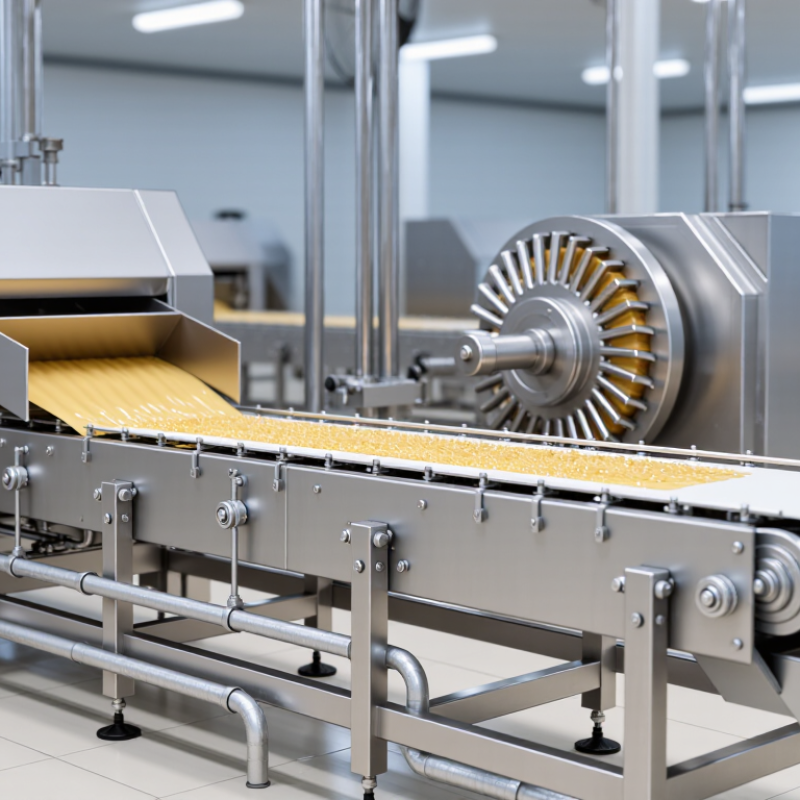
A wax flaking conveyor moves solid wax flakes from a cooling unit to storage or packing equipment.
The process begins when molten wax spreads across a chilled drum or moving steel belt. As the surface cools, a scraper removes thin flakes. The conveyor then receives them through a controlled transfer point. A slow belt speed helps prevent breakage, while cleats reduce sliding on inclined sections. It sounds simple. It is not always simple.
Grand View Research estimated the global paraffin wax market at about USD 6.7 billion in 2023, with continued growth expected through 2030. This demand increases pressure on stable, hygienic conveying systems. CEMA’s Belt Conveyors for Bulk Materials, Seventh Edition, stresses that belt selection must reflect bulk density, temperature, moisture, and material flow. Wax flakes can bridge inside chutes when they soften. They can also fracture when dropped too aggressively.
Operators should check wax temperature, belt tension, scraper alignment, and transfer height during production. A practical line may use a food-grade or industrial polymer belt, depending on the final application. The wrong surface can collect residue. This is often overlooked. Dust control also deserves attention, because fine wax particles may accumulate around motors, guards, and discharge points. Actual performance depends on wax formulation, flake thickness, cooling efficiency, and cleaning discipline, so a laboratory test alone may not predict factory behavior.
Wax flakes behave differently after cooling. They can fracture, bridge, or soften against warm surfaces. Conveyor selection must follow the application, not only the required capacity. According to Grand View Research, the global conveyor systems market was valued at over USD 10 billion in 2023, reflecting wider investment in automated material handling. Yet wax remains a specialized case.
A flat belt conveyor suits long, horizontal movement of dry flakes. Its low drop height helps reduce breakage.
For enclosed transfer, a screw conveyor can control dust and protect the product from outside contamination. It needs careful clearance design, however. Excessive compression may generate heat and form clumps.
Vibratory conveyors are useful for gentle metering, especially before filling or packaging. They offer accurate flow, but unstable amplitudes can cause uneven feeding. Short routes only.
Vertical movement often requires a bucket elevator. It saves floor space, although wax buildup around the buckets can increase cleaning time. A scraper conveyor may handle heavier flakes, but its contact surfaces demand precise temperature control.
The 2024 report from Mordor Intelligence identifies energy efficiency, automation, and hygienic design as major conveyor development trends. These priorities matter, but they do not replace trials with the actual wax grade.
A laboratory test can miss seasonal humidity. That is an uncomfortable weakness. Global buyers should check residence time, belt temperature, cleanability, motor loading, and emergency access before final approval.
2026 Best Wax Flaking Conveyor for Global Buyers?
How to Evaluate Capacity, Materials, and Conveying Performance
A reliable wax flaking conveyor should match your real production rate, not only its catalog rating. Measure kilograms per hour during normal operation, including start-up delays and cleaning time. A machine rated for 1,000 kg/h may deliver less when flakes bridge inside the hopper. Check the flake size, bulk density, and discharge pattern before selecting belt width and speed.
Material selection affects service life and product cleanliness. Stainless steel 304 suits many dry wax applications, while 316 may help in corrosive cleaning environments. Inspect belt joints, rollers, scrapers, and hopper walls closely. Smooth welds reduce residue buildup. They also make routine sanitation easier. Static electricity can cause flakes to cling to surfaces, so grounding and suitable belt materials deserve attention.
Conveying performance depends on more than motor power. Compare horizontal and inclined capacity, belt speed control, transfer-point design, and overload protection. A short test with your actual wax flakes can reveal slipping, dusting, or uneven feeding. Do not trust perfect laboratory figures. Real factories have temperature changes, operator delays, and occasional blockages. I would leave capacity margin, although excessive oversizing can waste energy and space. Record noise, cleaning time, and product loss during the trial. Those details often matter more than a polished specification sheet.
How to Evaluate Capacity, Materials, and Conveying Performance
The chart estimates continuous conveying capacity for wax flakes at a belt speed of 0.5 m/s, using a 70% loading factor and bulk densities of 450–650 kg/m³. Higher-density flakes increase throughput, while actual performance depends on belt width, surcharge angle, moisture, flake size, incline, and loading consistency.
A reliable wax flaking conveyor must control hazards before production begins. Exposed nip points can catch gloves, sleeves, or cleaning tools. OSHA requires guarding around dangerous machine points under 29 CFR 1910.212. Lockout procedures also apply during jam removal and maintenance.
The U.S. Bureau of Labor Statistics recorded 5,283 fatal workplace injuries in 2023. Conveyors are not harmless equipment. Emergency stops should remain reachable from both operating and service positions. Belt tracking, scraper pressure, bearing temperature, and abnormal noise need documented inspections.
Small omissions become expensive lessons.
Sanitation depends on access, not appearance. Wax flakes can hide beneath return rollers, belt supports, and frame joints. A smooth, sealed design reduces residue traps. Food-contact operations should follow applicable hygienic design and cleaning rules.
The WHO estimates 600 million foodborne illness cases annually, with 420,000 deaths worldwide. That figure concerns food safety generally, not wax conveyors specifically. Still, it shows why contamination controls deserve serious attention.
Use compatible materials, controlled lubricants, and validated cleaning methods. Dry cleaning may suit some wax processes, but moisture can create new problems. This point requires site-specific review.
Tips: Specify removable guards and tool-friendly access. Record cleaning time, residue findings, and failed components.
Ask suppliers for risk assessments, material certificates, and sanitation instructions. Do not accept vague “easy to clean” claims. A polished frame can still conceal buildup.
Operators should test emergency stops during scheduled inspections, not only after incidents.
Selecting the best wax flaking conveyor in 2026 requires more than comparing prices. Global buyers should match conveyor capacity with actual production volume, cooling conditions, and wax characteristics. Start with the flakes. Their size, temperature, and softness affect belt speed and scraper design. A practical trial using real wax can reveal problems that brochures often hide.
Look closely at contact materials, frame strength, and cleaning access. Stainless steel surfaces may support reliable hygiene and long service in demanding plants. Check whether the conveyor can maintain stable cooling without creating uneven flakes. Variable-speed control is valuable when production changes during the day. It helps reduce buildup near the discharge point. Small details matter.
Ask for documented performance data, factory testing, installation guidance, and spare-parts support in your region. Electrical controls should suit the destination facility and local operating requirements. Experienced buyers should also inspect belt tracking, tension adjustment, emergency stops, and noise levels. Do not ignore maintenance time. A cheaper conveyor can become expensive when technicians wait weeks for basic parts.
No machine is perfect. In real evaluations, operators sometimes discover that a high-capacity design is difficult to clean. That weakness should be recorded, not hidden. Review the supplier’s technical answers carefully, and request references from similar wax-processing applications. A reliable choice balances output, safety, serviceability, and long-term operating confidence.
„Thanks to the LUVIR technology, the solder resist process could be switched directly from the previously used mask exposure to direct exposure. As an outstanding digital solution on the market, this technology has been able to demonstrate fast process times and superior quality on our certified conventional ink in production. This allowed us to fully digitize the solder mask process at low cost – without process or ink adjustments. An excellent benefit to our production in Rot am See.“
Ralf Göhringer (Head of Production WE Rot am See)
I would definitely recommend the Limata machine and team for a future company purchase
Michael Greenaway
Compunetics Inc.
“The Limata ldi has been amazing!! Best thing we did was buy this machine”
Richard Brady
GM
Circuitlabs
“Since 2019, we have been running the Limata X1000 LDI system (including LUVIR for solder mask imaging) in daily production as an addition to our current process with film. The machine was capable of properly exposing Taiyo PSR-4000 BN (DI) solder mask types on normal to high-copper boards using a new and unique direct imaging process. The machine operating interface is very user friendly which allowed for a quick technical training curve. The pre-registration processing reduced several seconds of production time at every print. Limata support and service staff is incomparable. They supported our team every step of the way at basically any time of the day or night, with literally, an immediate response time, customizing the software interface to best fit our Operations and needs.
We have exposed more than 8,000 prints since end of October, on various solder mask colors and some resist film panels. Limata, has proven to be very capable and innovative. They are a strong contender in the industry.
We have very much enjoyed this project, and working with the team!
Thank you Limata for the continued support and being a part of our growth.”
Bill Sezate
Vice President, GM
Summit Interconnect
As a replacement to our current contact exposure process with film, the LIMATA X2000 system including LUVIR-Technology was capable of properly exposing non-LDI solder mask types using a direct imaging process. The machine offers cutting edge software with a very intuitive operating interface which allowed for quick technician training curve. The dual drawer system combined with pre-registration processing reduced several seconds of production time at every machine cycle. Limata support and service staff is world class. They added software patches to keep production running at shortest possible response times, customized the software interface to best fit our in-house Operations system, and even wrote a step-by-step machine processing manual. As a result of the project, we have exposed more than 16,000 times on various product types and solder mask brands/colors. Limata, in a very short timeframe as a company, has definitely shown they are truly innovative and will be challenging the industry of direct imaging for the top spot.
Kevin Beattie
Process Engineer
TTM Technologies
Forest Grove Division
