Electric flatbed trucks are moving from pilot fleets into demanding daily work. Buyers now compare more than range. They weigh payload, charging time, body options, service access, and the routes each vehicle must cover. A truck carrying lumber across a warm city faces different demands from one hauling equipment through cold, hilly terrain. Details matter.
NACFE executive director Mike Roeth has offered a useful reminder: “There is no one-size-fits-all solution.” That principle fits the Electric Flatbed market well. A published range figure can look reassuring, yet real payload, weather, speed, and stop frequency may change the result. Ask for operating data from comparable duty cycles, not just a brochure estimate. Then check charging compatibility and local parts support.
This guide to the 2026 top electric flatbed trucks for global buyers will compare vehicle capability, usable range, charging needs, safety features, and service considerations. It will also examine how regional infrastructure and dealer coverage affect ownership. No single model suits every fleet. That is the honest part. Some specifications may be difficult to compare directly, because manufacturers do not always test or report them under identical conditions. Buyers should verify current figures with the maker and request a route-based assessment before committing. A careful shortlist beats a bold claim.
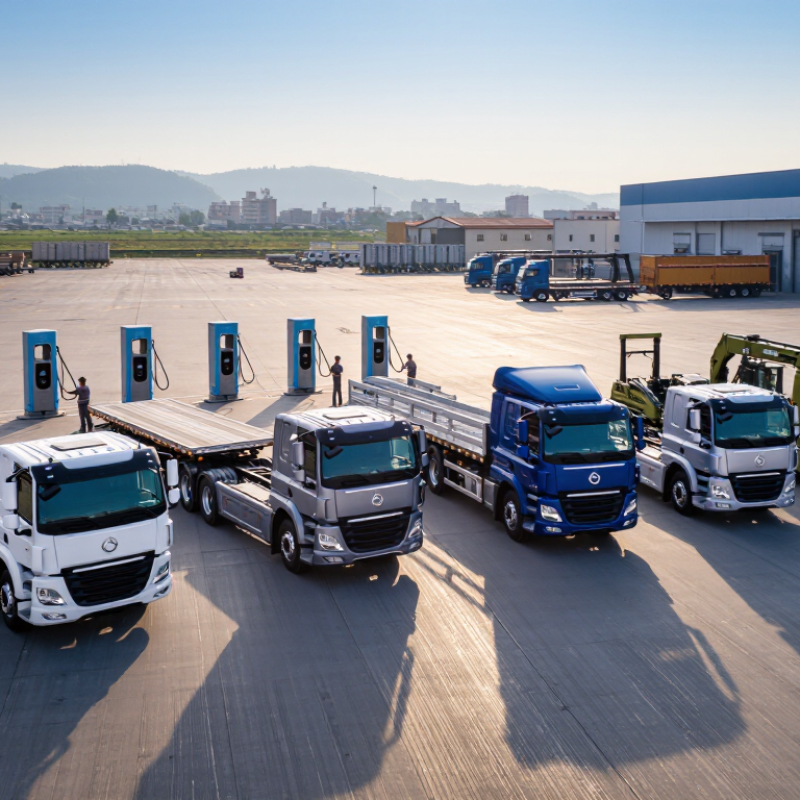
2026 Top Electric Flatbed Trucks for Global Buyers
What Electric Flatbed Trucks Are and How They Work
An electric flatbed truck is a work vehicle with an open, level cargo platform and an electric drivetrain. It carries materials, equipment, or palletized goods while a battery supplies energy to one or more motors. There is no tailpipe exhaust while driving. The exact layout varies by vehicle.
When the driver presses the accelerator, power electronics regulate current from the battery to the motor. The motor turns the wheels through a reduction gear or another drive arrangement. During braking, regenerative systems can return some energy to the battery. It helps, but it does not replace careful route planning. Payload, hills, speed, weather, and cabin heating can all change usable range.
Charging usually happens while the truck is parked, using compatible AC or DC equipment. Fleet managers should compare charging time with daily duty cycles, not just advertised range. Check battery capacity, payload rating, axle limits, deck dimensions, and service support. Details matter. A truck suited to warehouse routes may struggle on long rural trips. Even a good estimate can be wrong when loads or temperatures vary, so buyers should request operating data for similar work before choosing a configuration.
Electric flatbed trucks store energy in a battery, then use power electronics and an electric motor to drive the wheels. The ranges shown are typical component-level estimates, not specifications for a particular truck. Actual efficiency varies with temperature, load, speed, and operating conditions; the stages act sequentially, so their efficiencies multiply rather than add. Regenerative braking can return some energy to the battery.
For global buyers, electric flatbed truck performance starts with the work, not the brochure. Payload capacity must include the driver, tools, and any body equipment. A truck carrying steel coils needs different axle ratings from one delivering boxed goods. Bed length and width matter, too; an oversized deck can add weight and reduce useful range. Measure the real load. Check axle limits.
Battery capacity is only part of the picture. Ask for usable energy, expected range under load, and charging time at the power level available at your depot. Cold mornings, steep access roads, and frequent stops can all change daily mileage. A motor’s torque helps on ramps, but sustained grades also test battery cooling and thermal management. These details deserve careful comparison. A neat spreadsheet can still mislead if its range figures assume light loads and mild weather. Request test conditions, not just headline numbers. Charging compatibility and service access matter over years, even when the purchase price looks attractive. I would also leave a practical range buffer; real routes rarely behave perfectly.
Leading electric flatbed trucks available to global buyers in 2026 should match payload, route length, and local charging access. Medium-duty chassis-cab platforms suit urban deliveries, construction supplies, and municipal work. Heavier configurations can carry dense materials, but added battery weight may reduce usable payload. Check axle limits and body dimensions before comparing advertised range.
The International Energy Agency’s Global EV Outlook 2024 reported nearly 54,000 electric truck sales worldwide in 2023, about 1.2% of truck sales. China accounted for more than 80% of those sales.
This uneven adoption matters: service networks and parts access vary sharply between markets. For another reference point, the European Automobile Manufacturers’ Association reported that electrically chargeable trucks reached 1.5% of new EU truck registrations in 2023, up from 0.8% in 2022.
A neat specification sheet can still mislead. Not every route fits. Buyers should test loaded range, charging time during actual shifts, and bed compatibility with forklifts or cranes. A winter route or frequent stop-start work can change the calculation.
2026 Top Electric Flatbed Trucks for Global Buyers
How Electric Flatbed Trucks Serve Different Industries and Routes
Electric flatbed trucks are most useful when their work matches their route. On factory campuses, they can move steel frames, palletized parts, or maintenance equipment between nearby buildings. A low loading height and open deck make side access easier for forklifts. That saves minutes. But payload matters more than advertised range. Dense loads can reduce usable distance, especially with frequent stops, cold mornings, or steep ramps. Fleet managers should compare real trip logs, including return journeys and time spent waiting at loading bays. Range planning may be imperfect at first. That is worth admitting.
For ports, distribution yards, and construction sites, route conditions differ sharply. Smooth, predictable loops can support scheduled charging during breaks; mixed public-road routes need more buffer and dependable charging access. On a construction site, tire choice, ground clearance, and deck tie-down points can matter as much as battery capacity. A truck carrying bulky panels may face wind exposure, while a beverage load may demand many short stops. Operators should check axle loads, braking behavior, and charging time against the actual duty cycle. Numbers on a brochure cannot replace a loaded trial. Small trials reveal awkward details. A charger may be far from overnight parking, or the flatbed may not clear a tight gate.
Compare electric flatbed trucks by the work they repeat, not by brochure range alone. Record typical load, daily distance, stop frequency, and time spent waiting at a dock. A 3,000-pound payload on flat roads differs sharply from repeated hill climbs. Ask for verified payload and charging data for the exact configuration. Small details matter.
Estimate ownership costs across a realistic service period. Include purchase price, energy use, tires, scheduled maintenance, insurance, and possible downtime. A truck with a lower purchase price may cost more if it needs frequent charging or specialized service. Run the numbers. Use local electricity rates and actual route data where available, then test assumptions against a busy workweek. Estimates are never perfectly clean; seasonal use can change them.
Regional requirements can reshape the comparison. Check local vehicle weight and registration rules, charging connector compatibility, grid capacity, and access to qualified technicians. Cold weather may reduce usable range, while heat and heavy loads can also affect performance. Ask suppliers for written specifications and clarify what service support exists near your operating area. A short route trial with a representative load is more useful than a polished demonstration. I would still leave room for surprises.
„Thanks to the LUVIR technology, the solder resist process could be switched directly from the previously used mask exposure to direct exposure. As an outstanding digital solution on the market, this technology has been able to demonstrate fast process times and superior quality on our certified conventional ink in production. This allowed us to fully digitize the solder mask process at low cost – without process or ink adjustments. An excellent benefit to our production in Rot am See.“
Ralf Göhringer (Head of Production WE Rot am See)
I would definitely recommend the Limata machine and team for a future company purchase
Michael Greenaway
Compunetics Inc.
“The Limata ldi has been amazing!! Best thing we did was buy this machine”
Richard Brady
GM
Circuitlabs
“Since 2019, we have been running the Limata X1000 LDI system (including LUVIR for solder mask imaging) in daily production as an addition to our current process with film. The machine was capable of properly exposing Taiyo PSR-4000 BN (DI) solder mask types on normal to high-copper boards using a new and unique direct imaging process. The machine operating interface is very user friendly which allowed for a quick technical training curve. The pre-registration processing reduced several seconds of production time at every print. Limata support and service staff is incomparable. They supported our team every step of the way at basically any time of the day or night, with literally, an immediate response time, customizing the software interface to best fit our Operations and needs.
We have exposed more than 8,000 prints since end of October, on various solder mask colors and some resist film panels. Limata, has proven to be very capable and innovative. They are a strong contender in the industry.
We have very much enjoyed this project, and working with the team!
Thank you Limata for the continued support and being a part of our growth.”
Bill Sezate
Vice President, GM
Summit Interconnect
As a replacement to our current contact exposure process with film, the LIMATA X2000 system including LUVIR-Technology was capable of properly exposing non-LDI solder mask types using a direct imaging process. The machine offers cutting edge software with a very intuitive operating interface which allowed for quick technician training curve. The dual drawer system combined with pre-registration processing reduced several seconds of production time at every machine cycle. Limata support and service staff is world class. They added software patches to keep production running at shortest possible response times, customized the software interface to best fit our in-house Operations system, and even wrote a step-by-step machine processing manual. As a result of the project, we have exposed more than 16,000 times on various product types and solder mask brands/colors. Limata, in a very short timeframe as a company, has definitely shown they are truly innovative and will be challenging the industry of direct imaging for the top spot.
Kevin Beattie
Process Engineer
TTM Technologies
Forest Grove Division
