Choosing the best Competition Tires for 2026 is not just a search for the softest compound or the boldest tread pattern. Track layout, surface temperature, vehicle weight, suspension setup, and driving style all change what works. A tire that feels quick for one session may lose grip as the surface heats up. That matters. This guide compares key tire types and buying considerations, including dry-weather grip, wet-track behavior, warm-up time, wear, and availability. It also looks at the details that are easy to overlook, such as correct sizing, load ratings, and recommended operating pressures.
There is no single winner for every driver. A lightweight car on a smooth circuit has different needs from a heavier car on a rough, technical course. Manufacturer specifications and independent test results can help, but results may not transfer directly to your car or track. Keep that in mind. We’ll explain what the available information can—and cannot—tell you, and how to weigh performance against service life and cost. Some comparisons remain imperfect because conditions and testing methods differ. That deserves a second look. Use the guide as a practical starting point, then confirm fitment and setup advice with a qualified tire professional before buying.
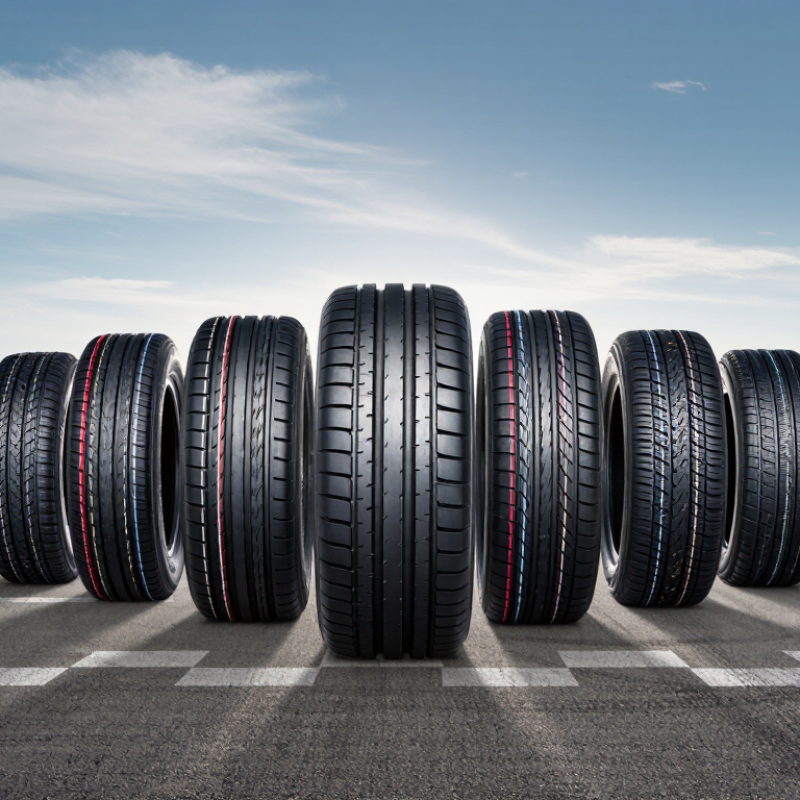
Competition tires are designed to deliver predictable grip during hard cornering, braking, and acceleration. Many use softer rubber compounds that can generate strong traction once they reach their intended temperature range. Some have minimal tread; others use grooves for particular surfaces or conditions. They are not all alike.
Street tires must handle a wider mix of everyday demands, including cold starts, rain, noise, and long service life. Competition tires usually prioritize lap-time performance instead. Their construction may feel stiffer, and their shallow tread can make standing water a serious concern. A tire that feels planted on a dry track may behave very differently on a wet road. That distinction matters.
Temperature is a key detail. A competition tire can feel less responsive before it warms up, while excessive heat may also reduce grip. The useful range depends on the tire and setup, so check the manufacturer’s technical guidance and monitor pressures consistently. Small changes count.
Inspect tires for cuts, uneven wear, and heat damage after sessions. Track conditions, vehicle weight, alignment, and driving style all affect results. Choosing a competition tire is not simply choosing the stickiest option; matching its design to the surface and use takes care. Even experienced drivers can misread a tire’s feedback at first.
That deserves a second look.
Competition tires are built around the surface, heat, and cornering forces of each discipline. For circuit racing on a dry track, slicks offer a broad, uninterrupted contact patch and quick response. They need heat to work well. On a cold morning, they may feel stubborn rather than fast. Semi-slicks suit track days and autocross, where changing weather and road-legal requirements can matter. They trade some peak grip for wider usability. For rain, treaded wet tires channel standing water away from the contact patch; using them on a drying track can cause rapid overheating.
Rally gravel tires need tough sidewalls and open tread blocks to bite into loose stones and resist cuts. Tarmac rally tires use a firmer, flatter tread suited to hard surfaces. Drag tires are different again: their flexible construction helps transfer launch torque, but they are poor choices for repeated high-speed cornering. The FIA’s 2024 Formula One Technical Regulations specify 18-inch wheel rims, showing how tightly circuit tires are matched to a series’ chassis standards. Rim size alone does not determine the right tire, though. That detail is easy to overvalue. Match the tire to the event rules, surface, temperature, and suspension setup, then check pressures after each session.
Competition tire choice is a trade-off, not a single grip score. Compare lap times across repeated runs, then check how much they change as the tread heats and wears. On a damp circuit, record braking distance and cornering consistency; one fast dry lap tells little about wet-weather behavior. Keep pressure, vehicle load, and track temperature consistent. Small differences matter.
For cost, calculate price per usable session, including replacements and travel to events. ISO 28580 specifies rolling-resistance measurement in newtons per kilonewton, useful when tires also see road miles. The U.S. Department of Energy reports that properly inflated tires can improve fuel economy by about 0.6% on average, and up to 3%; that figure concerns inflation, not a tire model’s racing performance. Treat it as a road-use cost reminder, not a track-grip claim. I would not trust a comparison that skips pressure checks or reports only the best lap. Test results can also shift with weather, so a clean spreadsheet is not the same as certainty.
Compare common competition tire types across dry grip, durability, wet-weather performance, and value for money. Higher scores are better.
Scores are illustrative category-level estimates on a 1–10 scale, not results from a standardized test or specific products. Actual performance varies with tire model, vehicle, setup, surface, and conditions. “Value” means performance relative to typical purchase cost.
Competition tires should be chosen for the surface and event, not for a single headline grip figure. For dry circuit racing, slick tires offer a broad contact patch, but they need suitable temperatures to work well. Short sessions or cool mornings can leave them below their useful range. For wet circuits, treaded competition tires channel water away; standing water still demands slower speeds and careful driving. Grip is not universal. Check the event rules and tire temperature guidance before buying.
For rally stages, prioritize the surface: gravel tires need durable tread and sidewalls, while asphalt tires suit paved stages. Autocross and sprint events often reward quick warm-up, since runs are brief. Formula-style circuit use is more specialized: the FIA’s 2024 Formula One Technical Regulations specify nominal tire widths of 305 mm at the front and 405 mm at the rear. These figures show how strongly fitment depends on vehicle and series; they are not a general buying target. The National Research Council’s 2006 report, Tires and Passenger Vehicle Fuel Economy, also identifies rolling resistance as a factor in tire efficiency, a useful reminder that grip can bring trade-offs. A setup may feel quick, yet wear unevenly. Measure clearance, confirm permitted sizes, and review temperature and wear after each session.
Competition tires should match the event rules before they match your driving style. In U.S. autocross, the 2025 SCCA Solo Rules require tires with a treadwear grade of at least 200 in Street category. That threshold is a class rule, not proof that one tire is faster everywhere. Check your class, permitted sizes, wheel-width limits, and any restrictions on tire changes. Rules first.
UTQG numbers need careful reading. NHTSA explains that treadwear grades compare tires under a controlled test; they are not lap-time predictions. Traction grades focus on straight-line wet braking, not cornering grip. Choose a size that clears the suspension and bodywork, then check its load rating against the vehicle’s requirements. Measure everything. A tire that rubs under hard cornering can ruin a promising setup.
For a short, technical course, prioritize repeatable grip and predictable response. For longer sessions, ask how performance changes as the tread heats and wears. Record cold pressure, hot pressure, ambient temperature, and lap times after each run. Small differences matter. I still find pressure easy to overlook, especially when the paddock is cold and the first run feels slow. Use the event’s technical rules and tire maker’s published specifications as your limits, then test one change at a time.
| Competition Tire Type | Best-Suited Events | Tread and Construction | Key Strengths | Trade-Offs | Fitment and Rule Checks |
|---|---|---|---|---|---|
| 200-treadwear summer tire | Street-based autocross, track days, and classes that require a street-legal tire | Patterned tread; high-grip summer compound. The treadwear number is a rating, not a direct measurement of competition grip. | Often practical for drivers who need a tire usable on public roads; generally more tolerant of changing conditions than a slick. | Grip and consistency depend on temperature, pressure, alignment, and tread design. Not intended for snow or near-freezing conditions. | Confirm the event’s minimum treadwear rating, road-use requirements, permitted size, and any restrictions on tire modifications. |
| DOT-marked R-compound tire | Road-course racing, time trials, and some autocross classes | Usually has shallow patterned tread and a competition-focused compound; some models carry road-use markings. | High dry grip and relatively quick warm-up compared with many full slicks. | Can wear quickly, become less effective when cold or wet, and require careful pressure and temperature management. | A road-use marking does not automatically make a tire legal for every road or competition class. Check the event rules and local regulations. |
| Slick racing tire | Closed-course circuit racing where slicks are permitted | Smooth tread surface with a racing compound; generally designed for dry pavement. | Large contact area and strong dry-track performance when used in its intended temperature range. | Usually unsuitable for public-road use; little or no wet-weather capability. Performance can fall sharply if cold or overheated. | Verify class eligibility, wheel width, tire size, compound availability, and whether the event requires a particular construction or marking. |
| Wet-weather competition tire | Rain-affected circuit events and other paved competitions that allow wet tires | Deeper grooves and channels help move water away from the contact patch; compound and tread pattern vary by application. | Improved water evacuation and wet-pavement control compared with dry slicks. | Not a substitute for a dry tire in all conditions; standing water, temperature, and tread wear strongly affect performance. | Check whether the event defines a wet tire, permits grooving, or sets limits for tire changes and tread depth. |
| Gravel rally tire | Gravel rally and other loose-surface competition | Open tread blocks and reinforced construction are commonly used to provide traction and resist damage on rough surfaces. | Designed to find grip on loose gravel and cope with surface debris better than a typical road-course tire. | Can be noisy and wear quickly on pavement; the appropriate tread and compound depend on surface and conditions. | Confirm permitted tire dimensions, construction, wheel size, and any event-specific limits on tread or compound. |
| Drag radial | Drag racing and, where permitted, limited street use | Radial construction with a drag-focused tread and compound; specific designs differ in street markings and intended use. | Can provide strong straight-line traction on a prepared launch surface when correctly sized and set up. | Cornering, wet-road behavior, and daily-driving durability may be limited compared with ordinary road tires. | Check the class rules, vehicle clearance, wheel compatibility, tire pressure guidance, and whether street use is permitted. |
| Autocross-focused competition tire | Short-duration autocross events on paved courses | Typically designed for rapid response and grip over short runs; treadwear rating and road legality vary by tire and class. | Can reach useful operating temperatures quickly and deliver precise steering response in a short event. | May have a narrow temperature window and can be less effective for long track sessions or cold, wet conditions. | Read the current class rulebook for treadwear, tire-size, wheel-width, and vehicle-modification requirements before purchasing. |
| Selection note: The best competition tire depends on the event, surface, climate, vehicle, wheel specifications, and current rulebook. Treat categories above as general guidance, not a guarantee of class eligibility. Check the tire manufacturer’s published size and load data, confirm wheel fitment and vehicle clearance, and verify all event and road-use requirements before buying. | |||||
„Thanks to the LUVIR technology, the solder resist process could be switched directly from the previously used mask exposure to direct exposure. As an outstanding digital solution on the market, this technology has been able to demonstrate fast process times and superior quality on our certified conventional ink in production. This allowed us to fully digitize the solder mask process at low cost – without process or ink adjustments. An excellent benefit to our production in Rot am See.“
Ralf Göhringer (Head of Production WE Rot am See)
I would definitely recommend the Limata machine and team for a future company purchase
Michael Greenaway
Compunetics Inc.
“The Limata ldi has been amazing!! Best thing we did was buy this machine”
Richard Brady
GM
Circuitlabs
“Since 2019, we have been running the Limata X1000 LDI system (including LUVIR for solder mask imaging) in daily production as an addition to our current process with film. The machine was capable of properly exposing Taiyo PSR-4000 BN (DI) solder mask types on normal to high-copper boards using a new and unique direct imaging process. The machine operating interface is very user friendly which allowed for a quick technical training curve. The pre-registration processing reduced several seconds of production time at every print. Limata support and service staff is incomparable. They supported our team every step of the way at basically any time of the day or night, with literally, an immediate response time, customizing the software interface to best fit our Operations and needs.
We have exposed more than 8,000 prints since end of October, on various solder mask colors and some resist film panels. Limata, has proven to be very capable and innovative. They are a strong contender in the industry.
We have very much enjoyed this project, and working with the team!
Thank you Limata for the continued support and being a part of our growth.”
Bill Sezate
Vice President, GM
Summit Interconnect
As a replacement to our current contact exposure process with film, the LIMATA X2000 system including LUVIR-Technology was capable of properly exposing non-LDI solder mask types using a direct imaging process. The machine offers cutting edge software with a very intuitive operating interface which allowed for quick technician training curve. The dual drawer system combined with pre-registration processing reduced several seconds of production time at every machine cycle. Limata support and service staff is world class. They added software patches to keep production running at shortest possible response times, customized the software interface to best fit our in-house Operations system, and even wrote a step-by-step machine processing manual. As a result of the project, we have exposed more than 16,000 times on various product types and solder mask brands/colors. Limata, in a very short timeframe as a company, has definitely shown they are truly innovative and will be challenging the industry of direct imaging for the top spot.
Kevin Beattie
Process Engineer
TTM Technologies
Forest Grove Division
