Choosing a Big Roots Blower manufacturer in 2026 requires more than comparing catalog prices. Global buyers must examine engineering depth, factory capacity, testing procedures, and long-term service support. A reliable supplier should explain pressure limits, airflow performance, shaft sealing, bearing design, noise control, and material selection in practical terms. These details matter when a blower runs continuously beside a steel furnace, wastewater basin, or pneumatic conveying line.
The Roots brothers established the mechanical foundation for this technology. In their original patent, Philander Roots described “an improvement in the manner of forcing air into blast-furnaces.” That early purpose still reflects the core principle: stable, positive-displacement airflow. Modern applications are more demanding, however. Buyers now need energy-efficient profiles, variable-speed compatibility, accurate performance curves, and documented factory acceptance tests. A polished website is not proof.
This guide reviews leading Big Roots Blower manufacturers for international purchasing teams. It considers product range, customization, production experience, quality controls, export capability, and after-sales response. Site conditions deserve equal attention. Altitude changes inlet density. Dust can damage clearances. Poor piping can create unnecessary pressure loss.
Some rankings remain subjective.
That is unavoidable.
A manufacturer may excel in heavy industry but offer limited support for smaller systems. Another may provide excellent documentation yet lack local technicians. Readers should verify certifications, references, warranty terms, spare-parts availability, and operating data before signing a contract. The strongest choice is rarely the cheapest quotation. It is the supplier that combines dependable equipment with transparent evidence and realistic technical advice.
The 2026 Roots Blower Market Scope centers on 0.1–1.0 bar(g), a practical range for wastewater aeration, pneumatic conveying, and low-pressure process air. Demand is expanding with water infrastructure investment. UN-Water reports that over 80% of wastewater is discharged without treatment worldwide, creating a persistent need for reliable aeration equipment. The figure is global, but local conditions vary sharply.
Market selection now depends on more than catalog airflow. The 2024 Industrial Air Blower Market analysis by MarketsandMarkets identifies wastewater treatment and material handling as major application segments. For buyers, this supports comparing manufacturers by tested capacity, sound levels, oil carryover, and service coverage. At 0.1 bar(g), small efficiency differences can still affect annual electricity costs. At 1.0 bar(g), cooling, shaft seals, and motor sizing deserve closer inspection.
Performance claims need evidence. Request test curves at the actual inlet temperature, altitude, and discharge pressure. ISO 1217 methods may support comparison where applicable, but certification alone does not guarantee site performance. I have seen promising figures weaken after dirty filters and pressure losses were added. That is the uncomfortable part. A lower purchase price can become expensive when spare parts arrive slowly or controls cannot match variable demand. Global buyers should audit references, warranty terms, and local technical skills before approving a 2026 supplier shortlist.
2026 Roots Blower Market Scope: 0.1–1.0 bar(g) Pressure and Global Demand
The chart presents the stated market pressure scope in kilopascals gauge. Values are unit conversions based on 1 bar = 100 kPa, with the covered range extending from 0.1 to 1.0 bar(g). It describes the application scope rather than company-specific sales or market-share data.
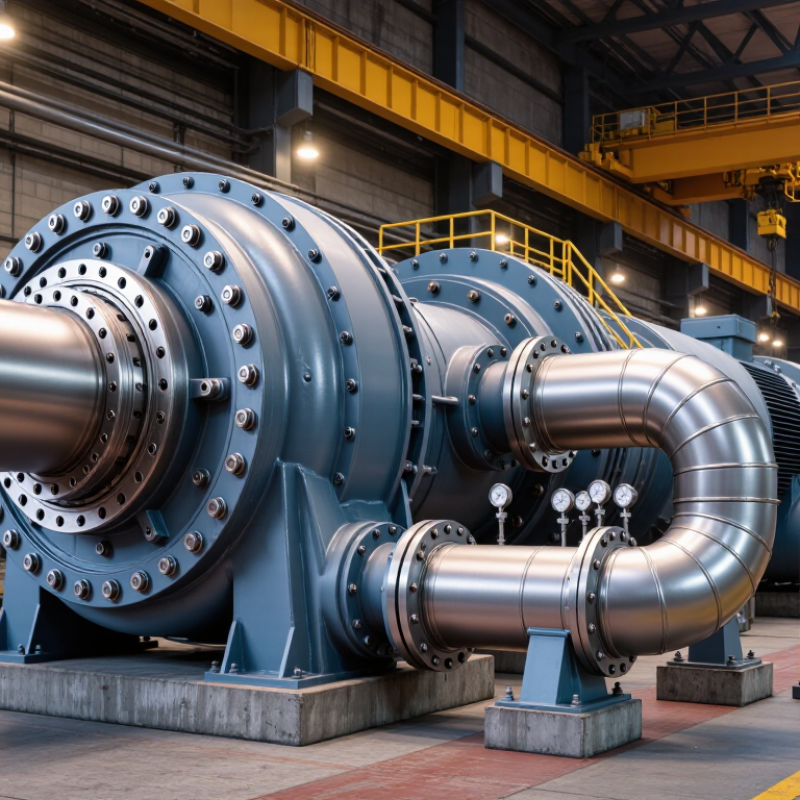
A Roots blower moves air through positive displacement. Two or three lobed rotors turn inside a precisely machined casing. Their timing gears keep the lobes separated without contact. No internal compression occurs. Air enters the inlet, fills a pocket, and travels around the casing. The pocket opens at the discharge port, where system pressure compresses the air.
Two-lobe designs are mechanically simple and often economical. Three-lobe designs usually reduce pulsation, vibration, and discharge noise. The difference becomes noticeable near a receiver tank or long pipeline.
Rotor speed controls volume, while system resistance affects pressure and power demand. Higher speed is not always better. It can increase heat, bearing load, and maintenance needs.
In field inspections, hot discharge air often signals restricted filters, excessive backpressure, or poor ventilation. A clear inlet filter and correct relief protection matter. So does oil condition in the gear housing.
Airflow is not simply the number printed in a catalogue. Temperature, altitude, leakage, and piping losses can reduce delivered capacity. A practical test compares inlet and outlet pressure, motor current, and actual flow. A catalog figure can mislead.
Selection should match duty cycle, pressure, air quality, and service support. Even experienced engineers can overlook seasonal temperature changes. That mistake deserves a second check before purchase.
Global buyers are comparing large Roots blowers through measured performance, not catalogue promises. ISO 1217 testing creates a practical reference for airflow, pressure, speed, power consumption, and operating conditions. A reliable comparison begins with clearly recorded inlet temperature, inlet pressure, discharge pressure, and rotational speed.
Small details matter. A test room with unstable temperature can distort corrected flow results. Poorly described pipework may also hide pressure losses outside the blower package. Experienced evaluators should request full test sheets, calibration dates, uncertainty values, and the exact gas used during testing. Specific energy consumption is especially useful because it connects output with electrical demand.
Efficiency data deserves careful reading. A high flow rate may look impressive, yet it can require excessive shaft power. Buyers should compare performance at the same pressure ratio and duty point. Noise, vibration, oil carryover, seal design, and service intervals also affect ownership costs. ISO 1217 results do not automatically describe every field condition.
No ranking is flawless. Test results can change with tolerances, assembly quality, and maintenance practices. That deserves attention. A manufacturer offering repeatable data, transparent correction methods, and witnessed testing demonstrates stronger technical credibility. For a wastewater plant or pneumatic conveying line, the best choice is usually the blower delivering stable air with the lowest verified energy demand, not the largest number on a brochure.
Global buyers should compare big Roots blowers by operating data, not catalogue size. Flow rate must match the actual pressure, temperature, and altitude at the installation site. A blower rated at 10,000 m³/h may deliver less under hot, restrictive conditions. Ask for performance curves, test tolerances, and guaranteed operating points. I have found that inlet filters and pipe bends often reduce real output more than expected.
Noise is another practical concern. Request sound measurements with clear distance, load, and installation details. Oil-free gas handling protects sensitive processes, but the gearbox may still require oil. Confirm whether “oil-free” describes the air path or the entire machine. IEC motors can simplify global maintenance, especially when frame size, voltage, frequency, efficiency class, and ingress protection are documented. Compatibility is not automatic.
Tips: Compare lifecycle costs, not only purchase prices. Check spare-part access, vibration limits, service response, and commissioning support. Leave capacity margin, but avoid excessive oversizing. It wastes energy. One detail is easy to miss: local electrical conditions may require a different motor configuration. Recheck every specification before signing.
Selecting a Roots blower for global service requires more than checking airflow and pressure. API 619 covers rotary-type positive-displacement compressors in petroleum, petrochemical, and natural-gas applications. Buyers should confirm the exact compliance scope, not accept vague claims such as “API design.” Request material certificates, pressure-test records, vibration limits, rotor clearances, and performance curves. The U.S. Department of Energy reports that compressed air can consume 10–30% of industrial electricity, so efficiency deserves equal attention.
CE marking confirms conformity with applicable European requirements, but it is not a performance certificate. Ask for the EU Declaration of Conformity and the supporting technical file. For hazardous areas, ATEX selection must match the zone, equipment category, gas or dust group, and temperature class. One missing detail can invalidate an otherwise impressive quotation. Check enclosure ratings, surface temperature, grounding, and motor documentation together.
Warranty language often looks stronger than it is. Review coverage periods, startup conditions, bearing exclusions, vibration limits, and response times. Service capability matters after the shipment arrives. The supplier should provide commissioning procedures, alignment guidance, lubrication schedules, spare-parts availability, and remote troubleshooting. The U.S. DOE also emphasizes leak control and system maintenance as practical energy-saving measures. A baseline vibration report is useful. It is not a substitute for field experience. Buyers should compare delivered performance, lifecycle energy cost, and local technical support, not only the lowest purchase price.
„Thanks to the LUVIR technology, the solder resist process could be switched directly from the previously used mask exposure to direct exposure. As an outstanding digital solution on the market, this technology has been able to demonstrate fast process times and superior quality on our certified conventional ink in production. This allowed us to fully digitize the solder mask process at low cost – without process or ink adjustments. An excellent benefit to our production in Rot am See.“
Ralf Göhringer (Head of Production WE Rot am See)
I would definitely recommend the Limata machine and team for a future company purchase
Michael Greenaway
Compunetics Inc.
“The Limata ldi has been amazing!! Best thing we did was buy this machine”
Richard Brady
GM
Circuitlabs
“Since 2019, we have been running the Limata X1000 LDI system (including LUVIR for solder mask imaging) in daily production as an addition to our current process with film. The machine was capable of properly exposing Taiyo PSR-4000 BN (DI) solder mask types on normal to high-copper boards using a new and unique direct imaging process. The machine operating interface is very user friendly which allowed for a quick technical training curve. The pre-registration processing reduced several seconds of production time at every print. Limata support and service staff is incomparable. They supported our team every step of the way at basically any time of the day or night, with literally, an immediate response time, customizing the software interface to best fit our Operations and needs.
We have exposed more than 8,000 prints since end of October, on various solder mask colors and some resist film panels. Limata, has proven to be very capable and innovative. They are a strong contender in the industry.
We have very much enjoyed this project, and working with the team!
Thank you Limata for the continued support and being a part of our growth.”
Bill Sezate
Vice President, GM
Summit Interconnect
As a replacement to our current contact exposure process with film, the LIMATA X2000 system including LUVIR-Technology was capable of properly exposing non-LDI solder mask types using a direct imaging process. The machine offers cutting edge software with a very intuitive operating interface which allowed for quick technician training curve. The dual drawer system combined with pre-registration processing reduced several seconds of production time at every machine cycle. Limata support and service staff is world class. They added software patches to keep production running at shortest possible response times, customized the software interface to best fit our in-house Operations system, and even wrote a step-by-step machine processing manual. As a result of the project, we have exposed more than 16,000 times on various product types and solder mask brands/colors. Limata, in a very short timeframe as a company, has definitely shown they are truly innovative and will be challenging the industry of direct imaging for the top spot.
Kevin Beattie
Process Engineer
TTM Technologies
Forest Grove Division
