The 2026 market for Thermal Break Aluminum System Windows is becoming more demanding and more transparent. Architects, developers, and homeowners now expect measurable performance, not attractive brochures alone. This guide introduces leading manufacturers through practical evidence, including profile design, polyamide insulation quality, glazing options, hardware reliability, and documented project experience. Better thermal separation can reduce heat transfer around the frame. It can also improve indoor comfort near large glass openings.
Reliable manufacturers should explain their testing methods clearly. Look for verified U-values, air-tightness results, water resistance, wind-load data, and acoustic performance. Regional standards may differ, so direct comparisons require care. A technically strong system in one climate may need different glass or gaskets elsewhere. Small details matter. For example, a reinforced corner, accurate drainage path, or well-fitted seal can affect long-term performance. Factory quality control matters too, especially when frames are produced for high-rise buildings or coastal environments.
This ranking considers technical capability, manufacturing capacity, customization, warranty support, and customer feedback. It also examines whether companies provide installation guidance and replacement components after delivery. Those points often reveal real experience. However, no manufacturer is perfect. Published performance figures may not reflect poor installation, and some project claims are difficult to verify independently. That limitation deserves attention. Readers should request current certificates, tested samples, and references from comparable projects before making a decision. The strongest choice is not always the largest company. It is the manufacturer that offers consistent engineering, clear documentation, responsive support, and a system suited to the building’s actual climate and use.
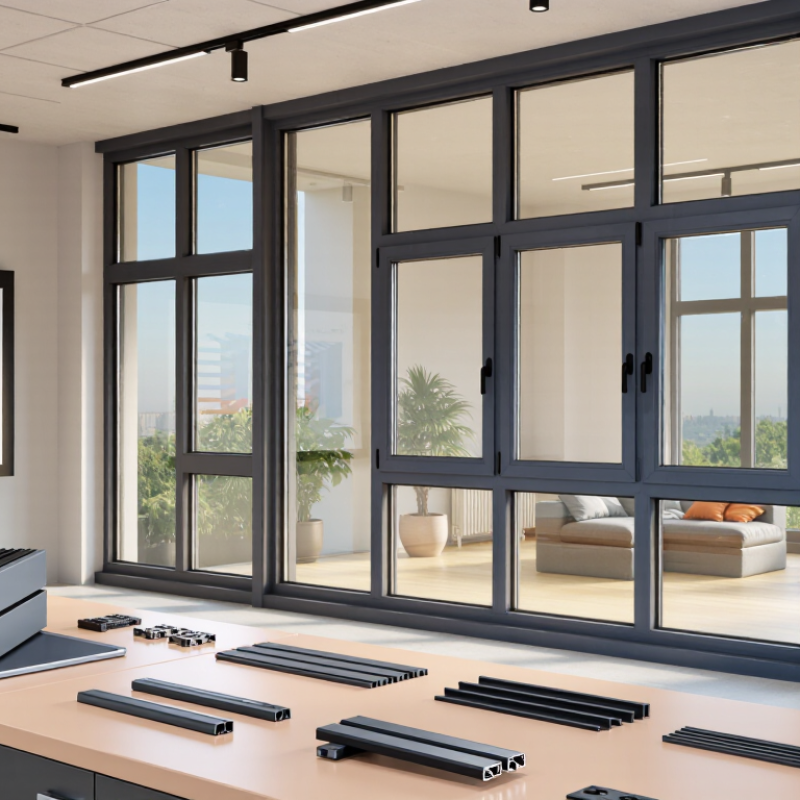
Thermal break aluminum system windows use an insulating barrier between the inner and outer aluminum sections. This barrier reduces heat transfer through the frame. It also limits interior condensation during cold weather. Unlike basic aluminum frames, the system separates structural strength from thermal performance. Polyamide strips are commonly used because they resist heat and maintain dimensional stability.
Key features include multi-chamber profiles, insulated glazing, continuous gaskets, and controlled drainage paths. Low-e glass can improve comfort, but the complete window matters more than one component. Frame depth, glass thickness, spacer quality, and installation accuracy affect real results. A poorly sealed joint can waste the benefits of an advanced profile. Thermal expansion also deserves attention, especially on large south-facing windows.
Tips: Check the whole system, not only the advertised U-value. Ask for tested air leakage, water resistance, and thermal performance data. Inspect corner joints and gasket compression before installation. A certified installer should follow the manufacturer’s drainage and anchoring details. No window is perfect. Even a strong design may perform poorly when measurements are rushed or site conditions are ignored. הממשלה
2026 Top Thermal Break Aluminum System Windows Manufacturers
How Thermal Break Aluminum Windows Work
Thermal break aluminum windows use two aluminum sections separated by an insulating polyamide strip. Aluminum remains strong and slim, but it conducts heat quickly. The thermal barrier interrupts that path between the indoor and outdoor frame surfaces.
In winter, indoor heat meets the colder outer frame. The insulated strip slows this transfer and helps keep the interior frame warmer. In summer, it limits heat entering from sun-heated aluminum. The result can be a more stable room temperature and reduced condensation risk around the frame.
The barrier is only one part of the system. Glass type, seals, drainage, hardware, and installation quality also affect performance. A poorly fitted window can leak air beside an excellent thermal break. Small gaps matter.
On site, installers must keep the frame square and protect the insulation from damage. They also need continuous seals at corners and opening sections. This detail is easy to underestimate. Even strong designs can perform poorly when the surrounding wall connection is weak.
Thermal performance should be checked through documented testing, not appearance alone. U-values, air leakage, water resistance, and solar control provide more reliable evidence. Specifications can look impressive. Real buildings are less forgiving.
Thermal-break aluminum windows reduce heat transfer by separating the highly conductive aluminum frame with low-conductivity polyamide insulation strips. The chart uses representative thermal-conductivity values at approximately 20°C; actual values vary by alloy, formulation, temperature, and test method.
Thermal break window systems separate interior and exterior aluminum with an insulating barrier. The main types include polyamide-strip, poured-and-debridged, and insulated multi-chamber profiles. Polyamide systems suit large façades and high-rise windows because their rigid barriers support narrow sightlines. Poured systems work well for residential replacements and moderate commercial openings. Multi-chamber profiles can improve insulation, but they often require deeper frames. According to the U.S. Department of Energy, windows may account for 25–30% of household heating and cooling energy use. That figure makes frame design more than an appearance choice.
Applications vary by climate and building function. Residential projects often prioritize airtightness, acoustic comfort, and manageable maintenance. Curtain walls need thermal continuity across mullions, transoms, anchors, and spandrel zones. Passive and low-energy buildings usually demand low U-values, warm-edge glazing, and carefully tested air leakage. The International Energy Agency reports that buildings consume about 30% of global final energy. Better windows cannot solve building inefficiency alone. I would not specify a system from frame data only. Glass selection and installation can change the real result.
Tips: Check whole-window U-value, not just the aluminum profile. Request independent test reports for air, water, wind, and condensation resistance. Inspect corner joints and drainage paths on site. A strong thermal break can still underperform with poor shimming or compressed seals. This is where specifications often become too optimistic. Choose certified fabricators, review local climate exposure, and test representative window sizes before approving production.
Evaluating a thermal break aluminum window manufacturer requires more than reviewing product photographs. Check the company’s documented experience with residential, commercial, and high-rise projects. Ask for project records, installation dates, and climate conditions. Real performance depends on design, fabrication, and installation together.
Examine the thermal barrier material, profile geometry, corner connections, and drainage paths. Reliable manufacturers should provide thermal transmittance data from recognized testing laboratories. Request air infiltration, water penetration, wind-load, and sound-control results. Confirm that testing reflects the actual window configuration, not only a laboratory sample. Small details matter.
Review factory quality controls, including aluminum inspection, extrusion consistency, coating thickness, and assembly tolerances. A useful audit should include production photographs, calibration records, and sample inspections. Speak with contractors about packaging, delivery accuracy, technical support, and replacement procedures. Service matters too.
No factory is flawless. A supplier that openly explains failed tests may deserve more trust than one offering perfect claims. I would also compare warranty language carefully, especially exclusions for glass, hardware, finishes, and installation. Certification is valuable, but it cannot replace independent judgment.
Ask difficult questions. Then verify the answers.
The 2026 thermal break aluminum system window market is becoming more performance-driven. Buyers now compare insulation, air tightness, water resistance, acoustic control, and installation support. A thermal break usually uses reinforced polyamide strips between interior and exterior aluminum profiles. This reduces heat transfer through the frame. However, frame performance depends on glazing, gaskets, drainage, and installation quality.
Leading manufacturers generally fall into several categories. Integrated system manufacturers develop profiles, hardware, seals, and testing programs together. Profile extruders focus on accurate aluminum shapes and consistent thermal barrier assembly. Window fabricators convert these systems into finished units for residential and commercial projects. Engineering specialists often serve demanding façades, large openings, or unusual ventilation requirements. Custom project suppliers can adapt colors, dimensions, and glass specifications, but their quality may vary between production batches. No category is perfect. A polished catalog cannot replace verified test reports and factory inspection.
Tips: Request air, water, structural, and thermal test data for the exact configuration. Check the polyamide width, glass package, corner joints, and drainage details. Ask how the supplier controls profile tolerances and replacement parts. Inspect one sample corner before approving a large order. A low quoted price may hide weaker hardware, longer lead times, or costly site adjustments. Local climate and building codes should guide the final specification, not marketing language.
„Thanks to the LUVIR technology, the solder resist process could be switched directly from the previously used mask exposure to direct exposure. As an outstanding digital solution on the market, this technology has been able to demonstrate fast process times and superior quality on our certified conventional ink in production. This allowed us to fully digitize the solder mask process at low cost – without process or ink adjustments. An excellent benefit to our production in Rot am See.“
Ralf Göhringer (Head of Production WE Rot am See)
I would definitely recommend the Limata machine and team for a future company purchase
Michael Greenaway
Compunetics Inc.
“The Limata ldi has been amazing!! Best thing we did was buy this machine”
Richard Brady
GM
Circuitlabs
“Since 2019, we have been running the Limata X1000 LDI system (including LUVIR for solder mask imaging) in daily production as an addition to our current process with film. The machine was capable of properly exposing Taiyo PSR-4000 BN (DI) solder mask types on normal to high-copper boards using a new and unique direct imaging process. The machine operating interface is very user friendly which allowed for a quick technical training curve. The pre-registration processing reduced several seconds of production time at every print. Limata support and service staff is incomparable. They supported our team every step of the way at basically any time of the day or night, with literally, an immediate response time, customizing the software interface to best fit our Operations and needs.
We have exposed more than 8,000 prints since end of October, on various solder mask colors and some resist film panels. Limata, has proven to be very capable and innovative. They are a strong contender in the industry.
We have very much enjoyed this project, and working with the team!
Thank you Limata for the continued support and being a part of our growth.”
Bill Sezate
Vice President, GM
Summit Interconnect
As a replacement to our current contact exposure process with film, the LIMATA X2000 system including LUVIR-Technology was capable of properly exposing non-LDI solder mask types using a direct imaging process. The machine offers cutting edge software with a very intuitive operating interface which allowed for quick technician training curve. The dual drawer system combined with pre-registration processing reduced several seconds of production time at every machine cycle. Limata support and service staff is world class. They added software patches to keep production running at shortest possible response times, customized the software interface to best fit our in-house Operations system, and even wrote a step-by-step machine processing manual. As a result of the project, we have exposed more than 16,000 times on various product types and solder mask brands/colors. Limata, in a very short timeframe as a company, has definitely shown they are truly innovative and will be challenging the industry of direct imaging for the top spot.
Kevin Beattie
Process Engineer
TTM Technologies
Forest Grove Division
