The Tray Forming Hydraulic Press is pivotal in various manufacturing processes. As industries strive for efficiency, this equipment offers significant advantages. Its hydraulic mechanism enhances precision and speed, which is critical in high-demand environments. When exploring the 2026 top insights on this technology, we find factors that could impact the industry.
Manufacturers benefit from the durability and reliability of Tray Forming Hydraulic Press systems. They optimize material usage and reduce waste, aligning with sustainability goals. However, one must consider the initial investment and upkeep costs. These aspects can lead to financial challenges for small businesses.
Additionally, while the technology improves production, it's essential to revisit operational methods. Continuous assessment can highlight areas needing improvement. Engaging with user experiences can shed light on practical benefits and hurdles faced in real-world applications. This balanced exploration connects theoretical insights with hands-on knowledge, paving the way for informed decisions.
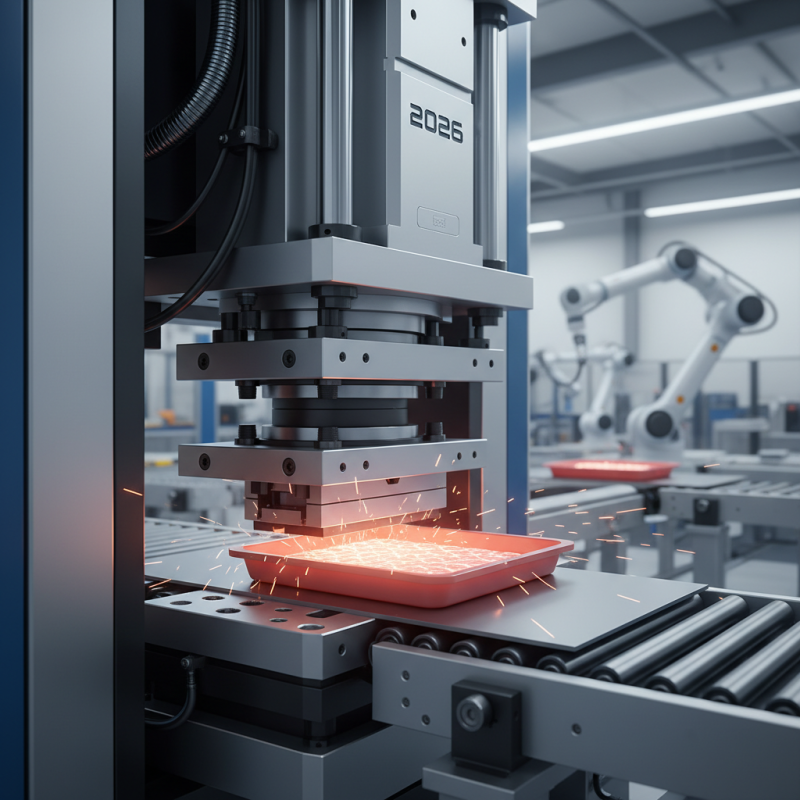
Tray forming hydraulic presses are vital in various industries. This technology effectively shapes materials, ensuring precise dimensions and consistent quality. Operators benefit from enhanced efficiency and reduced manual labor. The automated processes allow for higher production rates. These machines provide flexibility in handling different materials and shapes.
When considering a tray forming hydraulic press, remember to assess your specific needs. Not every press suits every application. Choose a model that fits your production requirements. Regular maintenance is essential for optimal performance. Neglecting upkeep can lead to operational failures.
The integration of advanced technologies in these presses has transformed how manufacturers approach production. Features like digital controls and real-time monitoring enhance accuracy. However, it’s crucial to train staff adequately on these systems. Poor training can lead to mistakes that impact productivity. Always evaluate training protocols alongside technology upgrades.
The 2026 Top Tray Forming Hydraulic Press is set to revolutionize packaging processes across various industries. Its key features stand out in a crowded market. This hydraulic press boasts a compact design, maximizing space while ensuring high output efficiency. According to industry reports, machines in this category can improve production rates by 30%. This increase is crucial in today’s fast-paced manufacturing environments where time is money.
Enhanced control systems are another notable aspect. The integration of advanced sensors allows for precise adjustments during operation. This capability not only boosts accuracy but also minimizes material waste. Research indicates that reducing waste by even 10% can result in significant cost savings over time. Additionally, maintenance needs are simplified due to improved accessibility. Users can expect reduced downtime, addressing a common challenge in machine operations.
Moreover, the machine’s energy efficiency is a significant advantage. Data from recent analyses show that modern hydraulic presses consume up to 40% less energy compared to their predecessors. This not only lowers operational costs but also aligns with sustainability goals in production. In a world increasingly focused on eco-friendly practices, such features highlight the pressing need for innovation in manufacturing equipment. As industries continue to evolve, these insights suggest that investing in such technology is not just wise but necessary.
In the manufacturing industry, the tray forming hydraulic press stands out for its efficiency. This equipment shapes materials into precise forms. It enhances production speed and consistency. Companies often notice significant time savings when integrating such presses. Faster production cycles lead to higher output rates.
The benefits extend beyond mere speed. Using a hydraulic press reduces material waste. It can create trays with intricate designs. These presses also provide uniform pressure, ensuring that each item is molded correctly. However, manufacturers must watch for maintenance needs. Regular checks are essential for optimal performance. Pressure inconsistencies can lead to defects in the final product.
Moreover, the energy consumption of hydraulic presses should be evaluated. While efficient, older models may consume more power than necessary. Upgrading to newer technology can offer better energy management. This accounts for both economic and environmental impacts. Reflection on these aspects helps manufacturers optimize their production lines effectively.
The tray forming hydraulic press has found extensive applications across various industries. In packaging, for instance, it plays a crucial role in creating trays needed for food and pharmaceuticals. The global packaging market is projected to reach $1 trillion by 2026. This means the demand for effective tray forming solutions will only increase.
Automotive manufacturing is another key area. Here, the hydraulic press forms intricate parts, contributing to vehicle efficiency. The automotive sector accounts for about 4.5% of global GDP. Consequently, optimizing production processes with advanced hydraulic technology can lead to significant cost reductions.
Challenges exist in the adoption of these machines. Some facilities may require extensive training for operators. Safety protocols must also be reinforced to ensure a secure working environment. Investment in skilled personnel and ongoing maintenance is crucial. Yet, companies often overlook these aspects. Addressing these needs can enhance productivity and reduce downtime, ensuring the benefits of hydraulic presses are fully realized.
| Industry | Application | Benefits | Impact on Production |
|---|---|---|---|
| Food Packaging | Tray forming for ready meals | Improved efficiency and hygiene | Increased throughput by 30% |
| Electronics | Custom trays for components | Enhanced product protection | Reduced damage during shipping |
| Pharmaceuticals | Tray forming for vials and ampoules | Compliance with health regulations | Streamlined packing processes |
| Cosmetics | Retail display trays | Attractive presentation | Increased customer engagement |
| Automotive | Component holding trays | Optimized assembly line operations | Higher production stability |
The future of tray forming hydraulic press design is quite promising. As industries push for greater efficiency, attention turns to innovative designs. Recent reports indicate that automation in manufacturing processes is expected to rise by 25% by 2026. This shift helps reduce labor costs while improving output quality. With advanced sensors, engineers can monitor real-time performance, leading to fewer errors.
Efficiency is taking center stage. Hydraulic presses are becoming increasingly energy-efficient, with a reported reduction in energy consumption of up to 30%. This is important not only for cost savings but also for environmental sustainability. The integration of smart technology allows for adaptive pressure regulation, which fine-tunes energy usage based on specific job requirements. A report from Industry Research states that these advancements can lead to a 20% reduction in operational costs.
Tip: Invest in equipment that includes smart features. This can significantly optimize your production line. Regular maintenance is essential too. Automation requires oversight and attention, which can sometimes be overlooked. Small adjustments in setup can yield large benefits. Embrace the trends, but stay vigilant about their applications.
„Thanks to the LUVIR technology, the solder resist process could be switched directly from the previously used mask exposure to direct exposure. As an outstanding digital solution on the market, this technology has been able to demonstrate fast process times and superior quality on our certified conventional ink in production. This allowed us to fully digitize the solder mask process at low cost – without process or ink adjustments. An excellent benefit to our production in Rot am See.“
Ralf Göhringer (Head of Production WE Rot am See)
I would definitely recommend the Limata machine and team for a future company purchase
Michael Greenaway
Compunetics Inc.
“The Limata ldi has been amazing!! Best thing we did was buy this machine”
Richard Brady
GM
Circuitlabs
“Since 2019, we have been running the Limata X1000 LDI system (including LUVIR for solder mask imaging) in daily production as an addition to our current process with film. The machine was capable of properly exposing Taiyo PSR-4000 BN (DI) solder mask types on normal to high-copper boards using a new and unique direct imaging process. The machine operating interface is very user friendly which allowed for a quick technical training curve. The pre-registration processing reduced several seconds of production time at every print. Limata support and service staff is incomparable. They supported our team every step of the way at basically any time of the day or night, with literally, an immediate response time, customizing the software interface to best fit our Operations and needs.
We have exposed more than 8,000 prints since end of October, on various solder mask colors and some resist film panels. Limata, has proven to be very capable and innovative. They are a strong contender in the industry.
We have very much enjoyed this project, and working with the team!
Thank you Limata for the continued support and being a part of our growth.”
Bill Sezate
Vice President, GM
Summit Interconnect
As a replacement to our current contact exposure process with film, the LIMATA X2000 system including LUVIR-Technology was capable of properly exposing non-LDI solder mask types using a direct imaging process. The machine offers cutting edge software with a very intuitive operating interface which allowed for quick technician training curve. The dual drawer system combined with pre-registration processing reduced several seconds of production time at every machine cycle. Limata support and service staff is world class. They added software patches to keep production running at shortest possible response times, customized the software interface to best fit our in-house Operations system, and even wrote a step-by-step machine processing manual. As a result of the project, we have exposed more than 16,000 times on various product types and solder mask brands/colors. Limata, in a very short timeframe as a company, has definitely shown they are truly innovative and will be challenging the industry of direct imaging for the top spot.
Kevin Beattie
Process Engineer
TTM Technologies
Forest Grove Division
