The automotive industry in China is witnessing a transformation with advanced technologies like 3d Wheel Alignment. This system enhances precision in vehicle maintenance. Many workshops are adopting this technique, but not all are fully trained.
3D wheel alignment involves complex measurements and recalibrations. It requires skilled technicians and proper equipment. Yet, some technicians overlook essential steps. This can lead to inaccurate alignments, which might affect vehicle performance.
In 2026, the importance of 3D wheel alignment will continue to grow. Car owners seek reliability and safety. Technicians must embrace continuous learning. There is still room for improvement in training programs. Balancing technology and human skill is crucial in the future of vehicle maintenance.
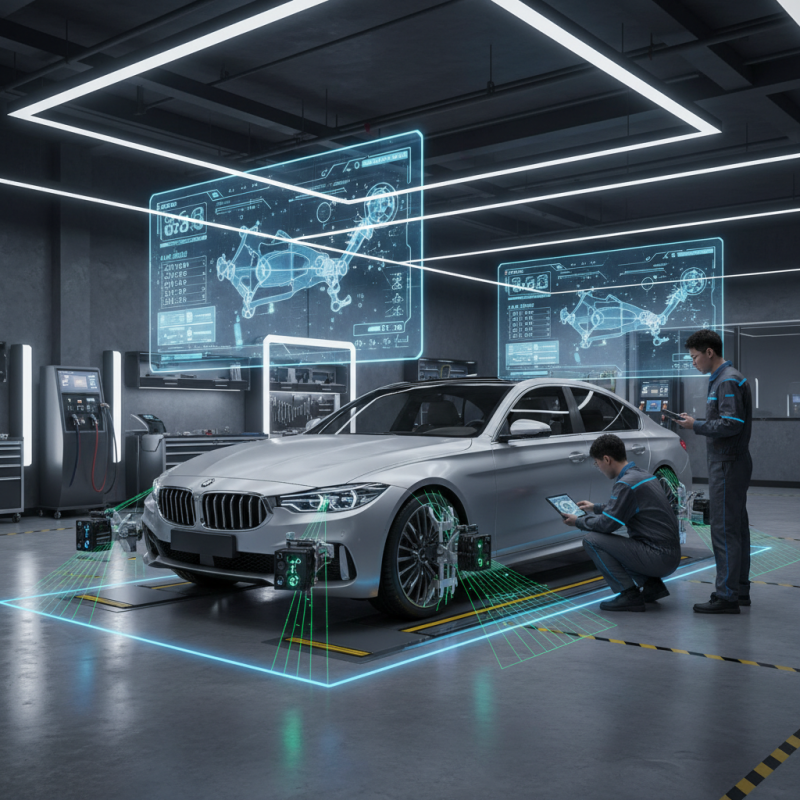
In 2026, 3D wheel alignment technology continues to evolve rapidly. This method uses advanced laser measurement systems. These systems accurately assess wheel angles in real-time. Calibration is faster, making the process more efficient. As vehicles become more complex, 3D alignment becomes essential.
Tips: Regular checks are crucial. Many drivers underestimate alignment issues. Small discrepancies can lead to uneven tire wear. This, in turn, affects handling and safety.
Moreover, not all service centers may have the latest equipment. Some may still rely on outdated methods. This can lead to inaccuracies. It’s important to choose a service that invests in technology. Ask about their equipment before scheduling.
In 2026, expect a rise in mobile services. Technicians may provide alignment services at your home or work. This saves time and offers convenience. However, ensure they use high-quality equipment. Poor alignment can lead to costly repairs later on.
3D wheel alignment offers significant benefits for vehicle performance. Proper alignment ensures that tires wear evenly, leading to savings on tire replacements. According to a recent industry report, misalignment can reduce fuel efficiency by up to 10%. That's a high cost for many drivers.
Not only does alignment impact fuel economy, but it also affects handling. Vehicles that are misaligned often pull to one side, creating a safety risk for drivers. A well-aligned vehicle provides a smoother ride and improves overall control. It is essential for long-distance travel, especially on China's varied road conditions.
Regular alignment checks can save money in the long run. A small investment can prevent bigger issues down the line. Data suggests that misalignment influences the lifespan of other suspension components as well. Ignoring these checks might lead to unexpected repair costs. Investing in 3D wheel alignment is a step every vehicle owner should consider.
The 3D wheel alignment market in China is rapidly evolving. In 2026, the emphasis will be on precision and efficiency. Industry reports indicate that demand for 3D wheel alignment systems will grow by approximately 10% annually. This growth is driven by increasing vehicle ownership and a rising awareness of vehicle safety among consumers.
Key players in the market are investing heavily in technology. Many are focusing on enhancing the accuracy of alignment systems. However, challenges remain, such as the high cost of advanced equipment. Several smaller workshops may struggle to keep up with these advancements. Unaffordable technology can create gaps in service quality across different regions.
Despite technological advancements, training remains a critical issue. Many technicians lack adequate skills to operate sophisticated systems. This inadequacy can lead to misalignment, affecting vehicle performance. As the industry grows, addressing such skills gaps will be crucial for sustainment. Balancing technology investment with proper training is essential for long-term success in the 3D wheel alignment sector.
In China, the importance of proper wheel alignment can't be overstated. As vehicle ownership rises, so does the need for precise alignment. Regulatory standards are evolving. They focus on safety, emissions, and vehicle performance. Misalignment can lead to uneven tire wear and reduced fuel efficiency. This is critical in urban areas where traffic congestion is high.
Current guidelines emphasize regular inspections. Technicians must be trained to current standards. They should use updated tools and technologies. Some shops still rely on outdated equipment. This can lead to inaccurate assessments. Customers often notice the difference. Feedback reveals that many are unaware of alignment issues until it's too late.
Moreover, new regulations may require certification for workshops. This shift aims to enhance public trust. Quality assurances are essential. However, some businesses may struggle to comply. It's a challenge that requires attention. As the industry adjusts, the focus should remain on transparency and service excellence.
The future of 3D wheel alignment solutions in China is poised for significant changes by 2026. With the rise of electric vehicles and autonomous driving, alignment technology will need to adapt. Sensors and software integration will become more sophisticated. These advancements can enhance accuracy and efficiency. However, complexity may also increase.
Workshops may face challenges in adapting to this new technology. Training staff on advanced systems will be crucial. Many workshops might hesitate to invest in expensive equipment. As a result, some may lag behind. This could create disparity in service quality. In parallel, the demand for skilled technicians will rise. Employers will need to offer competitive incentives to attract talent.
The emphasis on eco-friendly practices will redefine the industry. Environmentally sustainable materials may be prioritized. However, this shift could pose initial hurdles, like cost and availability. Ensuring compatibility with existing systems will also require careful planning. Balancing innovation with practicality will be essential. Stakeholders must remain vigilant about the fast-paced changes ahead.
„Thanks to the LUVIR technology, the solder resist process could be switched directly from the previously used mask exposure to direct exposure. As an outstanding digital solution on the market, this technology has been able to demonstrate fast process times and superior quality on our certified conventional ink in production. This allowed us to fully digitize the solder mask process at low cost – without process or ink adjustments. An excellent benefit to our production in Rot am See.“
Ralf Göhringer (Head of Production WE Rot am See)
I would definitely recommend the Limata machine and team for a future company purchase
Michael Greenaway
Compunetics Inc.
“The Limata ldi has been amazing!! Best thing we did was buy this machine”
Richard Brady
GM
Circuitlabs
“Since 2019, we have been running the Limata X1000 LDI system (including LUVIR for solder mask imaging) in daily production as an addition to our current process with film. The machine was capable of properly exposing Taiyo PSR-4000 BN (DI) solder mask types on normal to high-copper boards using a new and unique direct imaging process. The machine operating interface is very user friendly which allowed for a quick technical training curve. The pre-registration processing reduced several seconds of production time at every print. Limata support and service staff is incomparable. They supported our team every step of the way at basically any time of the day or night, with literally, an immediate response time, customizing the software interface to best fit our Operations and needs.
We have exposed more than 8,000 prints since end of October, on various solder mask colors and some resist film panels. Limata, has proven to be very capable and innovative. They are a strong contender in the industry.
We have very much enjoyed this project, and working with the team!
Thank you Limata for the continued support and being a part of our growth.”
Bill Sezate
Vice President, GM
Summit Interconnect
As a replacement to our current contact exposure process with film, the LIMATA X2000 system including LUVIR-Technology was capable of properly exposing non-LDI solder mask types using a direct imaging process. The machine offers cutting edge software with a very intuitive operating interface which allowed for quick technician training curve. The dual drawer system combined with pre-registration processing reduced several seconds of production time at every machine cycle. Limata support and service staff is world class. They added software patches to keep production running at shortest possible response times, customized the software interface to best fit our in-house Operations system, and even wrote a step-by-step machine processing manual. As a result of the project, we have exposed more than 16,000 times on various product types and solder mask brands/colors. Limata, in a very short timeframe as a company, has definitely shown they are truly innovative and will be challenging the industry of direct imaging for the top spot.
Kevin Beattie
Process Engineer
TTM Technologies
Forest Grove Division
