Choosing the right Tray Ladder Rack can affect safety, loading speed, and daily vehicle performance. Global buyers often compare capacity, tray dimensions, mounting systems, materials, and supplier support. A rack that works well on one service van may not fit another vehicle. Small differences matter.
This guide reviews seven leading options for different commercial needs. Each model is considered through practical buying factors, including construction quality, ladder access, corrosion resistance, installation requirements, and load stability. Clear product specifications and reliable manufacturer documentation deserve serious attention. So does after-sales support. A competitive price means little when replacement parts are difficult to source.
Real-world use reveals details that brochures sometimes miss. A powder-coated steel frame may feel extremely solid, yet add noticeable roof weight. An aluminum design may reduce weight, but require careful inspection around joints and fasteners. Nothing is perfect. Even experienced buyers can overlook wind noise, clearance limits, or awkward loading angles.
The selections are intended to support informed international purchasing decisions. Buyers should confirm vehicle compatibility, local transport rules, warranty terms, and available installation expertise before ordering. Product performance can also change with climate, road conditions, and maintenance habits. These seven racks offer useful starting points, not automatic answers. The best choice depends on the vehicle, workload, budget, and confidence in the supplier.
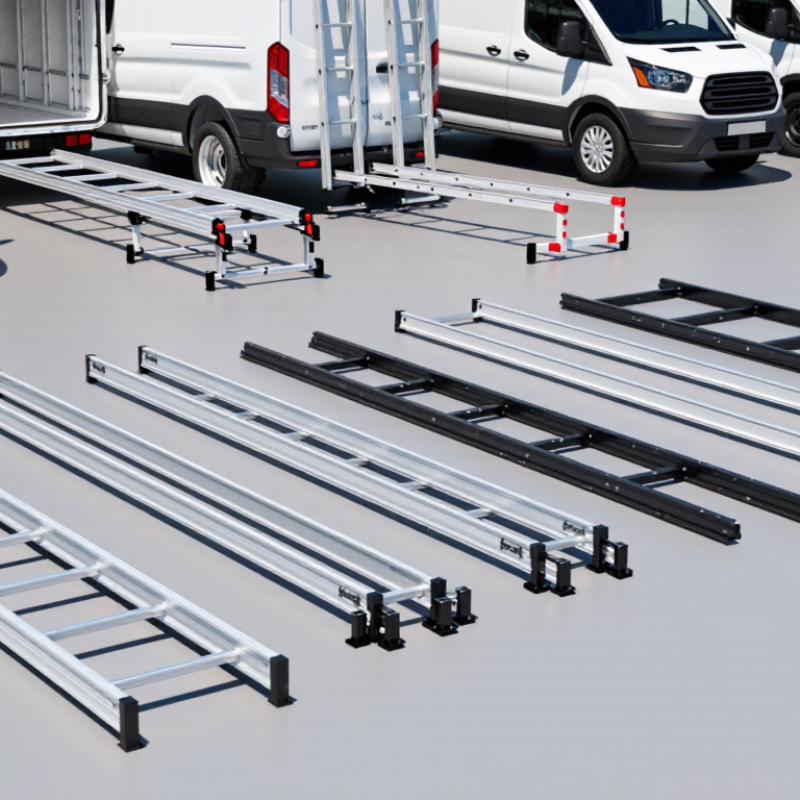
A tray ladder rack is a vehicle-mounted support system for carrying ladders above or beside a service vehicle. Its tray, usually formed from steel or aluminum, cradles the ladder rails and reduces direct contact with the vehicle roof. Clamps, straps, or locking arms hold the load during braking, turning, and uneven travel. The rack transfers weight into reinforced mounting points, not fragile body panels.
The working process is simple. Place the closed ladder into the tray, center its weight, and secure both ends. A raised side rail prevents sideways movement. Rubber contact pads can reduce vibration, scratches, and rattling. The U.S. Bureau of Labor Statistics reported 885 fatal occupational injuries involving falls, slips, and trips in 2023. That figure does not prove a rack caused any incident, but it shows why secure access equipment matters. The National Institute for Occupational Safety and Health also recommends inspecting ladders before use and maintaining stable contact points.
Global buyers should compare payload ratings, tray width, corrosion protection, mounting compatibility, and replacement hardware. Check the complete system rating, not only the ladder’s weight. Wind resistance matters too, especially on tall vans and open highways. A heavier rack is not automatically safer. It may increase roof stress and reduce fuel efficiency. In practice, installation quality can matter as much as the rack design. I would still recheck fasteners after the first few trips. Small movement often reveals a problem early. Manufacturer instructions, local vehicle limits, and regional workplace rules should guide the final selection.
Global buyers should compare ladder racks by real working conditions, not appearance. Start with load capacity, but check whether the rating applies while driving. A rack carrying several wet ladders needs a safer margin. Measure the tray, roof width, mounting points, and ladder length before ordering. Small size errors can create expensive installation problems.
Material matters in coastal or humid regions. Powder-coated steel may offer strength, while aluminum can reduce vehicle weight and corrosion risk. Ask for coating details, weld quality, fastener grade, and drainage design. Sharp edges should be covered. They can damage ladders and injure installers. Test whether the rack stays stable during braking, cornering, and strong crosswinds. A quiet rack is not always a secure rack.
Check compatibility with local vehicles and available tools. Metric and imperial measurements can cause confusion. Clear drawings, torque instructions, replacement parts, and verified load tests show stronger technical reliability. Independent certification is useful when available, but paperwork alone cannot replace a practical fit check. Installation time also affects total cost, especially for fleet operators. A rack that needs two workers and special tools may become inefficient. One overlooked detail is access to the vehicle roof after installation. Users still need room to load safely. No comparison is perfect. Recheck claims against actual roads, weather, and daily handling before purchase.
7 Best Tray Ladder Racks for Global Buyers
Seven Leading Tray Ladder Rack Options by Use Case
Choosing a tray ladder rack should begin with the vehicle, load, and work environment. OSHA, citing CDC/NIOSH research, reports that ladders cause about 20% of workplace fall injuries and 43% of fatal falls. Secure transport matters.
For compact vans, a low-profile single-bar rack reduces height and parking conflicts. Pickup owners may prefer a tray-mounted dual-bar rack for longer extension ladders. Flatbed trucks need wide-load trays with reinforced feet and distributed weight. High-roof vans suit raised systems that preserve interior storage. Side-access racks help technicians reach ladders without climbing onto the vehicle. Heavy-duty contractors need steel trays, locking supports, and tested load ratings. Coastal or wet-region buyers should consider aluminum or corrosion-resistant finishes.
Small details matter. Rubber contact pads can reduce vibration and paint damage. Mechanical locks are preferable to improvised straps. Poorly matched hardware remains a common failure point. It is easy to trust a published capacity, yet the vehicle roof limit may be lower. Check both figures.
The International Organization for Standardization emphasizes risk assessment, traceability, and documented equipment controls in occupational safety management. Buyers should request installation instructions, corrosion testing, and independent load verification. A rack that fits beautifully may still perform poorly when wind, uneven roads, and repeated loading are ignored. Field testing is useful, but my own preference is conservative: leave capacity unused.
Choosing among the seven best tray ladder racks requires more than comparing prices. The strongest options include fixed steel, lightweight aluminum, folding, adjustable-width, side-loading, lockable, and modular designs. Each suits different vehicles, ladder sizes, and work routines. Verify the vehicle’s roof limit and the rack’s dynamic load rating before purchase. Never treat static capacity as a driving allowance. A fully loaded rack can shift during braking, especially on uneven roads.
Compatibility deserves careful measurement. Check roof length, mounting points, tray width, crossbar spacing, and clearance above doors. A rack may fit physically but still block antennas, vents, or emergency equipment. Installation should use the supplied hardware, correct torque, and suitable backing plates. Drilling may weaken a roof if performed carelessly. Some vehicles also need professional fitting because roof structures differ between markets. Local transport rules, lighting requirements, and maximum vehicle height can vary widely. Confirm them before shipment or installation.
Tips: Place the ladder evenly across the tray, with padded contact points. Use rated straps, not improvised rope. Recheck every fastener after the first journey. Inspect welds, clamps, and corrosion monthly. I once overlooked door clearance during a trial fitting; the rack passed a stationary check but interfered when the door opened. That small mistake changed the installation plan. Safety testing should include real movement, not only a workshop inspection.
7 Best Tray Ladder Racks for Global Buyers?
International purchasing requires more than comparing load ratings and prices. Experienced buyers check tray length, mounting points, vehicle compatibility, and corrosion protection before placing an order. A rack may fit one van model but require drilling on another. That detail can change installation costs quickly. Request dimensioned drawings, packed measurements, gross weight, and clear photos of brackets. Ask whether the rack ships assembled or flat-packed. Flat packing may reduce freight costs, but it can increase assembly time and mistakes.
Shipping terms also deserve careful attention. Confirm the agreed Incoterm, export documents, insurance responsibility, and destination delivery charges in writing. Wooden packaging may need approved treatment and supporting documentation. Measure the crate before booking freight. A few extra centimeters can move cargo into a higher rate category. Sea freight often costs less, while air freight suits urgent replacement parts. Neither option is automatically better. Customs delays remain possible, even when paperwork appears complete.
After-sales support separates a dependable supplier from a risky purchase. Request a written warranty, installation guide, spare-part list, and response-time commitment. Ask how damaged brackets or missing fasteners will be handled across borders. Keep photos of the package before opening it. This helps resolve transport claims. A local installer can check torque, alignment, and roof clearance. Still, remote guidance has limits. One mistake I still see is choosing the lowest purchase price, then discovering that replacement parts are unavailable locally. A careful buyer evaluates the whole ownership cost, not only the invoice.
| Rank | Tray Ladder Rack Type | Best Use | Typical Tray Capacity | Common Vehicle Fit | Main Construction | Approx. Rack Weight | Typical External Size | Indicative Load Rating | Shipping Considerations | After-Sales Priorities | Overall Suitability |
|---|---|---|---|---|---|---|---|---|---|---|---|
| 1 | Heavy-Duty Full-Length Tray Rack | Frequent transport of extension ladders, long boards, pipes, and construction materials | 2–4 ladders or mixed long-load cargo | Full-size pickup trucks, chassis cabs, and long-wheelbase utility vehicles | Powder-coated steel or high-strength aluminum with reinforced crossbars | 45–75 kg (99–165 lb) | 1.8–2.4 m long × 1.4–1.8 m wide × 0.35–0.55 m high | 150–300 kg dynamic load; higher static ratings may apply | Large and heavy cartons; ocean freight is usually more economical than air freight. Confirm pallet dimensions and corrosion protection. | Replacement clamps, end caps, fasteners, installation drawings, and spare crossbars should be available. | ★★★★★ |
| 2 | Lightweight Aluminum Tray Rack | Commercial fleets seeking lower vehicle weight and improved corrosion resistance | 1–3 ladders or light construction materials | Pickup trucks, vans, and utility vehicles with factory or aftermarket mounting points | Extruded aluminum rails with stainless-steel or coated-steel hardware | 22–40 kg (49–88 lb) | 1.6–2.2 m long × 1.2–1.7 m wide × 0.30–0.50 m high | 100–200 kg dynamic load, depending on mounting structure | Lower freight weight than steel versions; protect aluminum surfaces from abrasion during container or pallet transport. | Check hardware compatibility, galvanic-corrosion protection, replacement brackets, and torque specifications. | ★★★★★ |
| 3 | Universal Adjustable Tray Rack | Importers serving several vehicle models or mixed regional markets | 1–3 ladders with adjustable support spacing | Selected pickups, vans, and flatbed utility vehicles with adjustable mounting positions | Modular steel or aluminum uprights with slotted crossbars | 30–55 kg (66–121 lb) | 1.5–2.3 m long × 1.1–1.8 m wide × 0.30–0.60 m high | 100–250 kg dynamic load, subject to vehicle mounting points | More components reduce packing density and increase assembly time. Request a complete parts list and carton count. | Prioritize multilingual manuals, replacement adjustment hardware, fitment charts, and online installation support. | ★★★★☆ |
| 4 | Low-Profile Cab-Over Tray Rack | Urban delivery vehicles where reduced height and easier loading are important | 1–2 ladders or shorter long-load items | Compact vans, cab-over vans, and small commercial vehicles | Formed aluminum or coated steel with low-height support legs | 18–35 kg (40–77 lb) | 1.4–2.0 m long × 1.1–1.6 m wide × 0.20–0.40 m high | 75–150 kg dynamic load | Compact cartons simplify parcel or LCL shipping. Confirm the packed height to avoid dimensional-weight surcharges. | Verify roof-clearance guidance, replacement feet, mounting seals, and instructions for drilling or no-drill installation. | ★★★★☆ |
| 5 | Removable Clamp-Mount Tray Rack | Seasonal users and rental fleets needing rapid installation and removal | 1–2 ladders or occasional long-load cargo | Vehicles with compatible roof rails, bed rails, or approved clamping surfaces | Aluminum crossbars with adjustable clamps and protective rubber interfaces | 15–30 kg (33–66 lb) | 1.3–2.0 m long × 1.0–1.6 m wide × 0.20–0.45 m high | 60–150 kg dynamic load | Usually efficient for parcel export, but clamp sets should be packed separately to prevent scratches and deformation. | Replacement pads, clamp bolts, locking parts, fitment templates, and clear load-limit labeling are essential. | ★★★★☆ |
| 6 | Lockable Security Tray Rack | Contractors and fleets operating in public areas or overnight job sites | 1–3 ladders with lockable retention points | Medium and full-size pickups, vans, and service bodies | Powder-coated steel or aluminum with stainless locking hardware | 30–60 kg (66–132 lb) | 1.5–2.3 m long × 1.2–1.8 m wide × 0.30–0.60 m high | 100–250 kg dynamic load | Locks and moving parts require moisture-resistant packaging. Confirm customs descriptions for metal hardware and locking components. | Replacement keys or cylinders, lock lubrication guidance, anti-theft instructions, and corrosion warranty terms should be documented. | ★★★★☆ |
| 7 | Heavy-Duty Flatbed Utility Rack | Flatbed trucks, service bodies, agricultural vehicles, and oversized cargo | 2–5 ladders or multiple long-load items | Flatbeds, service trucks, chassis cabs, and specialty utility vehicles | Structural steel tubing with galvanized or industrial powder-coated finish | 55–100 kg (121–220 lb) | 1.8–2.6 m long × 1.5–2.2 m wide × 0.40–0.80 m high | 200–400 kg dynamic load, depending on frame and mounting design | Often shipped knocked down on pallets. Confirm lifting requirements, container utilization, rust-prevention treatment, and local import duties. | Require weld-quality documentation, replacement legs, mounting plates, touch-up coating, and a defined claims process for transit damage. | ★★★★☆ |
„Thanks to the LUVIR technology, the solder resist process could be switched directly from the previously used mask exposure to direct exposure. As an outstanding digital solution on the market, this technology has been able to demonstrate fast process times and superior quality on our certified conventional ink in production. This allowed us to fully digitize the solder mask process at low cost – without process or ink adjustments. An excellent benefit to our production in Rot am See.“
Ralf Göhringer (Head of Production WE Rot am See)
I would definitely recommend the Limata machine and team for a future company purchase
Michael Greenaway
Compunetics Inc.
“The Limata ldi has been amazing!! Best thing we did was buy this machine”
Richard Brady
GM
Circuitlabs
“Since 2019, we have been running the Limata X1000 LDI system (including LUVIR for solder mask imaging) in daily production as an addition to our current process with film. The machine was capable of properly exposing Taiyo PSR-4000 BN (DI) solder mask types on normal to high-copper boards using a new and unique direct imaging process. The machine operating interface is very user friendly which allowed for a quick technical training curve. The pre-registration processing reduced several seconds of production time at every print. Limata support and service staff is incomparable. They supported our team every step of the way at basically any time of the day or night, with literally, an immediate response time, customizing the software interface to best fit our Operations and needs.
We have exposed more than 8,000 prints since end of October, on various solder mask colors and some resist film panels. Limata, has proven to be very capable and innovative. They are a strong contender in the industry.
We have very much enjoyed this project, and working with the team!
Thank you Limata for the continued support and being a part of our growth.”
Bill Sezate
Vice President, GM
Summit Interconnect
As a replacement to our current contact exposure process with film, the LIMATA X2000 system including LUVIR-Technology was capable of properly exposing non-LDI solder mask types using a direct imaging process. The machine offers cutting edge software with a very intuitive operating interface which allowed for quick technician training curve. The dual drawer system combined with pre-registration processing reduced several seconds of production time at every machine cycle. Limata support and service staff is world class. They added software patches to keep production running at shortest possible response times, customized the software interface to best fit our in-house Operations system, and even wrote a step-by-step machine processing manual. As a result of the project, we have exposed more than 16,000 times on various product types and solder mask brands/colors. Limata, in a very short timeframe as a company, has definitely shown they are truly innovative and will be challenging the industry of direct imaging for the top spot.
Kevin Beattie
Process Engineer
TTM Technologies
Forest Grove Division
