Advertising Billboards are a significant aspect of outdoor advertising. Their visibility makes them powerful tools for message delivery. According to the Outdoor Advertising Association of America, billboard advertising increases brand awareness by up to 48%. This statistic highlights their effectiveness in reaching large audiences. A well-placed advertising billboard can communicate messages quickly.
What sets advertising billboards apart is their ability to engage viewers in urban environments. Reports suggest that 71% of people often look at the advertisements on billboards. This level of engagement is crucial for brands looking to make an impact. However, not every billboard achieves its intended effect. Some advertisements fail to resonate because of poor design or irrelevant content. This indicates a need for constant refinement in billboard strategies.
In an age where digital media reigns, advertising billboards still hold importance. They complement online campaigns by reinforcing messages in the physical world. However, brands must remain mindful of how the landscape is changing. The rise of smart cities means billboards may evolve with technology. Understanding the role of advertising billboards helps marketers stay relevant in a competitive marketplace.
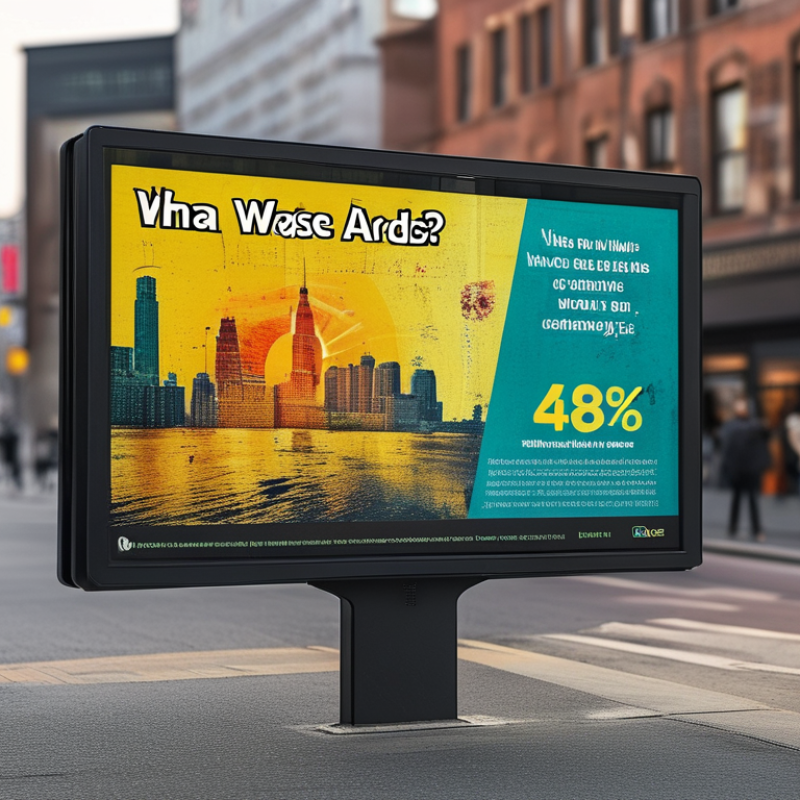
Advertising billboards play a crucial role in modern marketing strategies. They are large outdoor displays that attract attention and engage potential customers. According to the Outdoor Advertising Association of America (OAAA), outdoor advertising expenditures in the U.S. grew by 5.5% in 2022, highlighting its effectiveness. Billboards are designed to convey messages quickly and memorably, with striking images and minimal text. They can reach a wide audience, often at high traffic locations, allowing businesses to achieve significant visibility for their brands.
Tips: When creating a billboard, focus on simplicity. A clear message is key. Use bold colors to stand out. Ensure your billboard can be read at a glance. Research shows that effective designs can increase brand recall by up to 47%.
Despite their advantages, billboards have limitations. They require careful placement and consideration of the target demographic. Not every location attracts the same audience. Some may feel overwhelmed by too much information on a single billboard. Finding balance is essential for effective communication. Regularly reassessing the performance of billboards can help refine strategies for better results.
| Dimension | Description | Impact |
|---|---|---|
| Visibility | Advertising billboards are usually placed in high-traffic areas to capture the attention of a large audience. | High visibility can lead to increased brand awareness and reach. |
| Creativity | Innovative designs and engaging content are crucial for making a lasting impression on viewers. | Creative billboards attract attention and foster brand recognition. |
| Location | Strategically chosen locations enhance the effectiveness of billboards by targeting specific demographics. | Proper location increases the likelihood of reaching the desired audience. |
| Duration | Billboards can remain in place for extended periods, maintaining constant visibility for a campaign. | Long-term presence helps reinforce brand messages and loyalty. |
| Cost Efficiency | Compared to other forms of advertising, billboards can provide lower costs per exposure. | Cost effective way to reach a large audience over time. |
Advertising billboards have a fascinating history that dates back centuries. In the early 19th century, large painted signs began appearing in cities. These signs served as crucial tools for businesses to attract customers. They adorned buildings and stood tall on street corners, grabbing attention and delivering messages.
As time passed, technology advanced. The invention of electric lights transformed billboards. Brightly lit displays emerged in the early 20th century, capturing the interest of night-time passersby. This innovation expanded the reach of advertising. It also sparked creativity as designers experimented with graphics and bold colors.
However, the evolution of billboards hasn’t been without its challenges. Urban landscapes became cluttered with advertisements, leading to debates on visual pollution. Many cities imposed regulations on billboard placements. Advertisers now have to balance creativity with community standards. This ongoing tension makes the history of advertising billboards a reflection of changing societal values and marketing practices.
Advertising billboards play a crucial role in the marketing landscape. They provide visibility and reach, capturing the attention of passing pedestrians and drivers alike. As of 2022, the global outdoor advertising market, which includes billboards, was valued at approximately $38 billion. This figure highlights the importance of outdoor billboards in brand awareness.
There are various types of billboards in use today. Traditional static billboards dominate the market, making up about 79% of billboard inventory. These are simple but effective, often found on highways or busy streets. Digital billboards are gaining ground, allowing for dynamic content updates. According to recent research, digital billboards have increased viewer engagement by 50%. However, they can be costly, which may deter some advertisers.
Additionally, transit billboards are widely used in urban areas. They appear on buses, subways, and taxis, reaching diverse audiences. A study found that transit advertising can boost brand recall by 45%. Yet, advertisers must also reflect on placement strategies. Not all locations yield the same engagement. This variability calls for careful analysis to optimize advertising effectiveness.
Billboards play a vital role in contemporary marketing strategies. Their visibility can reach thousands daily. Reports indicate that about 71% of consumers notice billboards while driving. This high visibility makes them an effective medium for brand messaging.
One key reason billboards matter is their ability to deliver a clear, concise message. With limited space, brands must capture attention quickly. According to a study by the Outdoor Advertising Association, over 50% of people remember the content of a billboard they see. This strong recall underscores their effectiveness.
Tips: Use bold visuals. They attract the eye better than text-heavy designs. Ensure your message is simple. A good rule is to communicate in six words or less.
Billboards also create a sense of place. They can target specific demographics based on location. However, relying solely on billboards could be limiting. They should be a part of a broader marketing strategy. Combining them with digital efforts can amplify reach.
Billboard advertising faces unique challenges. Declining attention spans are a significant concern. According to a recent study, consumers spend only about 2.6 seconds gazing at a billboard. This means advertisers must craft messages that are instantly engaging.
Innovations in technology are changing the landscape. Digital billboards allow for real-time updates and customization. A report from the Outdoor Advertising Association highlights that digital outdoor advertising grew by over 30% in the last year. This growth reflects how brands can catch consumers in the moment. Yet, the saturation of digital screens can lead to viewer fatigue. Brands need to be mindful of this balance.
Environmental considerations also play a role. Many cities are adopting regulations to limit outdoor advertising's visual impact. Sustainable materials and energy-efficient technologies are gaining traction. While these innovations are beneficial, they often come with higher costs. Advertisers must weigh their options carefully to remain competitive while being responsible.
„Thanks to the LUVIR technology, the solder resist process could be switched directly from the previously used mask exposure to direct exposure. As an outstanding digital solution on the market, this technology has been able to demonstrate fast process times and superior quality on our certified conventional ink in production. This allowed us to fully digitize the solder mask process at low cost – without process or ink adjustments. An excellent benefit to our production in Rot am See.“
Ralf Göhringer (Head of Production WE Rot am See)
I would definitely recommend the Limata machine and team for a future company purchase
Michael Greenaway
Compunetics Inc.
“The Limata ldi has been amazing!! Best thing we did was buy this machine”
Richard Brady
GM
Circuitlabs
“Since 2019, we have been running the Limata X1000 LDI system (including LUVIR for solder mask imaging) in daily production as an addition to our current process with film. The machine was capable of properly exposing Taiyo PSR-4000 BN (DI) solder mask types on normal to high-copper boards using a new and unique direct imaging process. The machine operating interface is very user friendly which allowed for a quick technical training curve. The pre-registration processing reduced several seconds of production time at every print. Limata support and service staff is incomparable. They supported our team every step of the way at basically any time of the day or night, with literally, an immediate response time, customizing the software interface to best fit our Operations and needs.
We have exposed more than 8,000 prints since end of October, on various solder mask colors and some resist film panels. Limata, has proven to be very capable and innovative. They are a strong contender in the industry.
We have very much enjoyed this project, and working with the team!
Thank you Limata for the continued support and being a part of our growth.”
Bill Sezate
Vice President, GM
Summit Interconnect
As a replacement to our current contact exposure process with film, the LIMATA X2000 system including LUVIR-Technology was capable of properly exposing non-LDI solder mask types using a direct imaging process. The machine offers cutting edge software with a very intuitive operating interface which allowed for quick technician training curve. The dual drawer system combined with pre-registration processing reduced several seconds of production time at every machine cycle. Limata support and service staff is world class. They added software patches to keep production running at shortest possible response times, customized the software interface to best fit our in-house Operations system, and even wrote a step-by-step machine processing manual. As a result of the project, we have exposed more than 16,000 times on various product types and solder mask brands/colors. Limata, in a very short timeframe as a company, has definitely shown they are truly innovative and will be challenging the industry of direct imaging for the top spot.
Kevin Beattie
Process Engineer
TTM Technologies
Forest Grove Division
