Choosing an Automated Tank Filling Solution is not just a search for faster production. It is a decision about accuracy, product protection, and dependable operation across shifts. A line filling water, edible oil, or industrial liquid may need different pumps, seals, meters, and controls. The right configuration depends on the product, tank geometry, target volume, and cleaning routine. Small details matter. A drip at the nozzle can become product loss, slippery flooring, or hours of cleanup.
Quality-management expert W. Edwards Deming’s familiar reminder, “In God we trust; all others must bring data,” offers a useful principle for evaluating filling equipment. Buyers should ask for documented accuracy tests, repeatability results, and performance evidence under realistic operating conditions. They should also examine how the system handles foaming, changing viscosity, and varied fill levels. A polished demonstration is not enough. Ask what happens during a sensor fault or an unplanned stop.
This guide compares leading tank-filling approaches for global buyers, from basic metered systems to integrated automated lines. It considers controls, changeover time, maintenance access, and supplier support. Those practical points can matter more than an impressive feature list. No system is perfect. A highly automated line may reduce routine handling, yet require specialist support when controls fail. That trade-off deserves honest attention before purchase. The aim is a solution that fits the plant—not a specification sheet that merely looks impressive.
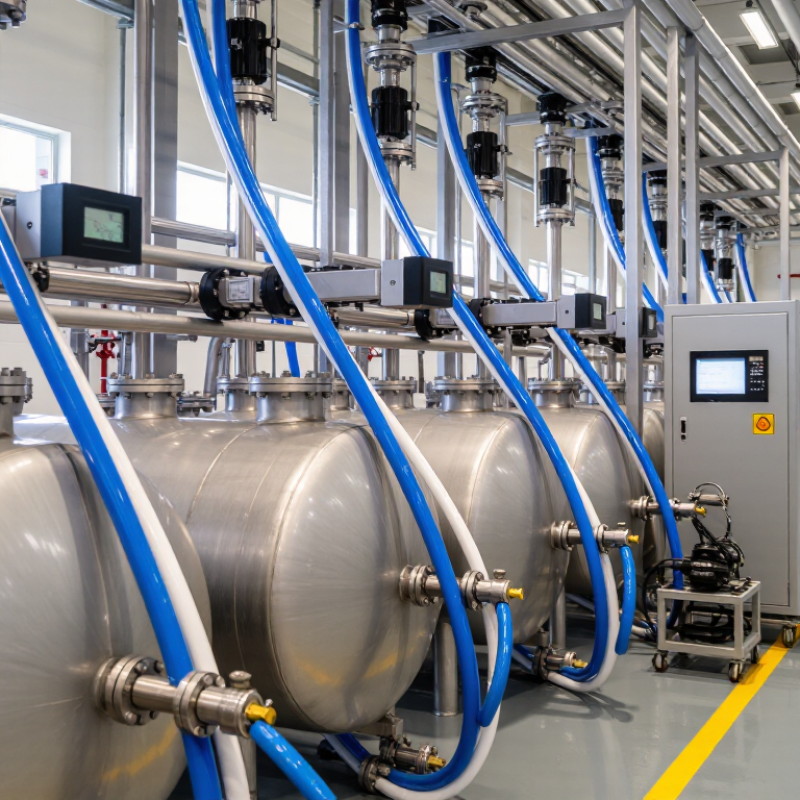
An automated tank filling system moves product from a supply line into a tank while controlling the target quantity. A pump or gravity feed starts the flow, and an actuated valve opens or closes the line. A flow meter measures volume; load cells can measure the tank’s changing weight instead. The controller compares readings with the operator’s setpoint and slows or stops filling near the target.
The sequence depends on sensors and clear operating logic. A high-level switch can stop filling if the tank approaches its safe limit. The controller may also prevent a start when a hose connection is missing or a valve is not in the expected position. Small details matter. A poorly placed sensor can react late, while foam or product residue may affect measurement. Regular checks and calibration help keep readings dependable.
Commissioning usually involves testing different fill rates, container sizes, and product behaviors. A slower final stage can reduce splashing and overshoot, though it may increase cycle time. There is no single setting that fits every installation. Operators still need training and a clear way to respond to alarms. Automation reduces routine manual control, but it does not remove the need for inspection. Even a well-designed system can need adjustment after real production begins.
Illustrative cycle times for a 1,000 L filling operation. Actual times vary with flow rate, tank size, product properties, and equipment configuration.
A typical sequence positions the container, verifies the connection, fills to the setpoint using flow or level controls, then stops flow and releases the container. The example assumes a nominal filling rate of about 5.5 L/s; it is not a universal performance specification.
Automated tank filling depends on coordinated components, not a single machine. A typical line combines a product pump, control valves, filling nozzle, sensors, and a programmable logic controller. The right metering method depends on the liquid. Load cells weigh each tank directly, while flowmeters measure liquid moving through a pipe. Thick products may need positive-displacement pumps; foamy liquids often need slower filling and careful nozzle positioning. Small details matter.
The International Federation of Robotics’ World Robotics 2024 report recorded 541,302 industrial robot installations worldwide in 2023. This broader automation figure does not measure tank fillers specifically, but it shows the scale of automation supporting material handling and production lines. For buyers, the useful question is whether sensors and controls work consistently with the actual product, tank geometry, and cleaning routine. A few litres of trapped liquid or a drifting scale can undermine an otherwise precise system. One awkward truth: more sensors do not automatically mean better accuracy. Ask suppliers for repeatability tests using comparable liquid properties, and check how the system flags low flow, overfill, or a failed valve. A clear test record is more convincing than a polished screen.
Types of Automated Tank Filling Solutions
Timed filling opens a valve for a preset interval. It suits free-flowing liquids and straightforward tank setups. A pressure change can still alter the delivered volume. Simple, but not foolproof. Flowmeter-based systems measure liquid moving through a pipe and stop at a set volume. They work well where repeatable batches matter, though bubbles, poor meter placement, or missed calibration can distort readings.
Gravimetric systems use load cells to measure the tank’s added weight. They are useful when density varies or volume readings are less dependable. Level-based controls instead stop filling at a sensor-defined point, which can help maintain a consistent visible level across tanks. Foam and splashing may confuse sensors, so the installation needs testing with the actual liquid. The right choice depends on viscosity, batch size, tank geometry, and cleaning routines—not just the control panel.
Automation adoption is broadening: the International Federation of Robotics reported 541,302 industrial robots installed worldwide in 2023 in its World Robotics 2024 report. That figure covers industrial robots, not filling systems specifically, but it signals growing investment in automated production. A useful site trial records fill variation, changeover time, and spill frequency. The spreadsheet may look convincing; the first foamy batch can disagree.
Compare automated tank filling systems by the liquid and workflow, not by headline speed alone. Water-like products may suit a simple timed or flow-meter setup, while thick liquids can need slower dispensing and larger product passages. Foam changes everything. A foaming liquid may require reduced flow near the target level to limit bubbles and spills.
Time-based filling is straightforward, but changes in pressure or viscosity can affect the delivered amount. Flow-meter systems measure product movement and can support repeatable fills when properly selected and maintained. Load-cell systems weigh the receiving tank, which can be useful when liquid properties vary. Each method has trade-offs. Ask suppliers how they handle drips, start-up waste, recipe changes, and cleaning between products. These details often matter more than a high advertised rate.
Match the design to the site as well as the product. Check tank dimensions, available power and compressed air, control-system compatibility, and the space operators need for cleaning. For export projects, confirm documentation, units, and access to calibration support in the destination region. A neat specification can still miss real production conditions. Request a trial using the actual liquid and container, then compare fill variation, changeover time, and operator steps. Even a small test may expose an inconvenient detail.
For global buyers, tank-filling equipment must fit the process and the plant’s control system. A filler handling thin liquids may struggle with viscous products or foaming. The International Federation of Robotics reported 4,281,585 industrial robots operating worldwide in 2023, a 10% increase over 2022 in World Robotics 2024. This figure covers industrial robots generally, not filling systems, but it signals the growing importance of automation integration. Small details matter.
Evaluate standards alongside practical performance. IEC 60204-1 addresses electrical equipment of machinery, while ISO 12100 provides principles for machinery risk assessment. Treat them as useful design references, and confirm applicable local requirements with qualified specialists. Ask suppliers to document filling accuracy across the required flow range, product viscosity, and container sizes. Check communication protocols, cleaning access, calibration records, and how faults appear on the operator screen. Request a factory acceptance test using representative product conditions. A polished demonstration may not reveal difficult changeovers or foaming; this is an easy gap to miss.
Tips: Share real production data before comparing quotations. Ask for measured results at minimum and maximum fill rates, not just a single best-case figure. Verify spare-parts lead times and training arrangements. If a supplier cannot explain test conditions clearly, pause and ask again.
„Thanks to the LUVIR technology, the solder resist process could be switched directly from the previously used mask exposure to direct exposure. As an outstanding digital solution on the market, this technology has been able to demonstrate fast process times and superior quality on our certified conventional ink in production. This allowed us to fully digitize the solder mask process at low cost – without process or ink adjustments. An excellent benefit to our production in Rot am See.“
Ralf Göhringer (Head of Production WE Rot am See)
I would definitely recommend the Limata machine and team for a future company purchase
Michael Greenaway
Compunetics Inc.
“The Limata ldi has been amazing!! Best thing we did was buy this machine”
Richard Brady
GM
Circuitlabs
“Since 2019, we have been running the Limata X1000 LDI system (including LUVIR for solder mask imaging) in daily production as an addition to our current process with film. The machine was capable of properly exposing Taiyo PSR-4000 BN (DI) solder mask types on normal to high-copper boards using a new and unique direct imaging process. The machine operating interface is very user friendly which allowed for a quick technical training curve. The pre-registration processing reduced several seconds of production time at every print. Limata support and service staff is incomparable. They supported our team every step of the way at basically any time of the day or night, with literally, an immediate response time, customizing the software interface to best fit our Operations and needs.
We have exposed more than 8,000 prints since end of October, on various solder mask colors and some resist film panels. Limata, has proven to be very capable and innovative. They are a strong contender in the industry.
We have very much enjoyed this project, and working with the team!
Thank you Limata for the continued support and being a part of our growth.”
Bill Sezate
Vice President, GM
Summit Interconnect
As a replacement to our current contact exposure process with film, the LIMATA X2000 system including LUVIR-Technology was capable of properly exposing non-LDI solder mask types using a direct imaging process. The machine offers cutting edge software with a very intuitive operating interface which allowed for quick technician training curve. The dual drawer system combined with pre-registration processing reduced several seconds of production time at every machine cycle. Limata support and service staff is world class. They added software patches to keep production running at shortest possible response times, customized the software interface to best fit our in-house Operations system, and even wrote a step-by-step machine processing manual. As a result of the project, we have exposed more than 16,000 times on various product types and solder mask brands/colors. Limata, in a very short timeframe as a company, has definitely shown they are truly innovative and will be challenging the industry of direct imaging for the top spot.
Kevin Beattie
Process Engineer
TTM Technologies
Forest Grove Division
