Automotive Stamping Tooling shapes the panels, brackets, and structural parts that define a vehicle’s fit and performance. China has a broad supplier base, but a long list does not make every toolroom equally capable. Buyers should look beyond quoted price and compare die-design experience, press compatibility, steel selection, tryout records, and after-sales support.
Taiichi Ohno, a Toyota production-system expert, wrote, “Where there is no standard, there can be no kaizen.” That principle matters here. Clear inspection standards and documented die trials help buyers judge whether a supplier can repeat quality, not just produce one promising sample. For example, ask how a team checks a formed panel for springback, trims its edges, and records changes after a press trial. Details matter.
This guide introduces leading Automotive Stamping Tooling suppliers in China and the capabilities buyers should verify. It considers product scope, engineering support, manufacturing resources, and communication during project changes. A polished brochure is not proof that a die will run reliably through long production cycles. Nor is a low quotation automatically a bargain. Supplier claims deserve checking against drawings, sample parts, and documented trial results. There is no perfect ranking for every buyer; vehicle programs differ, and the right fit depends on part complexity, production volume, and service needs. Some comparisons remain imperfect. That is worth admitting.
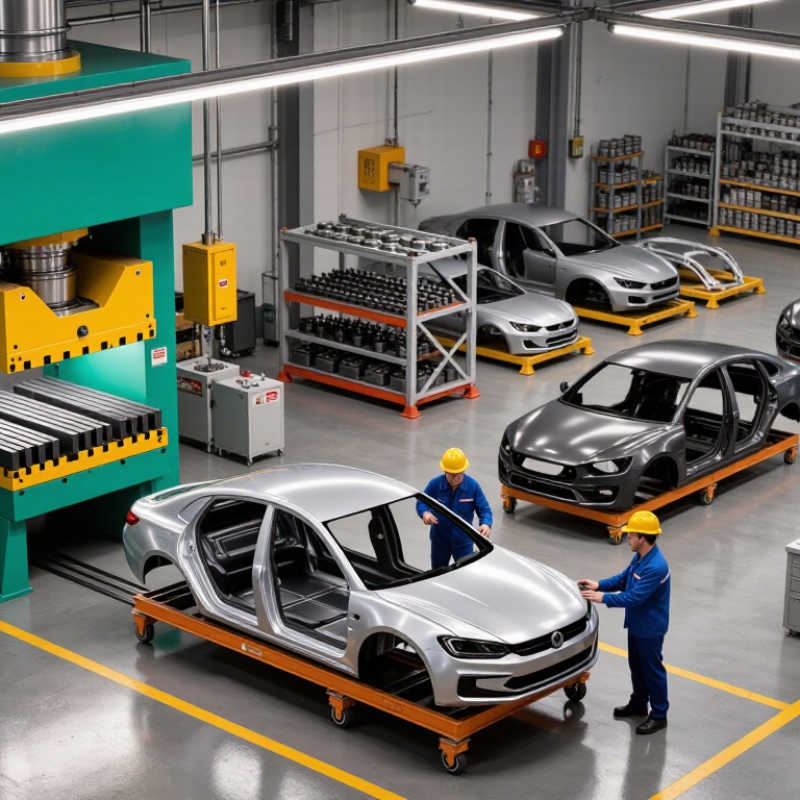
Automotive stamping tooling is the set of dies and related components used in a press to cut and shape sheet metal. A punch and die form the material into parts such as door panels, brackets, and floor sections. The tooling helps produce consistent shapes at production speed. That consistency matters. It supports accurate assembly, panel fit, and repeatable quality across large production runs.
Tool design must account for sheet thickness, material strength, blank shape, and press capacity. During tryout, technicians check sample parts for wrinkles, cracks, burrs, and springback. A part may look correct on the press but shift slightly after release. That detail can affect later assembly. Inspection data helps engineers adjust the die, though some adjustments take several rounds. No tool is perfect at first.
Tips: Ask how a supplier checks parts during tryout and production. Confirm that inspection records include key dimensions, not just visual checks. If a design changes, review the tooling and sample parts again. Small changes matter.
Evaluating automotive stamping tooling suppliers in China takes more than comparing quoted prices. Look at how each team turns a part drawing into production-ready tooling. Ask about experience with similar material thicknesses, draw depths, and annual volumes. A capable supplier should explain die structure, press compatibility, tolerance risks, and maintenance needs clearly. Numbers help. Request trial records covering several production runs, not only one approved sample. Check how they measure critical features, including hole position, flange height, and springback.
Tips: Share a representative part drawing and material specification before requesting a quotation. Ask for a sample inspection report, a tooling timeline, and details about design changes. Clear answers matter. If a supplier cannot explain how it will control a difficult feature, clarify the plan before comparing prices.
Review the supplier’s engineering, build, and tryout process together. Ask who checks the die during assembly and how issues from initial press trials are recorded and resolved. A live video review or site visit can reveal practical details, such as tool storage, measurement equipment, and work instructions. Still, a polished workshop does not guarantee consistent results. Compare documented evidence, and confirm that the proposed checks fit your part’s real production risks.
Leading automotive stamping tooling suppliers in China combine die engineering with practical production support. Their teams should understand material flow, press capacity, part geometry, and springback before finalizing a tool design. A useful technical review includes forming simulations, die layouts, and clear assumptions about the production line. Details matter.
During supplier evaluation, ask how tools are tested and how trial findings are documented. Inspect sample parts for wrinkles, trim accuracy, surface marks, and dimensional consistency. A supplier should explain changes made between tool tryout and approval, rather than simply presenting a finished sample. Evidence builds confidence. Ask about spare inserts, maintenance guidance, and response times when a die needs adjustment.
Communication can be as important as machining capability. Confirm who owns design changes, how revisions are tracked, and what information is needed to resolve production issues. Site visits or structured video reviews can reveal workshop organization and inspection practices. Still, a polished presentation does not guarantee stable output. Buyers should compare technical records with actual trial results, and leave room for uncertainty when schedules or specifications change. Some sourcing plans overlook maintenance until the first stoppage; that is an avoidable gap.
Annual vehicle production in China, in millions of units. Production volume provides market context for automotive stamping demand; it does not rank individual tooling suppliers.
Chinese automotive stamping tooling suppliers often support projects from feasibility review through die tryout and production launch. Their teams use 3D CAD and forming simulation to assess material flow, thinning, wrinkles, and springback before cutting steel. For a complex panel, engineers may adjust draw beads, blank shape, or binder pressure after reviewing simulation and press data. They build progressive, transfer, and tandem dies for parts such as brackets, closures, and structural reinforcements. Fit matters. Capabilities vary. Precision milling, wire cutting, spotting, and CMM inspection help refine die surfaces and confirm critical dimensions. These steps matter when a panel must fit fixtures and neighboring parts.
Support can include material recommendations, tryout reports, sample parts, spare inserts, and maintenance guidance. During tryout, teams inspect wrinkles, split lines, burrs, and dimensional drift, then tune the die in measured increments. Remote reviews may help, but clear photos cannot replace checking the actual press, lubrication, and coil condition. A useful supplier shares trial data and explains open issues, not just polished samples. That transparency helps buyers compare tooling life, cycle time, and repair access against project needs. Simulation reduces risk, but it cannot remove material variation or shop-floor surprises. Ask how engineering changes are documented and how replacement components are controlled. The answer should be specific.
| Technology or Service | What It Covers | Typical Automotive Applications | Common Deliverables and Checks |
|---|---|---|---|
| Progressive Die Design and Manufacturing | Integrated die stations perform successive operations, such as piercing, bending, forming, and part cut-off, as strip material advances through the tool. | High-volume production of small and medium stamped components, including brackets, reinforcements, and electrical or seat hardware. | Die layout, strip layout, tool design, tryout support, and checks for part dimensions, burrs, and repeatability. |
| Transfer Die Systems | Parts are moved between forming stations by mechanical or robotic transfer equipment, allowing multiple operations on larger or deeper parts. | Structural panels, chassis components, and other parts that are not suited to conventional progressive-strip production. | Station and transfer concepts, die sets, operation sequencing, and trial-run checks for part handling and forming consistency. |
| Tandem and Line Dies | Separate dies carry out individual operations in a press line, with parts transferred between presses or stations. | Large body panels and components requiring several forming, trimming, piercing, or flanging operations. | Individual dies, process planning, line integration support, and dimensional inspection of trial parts. |
| 3D CAD and Die Simulation | Digital design and forming analysis help assess material flow, thinning, wrinkling, springback, and potential forming issues before production tooling is finalized. | Complex body-in-white panels, high-strength steel parts, and components with demanding geometry. | 3D tool designs, forming analysis reports, process recommendations, and design revisions based on simulation results. |
| High-Strength Steel Forming | Tool and process design accounts for the higher strength and springback behavior of advanced high-strength steels and other demanding sheet materials. | Safety-related structural parts, reinforcements, pillars, and chassis components. | Material-specific process plans, compensation strategies, trial results, and dimensional verification against supplied specifications. |
| Aluminum Sheet Forming | Forming methods and tool surfaces are selected to address aluminum’s material behavior and reduce risks such as surface marking and cracking. | Lightweight body panels and structural components made from sheet aluminum. | Material and lubrication recommendations, forming trials, surface-condition checks, and dimensional inspection. |
| Tryout, Sampling, and Tool Tuning | Press trials are used to evaluate the tooling and adjust forming conditions, clearances, or tool geometry as needed. | New dies, transferred tools, and production changes that require confirmation before release. | Trial parts, issue lists, adjustment records, and sample inspection results. Scope depends on the agreed project plan. |
| Metrology and Dimensional Inspection | Parts and tooling features are measured against engineering drawings or agreed inspection requirements using suitable measurement equipment. | Prototype, pre-production, and production validation for stamped components. | Measurement reports, dimensional comparison data, and documentation of nonconformities where applicable. |
| Tool Repair, Maintenance, and Refurbishment | Inspection, repair, replacement, or adjustment of worn or damaged die components to support continued production. | In-service tooling requiring corrective work, scheduled maintenance, or relocation support. | Repair plans, replacement components, maintenance records, and post-repair trial or inspection support. |
| Engineering Change and Localization Support | Tooling or process updates are managed when part designs, materials, manufacturing locations, or customer requirements change. | Model-year updates, design revisions, and production transfer projects. | Change assessments, revised tool data, updated documentation, and validation samples as defined by the project. |
Capabilities vary by supplier, facility, tooling size, press capacity, material specification, and project scope. Confirm technical requirements and validation criteria directly during supplier evaluation.
Top Automotive Stamping Tooling Suppliers in China
Selecting a Chinese automotive stamping tooling supplier takes more than comparing quotations. Start with the part drawing, material grade, annual volume, and required production rate. Ask how the supplier converts these details into a die concept, press specification, and realistic project schedule. Clear answers matter.
Review engineering and production capability together. Request examples of tooling trials, dimensional inspection reports, and documented revisions. During a factory visit, look at machining equipment, tool storage, and the condition of dies already in use. Details matter. A clean workshop is useful, but it does not prove consistent quality. Ask how the team measures critical features and corrects springback or burr issues after a trial run.
Discuss ownership of drawings, change approvals, maintenance, and spare components before signing an agreement. Confirm who attends tryouts and how problems are recorded. Ask for references from projects with similar materials, part complexity, and production volumes. Then compare total cost, not just the initial tool price. A low quote can exclude useful support. I would also question schedules that leave no time for revisions; even experienced teams can underestimate a difficult forming stage. Perfect plans are rare. Look for transparent communication and evidence that concerns are addressed promptly.
„Thanks to the LUVIR technology, the solder resist process could be switched directly from the previously used mask exposure to direct exposure. As an outstanding digital solution on the market, this technology has been able to demonstrate fast process times and superior quality on our certified conventional ink in production. This allowed us to fully digitize the solder mask process at low cost – without process or ink adjustments. An excellent benefit to our production in Rot am See.“
Ralf Göhringer (Head of Production WE Rot am See)
I would definitely recommend the Limata machine and team for a future company purchase
Michael Greenaway
Compunetics Inc.
“The Limata ldi has been amazing!! Best thing we did was buy this machine”
Richard Brady
GM
Circuitlabs
“Since 2019, we have been running the Limata X1000 LDI system (including LUVIR for solder mask imaging) in daily production as an addition to our current process with film. The machine was capable of properly exposing Taiyo PSR-4000 BN (DI) solder mask types on normal to high-copper boards using a new and unique direct imaging process. The machine operating interface is very user friendly which allowed for a quick technical training curve. The pre-registration processing reduced several seconds of production time at every print. Limata support and service staff is incomparable. They supported our team every step of the way at basically any time of the day or night, with literally, an immediate response time, customizing the software interface to best fit our Operations and needs.
We have exposed more than 8,000 prints since end of October, on various solder mask colors and some resist film panels. Limata, has proven to be very capable and innovative. They are a strong contender in the industry.
We have very much enjoyed this project, and working with the team!
Thank you Limata for the continued support and being a part of our growth.”
Bill Sezate
Vice President, GM
Summit Interconnect
As a replacement to our current contact exposure process with film, the LIMATA X2000 system including LUVIR-Technology was capable of properly exposing non-LDI solder mask types using a direct imaging process. The machine offers cutting edge software with a very intuitive operating interface which allowed for quick technician training curve. The dual drawer system combined with pre-registration processing reduced several seconds of production time at every machine cycle. Limata support and service staff is world class. They added software patches to keep production running at shortest possible response times, customized the software interface to best fit our in-house Operations system, and even wrote a step-by-step machine processing manual. As a result of the project, we have exposed more than 16,000 times on various product types and solder mask brands/colors. Limata, in a very short timeframe as a company, has definitely shown they are truly innovative and will be challenging the industry of direct imaging for the top spot.
Kevin Beattie
Process Engineer
TTM Technologies
Forest Grove Division