The debate surrounding Battery Cage Poultry Farming has intensified in recent years. This farming method houses hens in small cages, designed to maximize egg production. However, it raises ethical questions about animal welfare. Dr. Evelyn Hart, a leading expert in poultry science, asserts, "We must weigh efficiency against the well-being of the birds." This highlights the complexity of our choices.
Battery Cage Poultry Farming claims to increase productivity. Yet, many criticize its impact on animal behavior. Birds in cages often show signs of stress and frustration. Critics argue that better alternatives exist, such as cage-free or free-range systems. While these may be less efficient, they strive for improved animal welfare.
Finding a balance between productivity and ethics remains challenging. As society demands more sustainable and humane practices, the future of poultry production must reflect these values. The continued reliance on Battery Cage Poultry Farming invites reflection on what we prioritize in our food systems.
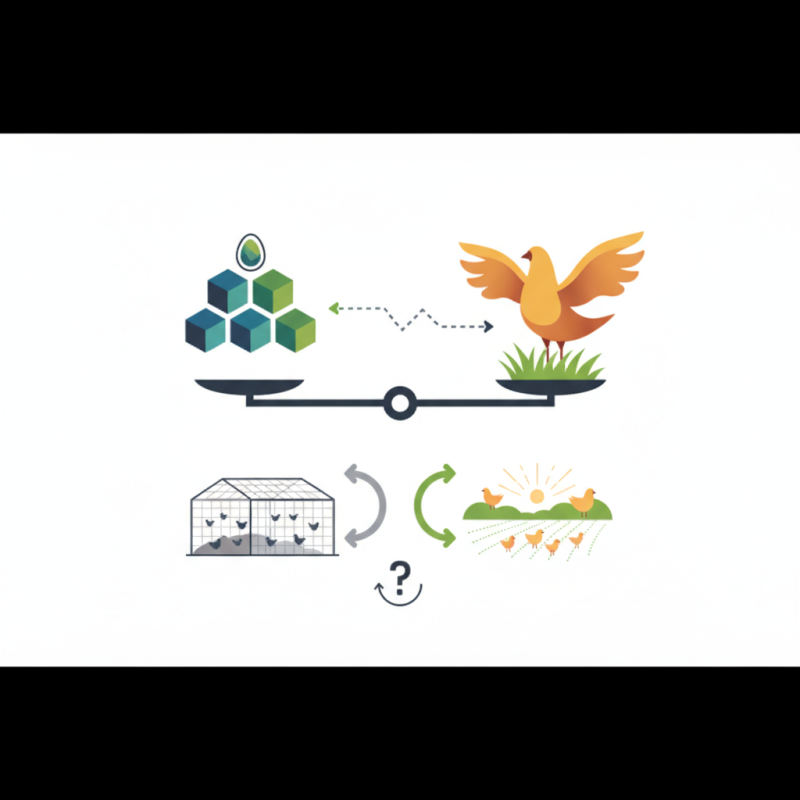
Battery cage systems represent a significant method in poultry production. These systems allow for high density housing of hens. Each bird has limited space, often less than a sheet of A4 paper. This can lead to stress among hens. Critics highlight the ethical concerns of animal welfare.
Understanding the mechanism of battery cages is essential. They provide a controlled environment with automated feeding and egg collection. This optimizes efficiency in production. However, the confined space can impact the health of the birds. Hens may engage in natural behaviors less frequently, affecting their overall well-being.
Tips: Monitor the health and behavior of birds regularly. Observing signs of stress can improve welfare. Consider alternatives to battery cages. Free-range systems offer more space but may require more land and resources. Balancing efficiency with ethics is crucial in poultry farming today.
| Aspect | Battery Cage System | Free-Range System | Welfare Considerations |
|---|---|---|---|
| Initial Investment | Low | High | Varies |
| Space Per Bird | Caged, < 0.1 m² | Outdoor, ~4 m² | Higher in Free-Range |
| Egg Production Rate | High, ~90% efficiency | Moderate, ~80% efficiency | Improved in Free-Range |
| Labor Cost | Reduced | Increased | Higher for Welfare Checks |
| Consumer Preference | Lower Demand | Higher Demand | Growing Interest |
Poultry farming has evolved significantly, with battery cages and free-range systems as the two leading methods. Battery cages are designed to maximize efficiency and productivity, allowing farmers to raise more chickens in a smaller space. However, this intensive approach raises significant ethical concerns. In many countries, regulations regarding animal welfare are tightening. For example, the European Union has prohibited battery cages in favor of enriched cages and free-range systems. According to the World Animal Protection report, around 300 million hens are kept in battery cages in Europe alone.
On the other hand, free-range systems promote better animal welfare. Hens have access to outdoor spaces, which allow for natural behaviors. Studies show that free-range eggs contain higher levels of Omega-3 fatty acids compared to battery-caged eggs. This nutritional difference influences consumer preferences significantly. In the United States, the market for free-range eggs has grown by nearly 100% over the past five years. Nonetheless, free-range farming faces challenges, such as higher production costs and land use. Many farmers struggle to adapt to consumer demand while maintaining profitability.
Both systems have their pros and cons. Battery cage systems promise high yields but at animal welfare's expense. Free-range systems offer ethical advantages, yet economic viability remains a concern. As consumer awareness increases, the poultry industry must find a balance between efficiency and ethical practices. The future of poultry production will likely depend on finding sustainable solutions that satisfy both animal welfare advocates and market demands.
Battery cage poultry farming has long been a topic of debate within the industry. This method allows for intensive production, thereby meeting the global demand for eggs. According to a report from the Food and Agriculture Organization, egg production is projected to increase by nearly 2.5% each year. Battery cages significantly impact this growth by maximizing the number of hens housed in a limited space. However, critics argue that this practice raises ethical concerns regarding animal welfare.
Economic implications are significant. The initial setup cost is lower compared to alternative systems. A USDA report highlights that battery cage farms can produce eggs at a cost of approximately $0.75 per dozen, compared to $1.20 for cage-free systems. Yet, reliance on a single farming method could expose producers to market fluctuations. Moreover, increasing consumer demand for humane practices may eventually destabilize the profitability of battery cage setups.
Tips:
Battery cage poultry farming has drawn scrutiny for its impact on animal welfare. These systems confine hens to small cages. The space provided is often less than the area of a standard sheet of paper. This confinement can lead to severe stress and physical problems for the birds. Behavioral issues also arise, as hens cannot engage in natural behaviors like nesting or perching.
Many animal welfare advocates push for better conditions. Critics of battery cages often highlight the ethical implications. Hens in these systems may suffer from pecking and other injuries. The lack of space severely limits their movement and social interaction. While some argue these systems are efficient for production, the question remains: at what cost?
Tips: When considering poultry farming methods, it's crucial to research the welfare implications. Look for alternatives that provide better living conditions. Higher animal welfare standards can lead to healthier flocks and potentially better quality eggs.
The poultry industry is on the brink of transformation, driven by technological innovations and evolving consumer preferences. According to the Food and Agriculture Organization (FAO), global poultry production is projected to reach 195 million tons by 2025. This surge is largely attributed to advancements in farming techniques. Conventional systems are becoming less favored due to concerns over animal welfare and environmental sustainability.
Innovative practices are emerging in poultry production. For instance, free-range systems and enriched cages provide birds with more space and better living conditions. The use of precision farming technologies is also gaining traction. These methods optimize feed efficiency and monitor flock health through data analytics. Research indicates that farms employing these technologies can achieve productivity gains of up to 30%.
However, the transition to these new systems is not without challenges. High initial investment costs hinder many farmers from adopting innovative practices. Additionally, consumer concerns about animal welfare may not always align with economic pressures. Reporting from key industry stakeholders shows that balancing ethical considerations with profitability remains a growing concern. The path ahead requires careful navigation of these complexities to ensure a sustainable poultry production future.
This chart displays the various poultry production methods and their projected share of the market in 2023. Battery cage systems continue to dominate poultry farming, but alternative methods are gaining traction as consumer preferences shift towards more humane practices.
„Thanks to the LUVIR technology, the solder resist process could be switched directly from the previously used mask exposure to direct exposure. As an outstanding digital solution on the market, this technology has been able to demonstrate fast process times and superior quality on our certified conventional ink in production. This allowed us to fully digitize the solder mask process at low cost – without process or ink adjustments. An excellent benefit to our production in Rot am See.“
Ralf Göhringer (Head of Production WE Rot am See)
I would definitely recommend the Limata machine and team for a future company purchase
Michael Greenaway
Compunetics Inc.
“The Limata ldi has been amazing!! Best thing we did was buy this machine”
Richard Brady
GM
Circuitlabs
“Since 2019, we have been running the Limata X1000 LDI system (including LUVIR for solder mask imaging) in daily production as an addition to our current process with film. The machine was capable of properly exposing Taiyo PSR-4000 BN (DI) solder mask types on normal to high-copper boards using a new and unique direct imaging process. The machine operating interface is very user friendly which allowed for a quick technical training curve. The pre-registration processing reduced several seconds of production time at every print. Limata support and service staff is incomparable. They supported our team every step of the way at basically any time of the day or night, with literally, an immediate response time, customizing the software interface to best fit our Operations and needs.
We have exposed more than 8,000 prints since end of October, on various solder mask colors and some resist film panels. Limata, has proven to be very capable and innovative. They are a strong contender in the industry.
We have very much enjoyed this project, and working with the team!
Thank you Limata for the continued support and being a part of our growth.”
Bill Sezate
Vice President, GM
Summit Interconnect
As a replacement to our current contact exposure process with film, the LIMATA X2000 system including LUVIR-Technology was capable of properly exposing non-LDI solder mask types using a direct imaging process. The machine offers cutting edge software with a very intuitive operating interface which allowed for quick technician training curve. The dual drawer system combined with pre-registration processing reduced several seconds of production time at every machine cycle. Limata support and service staff is world class. They added software patches to keep production running at shortest possible response times, customized the software interface to best fit our in-house Operations system, and even wrote a step-by-step machine processing manual. As a result of the project, we have exposed more than 16,000 times on various product types and solder mask brands/colors. Limata, in a very short timeframe as a company, has definitely shown they are truly innovative and will be challenging the industry of direct imaging for the top spot.
Kevin Beattie
Process Engineer
TTM Technologies
Forest Grove Division
