In the realm of industrial applications, the role of the Axial Fan cannot be overstated. This critical element plays a vital part in enhancing ventilation and supporting cooling systems. Its design allows for efficient airflow, making it indispensable in various settings. Industries ranging from manufacturing to food processing rely on Axial Fans for optimal performance.
These fans operate effectively in large spaces. They move significant volumes of air, leading to improved air quality. By utilizing an Axial Fan, facilities can reduce energy consumption. This efficiency not only lowers operational costs but also contributes to a greener environment. The durability and reliability of Axial Fans further enhance their value in industrial applications.
However, it's important to recognize the challenges associated with Axial Fans. Proper maintenance is essential to ensure longevity. Neglecting this could result in decreased performance or even failure. Organizations must invest time and resources into regular inspections. Embracing the Axial Fan as part of an industrial strategy can yield notable benefits. A thoughtful approach ensures that the advantages are fully realized.
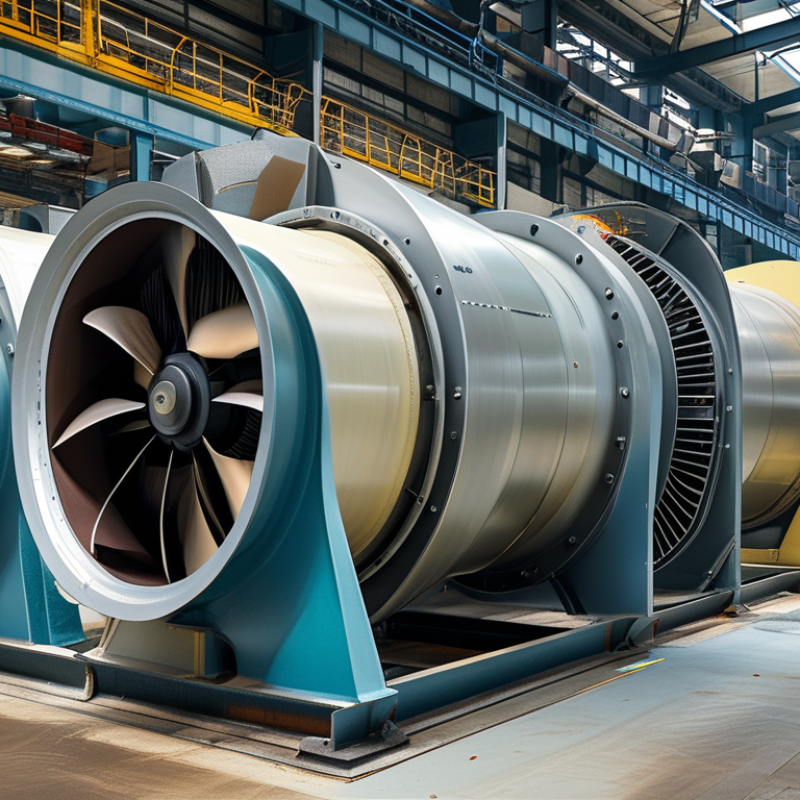
In industrial settings, axial fans are vital for efficient ventilation and cooling. These fans move air in a straight line, maximizing airflow with minimal resistance. According to the American Society of Heating, Refrigerating, and Air-Conditioning Engineers (ASHRAE), proper air circulation can improve worker comfort and enhance productivity by up to 20%.
Many industries, such as manufacturing and warehousing, rely on axial fans to maintain optimal temperatures. These fans are often more energy-efficient compared to centrifugal types. A 2020 report from the Industrial Fans Association indicates that axial fans can reduce energy costs by 30% in large-scale operations. This efficiency not only saves money but also supports sustainability initiatives.
However, there are limitations. Axial fans may struggle in environments requiring high static pressure. In such cases, alternative fan types may be more suitable. Proper placement and maintenance are crucial to ensuring these fans perform reliably. Monitoring airflow and noise levels can help identify potential issues before they escalate. Balancing efficiency with operational demands is essential for maximizing the benefits of axial fans.
Axial fans are widely recognized for their ability to enhance airflow efficiency in industrial environments. Their design allows air to move parallel to the fan's axis, which ensures a consistent flow rate. This is particularly beneficial in large spaces, such as warehouses or manufacturing plants. By maintaining effective airflow, axial fans help in temperature regulation, ensuring optimal working conditions.
In addition to cooling, these fans can also assist in ventilating hazardous areas. They help expel unwanted gases or pollutants, vital for safety. However, not all applications may yield the desired results. Some settings may require a more robust solution. It's important to assess the specific environmental needs before implementation. Proper placement and sizing of the fan are crucial factors in achieving efficiency. Mistakes in this area can lead to inadequate airflow or increased energy consumption.
While axial fans are effective, they can create noise. In quieter workspaces, this can be a disadvantage. Regular maintenance is also necessary to prevent dust buildup, which can hinder performance. Balancing these factors is important for achieving maximum efficiency while addressing potential downsides. Understanding the nuances of axial fan operation can significantly impact their effectiveness in various industrial applications.
In industrial settings, axial fans are notable for their space-saving designs. These fans are compact and can fit into tight spaces, making them ideal for crowded work environments. They mount easily on walls or ceilings, optimizing airflow without taking up valuable floor space. This quality is crucial in facilities where every square foot counts, such as factories and warehouses.
The efficiency of axial fans is often evident in their performance. They can move large volumes of air using minimal energy. This design helps maintain ideal temperatures in environments that require constant air circulation. However, one must consider the airflow direction. If not positioned correctly, fans can create dead zones where air does not flow effectively. This potential flaw requires careful installation and planning.
While axial fans offer numerous advantages, their effectiveness hinges on proper application. For instance, in high-heat environments, their power can be underwhelming if not complemented by other ventilation techniques. Therefore, assessing specific needs before implementation is vital. Striking the right balance can lead to superior air quality while conserving space efficiently.
Axial fans are widely used in various industrial settings for their efficiency and cost-effectiveness. One major benefit is their lower operational costs. These fans consume less energy compared to other types, contributing to significant savings over time. Industries often operate extensively, making this characteristic crucial. A well-designed axial fan can help reduce electricity bills, allowing funds to be allocated elsewhere.
Moreover, axial fans excel in high-volume airflow applications. They provide large air movement at relatively low pressure, making them ideal for cooling and ventilation processes. In environments where heat dissipation is necessary, axial fans perform remarkably well. However, their performance can be influenced by factors such as installation position and airflow direction, which may require ongoing adjustments. Regular maintenance is essential to ensure optimal functionality and efficiency.
Another point to consider is the initial investment. While axial fans can be more affordable upfront, the overall savings will depend on the specific operational context. Factors like system design and the need for supplementary equipment can impact costs. Thus, industries must carefully evaluate these variables before making a decision. Balancing upfront costs against long-term savings requires a thorough understanding of both the application and the specific environment in which the fans will operate.
Axial fans play a crucial role across various industries, ensuring effective ventilation and cooling. These fans are widely used in manufacturing, agriculture, and data centers. According to the U.S. Department of Energy, efficient ventilation methods can reduce energy costs by up to 30%. This statistic highlights the value of axial fans in promoting energy efficiency in industrial settings.
In the agricultural sector, axial fans assist in temperature regulation for livestock and crops. They help maintain optimal growing conditions. Research indicates that proper airflow can increase crop yield by as much as 15%. This data emphasizes the importance of axial fans in enhancing productivity and sustainability.
Data centers also benefit greatly. With heat from servers, maintaining a cool environment is essential. Axial fans help in dissipating heat, ensuring equipment operates effectively. Industry reports suggest that optimized cooling systems can save up to 20% in annual operating costs. Such savings reflect the impact of axial fans in maintaining operational efficiency while reducing overheads.
„Thanks to the LUVIR technology, the solder resist process could be switched directly from the previously used mask exposure to direct exposure. As an outstanding digital solution on the market, this technology has been able to demonstrate fast process times and superior quality on our certified conventional ink in production. This allowed us to fully digitize the solder mask process at low cost – without process or ink adjustments. An excellent benefit to our production in Rot am See.“
Ralf Göhringer (Head of Production WE Rot am See)
I would definitely recommend the Limata machine and team for a future company purchase
Michael Greenaway
Compunetics Inc.
“The Limata ldi has been amazing!! Best thing we did was buy this machine”
Richard Brady
GM
Circuitlabs
“Since 2019, we have been running the Limata X1000 LDI system (including LUVIR for solder mask imaging) in daily production as an addition to our current process with film. The machine was capable of properly exposing Taiyo PSR-4000 BN (DI) solder mask types on normal to high-copper boards using a new and unique direct imaging process. The machine operating interface is very user friendly which allowed for a quick technical training curve. The pre-registration processing reduced several seconds of production time at every print. Limata support and service staff is incomparable. They supported our team every step of the way at basically any time of the day or night, with literally, an immediate response time, customizing the software interface to best fit our Operations and needs.
We have exposed more than 8,000 prints since end of October, on various solder mask colors and some resist film panels. Limata, has proven to be very capable and innovative. They are a strong contender in the industry.
We have very much enjoyed this project, and working with the team!
Thank you Limata for the continued support and being a part of our growth.”
Bill Sezate
Vice President, GM
Summit Interconnect
As a replacement to our current contact exposure process with film, the LIMATA X2000 system including LUVIR-Technology was capable of properly exposing non-LDI solder mask types using a direct imaging process. The machine offers cutting edge software with a very intuitive operating interface which allowed for quick technician training curve. The dual drawer system combined with pre-registration processing reduced several seconds of production time at every machine cycle. Limata support and service staff is world class. They added software patches to keep production running at shortest possible response times, customized the software interface to best fit our in-house Operations system, and even wrote a step-by-step machine processing manual. As a result of the project, we have exposed more than 16,000 times on various product types and solder mask brands/colors. Limata, in a very short timeframe as a company, has definitely shown they are truly innovative and will be challenging the industry of direct imaging for the top spot.
Kevin Beattie
Process Engineer
TTM Technologies
Forest Grove Division
