Exothermic Welding has emerged as a critical technique in the electrical and construction industries. This process, known for its efficiency and reliability, significantly lowers the costs involved in connecting conductive materials. According to a recent report by the International Society of Electrical Engineers, the global market for Exothermic Welding is expected to grow annually by 5.3% over the next five years. This growth reflects increasing demand for quality and durability in electrical connections.
Dr. James Thornton, a notable expert in welding technologies, emphasizes the importance of this method. "Exothermic Welding not only enhances the integrity of electrical connections but also minimizes maintenance costs over time." His insights highlight the undeniable benefits that Exothermic Welding offers to global buyers, from improved safety to reduced failure rates in electrical joints.
Despite the advantages, it is essential to reflect on potential challenges in implementing this technology. Some users may initially find the technique complex or costly. However, with proper training and understanding, the long-term savings from using Exothermic Welding can far outweigh these initial hurdles. The growing awareness and comprehension of its benefits are vital for the industry's progress.
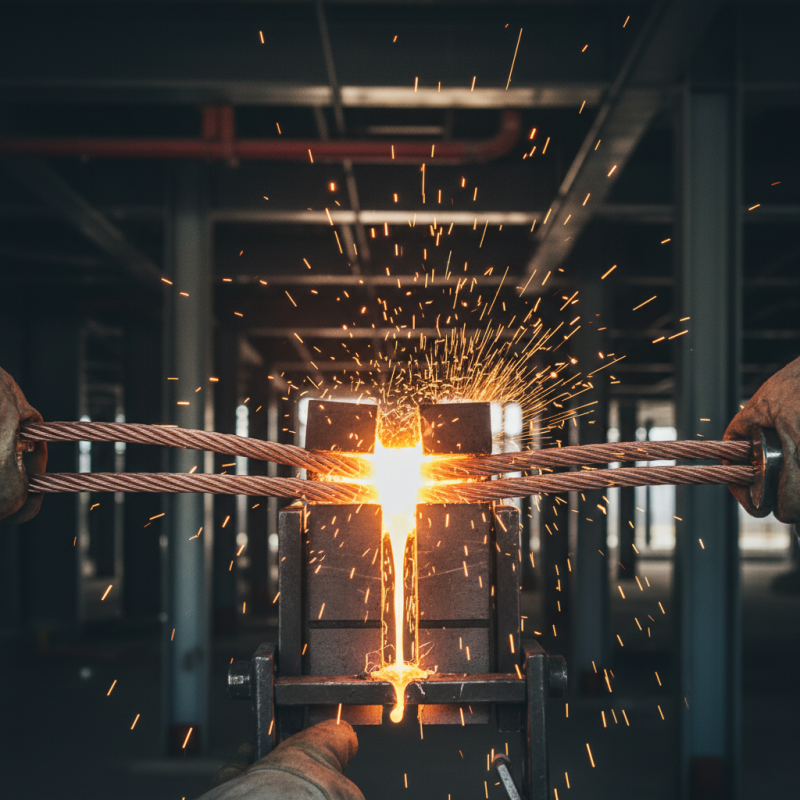
Exothermic welding offers numerous advantages for global buyers. This method utilizes a chemical reaction to create a strong bond without the need for electric power. One key benefit is its exceptional conductivity. This results in efficient electrical connections, crucial for many applications.
Another important aspect is the durability of exothermic welds. They exhibit remarkable resistance to environmental factors. This reliability increases longevity and reduces the need for maintenance. Additionally, the process is straightforward, requiring minimal training for technicians. However, there may be an initial learning curve for those new to this technique.
Cost-effectiveness stands out as a significant advantage. While initial materials may appear pricey, the long-term savings often outweigh these costs. Buyers should consider potential reductions in fault rates and maintenance expenses. It’s essential to weigh these factors against traditional welding methods to make informed decisions. Continual advancements in the field may also influence the efficacy of exothermic welding in the future.
Exothermic welding offers significant cost-effectiveness across various applications. This method burns a mixture of metal powders, creating a strong bond without external energy. Because it is self-sustaining, companies save on energy costs during installation. Additionally, it requires minimal equipment, lowering initial investment and maintenance expenses.
The process has a long lifespan and low upkeep needs. Once the weld is made, there is little to no need for repairs. This aspect minimizes operational downtime and boosts productivity. Buyers also appreciate that exothermic welding adapts to different environments. Whether in construction or electrical systems, it shows versatility because it performs well even in adverse conditions.
However, it’s essential to note potential challenges. Training personnel in this specialized welding technique can demand resources. Furthermore, ensuring consistent quality control is vital, as variations in materials can affect bond strength. While the process is efficient, organizations must remain vigilant about its applications to achieve optimal results.
Exothermic welding brings enhanced durability and longevity to welded connections, making it a favored choice in various industries. This method creates a thermite reaction that generates molten metal, which bonds materials at a molecular level. This deep fusion ensures that the connection can withstand extreme weather conditions and vibrations, common in transportation and utility sectors.
One notable detail lies in the resistive nature of exothermic welds. They often outperform traditional welded joints, especially in high-stress environments. For example, an underground pipeline may experience soil movement or pressure changes. A properly executed exothermic weld maintains integrity despite these challenges.
However, it's essential to acknowledge potential limitations. While the process is typically reliable, inconsistent application can lead to weak connections. Proper training and supervision are necessary to ensure high-quality welds. Evaluating the local conditions and materials before proceeding is crucial as environmental factors can influence the effectiveness of the welds.
Exothermic welding offers significant safety advantages, making it a preferred choice in various industries. This technique involves a chemical reaction that generates extreme heat, enabling the welding of metal components without external power sources. Such an approach minimizes the risk of electric shock, a common concern with traditional welding methods. By eliminating electrical equipment, workers face fewer hazards on-site.
Another key safety feature is the reduction of fire risks. Many welding processes generate sparks and fumes, which can ignite surrounding materials. In contrast, exothermic welding produces no arcs or sparks, lowering the likelihood of fires. This safety attribute is especially crucial in environments with flammable materials.
While exothermic welding is generally safe, it is essential for operators to follow proper guidelines. Training is necessary to understand the materials and reactions involved. Even with advanced technology, accidents can occur. Awareness of safety protocols is vital. Workers should wear protective gear and maintain a safe distance during the reaction. Continuous education helps reinforce these practices, ensuring a safer working environment overall.
Exothermic welding is a powerful process often chosen for its efficiency and durability. However, it also comes with significant environmental considerations. During the welding reaction, intense heat is generated, resulting in minimal waste. This process does not require an external power source, which reduces energy consumption. The materials used are typically metals that can be recycled, aligning well with sustainable practices.
Despite these benefits, some drawbacks need addressing. The reaction can produce fumes, which may pose health risks if not properly ventilated. Workers must be trained to handle materials safely. Additionally, while the waste is minimal, it is crucial to monitor any leftover materials to avoid environmental harm. Selecting responsible production methods is vital to mitigate potential pitfalls.
Sustainability in welding shouldn't be overlooked. By choosing low-impact materials and effective safety protocols, operators can enhance their environmental footprint. Continuous assessment of processes is essential for improvement. The welding industry must evolve to balance efficiency with ecological responsibility.
„Thanks to the LUVIR technology, the solder resist process could be switched directly from the previously used mask exposure to direct exposure. As an outstanding digital solution on the market, this technology has been able to demonstrate fast process times and superior quality on our certified conventional ink in production. This allowed us to fully digitize the solder mask process at low cost – without process or ink adjustments. An excellent benefit to our production in Rot am See.“
Ralf Göhringer (Head of Production WE Rot am See)
I would definitely recommend the Limata machine and team for a future company purchase
Michael Greenaway
Compunetics Inc.
“The Limata ldi has been amazing!! Best thing we did was buy this machine”
Richard Brady
GM
Circuitlabs
“Since 2019, we have been running the Limata X1000 LDI system (including LUVIR for solder mask imaging) in daily production as an addition to our current process with film. The machine was capable of properly exposing Taiyo PSR-4000 BN (DI) solder mask types on normal to high-copper boards using a new and unique direct imaging process. The machine operating interface is very user friendly which allowed for a quick technical training curve. The pre-registration processing reduced several seconds of production time at every print. Limata support and service staff is incomparable. They supported our team every step of the way at basically any time of the day or night, with literally, an immediate response time, customizing the software interface to best fit our Operations and needs.
We have exposed more than 8,000 prints since end of October, on various solder mask colors and some resist film panels. Limata, has proven to be very capable and innovative. They are a strong contender in the industry.
We have very much enjoyed this project, and working with the team!
Thank you Limata for the continued support and being a part of our growth.”
Bill Sezate
Vice President, GM
Summit Interconnect
As a replacement to our current contact exposure process with film, the LIMATA X2000 system including LUVIR-Technology was capable of properly exposing non-LDI solder mask types using a direct imaging process. The machine offers cutting edge software with a very intuitive operating interface which allowed for quick technician training curve. The dual drawer system combined with pre-registration processing reduced several seconds of production time at every machine cycle. Limata support and service staff is world class. They added software patches to keep production running at shortest possible response times, customized the software interface to best fit our in-house Operations system, and even wrote a step-by-step machine processing manual. As a result of the project, we have exposed more than 16,000 times on various product types and solder mask brands/colors. Limata, in a very short timeframe as a company, has definitely shown they are truly innovative and will be challenging the industry of direct imaging for the top spot.
Kevin Beattie
Process Engineer
TTM Technologies
Forest Grove Division
