cooling towers play a vital role in many industrial applications. They provide an effective cooling solution for processes that generate excess heat. By using a cooling tower, industries can maintain optimal operating temperatures and enhance efficiency.
The advantages of cooling towers extend beyond just temperature control. They help in conserving water, reducing energy costs, and improving equipment lifespan. These towers work by dissipating heat into the atmosphere, utilizing evaporation. This natural process proves beneficial in diverse settings, from power plants to manufacturing facilities.
Despite their many benefits, cooling towers also require careful management. Regular maintenance is crucial to avoid inefficiencies. Neglect can lead to issues such as scaling and algae growth. Industries must remain vigilant and proactive to maximize the advantages of their cooling towers. This balance of benefits and responsibilities is critical for effective industrial operations.
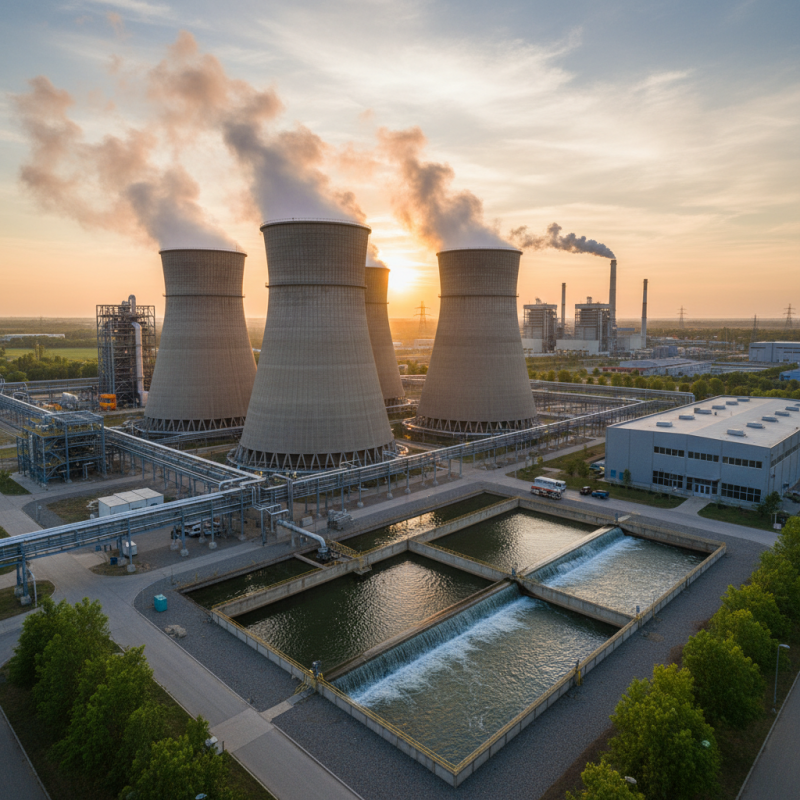
Cooling towers play a crucial role in industrial applications. Their ability to enhance energy efficiency is particularly noteworthy. By using a cooling tower, industries can significantly reduce their energy consumption. This reduction translates directly into lower operating costs, benefitting both the company and the environment.
Enhanced energy efficiency is achieved through improved heat exchange processes. Cooling towers use water to absorb heat efficiently. This method requires less energy compared to traditional cooling systems. As temperatures rise, these towers adapt, optimizing their performance. However, not all facilities utilize them properly. Regular maintenance is essential to ensure peak performance and avoid inefficiencies.
Investing in energy-efficient cooling systems is vital. The upfront costs can be daunting, but the long-term savings are often substantial. Some may overlook the need for periodic assessments, which can lead to wasted energy. Addressing these gaps can foster better outcomes. Industries must be mindful of their energy usage to enhance overall sustainability.
Cooling towers play a crucial role in industrial settings by optimizing water usage. These systems significantly reduce the amount of water needed for cooling processes. By recycling water, they help industries save resources and lower their operational costs. Efficient cooling systems can minimize evaporation losses, ensuring that water is used wisely.
However, there are challenges that come with these systems. Maintenance can be complex, and regular checks are necessary to ensure optimal performance. If not properly managed, cooling towers may lead to water quality issues. This necessitates ongoing investment in monitoring and maintenance. Industries need to strike a balance between efficient cooling and sustainable practices.
Effective water management requires a commitment to best practices and regular assessments.
Cooling towers play a significant role in enhancing the reliability of industrial processes. They operate by dissipating heat, which can improve equipment performance. With effective temperature control, machines can function optimally. This reduces the chances of unexpected breakdowns.
Moreover, consistent cooling leads to stable operating conditions. Fluctuations in temperature can lead to process inefficiencies. When cooling systems are reliable, it minimizes downtime. Workers can focus on their tasks without worrying about equipment overheating. It’s essential to maintain these cooling systems properly. Neglect can lead to reduced efficiency or even system failure.
In addition, cooling towers help in energy conservation. They use water to absorb heat, which is often more efficient than air cooling. However, they require regular monitoring to prevent issues such as algae growth. This not only affects performance but can introduce risks. Ensuring the system is clean and well-maintained is crucial for optimal operation. Balancing cost and maintenance can be challenging, yet vital for long-term success.
Cooling towers serve as a vital component in industrial operations, contributing significantly to sustainable practices. They effectively dissipate heat into the atmosphere, allowing processes to function efficiently. Utilizing evaporative cooling technology, they minimize the use of freshwater resources. This is crucial in regions experiencing water scarcity.
The environmental benefits of cooling towers extend beyond water conservation. They can lower energy consumption, reducing greenhouse gas emissions. Moreover, these towers can help industries comply with strict environmental regulations. However, the initial setup and maintenance require careful planning and investment. Some facilities struggle with optimizing their cooling systems, leading to inefficiencies.
A successful operation depends on regular assessments and adjustments to ensure peak performance. Without this vigilance, potential issues may arise, like drift loss or inadequate cooling. Addressing these challenges can involve learning from past mistakes. Ultimately, fostering a culture of sustainability in industrial cooling is essential for minimizing environmental impact.
Cooling towers are vital for many industrial processes. They help manage heat produced during operations. One major advantage is cost savings. Companies can slash their maintenance expenses over time. This reduction often stems from fewer breakdowns and minimal repairs.
Operational expenses also decline when using a cooling tower. These systems optimize water usage, leading to lower utility bills. Moreover, the efficient cooling process can extend equipment life. It means less frequent replacements are necessary. However, it's important to remember that without proper care, a cooling tower can become inefficient.
Regular maintenance is crucial. Neglecting this can increase costs rather than decrease them. Companies might face unexpected shutdowns, leading to lost production time. Overall, while cooling towers offer significant benefits, they require attention and proper upkeep to realize those savings fully.
„Thanks to the LUVIR technology, the solder resist process could be switched directly from the previously used mask exposure to direct exposure. As an outstanding digital solution on the market, this technology has been able to demonstrate fast process times and superior quality on our certified conventional ink in production. This allowed us to fully digitize the solder mask process at low cost – without process or ink adjustments. An excellent benefit to our production in Rot am See.“
Ralf Göhringer (Head of Production WE Rot am See)
I would definitely recommend the Limata machine and team for a future company purchase
Michael Greenaway
Compunetics Inc.
“The Limata ldi has been amazing!! Best thing we did was buy this machine”
Richard Brady
GM
Circuitlabs
“Since 2019, we have been running the Limata X1000 LDI system (including LUVIR for solder mask imaging) in daily production as an addition to our current process with film. The machine was capable of properly exposing Taiyo PSR-4000 BN (DI) solder mask types on normal to high-copper boards using a new and unique direct imaging process. The machine operating interface is very user friendly which allowed for a quick technical training curve. The pre-registration processing reduced several seconds of production time at every print. Limata support and service staff is incomparable. They supported our team every step of the way at basically any time of the day or night, with literally, an immediate response time, customizing the software interface to best fit our Operations and needs.
We have exposed more than 8,000 prints since end of October, on various solder mask colors and some resist film panels. Limata, has proven to be very capable and innovative. They are a strong contender in the industry.
We have very much enjoyed this project, and working with the team!
Thank you Limata for the continued support and being a part of our growth.”
Bill Sezate
Vice President, GM
Summit Interconnect
As a replacement to our current contact exposure process with film, the LIMATA X2000 system including LUVIR-Technology was capable of properly exposing non-LDI solder mask types using a direct imaging process. The machine offers cutting edge software with a very intuitive operating interface which allowed for quick technician training curve. The dual drawer system combined with pre-registration processing reduced several seconds of production time at every machine cycle. Limata support and service staff is world class. They added software patches to keep production running at shortest possible response times, customized the software interface to best fit our in-house Operations system, and even wrote a step-by-step machine processing manual. As a result of the project, we have exposed more than 16,000 times on various product types and solder mask brands/colors. Limata, in a very short timeframe as a company, has definitely shown they are truly innovative and will be challenging the industry of direct imaging for the top spot.
Kevin Beattie
Process Engineer
TTM Technologies
Forest Grove Division
