Seamless Tubes offer numerous advantages in various industrial applications. They are known for their strength and durability, making them ideal for high-pressure environments. According to a recent report by the Steel Tube Institute, the seamless tube market is expected to grow by 4.5% annually, reflecting increasing demand in sectors such as construction and oil and gas.
Expert insights into seamless tube applications highlight their unique properties. John Smith, a leading specialist in materials engineering, emphasizes, “The seamless tube is crucial for ensuring structural integrity in demanding applications.” His statement underscores the importance of seamless tubes in achieving safety and performance standards.
However, despite these benefits, some challenges remain. The manufacturing process for seamless tubes is complex and can lead to inconsistencies. Manufacturers must focus on quality control measures to address these potential issues. As the industry evolves, understanding the balance between efficiency and quality will be key to maximizing the advantages of seamless tubes.
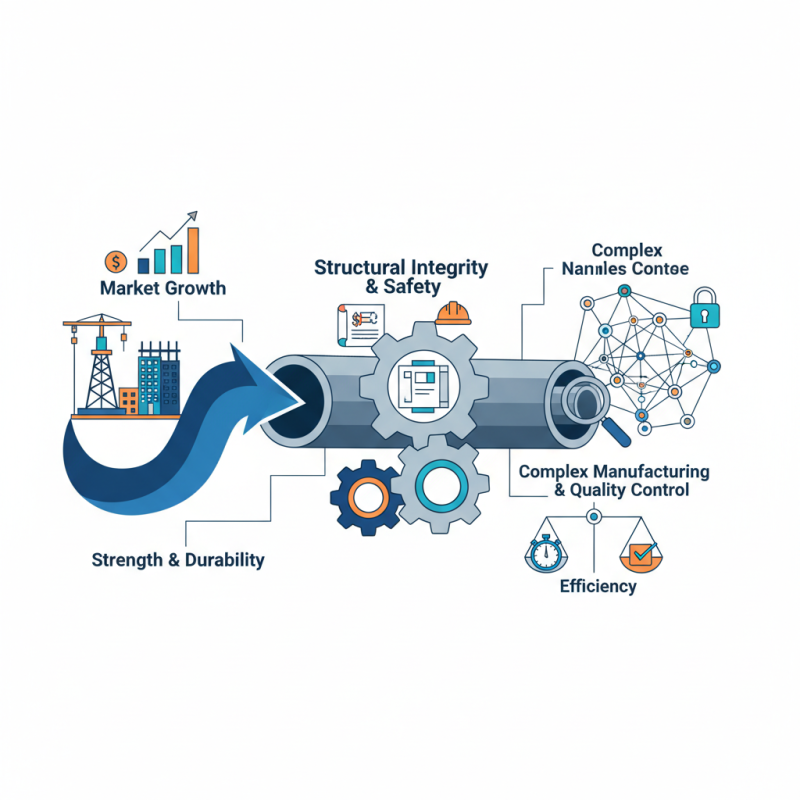
Seamless tubes are increasingly favored over welded alternatives due to their numerous advantages. One significant benefit lies in their strength and durability. Without welds, seamless tubes offer a uniform structure, reducing weak points. This uniformity allows them to withstand higher pressures and stresses, making them ideal for high-performance applications.
Another advantage is resistance to corrosion. Seamless tubes can be produced to specific grades and coatings that enhance their ability to resist environmental factors. This is especially critical in industries like oil and gas, where exposure to harsh conditions is common.
Tip: When selecting seamless tubes, consider the application’s specific requirements. Understanding the environment and pressure levels is crucial.
Seamless tubes also provide better aesthetic appeal. Their smooth finish makes them an attractive choice for visible components in design projects. Yet, one must ponder budget considerations. While seamless tubes can be more expensive upfront, their longevity often offsets initial costs.
Tip: Always weigh the short-term versus long-term benefits when making a decision. Sometimes, investing more initially can save money in the long run.
Seamless tubes play a vital role in various industries, offering unique advantages. In the automotive sector, seamless tubes are essential for manufacturing exhaust systems and structural components. Their high strength and lightweight properties contribute to improved fuel efficiency and reduced emissions. Engineers often prefer them for critical applications where safety is paramount.
In the oil and gas industry, seamless tubes are crucial for transportation and storage. These tubes withstand high pressure and extreme temperatures. They are used in pipelines and drilling operations. The corrosion resistance of seamless tubes ensures longevity and reliability, even in harsh environments. Many projects face challenges like material fatigue. Seamless tubes often address these issues effectively.
The aerospace industry also utilizes seamless tubes extensively. They are used in aircraft structures and engine components. These tubes must meet strict safety standards. Engineers need to consider factors like weight and strength during design. While seamless tubes excel in many applications, there can be drawbacks, such as higher costs compared to welded tubes. It's essential to assess project requirements and budget constraints when selecting materials.
Seamless tubes offer a unique advantage in various projects, especially regarding cost-effectiveness. Because there are no seams, these tubes are less likely to experience failures. This reliability can lead to significant savings over time. Fewer failures mean less downtime and reduced repairs. This can be a crucial factor in tight project budgets.
Tip: Consider the project environment. Seamless tubes are often more resistant to high pressures and temperatures. This durability might reduce long-term costs significantly.
The initial investment for seamless tubes could be higher than welded alternatives. However, their longevity justifies this cost. Projects that require heavy usage can benefit from seamless tubes. They require less maintenance, and this can help keep costs in check.
Tip: Evaluate the specifications of your project. Ensure that the seamless tubes you choose meet necessary strength and pressure requirements. This will maximize the cost-effectiveness of your investment.
While seamless tubes are durable, it's essential to assess specific project needs. Not all applications justify the higher price. Understanding your project's requirements will help you make an informed decision. Balancing cost and performance is vital for any project manager.
| Dimension | Material Type | Cost ($/meter) | Applications | Advantages |
|---|---|---|---|---|
| 20 mm | Stainless Steel | 50 | Oil & Gas | Corrosion Resistance |
| 25 mm | Carbon Steel | 30 | Construction | High Strength |
| 30 mm | Alloy Steel | 70 | Automotive | Durability |
| 15 mm | Copper | 90 | Electrical | Excellent Conductivity |
| 40 mm | Titanium | 150 | Aerospace | Lightweight, Strong |
Seamless tubes have gained popularity in various industries due to their unique characteristics. One major benefit is their enhanced durability. These tubes are manufactured without any welds, which reduces the risk of weak points. This makes them ideal for high-pressure applications, such as in oil and gas pipelines. Engineers often choose seamless tubes for their reliability.
In addition to durability, seamless tubes offer excellent performance under extreme conditions. They can withstand high temperatures and corrosive environments better than welded tubes. This resilience can lead to lower maintenance costs over time. While seamless tubes may have a higher initial investment, their longevity can offset this. However, it's essential to consider the specific project requirements before making a choice. Some projects may benefit from lower-cost alternatives.
Despite their advantages, seamless tubes are not always the best solution. For instance, they can sometimes be heavier than other options, which may impact transport and installation. It’s essential to weigh these factors carefully. In some cases, alternative materials or designs might suit a project better. Understanding the potential drawbacks is vital for achieving project success.
The manufacturing of seamless tubes requires precise processes to ensure quality and reliability. Often made from steel or other alloys, these tubes undergo a series of steps. The initial phase involves heating a solid billet to a high temperature. This allows for the formation of a hollow tube without seams. Next, the tube is pierced, creating the necessary opening. This process is crucial for achieving the desired dimensions.
Quality control plays a significant role in the production of seamless tubes. After forming, the tubes undergo rigorous testing. Techniques such as ultrasonic testing and radiographic inspection are utilized. These methods help identify any internal defects. They ensure that the tubes meet industry standards. However, not all manufacturers adhere to the same quality standards. This inconsistency can lead to varying product reliability.
The seamless tube manufacturing process also faces challenges. Equipment malfunctions or human errors can occur. These issues can lead to delays and increase production costs. It's essential for manufacturers to invest in training and maintenance. This can improve both product quality and overall efficiency. Consistent evaluation of processes is necessary to maintain high standards in seamless tube production.
„Thanks to the LUVIR technology, the solder resist process could be switched directly from the previously used mask exposure to direct exposure. As an outstanding digital solution on the market, this technology has been able to demonstrate fast process times and superior quality on our certified conventional ink in production. This allowed us to fully digitize the solder mask process at low cost – without process or ink adjustments. An excellent benefit to our production in Rot am See.“
Ralf Göhringer (Head of Production WE Rot am See)
I would definitely recommend the Limata machine and team for a future company purchase
Michael Greenaway
Compunetics Inc.
“The Limata ldi has been amazing!! Best thing we did was buy this machine”
Richard Brady
GM
Circuitlabs
“Since 2019, we have been running the Limata X1000 LDI system (including LUVIR for solder mask imaging) in daily production as an addition to our current process with film. The machine was capable of properly exposing Taiyo PSR-4000 BN (DI) solder mask types on normal to high-copper boards using a new and unique direct imaging process. The machine operating interface is very user friendly which allowed for a quick technical training curve. The pre-registration processing reduced several seconds of production time at every print. Limata support and service staff is incomparable. They supported our team every step of the way at basically any time of the day or night, with literally, an immediate response time, customizing the software interface to best fit our Operations and needs.
We have exposed more than 8,000 prints since end of October, on various solder mask colors and some resist film panels. Limata, has proven to be very capable and innovative. They are a strong contender in the industry.
We have very much enjoyed this project, and working with the team!
Thank you Limata for the continued support and being a part of our growth.”
Bill Sezate
Vice President, GM
Summit Interconnect
As a replacement to our current contact exposure process with film, the LIMATA X2000 system including LUVIR-Technology was capable of properly exposing non-LDI solder mask types using a direct imaging process. The machine offers cutting edge software with a very intuitive operating interface which allowed for quick technician training curve. The dual drawer system combined with pre-registration processing reduced several seconds of production time at every machine cycle. Limata support and service staff is world class. They added software patches to keep production running at shortest possible response times, customized the software interface to best fit our in-house Operations system, and even wrote a step-by-step machine processing manual. As a result of the project, we have exposed more than 16,000 times on various product types and solder mask brands/colors. Limata, in a very short timeframe as a company, has definitely shown they are truly innovative and will be challenging the industry of direct imaging for the top spot.
Kevin Beattie
Process Engineer
TTM Technologies
Forest Grove Division
