Selecting the right 480v To 13.8kv Step-Up Power Transformer Specs requires more than comparing voltage ratios. A 480 V primary and 13.8 kV secondary produce an approximate 28.75:1 ratio. Yet the correct transformer also depends on load kVA, frequency, impedance, cooling, insulation, grounding, and installation conditions.
The U.S. Department of Energy’s Distribution Transformers Energy Conservation Standards emphasize reducing lifetime losses, not merely purchase cost. IEEE C57 standards provide widely used guidance for transformer ratings, testing, insulation, and performance. IEC 60076 also supports international evaluation of power-transformer construction and tests. These references matter because a 15 kV-class transformer may commonly use a 95 kV BIL rating, but the required insulation level depends on switching surges, lightning exposure, and the site’s protection design.
Anthony J. Pansini, a recognized transformer engineering author, described the transformer as “the heart of the power system.” That principle remains practical. A 500 kVA unit serving a stable motor load needs different specifications from a 2,500 kVA unit feeding variable-speed drives. Harmonic currents can increase heating. High inrush current can disturb upstream protection.
The neat ratio is not enough. Sometimes, the overlooked detail is neutral grounding. Another common mistake is accepting catalog impedance without checking fault-current calculations. This guide compares five practical specification groups, including capacity, voltage regulation, impedance, insulation, cooling, and protection. The recommendations should still be verified by a qualified electrical engineer and the applicable local standards.
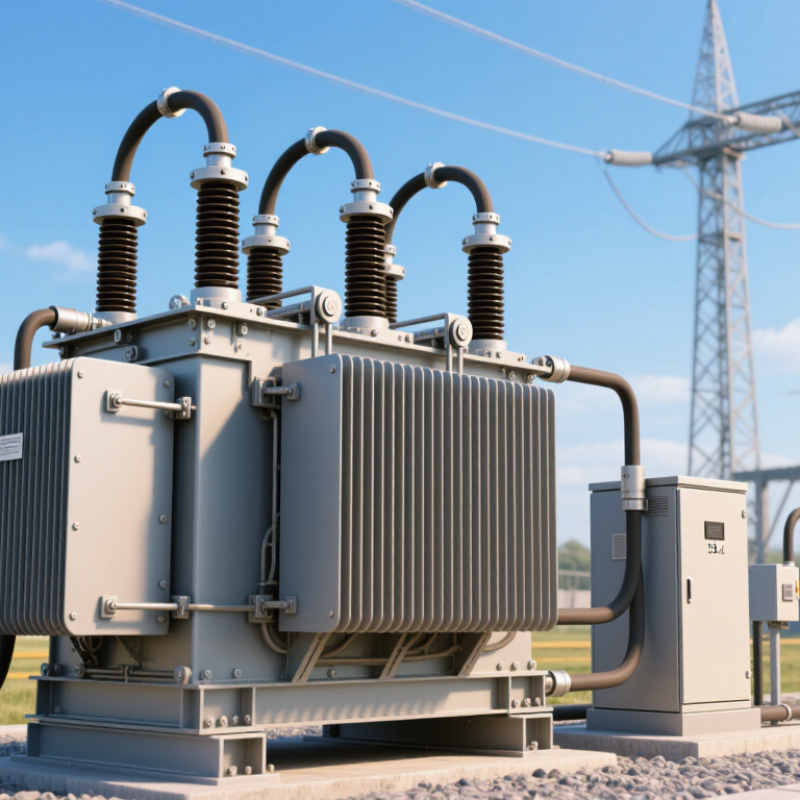
A 480V to 13.8kV transformer raises low-voltage output for medium-voltage distribution. The voltage ratio is approximately 28.75:1. This arrangement suits factories, microgrids, battery systems, and generator interconnections. The U.S. Energy Information Administration reported 32.4 GW of utility-scale solar capacity additions in 2023. More distributed generation increases the need for carefully designed collection transformers.
Five specifications deserve close attention. Select the kVA rating from measured load, not optimistic forecasts. Confirm 13.8kV insulation, impulse withstand level, and grounding method. Specify impedance, often near 5–8%, because it affects fault current and voltage regulation. Choose a suitable vector group for system phase relationships. Finally, verify cooling, tap range, enclosure, and altitude limits. IEEE C57.12.00 and IEC 60076 provide widely used design and testing frameworks.
Efficiency also matters during continuous operation. The U.S. Department of Energy estimated that updated distribution-transformer standards could save about 3.6 quadrillion British thermal units over thirty years. A transformer can run quietly while wasting substantial energy. Field measurements should include winding temperature, harmonics, and actual power factor. I would not treat a standard 480V rating as automatically suitable for inverter output. Harmonic heating can change the real duty cycle. A perfect specification is rarely perfect in the field.
For a 480V to 13.8kV step-up transformer, compare more than the voltage ratio. The ratio is about 28.75:1, but the kVA rating must match continuous load and motor-starting demand. Check the nameplate frequency, phase, winding connection, and available neutral. Impedance matters too. A higher impedance can limit fault current, yet it may increase voltage drop during heavy loads. Review efficiency, temperature rise, cooling method, and sound level for the installation area. These details affect operating cost and maintenance planning.
Insulation and safety specifications deserve close attention. Confirm the rated insulation level, impulse withstand rating, creepage distance, and high-voltage clearances. Ask for grounding provisions, surge protection coordination, and suitable enclosure protection. Oil-filled units may require leak control and fire planning. Dry-type units may simplify indoor placement, but ventilation remains essential. Specify de-energized taps or an approved tap-changing system for voltage correction. Routine tests should include winding resistance, turns ratio, insulation resistance, and dielectric testing. Factory documentation is not optional.
Tips: Compare the transformer’s impedance with the site fault study. Check cable terminations before ordering. I would also verify actual load growth, not just today’s demand. A perfect specification rarely exists. Recheck assumptions with a qualified engineer, especially where medium-voltage switching and grounding are involved. Small omissions can become expensive field changes.
5 Best 480V to 13.8kV Step Up Transformer Specs?
Five Leading Transformer Specification Profiles
A compact dry-type profile suits indoor facilities and moderate loads. Typical ratings range from 500 to 750 kVA, with 480 V primary and 13.8 kV secondary windings. Cast-resin insulation improves fire safety, but ventilation remains essential. Specify a 5% impedance and 60 Hz operation. This option is clean, though often louder than expected.
An oil-filled distribution profile supports larger loads, commonly from 1 to 5 MVA. It may include sealed-tank construction, mineral or ester fluid, and off-circuit tap settings. A 13.8 kV winding often uses 95 kV BIL, subject to local engineering requirements. Include temperature indicators and pressure relief protection. Small details matter here.
A heavy-duty industrial profile can reach 5 to 10 MVA. It should define load losses, no-load losses, impedance tolerance, grounding method, and short-circuit withstand capability. Forced-air cooling may increase capacity, but it adds controls and maintenance points. That tradeoff deserves honest review.
A renewable-energy profile needs stronger voltage regulation and frequent-load monitoring. Common specifications include on-load tap changing, reinforced insulation, and a grounded-wye secondary. Harmonic heating can become troublesome with power electronics. Do not assume the base rating covers every operating condition.
A high-reliability profile uses dual secondary windings or parallel transformer units. This arrangement improves maintenance flexibility and service continuity. It also demands careful phase matching, protection coordination, and installation space. A perfect specification does not exist. Final ratings should follow measured load data, fault studies, ambient temperature, and applicable electrical standards.
For a 480V to 13.8kV step-up transformer, the best specifications support safe installation, dependable protection, and practical maintenance. Confirm the kVA rating against the motor, generator, or facility load. Check primary and secondary voltages, frequency, impedance, temperature rise, insulation class, and basic impulse level. Outdoor units also need a suitable enclosure and corrosion-resistant finish.
Installation must follow the approved electrical design, utility requirements, and local codes. Place the transformer on a level, engineered foundation with clear working space. Provide grounding conductors, bonding, lightning protection, and correctly rated cable terminations. Keep high-voltage clearances visible and unobstructed. Never rely on appearance alone. A rushed cable check is still a failure point.
Protection should include primary fuses or circuit breakers, surge arresters, overcurrent coordination, and ground-fault protection. Differential protection may be appropriate for larger installations. During commissioning, qualified personnel should verify winding resistance, insulation resistance, turns ratio, polarity, and protective relay settings. Record every result. Maintenance should include infrared scans, oil sampling for liquid-filled units, bushing inspections, connection torque checks, and cleaning around ventilation openings. Listen for unusual humming. Small changes matter. Maintenance intervals should reflect loading, environment, and manufacturer data, not a convenient calendar. Some inspection plans look complete but miss loose terminations. Review them honestly after the first operating season.
Selecting a 480V to 13.8kV transformer starts with the real load, not the nameplate alone. Record motor starting currents, continuous demand, future expansion, and harmonic-producing equipment. A transformer operating near 80% capacity usually offers useful headroom, but this is not a universal rule. IEEE C57.12.00 and IEC 60076 provide recognized requirements for ratings, insulation, temperature rise, and testing.
Compare five practical specifications:
For example, a 1,500 kVA unit may suit a stable industrial load, while frequent motor starts could require more capacity or a reduced-impedance design. A typical 13.8kV system needs careful basic impulse insulation coordination, grounding, and surge protection. The U.S. Department of Energy has reported that transformer losses consume tens of billions of kilowatt-hours annually, so no-load and load-loss data deserve serious attention. Small efficiency gains remain active every hour.
Tips: Request certified routine-test results, including ratio, winding resistance, insulation resistance, and applied-voltage tests. Check the 480V service voltage under load, not only at the switchboard. Confirm enclosure rating, altitude, ambient temperature, sound limits, and installation clearance. I would also model harmonic heating before choosing capacity; overlooking it is an easy mistake. A lower purchase price can become expensive through losses, maintenance, or premature insulation aging.
„Thanks to the LUVIR technology, the solder resist process could be switched directly from the previously used mask exposure to direct exposure. As an outstanding digital solution on the market, this technology has been able to demonstrate fast process times and superior quality on our certified conventional ink in production. This allowed us to fully digitize the solder mask process at low cost – without process or ink adjustments. An excellent benefit to our production in Rot am See.“
Ralf Göhringer (Head of Production WE Rot am See)
I would definitely recommend the Limata machine and team for a future company purchase
Michael Greenaway
Compunetics Inc.
“The Limata ldi has been amazing!! Best thing we did was buy this machine”
Richard Brady
GM
Circuitlabs
“Since 2019, we have been running the Limata X1000 LDI system (including LUVIR for solder mask imaging) in daily production as an addition to our current process with film. The machine was capable of properly exposing Taiyo PSR-4000 BN (DI) solder mask types on normal to high-copper boards using a new and unique direct imaging process. The machine operating interface is very user friendly which allowed for a quick technical training curve. The pre-registration processing reduced several seconds of production time at every print. Limata support and service staff is incomparable. They supported our team every step of the way at basically any time of the day or night, with literally, an immediate response time, customizing the software interface to best fit our Operations and needs.
We have exposed more than 8,000 prints since end of October, on various solder mask colors and some resist film panels. Limata, has proven to be very capable and innovative. They are a strong contender in the industry.
We have very much enjoyed this project, and working with the team!
Thank you Limata for the continued support and being a part of our growth.”
Bill Sezate
Vice President, GM
Summit Interconnect
As a replacement to our current contact exposure process with film, the LIMATA X2000 system including LUVIR-Technology was capable of properly exposing non-LDI solder mask types using a direct imaging process. The machine offers cutting edge software with a very intuitive operating interface which allowed for quick technician training curve. The dual drawer system combined with pre-registration processing reduced several seconds of production time at every machine cycle. Limata support and service staff is world class. They added software patches to keep production running at shortest possible response times, customized the software interface to best fit our in-house Operations system, and even wrote a step-by-step machine processing manual. As a result of the project, we have exposed more than 16,000 times on various product types and solder mask brands/colors. Limata, in a very short timeframe as a company, has definitely shown they are truly innovative and will be challenging the industry of direct imaging for the top spot.
Kevin Beattie
Process Engineer
TTM Technologies
Forest Grove Division
