Choosing the Best 50W Explosion Proof High Bay Hood in 2026 starts with the worksite, not the product photo. A compact 50-watt fixture may suit a low ceiling, a narrow service bay, or a defined task area. But wattage alone cannot establish safe or effective use. The hazardous-area classification, gas or dust group, temperature rating, mounting height, and ambient conditions all matter. A bright beam on a specification sheet can still leave dark patches beneath pipes or platforms.
The search term xplosion-proof high bay hood 50w appears in product listings, but buyers should verify the actual certification and documentation behind each model. Check the nameplate, installation instructions, hood material, lens design, and stated operating temperature. Ask whether the fixture is suitable for the exact location and maintenance plan. Small details count. A loose mounting point or mismatched enclosure can undermine an otherwise capable light. That assumption deserves a second look.
A named expert quotation cannot be verified from the material provided, so this introduction does not assign invented words to a specialist. Instead, the guide focuses on practical checks that experienced lighting and safety teams use: confirm the site requirements, compare certified specifications, and inspect the beam pattern before purchase. Look closely at the edges. The right fixture should fit the environment, illuminate the work clearly, and come with documentation that supports its stated use.
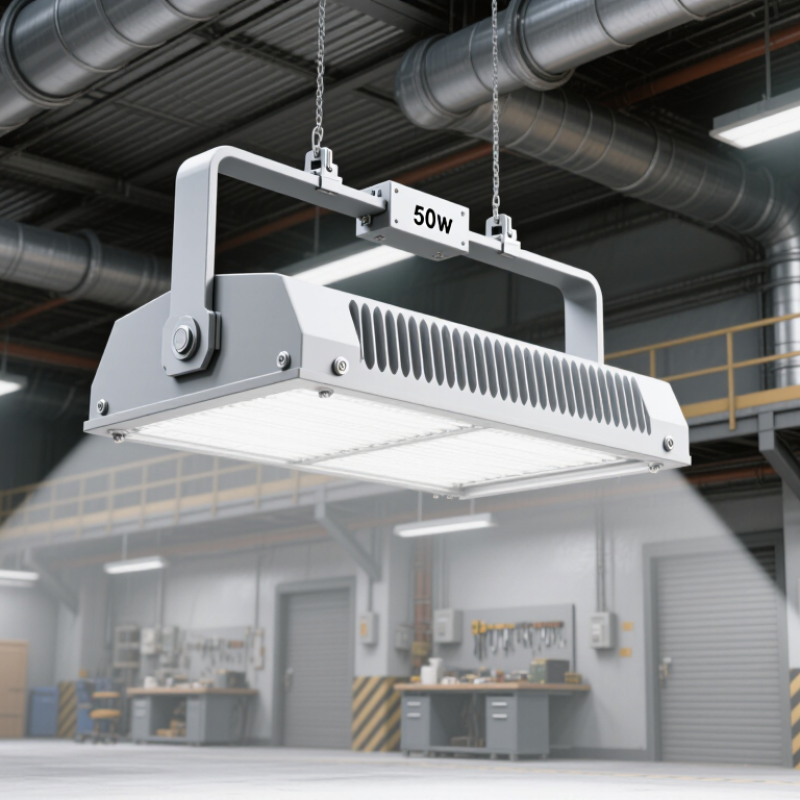
In 2026, the best 50W explosion-proof high bay hood is more than a bright lamp inside a heavy casing. It is a tested assembly suited to the specific hazardous location, mounting height, and operating temperature. Check that the hood, seals, cable entries, and light source are approved together for the intended environment. A robust-looking cover alone proves very little. Details matter.
Light quality deserves equal attention. At a high ceiling, a narrow beam may leave dark patches between workstations, while a broad beam can create glare on polished floors. Compare verified lumen output, beam distribution, and thermal data rather than relying on wattage alone. A 50W unit should also manage heat effectively; excess heat can shorten component life and affect performance. Look for clear test documentation and practical information about cleaning, inspection, and replacement parts.
A specification sheet can still leave an awkward question: will the fixture hold up around dust, vibration, or frequent washdowns? Match its protection rating and temperature range to actual site conditions, and have a qualified professional verify suitability. Do not modify the hood or add unapproved parts. Even a well-chosen fixture cannot fix poor placement, and that detail is easy to overlook.
What defines the best 50W explosion-proof high bay hood in 2026? Compare estimated light output at different LED efficacies.
Estimated output is calculated as 50 watts multiplied by luminous efficacy. These figures are illustrative, not product test results. For hazardous locations, verify the fixture’s certifications and suitability for the specific site; light output alone does not establish explosion protection.
A 50W high bay hood rated at 120–150 lumens per watt corresponds to 6,000–7,500 lumens. The calculation is simple: multiply input watts by efficacy. But check what the rating describes. If it refers to the LED chips alone, driver losses, heat, and the protective hood can reduce the light leaving the fixture. A complete-luminaire rating gives a more useful comparison. Small detail, big difference.
In an industrial space, those lumens need to reach the work area, not just look impressive on a specification sheet. A wide beam can spread light across a loading bay, while a narrower distribution may suit higher ceilings or defined work zones. Mounting height, surface reflectance, and spacing all affect the result. I would compare photometric data and confirm that the stated output was measured under clear test conditions. The hood and enclosure may also affect maintenance access and heat dissipation. Not every 50W model performs the same way. A real installation can still fall short of the calculated figure, so allow room for that uncertainty when planning illuminance.
A 50W rating describes power, not hazardous-area suitability. A hood above a filling line may face gas vapors, conductive dust, or both. Start with the site’s documented area classification. IEC 60079-10-1 covers explosive gas atmospheres; IEC 60079-10-2 addresses combustible dust. Small wattage. Big consequences.
For gas, Zone 0, 1, and 2 typically call for equipment protection levels Ga, Gb, and Gc respectively, or a higher level. Dust zones 20, 21, and 22 use Da, Db, and Dc. These classifications come from IEC 60079; confirm the equipment certificate covers the actual zone and gas or dust group. A hood’s shape does not establish its rating.
Temperature matters just as much. IEC 60079-0 defines gas temperature classes: T4 limits the equipment surface to 135°C, while T6 limits it to 85°C. Compare that marked maximum with the substance’s ignition temperature, using the project’s required safety margin. Dust requires checking its cloud and layer ignition temperatures; a hot lens or clogged fins can change the risk. I would still question any selection based only on a catalog headline. Verify the complete marking, ambient range, and installation requirements against the site assessment and IEC 60079-14.
A 50W explosion-proof high bay hood may work above a compact production line, but its ratings matter as much as its output. IP66 means the enclosure is dust-tight and protected against powerful water jets. Dust gets everywhere. Fine powder can settle around a lens, while washdown spray may reach seals and cable entries. IP66 helps limit those risks, but it does not mean the fixture can be submerged or cleaned with every pressure-washing method.
IK08 indicates resistance to mechanical impacts up to 5 joules under the applicable test method. That protection can help when tools, carts, or small parts strike a fixture in a busy work area. A dented housing is more than cosmetic; damage may affect seals or alignment. Still, impact ratings do not make a luminaire indestructible. Inspect the hood, lens, fasteners, and cable glands after installation and after any hard strike.
These ratings describe enclosure protection, not explosion protection by themselves. The fixture must also carry suitable certification for the specific hazardous location and installation conditions. Check the rating plate, temperature limits, wiring method, and maintenance instructions before specifying it. One detail is easy to miss: a damaged gasket can undermine an otherwise well-rated enclosure. The environment changes, too, and inspection intervals may need adjustment.
A 50W rating does not tell you whether a fixture will light the work surface well. Compare mounting height, beam spread, and the required illumination together. The Illuminating Engineering Society’s RP-7-21 guidance treats industrial lighting as task-specific, emphasizing appropriate illuminance and uniformity. At a high ceiling, a narrow beam may leave dark gaps between aisles. A wide beam can soften those gaps but may waste light on walls. Check the photometric layout at the actual mounting height, then verify it with a light meter after installation. Small details matter. A DOE Energy Saver benchmark says LEDs use at least 75% less energy than incandescent lighting; that comparison is not a direct guarantee of savings for a 50W industrial fixture.
Tips: Match beam angle to the room, not just the fixture label. Check the lens for dust, and inspect the hood, seals, and fasteners on a planned schedule. Follow the fixture’s certified installation and maintenance instructions, especially before opening its enclosure. A scuffed lens can reduce useful light. Maintenance intervals also depend on dust, heat, and operating hours, so a calendar alone may miss problems. Record readings at the same workbench points each time. The comparison is imperfect, but it can reveal gradual light loss.
„Thanks to the LUVIR technology, the solder resist process could be switched directly from the previously used mask exposure to direct exposure. As an outstanding digital solution on the market, this technology has been able to demonstrate fast process times and superior quality on our certified conventional ink in production. This allowed us to fully digitize the solder mask process at low cost – without process or ink adjustments. An excellent benefit to our production in Rot am See.“
Ralf Göhringer (Head of Production WE Rot am See)
I would definitely recommend the Limata machine and team for a future company purchase
Michael Greenaway
Compunetics Inc.
“The Limata ldi has been amazing!! Best thing we did was buy this machine”
Richard Brady
GM
Circuitlabs
“Since 2019, we have been running the Limata X1000 LDI system (including LUVIR for solder mask imaging) in daily production as an addition to our current process with film. The machine was capable of properly exposing Taiyo PSR-4000 BN (DI) solder mask types on normal to high-copper boards using a new and unique direct imaging process. The machine operating interface is very user friendly which allowed for a quick technical training curve. The pre-registration processing reduced several seconds of production time at every print. Limata support and service staff is incomparable. They supported our team every step of the way at basically any time of the day or night, with literally, an immediate response time, customizing the software interface to best fit our Operations and needs.
We have exposed more than 8,000 prints since end of October, on various solder mask colors and some resist film panels. Limata, has proven to be very capable and innovative. They are a strong contender in the industry.
We have very much enjoyed this project, and working with the team!
Thank you Limata for the continued support and being a part of our growth.”
Bill Sezate
Vice President, GM
Summit Interconnect
As a replacement to our current contact exposure process with film, the LIMATA X2000 system including LUVIR-Technology was capable of properly exposing non-LDI solder mask types using a direct imaging process. The machine offers cutting edge software with a very intuitive operating interface which allowed for quick technician training curve. The dual drawer system combined with pre-registration processing reduced several seconds of production time at every machine cycle. Limata support and service staff is world class. They added software patches to keep production running at shortest possible response times, customized the software interface to best fit our in-house Operations system, and even wrote a step-by-step machine processing manual. As a result of the project, we have exposed more than 16,000 times on various product types and solder mask brands/colors. Limata, in a very short timeframe as a company, has definitely shown they are truly innovative and will be challenging the industry of direct imaging for the top spot.
Kevin Beattie
Process Engineer
TTM Technologies
Forest Grove Division
