Choosing the best Aerosol Can Filler in 2026 depends on the product, production volume, and level of automation—not on a single machine specification. A line filling a few hundred cans per shift has different needs from a high-speed operation running multiple formats. Small details matter.
A useful comparison starts with filling accuracy, changeover time, can-size range, and the consistency of crimping and valve placement. Buyers should also examine how operators clean the equipment, access routine service points, and respond to stoppages. Ask for a demonstration using containers and product characteristics similar to your own. A polished brochure is not a factory test.
A qualified filling engineer can help assess those trade-offs, but no source material was provided to verify a named expert quotation. Rather than invent one, this guide focuses on practical criteria and transparent questions. One point deserves reflection: the fastest machine is not automatically the best value if changeovers consume hours or maintenance support is difficult to reach. Compare actual output, rejected cans, service terms, and operator training before deciding. Then match the equipment to documented production needs, with room for realistic growth. A careful choice may feel less exciting than a bold capacity claim. It can be more dependable.
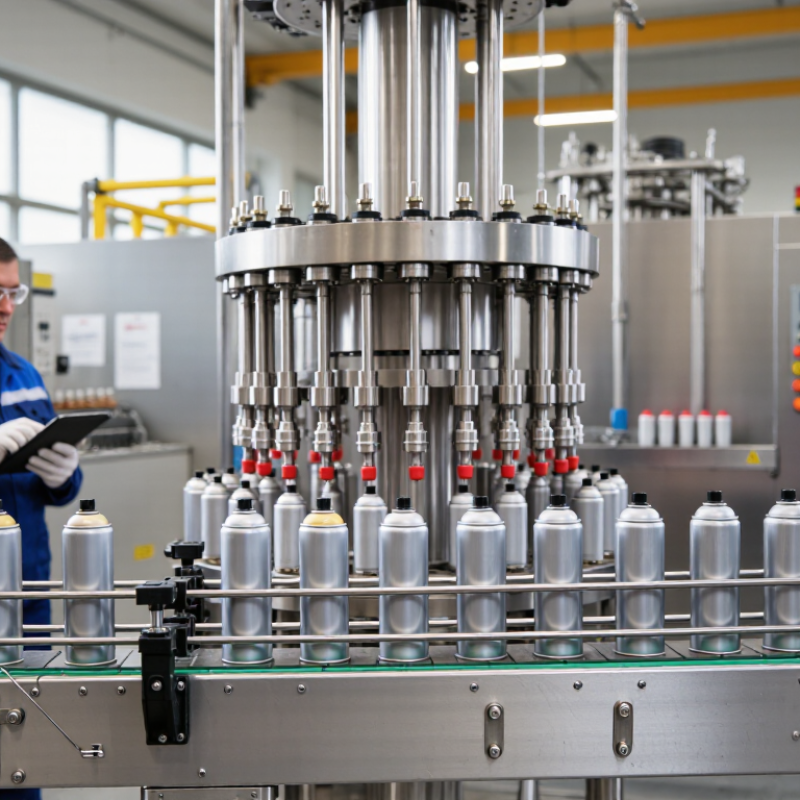
An aerosol can filler is equipment that doses a product into a container, crimps the valve in place, and adds propellant. Many filling lines also weigh cans and check for leaks. The exact setup depends on the formula, can size, valve, and required output. A line handling a thin cleaning liquid may need different controls from one filling a thicker personal-care product. Small details matter. A poorly matched nozzle or inconsistent fill can cause waste and uneven performance.
These machines serve personal care, household, food, and technical-product manufacturing. The European Aerosol Federation’s 2022 production statistics counted about 5.3 billion aerosol dispensers filled in Europe; personal-care products accounted for roughly 55% of output. That scale helps explain why accurate dosing and repeatable quality checks matter. A filler is not just a pump: it is part of a process involving container handling, valve placement, pressure control, and inspection. Still, higher speed is not always better. Changeovers and cleaning take time, and real production lines rarely run as neatly as a brochure suggests. Teams should compare a filler’s material compatibility, batch size, and maintenance needs with their actual products before choosing equipment.
Comparing Manual, Semi-Automatic, and Automatic Filling Systems
The best aerosol can filler depends on production volume, product variety, and available staff.
A manual system gives an operator direct control over each can. It can suit small batches and frequent changeovers, but results may vary with operator technique. Watch the fill weight, valve placement, and crimp quality. Small differences matter.
A semi-automatic system handles selected steps mechanically while an operator loads cans or starts each cycle. This can improve consistency without requiring a fully integrated production line. It may suit growing operations that need moderate output and flexibility. Changeovers still take time. So does training.
Automatic systems coordinate more steps, such as conveying, filling, and valve crimping. Sensors and in-process checks can support repeatable production, but they do not remove the need for maintenance or quality control. Higher speed also makes setup errors costly.
Not always a win.
Compare realistic hourly output, changeover time, cleaning needs, and service access—not just the advertised maximum speed. Confirm that the equipment can meet your product’s specifications and that staff can follow documented operating and inspection procedures.
A careful trial with representative cans can reveal practical issues before a purchase.
One detail is easy to miss: the fastest system may be poorly matched to a facility with limited space or uneven demand.
A good aerosol can filler is not simply the fastest machine. It must match the can diameter, valve design, product viscosity, and target fill weight. FEA’s 2023 European aerosol production survey reported more than five billion units, illustrating the scale and variety of formats manufacturers may need to handle. For a small operation, a compact semi-automatic filler may reduce changeover complexity. A high-speed line can suit steady, large batches, but only if upstream mixing and downstream inspection keep pace. Speed on paper can be misleading.
Compatibility needs a practical trial. Test the actual formulation and components, then check fill accuracy, valve placement, and leakage under the supplier’s stated conditions. Safety deserves equal attention: assess guarding, emergency stops, ventilation, and procedures for handling pressurized containers. Ask for documented risk assessments and operator training, not just a brochure. Details matter.
Operating cost includes more than the purchase price. Compare changeover time, compressed-air use, maintenance intervals, spare-part availability, and rejected cans over a representative shift. Track those figures during acceptance testing; a few hours of observation may reveal issues a quotation misses. I would also leave room in the budget for calibration and unplanned downtime. The “best” filler depends on the products, people, and production schedule it must serve.
What Is the Best Aerosol Can Filler in 2026?
Comparing Leading Aerosol Can Fillers Available in 2026
The best aerosol can filler depends on production volume, product viscosity, and changeover frequency. Automatic inline systems suit steady, high-volume runs. They can coordinate filling, valve placement, crimping, and propellant charging with less manual handling. Semi-automatic machines offer more flexibility for short runs, but operators must manage more steps. That takes time. For pilot batches, compact filling systems can be easier to adjust and maintain.
When comparing equipment, examine fill-weight consistency, crimp quality, and the time needed to clean product-contact parts. Ask for test results using containers and formulas similar to yours. A machine that performs well with a thin liquid may struggle with a thicker lotion. Check whether controls clearly flag underfills, pressure variation, or a poorly seated valve. These details matter on a busy production line.
Capacity figures deserve careful scrutiny. Advertised output may reflect ideal conditions, not frequent container changes or routine checks. I would compare verified output across a full shift, not just a short demonstration. Also assess operator training, spare-part access, and how quickly the filler handles a new can size. A cheaper machine may still make sense for modest demand; a complex line can be wasted capacity. There is no universal winner, and choosing from a brochure alone is a weak basis.
What Is the Best Aerosol Can Filler in 2026?
Selecting the Best Filler for Your Production Requirements
The best aerosol can filler in 2026 is the machine that fits your product, containers, and shift pattern. Start with can diameter, height, valve type, target fill weight, and expected hourly output. Check whether the filler handles your formulation and propellant consistently. A line that runs quickly with one can size may need slow, awkward changeovers for another. Speed is not everything. Compare dosing accuracy, reject rate, operator access, cleaning time, and maintenance support alongside rated output.
Tips: Collect production data from a typical shift, including short stops and changeovers. Ask for a supervised trial using your own containers and product, where practical. Confirm that guarding, ventilation, and emergency-stop features suit the installation and operating procedures.
Map the whole line before choosing: can feeding, filling, valve placement, crimping, and downstream checks all affect output. A filler can meet its advertised rate yet leave other equipment waiting. I would challenge any proposal built around peak speed alone; real results also depend on product behavior and operator routines. Compare service access and spare-part availability, since a small seal failure can stop a shift. Leave room for uncertainty: early production runs may reveal a changeover or dosing issue you did not expect.
„Thanks to the LUVIR technology, the solder resist process could be switched directly from the previously used mask exposure to direct exposure. As an outstanding digital solution on the market, this technology has been able to demonstrate fast process times and superior quality on our certified conventional ink in production. This allowed us to fully digitize the solder mask process at low cost – without process or ink adjustments. An excellent benefit to our production in Rot am See.“
Ralf Göhringer (Head of Production WE Rot am See)
I would definitely recommend the Limata machine and team for a future company purchase
Michael Greenaway
Compunetics Inc.
“The Limata ldi has been amazing!! Best thing we did was buy this machine”
Richard Brady
GM
Circuitlabs
“Since 2019, we have been running the Limata X1000 LDI system (including LUVIR for solder mask imaging) in daily production as an addition to our current process with film. The machine was capable of properly exposing Taiyo PSR-4000 BN (DI) solder mask types on normal to high-copper boards using a new and unique direct imaging process. The machine operating interface is very user friendly which allowed for a quick technical training curve. The pre-registration processing reduced several seconds of production time at every print. Limata support and service staff is incomparable. They supported our team every step of the way at basically any time of the day or night, with literally, an immediate response time, customizing the software interface to best fit our Operations and needs.
We have exposed more than 8,000 prints since end of October, on various solder mask colors and some resist film panels. Limata, has proven to be very capable and innovative. They are a strong contender in the industry.
We have very much enjoyed this project, and working with the team!
Thank you Limata for the continued support and being a part of our growth.”
Bill Sezate
Vice President, GM
Summit Interconnect
As a replacement to our current contact exposure process with film, the LIMATA X2000 system including LUVIR-Technology was capable of properly exposing non-LDI solder mask types using a direct imaging process. The machine offers cutting edge software with a very intuitive operating interface which allowed for quick technician training curve. The dual drawer system combined with pre-registration processing reduced several seconds of production time at every machine cycle. Limata support and service staff is world class. They added software patches to keep production running at shortest possible response times, customized the software interface to best fit our in-house Operations system, and even wrote a step-by-step machine processing manual. As a result of the project, we have exposed more than 16,000 times on various product types and solder mask brands/colors. Limata, in a very short timeframe as a company, has definitely shown they are truly innovative and will be challenging the industry of direct imaging for the top spot.
Kevin Beattie
Process Engineer
TTM Technologies
Forest Grove Division
