Choosing packaging for a fragrance line involves more than picking an attractive shape. Aluminum Perfume Bottles can offer a lightweight feel, a clean metallic finish, and practical protection from everyday handling. Small details matter. A cap that feels loose or a sprayer that delivers an uneven mist can affect how customers perceive the whole product.
For wholesale buyers, the right choice also depends on order quantities, available sizes, decoration options, and supplier communication. Compare bottle capacity, closure fit, surface finish, and sample quality before placing a large order. Ask how the packaging will be packed and shipped, too. A beautiful bottle is less useful if its finish scratches easily in transit.
This guide looks at ten options through the needs of retailers, fragrance brands, and distributors. It highlights design, usability, customization potential, and points worth checking with a supplier. Not every option will suit every fragrance or budget. A polished sample can hide practical drawbacks, so test the bottle with your intended sprayer and review a production sample when possible. That extra check may take time. It can also prevent avoidable surprises once cartons arrive.
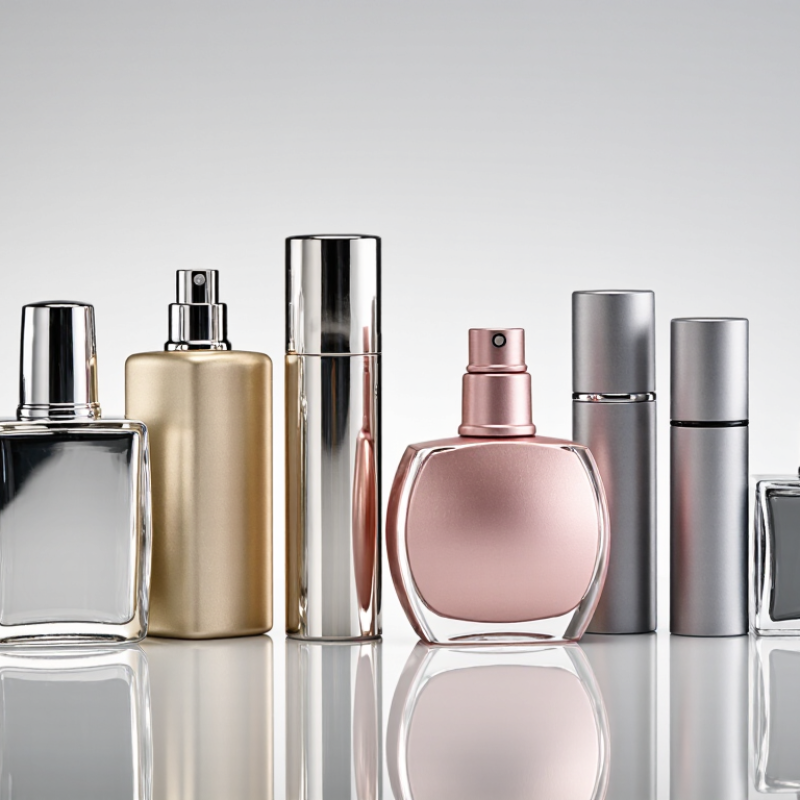
Aluminum perfume bottles pair a lightweight shell with an inner coating, neck, pump, and cap. Opaque walls help shield fragrance from light, while brushed, colored, or printed finishes create distinct shelf appeal. These bottles suit travel sprays, discovery sets, and daily-use formats.
Small details matter. Ask suppliers about coating compatibility, leak testing, and pump output; fragrance ingredients can affect liners and seals. A decorative finish alone does not make a bottle suitable for every formula.
Grand View Research valued the global perfume market at USD 50.5 billion in 2023. This figure tracks fragrance sales, not aluminum bottle demand, but it signals a substantial market for packaging choices.
The International Aluminium Institute reports that roughly 75% of all aluminum ever produced remains in use. That broad estimate is not a promise that each bottle will be recycled; collection and sorting vary by location. For wholesale orders, check material specifications and local recycling guidance alongside appearance and cost.
Wholesale evaluation should begin with the bottle’s intended use and filling process. Ask the supplier for aluminum grade, wall thickness, and inner-coating details. The metal shell alone does not confirm fragrance compatibility. Fill samples with the actual formula, then inspect them after storage and transport simulation. Look for odor changes, discoloration, seepage around the neck, and an uneven spray pattern. Small defects matter. A fine mist should remain consistent across repeated presses, not sputter after the first few sprays. Confirm neck dimensions and closure fit against your filling equipment before approving a large order.
Compare capacity, weight, finish, and decoration with your target price and shipping plan. A heavier bottle may feel premium, but it can raise freight costs. Glossy coatings can show scratches under warehouse lighting. Request written tolerances for dimensions, color, and print placement, along with the inspection method and defect policy. Check whether caps, pumps, and dip tubes can be replaced independently. Fit matters. Ask about minimum quantities, lead times, carton strength, and protective dividers. Test cartons with realistic drop and stacking trials. Do not rely only on catalog photos. A sample is useful, but it cannot reveal every production variation; keep an approved reference unit and inspect the first production batch carefully.
For wholesale comparison, start with capacity and handling. A 5 ml slim atomizer fits sample kits, though its small pump may feel delicate. A 10 ml pocket bottle suits travel sets and offers more room for a label. A 15 ml cylinder gives a steadier grip. A 20 ml rounded bottle packs neatly but can be harder to decorate evenly. Small, but useful.
At the middle range, a 30 ml bottle balances shelf presence with manageable weight. A 50 ml option is a familiar retail size, while a 60 ml format allows extra fill volume without a much wider footprint. An 80 ml bottle works for customers who prefer fewer refills, but its shape and cap can affect shipping cartons. Check the pump output, too. A fine mist is not guaranteed by the aluminum exterior.
For larger formats, a 100 ml bottle offers more volume but needs secure closure testing during transport. A 120 ml version may suit gift or home-use lines, though it takes more shelf space. Across all ten options, compare neck dimensions, spray performance, cap fit, and surface finish. Ask for samples filled with the intended fragrance; lining materials and formulas can interact differently. One detail is easy to miss: a polished sample may hide small finish inconsistencies across a bulk order.
For wholesale buyers, customization should begin with the bottle’s intended use. Choose capacity, neck finish, and spray or closure components before approving artwork. Aluminum bottles are lightweight, but wall shape and surface finish affect how a design appears. Matte coatings can soften the look; polished surfaces may show fingerprints. Small details matter.
Branding works best when it stays readable on a curved surface. Ask for a printed sample, and check the logo under ordinary indoor light. A design that looks crisp on a screen may lose fine lines on metal. Packaging also deserves a practical review. Dividers, cartons, and protective sleeves can reduce scuffing during transit, but extra layers add cost and storage needs. Compare packaging options against shipping conditions and order volume. One detail is easy to overlook: custom colors may vary slightly between production runs, so confirm acceptable tolerances in writing.
Tips: Request a pre-production sample and test the cap, sprayer, label placement, and carton fit together. Keep spare components in mind. They can be useful, though they may complicate inventory. Don’t approve the artwork too quickly.
When comparing the 10 best aluminum perfume bottles for wholesale, inspect more than appearance. Ask for samples from the production run, not only polished display samples. Check neck threading, cap fit, seam consistency, and the inner coating. Fill a few bottles and leave them upright overnight; look for leaks, odor changes, or discoloration. Small flaws matter. A loose cap can damage cartons before they reach a warehouse.
Tips: Request a written inspection checklist. Photograph sample defects beside a ruler. Confirm the acceptable tolerance for dimensions and fill volume before approving production. These checks reduce surprises, though they cannot reveal every issue in a large shipment.
Compliance and shipping need equal attention. Ask suppliers for current material and coating documentation, and verify that labels match the destination market’s requirements. Requirements can vary, so confirm details with a qualified compliance professional. For transport, confirm carton strength, pallet limits, and protective dividers. Aluminum is lightweight, but dented shoulders and scratched finishes still happen. Request a packed-carton drop test or trial shipment when practical. I would not rely on a supplier’s verbal assurance alone; written records make follow-up clearer when something goes wrong.
„Thanks to the LUVIR technology, the solder resist process could be switched directly from the previously used mask exposure to direct exposure. As an outstanding digital solution on the market, this technology has been able to demonstrate fast process times and superior quality on our certified conventional ink in production. This allowed us to fully digitize the solder mask process at low cost – without process or ink adjustments. An excellent benefit to our production in Rot am See.“
Ralf Göhringer (Head of Production WE Rot am See)
I would definitely recommend the Limata machine and team for a future company purchase
Michael Greenaway
Compunetics Inc.
“The Limata ldi has been amazing!! Best thing we did was buy this machine”
Richard Brady
GM
Circuitlabs
“Since 2019, we have been running the Limata X1000 LDI system (including LUVIR for solder mask imaging) in daily production as an addition to our current process with film. The machine was capable of properly exposing Taiyo PSR-4000 BN (DI) solder mask types on normal to high-copper boards using a new and unique direct imaging process. The machine operating interface is very user friendly which allowed for a quick technical training curve. The pre-registration processing reduced several seconds of production time at every print. Limata support and service staff is incomparable. They supported our team every step of the way at basically any time of the day or night, with literally, an immediate response time, customizing the software interface to best fit our Operations and needs.
We have exposed more than 8,000 prints since end of October, on various solder mask colors and some resist film panels. Limata, has proven to be very capable and innovative. They are a strong contender in the industry.
We have very much enjoyed this project, and working with the team!
Thank you Limata for the continued support and being a part of our growth.”
Bill Sezate
Vice President, GM
Summit Interconnect
As a replacement to our current contact exposure process with film, the LIMATA X2000 system including LUVIR-Technology was capable of properly exposing non-LDI solder mask types using a direct imaging process. The machine offers cutting edge software with a very intuitive operating interface which allowed for quick technician training curve. The dual drawer system combined with pre-registration processing reduced several seconds of production time at every machine cycle. Limata support and service staff is world class. They added software patches to keep production running at shortest possible response times, customized the software interface to best fit our in-house Operations system, and even wrote a step-by-step machine processing manual. As a result of the project, we have exposed more than 16,000 times on various product types and solder mask brands/colors. Limata, in a very short timeframe as a company, has definitely shown they are truly innovative and will be challenging the industry of direct imaging for the top spot.
Kevin Beattie
Process Engineer
TTM Technologies
Forest Grove Division
