Finding the Best Auto Phone Holder Supplier in China for Wholesale Buyers takes more than comparing unit prices. A reliable sourcing decision also depends on product design, materials, production capacity, and communication. The right Auto Phone Holder should grip securely on a bumpy road, adjust without stiff movement, and fit common phone sizes. Small details matter. A loose hinge or weak adhesive can lead to returns and damage buyer confidence.
This guide explores what wholesale buyers can check before placing an order. It covers holder styles, such as dashboard mounts, air-vent clips, and magnetic designs, along with sample testing, customization, packaging, and quality control. Ask suppliers how they inspect moving parts and manage consistency across production batches. Request clear product specifications and verify that samples match the final order. Photos help, but they do not reveal everything. A few days of hands-on testing may expose issues that a catalog cannot show.
Price still matters, especially for large orders. But the cheapest quote is not always the best value. Compare communication, lead times, minimum order quantities, and after-sales support alongside cost. No supplier is perfect, and even a careful process can miss something. Use practical questions and documented checks to reduce avoidable surprises and choose a partner that fits your market.
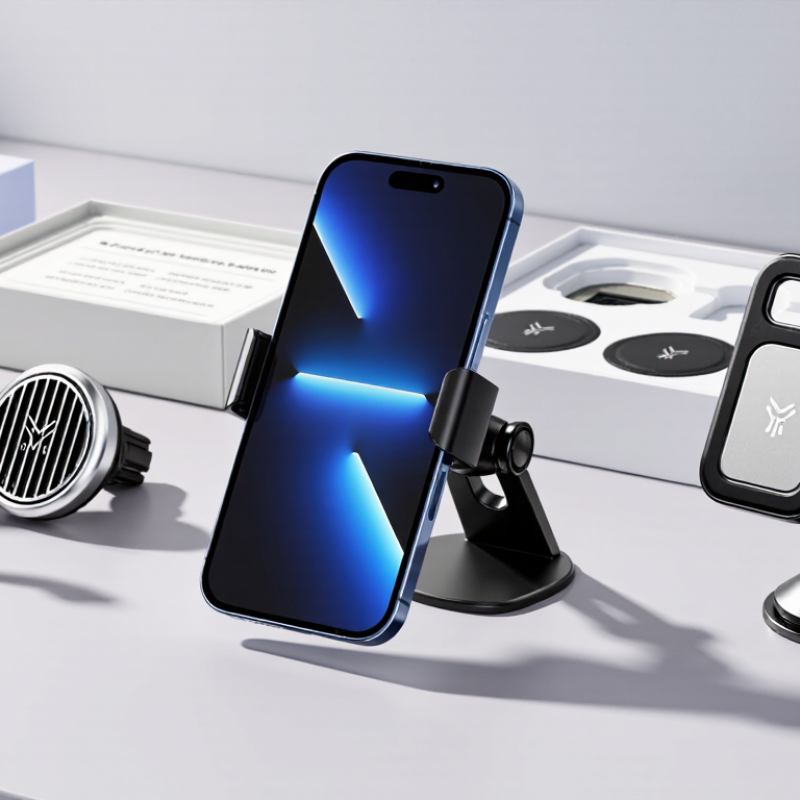
A reliable supplier proves performance with repeatable tests, not polished sample photos. Ask for clamp-force records, vibration-test results, and temperature test conditions. Small details matter. A mount that loosens on a rough road can become a distraction, even if it looks sturdy on a desk.
NHTSA’s 2022 Traffic Safety Facts report recorded 3,308 deaths in distraction-affected crashes in the United States. The WHO’s Global Status Report on Road Safety 2023 estimated 1.19 million annual road deaths worldwide. These figures do not show that a phone holder prevents crashes. They do show why suppliers should test secure positioning and unobstructed driver views, rather than promise safety outcomes.
For wholesale buyers, request material specifications, inspection criteria, and batch-level defect records. Check that suction cups, vent clips, and joints hold firm after repeated installation. Ask how the factory handles failed tests and production changes. Samples can mislead. I would also inspect a production-run unit, because small variations in plastic finish or hinge tension can appear after scaling. A dependable supplier answers technical questions clearly and provides traceable test evidence before shipment.
Wholesale buyers can choose from several auto phone holder designs, each suited to different vehicle layouts and customer preferences. Dashboard suction-cup holders offer flexible positioning and are easy to move between cars. Their performance can depend on dashboard texture, heat, and surface cleanliness. A smooth-looking dash is not always a suitable mounting surface.
Vent-clip holders are compact and quick to install. Check that the clip fits different vent blade shapes without blocking airflow. Clamp-style models grip the phone’s sides, while magnetic holders allow fast one-handed placement but require a compatible metal plate or magnetic phone case. Small details matter. Ask suppliers to specify supported phone widths and mounting methods.
Cup-holder mounts use an adjustable base and often include a longer arm, which helps when vents are awkwardly placed. Adhesive-base holders provide a fixed position, but buyers should review the adhesive pad and surface requirements before ordering. Wireless-charging holders add convenience, though charging alignment and cable access deserve sample testing. Test each style on varied vehicle interiors, including rough dashboards and narrow vents. A sample may fit one car perfectly and disappoint in another. That is worth admitting early. Compare materials, joint stability, packaging, and replacement-part availability before selecting a wholesale range.
Common holder styles are grouped by how they attach inside a vehicle.
Each bar marks one commonly available holder type, not its sales volume, market share, or popularity. Mount compatibility and installation details vary by product.
When selecting an auto phone holder supplier in China, look beyond a polished catalog. Ask for recent samples from the same production process used for bulk orders. Check the clamp, hinge, and mounting joint by hand. Do they hold firmly without feeling brittle? A clean sample matters. So does repeatability.
Request material specifications, inspection records, and a clear explanation of how defects are handled. Test samples in a vehicle for vibration, heat exposure, and phone fit across several device sizes. A holder that stays secure on a smooth desk may loosen on a rough road. That difference is easy to miss. Ask whether incoming components and finished products are checked, and how often those checks occur.
Review manufacturing capacity with practical questions: typical monthly output, current lead times, peak-season limits, and available backup equipment. Ask how the supplier manages changes to an order and reports delays. A large stated capacity is not proof of reliable delivery; compare it with production schedules and previous order records. No factory is flawless, and a small defect can still appear in a batch. During a factory visit or video walkthrough, look for organized workstations, labeled parts, and a consistent inspection area. If answers remain vague, pause and ask for evidence before committing to a large wholesale order.
| Evaluation Area | What to Check | Evidence to Request or Verify | Buyer Assessment Guide | Suggested Weight |
|---|---|---|---|---|
| Product quality and consistency | Fit, grip strength, adjustment range, material finish, and consistency between samples and production units. | Production-representative samples, inspection records, approved specifications, and a written defect-handling process. | Compare samples with the agreed specification; define acceptable defects and inspection criteria before placing an order. | 20% |
| Design and vehicle compatibility | Mounting type, phone-size range, case compatibility, viewing-angle adjustment, and installation requirements. | Dimensioned drawings, compatibility list, installation instructions, and sample testing in representative vehicles or setups. | Confirm the holder suits the intended vehicle interior and target phone range; treat compatibility claims as requiring verification. | 12% |
| Material and component control | Plastic or metal specifications, coatings, adhesives, magnets, springs, and other components used in the product. | Bill of materials, material specifications, incoming-inspection procedures, and applicable test reports. | Check that material and component descriptions match the approved sample and the product’s intended use. | 12% |
| Quality management | Documented inspection stages, traceability, corrective actions, and handling of customer complaints. | Quality-management certificate, if claimed; certificate scope and validity; inspection checklists; corrective-action examples. | Verify certificates with the issuing organization where possible. A certificate alone does not establish product quality. | 14% |
| Manufacturing capacity | Available production equipment, staffing, process capability, current workload, and ability to meet the requested schedule. | Factory audit or live production review, equipment list, production plan, and capacity figures tied to the specific product and shift pattern. | Ask how quoted capacity is calculated and whether it is available during the requested production window. | 14% |
| Order and delivery readiness | Minimum order quantity, lead time, production scheduling, packaging readiness, and shipment coordination. | Written quotation, order confirmation, production milestones, packaging specification, and shipping-document checklist. | Compare the supplier’s written commitment with your order volume and required delivery date; clarify what starts the lead-time clock. | 10% |
| Compliance and product documentation | Applicable destination-market requirements, labeling, warnings, and documentation for any powered or electronic features. | Relevant test reports or declarations, product labels, user instructions, and evidence that documents cover the exact product model. | Requirements depend on product design and destination market. Confirm applicable rules with a qualified compliance professional. | 8% |
| Communication and change control | Response clarity, escalation contacts, approval workflow, and control of changes to materials, design, or production process. | Named project contact, written change-approval procedure, sample-approval record, and documented order updates. | Assess responsiveness during sampling and quotation; require written approval before material or specification changes. | 5% |
| Commercial transparency | Unit pricing, tooling or setup charges, payment terms, warranty scope, and costs for packaging or customization. | Itemized quotation, warranty terms, payment schedule, and written explanation of any additional charges. | Compare quotations on the same specification and delivery basis rather than unit price alone. | 5% |
| Total suggested evaluation weight Weights are a buyer-use scorecard framework, not measured market statistics. | 100% | |||
For wholesale buyers, a low unit price matters, but the full order cost matters more. Ask suppliers to separate product pricing, packaging, tooling, and shipping estimates. Prices often change with material choice, order volume, and holder design. A folding dashboard mount may use less material than a multi-joint model. Small details matter. Confirm whether quoted prices include the accessories and packaging shown in the sample.
Minimum order quantities vary by design and production setup. A standard model may allow a smaller trial order, while custom colors or packaging can require more units. Ask for the minimum quantity for each option, not just the general catalog minimum. Request a written quotation with lead time, payment stages, and sample costs. Then compare offers on the same specifications. A cheaper quote can hide a different clamp, adhesive pad, or package.
Customization may include color, logo placement, retail packaging, and small changes to the holder’s shape. Ask what can be adjusted without new tooling, and what needs a separate development fee. Test a sample in the intended vehicle position; phone size, case thickness, and dashboard texture can affect grip. Ask for a sample. It may not match every production detail perfectly, so agree on measurable requirements before approving bulk production. Buyers sometimes focus on the logo and overlook packaging dimensions, which can create avoidable storage issues.
Start by checking the supplier’s registered business details, production address, and years making phone holders. Ask for a live video tour of the workshop, not only polished catalog photos. Look for orderly assembly benches, incoming-material checks, and finished goods ready for inspection. Request samples in the exact model and finish you plan to buy. Test the clamp with phones of different widths, then check whether the vent clip or dashboard pad stays secure on a bumpy drive. This step is easy to skip, and that is where buyers can misjudge.
Ask for a written specification covering materials, dimensions, packaging, and acceptable defects. Confirm how the supplier tests spring tension and repeated opening and closing. A single good sample is not proof of consistent production. Request a small trial order and agree on an inspection point before shipment. Compare the quotation with the same product details, shipping terms, and payment schedule. If answers about production capacity or quality records keep changing, pause and verify them independently.
Tips: Keep dated photos of samples and approved specifications. Ask for two references from recent wholesale buyers, then contact them directly. Check a random carton before final payment. Small details matter. A slightly loose hinge can become a costly return issue.
„Thanks to the LUVIR technology, the solder resist process could be switched directly from the previously used mask exposure to direct exposure. As an outstanding digital solution on the market, this technology has been able to demonstrate fast process times and superior quality on our certified conventional ink in production. This allowed us to fully digitize the solder mask process at low cost – without process or ink adjustments. An excellent benefit to our production in Rot am See.“
Ralf Göhringer (Head of Production WE Rot am See)
I would definitely recommend the Limata machine and team for a future company purchase
Michael Greenaway
Compunetics Inc.
“The Limata ldi has been amazing!! Best thing we did was buy this machine”
Richard Brady
GM
Circuitlabs
“Since 2019, we have been running the Limata X1000 LDI system (including LUVIR for solder mask imaging) in daily production as an addition to our current process with film. The machine was capable of properly exposing Taiyo PSR-4000 BN (DI) solder mask types on normal to high-copper boards using a new and unique direct imaging process. The machine operating interface is very user friendly which allowed for a quick technical training curve. The pre-registration processing reduced several seconds of production time at every print. Limata support and service staff is incomparable. They supported our team every step of the way at basically any time of the day or night, with literally, an immediate response time, customizing the software interface to best fit our Operations and needs.
We have exposed more than 8,000 prints since end of October, on various solder mask colors and some resist film panels. Limata, has proven to be very capable and innovative. They are a strong contender in the industry.
We have very much enjoyed this project, and working with the team!
Thank you Limata for the continued support and being a part of our growth.”
Bill Sezate
Vice President, GM
Summit Interconnect
As a replacement to our current contact exposure process with film, the LIMATA X2000 system including LUVIR-Technology was capable of properly exposing non-LDI solder mask types using a direct imaging process. The machine offers cutting edge software with a very intuitive operating interface which allowed for quick technician training curve. The dual drawer system combined with pre-registration processing reduced several seconds of production time at every machine cycle. Limata support and service staff is world class. They added software patches to keep production running at shortest possible response times, customized the software interface to best fit our in-house Operations system, and even wrote a step-by-step machine processing manual. As a result of the project, we have exposed more than 16,000 times on various product types and solder mask brands/colors. Limata, in a very short timeframe as a company, has definitely shown they are truly innovative and will be challenging the industry of direct imaging for the top spot.
Kevin Beattie
Process Engineer
TTM Technologies
Forest Grove Division
