Choosing China’s best Emt Electrical Connectors requires more than comparing prices or browsing polished supplier pages. Global buyers need reliable performance, traceable materials, and consistent production. A connector may look perfect in a product photo, yet fail during installation if its threading is inaccurate or its zinc coating is uneven. Small details matter.
This guide examines Chinese EMT Electrical Connectors through a practical purchasing lens. It considers conduit compatibility, thread quality, corrosion resistance, electrical continuity, and fitting strength. It also explores factory audits, sample testing, inspection records, packaging, and after-sales communication. Experienced buyers often request dimensional reports and production samples before approving bulk orders. That habit prevents expensive surprises.
Standards still require careful checking.
Supplier claims should not replace independent verification. Buyers should confirm whether products match the required regional standards, project specifications, and installation practices. Certifications can support trust, but their scope and validity deserve review. I have seen promising samples perform differently after mass production. That possibility deserves attention, not panic. A dependable supplier should explain its materials, tooling, testing process, and corrective actions clearly. This article helps global purchasers compare manufacturers with realistic expectations. It does not present one factory as perfect. Manufacturing quality can vary by model, batch, and application. Careful evaluation remains essential when selecting China’s best EMT Electrical Connectors for commercial, industrial, and infrastructure projects.
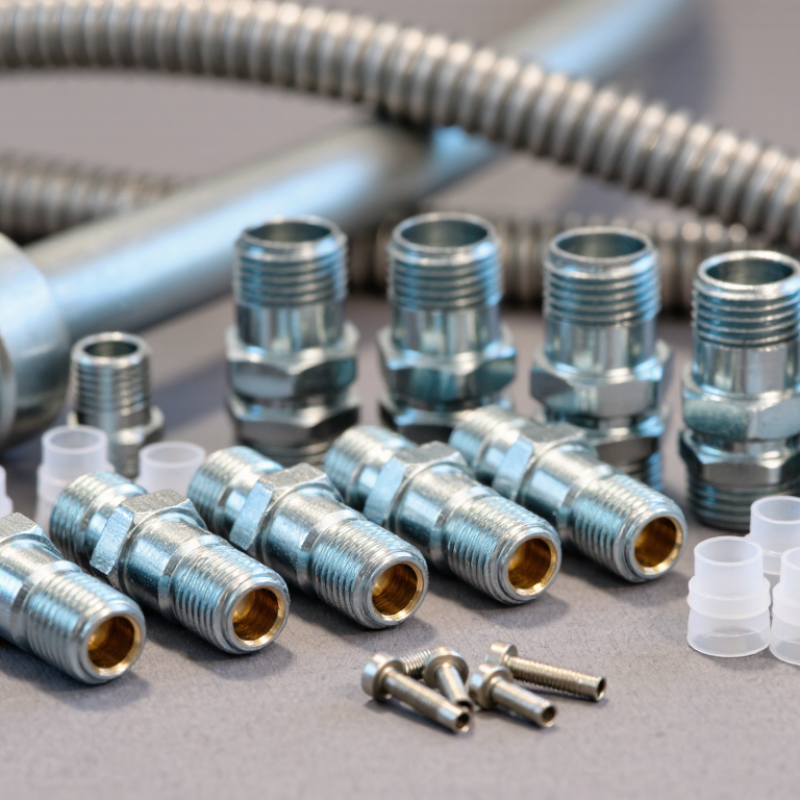
EMT electrical connectors are fittings that join electrical metallic tubing to boxes, enclosures, or other conduit sections. They create a firm mechanical connection and help maintain electrical continuity. Common types include compression connectors and set-screw connectors. Each design suits different installation conditions.
A compression connector uses a ring and nut to grip the tubing. It works well where installers need a clean, adjustable connection. A set-screw connector holds EMT with tightening screws and is common in commercial wiring. During installation, the tubing should be cut square, reamed, and inserted fully. Small metal burrs can damage insulation or weaken the fit.
These connectors appear in office ceilings, factory walls, retail spaces, and exposed service areas. They protect conductors from impact, moisture, and everyday movement. Indoor dry locations are simpler. Outdoor or damp areas demand suitable corrosion protection and correctly rated fittings. Local electrical codes still control the final choice.
Reliable sourcing from China requires more than checking price. Buyers should review material thickness, plating quality, thread accuracy, pull-out strength, and inspection records. Sample testing can reveal loose screws or rough edges before mass production. A connector may look polished but perform poorly. That is an easy mistake to overlook. Installers should also verify grounding continuity after assembly and follow current local requirements.
High-quality EMT connectors begin with standards, not appearance. In the United States, UL 514B evaluates fittings for grounding continuity, mechanical strength, and environmental performance. ANSI/NEMA FB 1 also covers fittings used with rigid and intermediate metal conduit. For installation practice, NFPA 70 requires effective bonding and secure connections. These requirements matter because a loose connector can interrupt the grounding path.
Material selection is equally practical. Zinc die-cast connectors resist impact and offer economical production, while galvanized steel fittings provide stronger mechanical support in demanding installations. Aluminum versions reduce weight and may perform well where corrosion exposure is carefully assessed. Coating quality matters more than a bright surface. Look for consistent threads, clean locknuts, and firm set-screw engagement. NFPA’s Fire Loss in the United States During 2023 report recorded 1,388,500 fires and about 23.2 billion dollars in direct property damage. That figure does not prove connector failure, but it reinforces the value of verified electrical workmanship. A small fitting deserves serious inspection.
Tips: Ask suppliers for current UL 514B evidence, material specifications, and salt-spray or corrosion-test results. Match the connector to the EMT size and installation environment. Check grounding continuity after tightening. Avoid assuming that heavier always means better; poorly finished steel can still corrode. Testing documents can also be incomplete, so buyers should review laboratory scope, not only certificates.
Comparing China-made EMT connectors starts with the installation, not the catalog price. An indoor dry wall needs different protection from a coastal pump room. Ask for tubing size charts, thread dimensions, material grades, and tested temperature ranges. A connector should seat firmly without crushing the EMT. Check the locknut, throat, and grounding path separately. Small details matter.
Request inspection records for thread gauges, plating thickness, and pull-out tests. For zinc or steel connectors, examine coating continuity around threads and sharp edges. A sample may look clean while production pieces vary. Supplier audits, batch reports, and traceable packing labels can reveal differences. Confirm whether testing follows the destination market’s requirements, such as UL, CSA, IEC, or local codes. Certificates alone are not enough. Match the exact model and revision.
For global projects, compare IP performance, corrosion resistance, thread compatibility, and installation torque. Test several samples with the actual EMT and enclosure. Measure bonding continuity after tightening, then repeat after vibration or thermal cycling when necessary. Packaging deserves attention too. Mixed sizes in one carton can slow installation and cause costly mistakes. I would question unusually low prices. They may reflect efficient production, or thinner plating and weaker inspection. Only controlled samples can show which. Keep findings in a clear comparison sheet before approving a larger order.
China Best EMT Electrical Connectors for Global Buyers?
Before ordering EMT electrical connectors, buyers should request traceable material and dimensional records. Check steel grade, wall thickness, fitting diameter, thread accuracy, and coating uniformity. Use calibrated gauges, not visual judgment alone. A connector may look smooth yet fail during installation.
Require torque, pull-out, thread engagement, and corrosion testing against the applicable regional standard. For outdoor or humid projects, ask for salt-spray evidence under ISO 9227, with test duration and failure criteria clearly stated. Verify electrical continuity and bonding performance across the connector joint. Also review inspection sampling, batch numbers, and nonconformance procedures. The ISO Survey 2022 recorded 1,265,216 valid ISO 9001 certificates worldwide. Certification supports process control, but it does not replace product testing.
Ask suppliers for recent laboratory reports, calibration certificates, and photographs of actual production lots. Confirm whether tests used production samples or specially prepared specimens. That difference matters. A polished sample can hide inconsistent zinc coverage or loose threads. Factory audits should examine incoming steel, forming tools, coating thickness, packaging, and final inspection records. ASTM and IEC requirements may differ, so the purchase specification must name the exact standard and edition. A checklist helps, but it is not flawless. Buyers should leave room for independent verification, especially after design changes or unexplained price reductions.
The chart shows a practical pre-order inspection weighting for EMT connectors. Buyers should verify dimensional fit, material and coating, mechanical strength, electrical continuity, corrosion resistance, marking, and documentation before approval. The percentages are procurement-planning weights, not company or brand performance data.
Reference framework: UL 514B, CSA C22.2 No. 18.3, IEC 61386 conduit-system requirements, ISO 2859-1 sampling principles, and buyer-approved product drawings. Confirm the exact edition and applicable certification route for the destination market.
Importers should treat an EMT connector as a tested component, not a low-cost accessory. A 2024 electrical conduit market assessment valued the global market at about US$7.9 billion in 2023. That scale attracts capable factories and careless traders. Ask for the factory address, production scope, export history, and current quality certificates. Verify every document independently.
Request technical drawings before discussing price. Check thread dimensions, wall thickness, material grade, plating, and conduit compatibility. IEC 61386-1 provides a useful framework for conduit system performance. North American projects may also require compliance with applicable electrical codes and product standards. Do not accept a generic certificate. Match it to the exact connector size and material. During a factory audit, inspect die-casting equipment, thread gauges, plating control, storage conditions, and batch labeling. Photos help, but they are not evidence.
Before placing a volume order, test samples from different production batches. Measure thread fit by hand and with calibrated gauges. Check pull-out resistance, corrosion behavior, burrs, and locking performance. Ask for batch-level inspection records, material certificates, and corrective-action reports. An ISO 9001 certificate supports process control, but it cannot replace product testing. I would not rely on a polished showroom or fast replies alone. Some suppliers pass samples, then change plating or subcontract production. That weakness is easy to miss. A pre-shipment inspection and a clearly written specification reduce the risk, although neither removes it.
„Thanks to the LUVIR technology, the solder resist process could be switched directly from the previously used mask exposure to direct exposure. As an outstanding digital solution on the market, this technology has been able to demonstrate fast process times and superior quality on our certified conventional ink in production. This allowed us to fully digitize the solder mask process at low cost – without process or ink adjustments. An excellent benefit to our production in Rot am See.“
Ralf Göhringer (Head of Production WE Rot am See)
I would definitely recommend the Limata machine and team for a future company purchase
Michael Greenaway
Compunetics Inc.
“The Limata ldi has been amazing!! Best thing we did was buy this machine”
Richard Brady
GM
Circuitlabs
“Since 2019, we have been running the Limata X1000 LDI system (including LUVIR for solder mask imaging) in daily production as an addition to our current process with film. The machine was capable of properly exposing Taiyo PSR-4000 BN (DI) solder mask types on normal to high-copper boards using a new and unique direct imaging process. The machine operating interface is very user friendly which allowed for a quick technical training curve. The pre-registration processing reduced several seconds of production time at every print. Limata support and service staff is incomparable. They supported our team every step of the way at basically any time of the day or night, with literally, an immediate response time, customizing the software interface to best fit our Operations and needs.
We have exposed more than 8,000 prints since end of October, on various solder mask colors and some resist film panels. Limata, has proven to be very capable and innovative. They are a strong contender in the industry.
We have very much enjoyed this project, and working with the team!
Thank you Limata for the continued support and being a part of our growth.”
Bill Sezate
Vice President, GM
Summit Interconnect
As a replacement to our current contact exposure process with film, the LIMATA X2000 system including LUVIR-Technology was capable of properly exposing non-LDI solder mask types using a direct imaging process. The machine offers cutting edge software with a very intuitive operating interface which allowed for quick technician training curve. The dual drawer system combined with pre-registration processing reduced several seconds of production time at every machine cycle. Limata support and service staff is world class. They added software patches to keep production running at shortest possible response times, customized the software interface to best fit our in-house Operations system, and even wrote a step-by-step machine processing manual. As a result of the project, we have exposed more than 16,000 times on various product types and solder mask brands/colors. Limata, in a very short timeframe as a company, has definitely shown they are truly innovative and will be challenging the industry of direct imaging for the top spot.
Kevin Beattie
Process Engineer
TTM Technologies
Forest Grove Division
