Choosing a China-based supplier for an Hss Heat Shrink Sleeve is not just a price comparison. The sleeve must fit the cable, connector, or component it protects, then shrink evenly under the specified heating conditions. A mismatch in recovered diameter, wall thickness, or material can create installation delays and uneven coverage. Small details matter.
Start with the application. Is the sleeve intended for insulation, bundling, abrasion resistance, or environmental protection? Ask suppliers for dimensional tolerances, shrink ratio, operating temperature range, and material information. Request sample pieces when possible. A datasheet is useful, but it cannot show how a sleeve behaves on your actual assembly. Test it.
Supplier checks matter just as much. Look for clear product specifications, consistent sample-to-production quality controls, and direct answers about manufacturing capacity and lead times. Ask how batches are inspected and whether test reports can be linked to the products being quoted. Reliable communication is evidence, too. Vague answers deserve follow-up.
China has many manufacturers and trading companies, so a polished website alone proves little. Compare suppliers using the same technical requirements, and confirm packaging, labeling, and order terms before production. If a quotation is dramatically lower, check what material, tolerance, or service level it assumes. There is no universal best supplier. The right choice depends on fit, documentation, repeatability, and support—and some questions may remain unanswered until samples are tested. That is worth admitting.
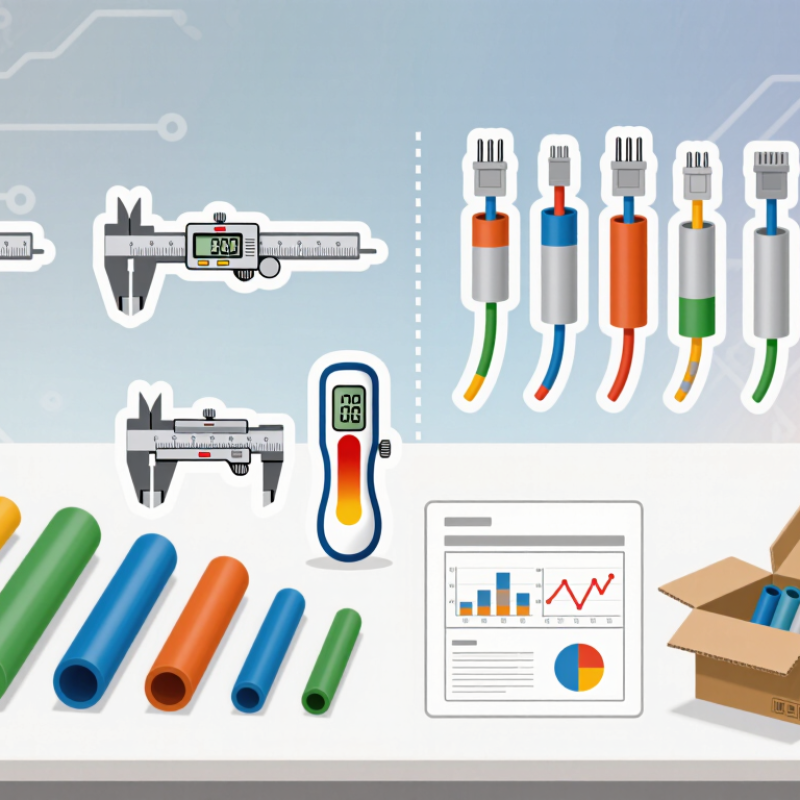
An HSS heat shrink sleeve is a tube that contracts when heated, fitting closely around a cable, wire joint, or component. It is commonly made from polymer materials such as polyolefin, though construction varies by application. Before heating, the sleeve slides over the part with enough clearance for installation. A controlled heat source softens the material, which then recovers toward its smaller diameter. The finished layer can reduce abrasion and help shield a connection from dust or moisture, depending on its design. Simple idea.
Choosing one requires more than checking its length. Installers typically compare expanded and recovered diameters, shrink ratio, wall thickness, operating temperature, and whether an inner adhesive layer is needed. A sleeve can look tidy yet fail to grip if its recovered size is too large. Too small, and it may be difficult to position without damage. The term HSS may vary across catalogs, so verify material details and test data rather than relying on the label alone. It is not magic. Match the sleeve to the substrate and service conditions, then check the fit on a sample before regular installation.
China Best HSS Heat Shrink Sleeve Supplier?
How Does an HSS Heat Shrink Sleeve Work?
An HSS heat shrink sleeve is made from polymer film that changes shape when heated. During manufacturing, the film is stretched and cooled into a stable form. When it meets controlled heat, it contracts toward its earlier dimensions. This lets it fit closely around a bottle, jar, or other container. The basic action is simple. The settings are not.
In production, a printed sleeve is formed into a tube and placed over the container. The container then passes through a steam or hot-air tunnel. Heat softens the film, and it shrinks around the package contours. A sleeve can cover a curved shoulder or reach around the full body. Even a small temperature change may affect fit, so operators check tunnel conditions and line speed.
Film choice matters. PETG, PVC, and other shrink films behave differently, and the right option depends on container shape and packaging needs. A test run can reveal wrinkles, loose edges, or distorted graphics before a full production run. That step is easy to underestimate. Heat alone does not guarantee a neat finish; sleeve placement, seam quality, and even airflow matter too. In practice, there is rarely one setting that works perfectly for every package.
This chart illustrates how different shrink ratios relate an expanded sleeve’s inner diameter to its recovered inner diameter. Each example assumes a recovered diameter of 10 mm; the expanded diameters are calculated from the stated ratios.
How to read it: When heated within its specified installation conditions, a heat-shrink sleeve contracts toward its recovered size. Actual dimensions, shrink ratios, and heating requirements vary by product; check the manufacturer’s datasheet before installation.
Choosing an HSS heat shrink sleeve starts with the package, not a catalogue. Confirm the container’s maximum diameter, taper, and shoulder shape. Then specify sleeve layflat width, total length, thickness, and shrink direction. A tight shoulder or recessed base can cause wrinkles, while excessive shrink force may distort a light container. Ask for shrink curves and test sleeves on your actual filling line.
Material and processing conditions matter just as much. Compare PETG, PVC, or other suitable films against required clarity, stiffness, print quality, and disposal goals. State tunnel temperature, conveyor speed, and exposure time; “fits standard equipment” is not a measurable specification. ASTM D2732 provides a method for measuring free shrink of plastic film. PlasticsEurope’s Plastics—The Fast Facts 2024 reports global plastics production of 413.8 million tonnes in 2023, a useful reminder that material choices deserve careful review—not a substitute for application testing.
Tip: Request samples with documented thickness tolerance and shrink results. Check registration, seam strength, and scuffing after a full-speed trial. A perfect-looking sample can still fail on a hot, fast line. I would also record any small defects; they often reveal a specification gap before bulk production.
| Specification | Typical Range or Option | What to Check When Choosing |
|---|---|---|
| Base material | Cross-linked polyolefin is commonly used; other formulations are available for specialized environments. | Confirm compatibility with the cable jacket, substrate, chemicals, moisture, and installation environment. |
| Shrink ratio | Common options include 2:1 and 3:1. | Choose a ratio that fits over the largest part before shrinking and recovers tightly around the smallest part. |
| Supplied inside diameter | Product ranges commonly cover approximately 3 mm to 100 mm or more, depending on the product series. | Check the actual supplied diameter and tolerances, not just the nominal size. Allow clearance for installation. |
| Recovered inside diameter | Depends on the supplied diameter and shrink ratio; confirm the minimum recovered diameter on the datasheet. | Ensure the recovered sleeve grips the application without excessive stretching or gaps. |
| Wall thickness | Thin-wall products are often around 0.4–1.0 mm recovered; thicker constructions are available. | Compare recovered wall thickness and its tolerance when abrasion resistance, insulation, or mechanical protection matters. |
| Shrink temperature | Many polyolefin sleeves begin shrinking at approximately 90–120°C; full recovery may require a higher temperature. | Ask for the minimum shrink temperature and recommended recovery procedure. Avoid overheating the sleeve or the covered component. |
| Continuous operating temperature | A common range for general-purpose polyolefin is about −55°C to +125°C; the exact range is formulation-dependent. | Verify the product’s rated continuous-use range against the real service temperature and any temperature cycling. |
| Longitudinal shrinkage | Varies by construction and product; some sleeves specify a maximum change during recovery. | Check the stated limit where sleeve length, end coverage, or alignment is critical. |
| Flame performance | Flame-retardant and non-flame-retardant versions may be available. | Request the exact test method and classification required for the application; do not assume all sleeves are flame-retardant. |
| Adhesive lining | Single-wall sleeves have no inner adhesive; dual-wall sleeves include a heat-activated lining. | Consider a lined sleeve when environmental sealing or additional bonding is needed, and verify compatibility with the substrate. |
| Electrical properties | Dielectric strength and insulation performance vary by material, wall thickness, and test method. | Request test data at the relevant thickness and confirm the applicable electrical standard and voltage requirements. |
| Resistance to fluids and chemicals | Resistance depends on the sleeve formulation and the specific fluid, concentration, temperature, and exposure time. | Provide the supplier with the actual exposure conditions and request compatibility data or a sample test. |
| Quality documents and testing | Datasheets, dimensional inspection results, and applicable compliance documents should be available for the selected product. | Confirm that documents apply to the exact material, size, color, and construction being quoted. Check relevant requirements such as UL 224 or IEC 60684 where applicable. |
Note: Values above are typical selection guidance, not universal product limits. Confirm dimensions, tolerances, test methods, and ratings using the specific sleeve’s current technical datasheet.
When comparing HSS heat shrink sleeve suppliers in China, ask for measurable specifications, not just a product brochure. Check the sleeve’s material, supplied diameter, wall thickness, shrink ratio, and recommended recovery temperature. These details should match your cable or component dimensions and installation process. Request a current technical data sheet and confirm how each value is tested. Small differences matter.
Ask for samples from a normal production run, then test them with your own equipment. Observe how evenly the sleeve recovers, whether the edges stay smooth, and whether the fit remains secure after cooling. For demanding applications, discuss abrasion, tensile strength, and chemical exposure with the supplier. Ask for inspection records and clarification on batch traceability. A polished sample is useful, but it cannot prove every shipment will be identical. That part deserves scrutiny. Also compare lead times, packing methods, and how the supplier handles specification changes. Clear answers are a good sign; vague promises are not. I would still verify important claims independently. A factory visit or third-party testing may add time, but can reveal gaps that a sales conversation misses.
Before placing an HSS heat-shrink sleeve order, confirm the film suits the container and shrink tunnel. PETG, PVC, and OPS behave differently under heat. Ask for film type, thickness, shrink curve, and recommended tunnel settings. Then compare the sleeve’s dimensions with the bottle’s body, shoulder, and base. A small mismatch can cause wrinkles or exposed edges.
Request printed samples and run them on your actual line. Check color, barcode readability, seam strength, and ink adhesion after shrinking. Test it live. Record the line speed and temperature, too; a successful hand test may not predict production results. Clarify roll direction, core size, splice limits, order tolerance, and packaging before approving the purchase order. Small details matter.
Material choice also deserves scrutiny. The U.S. EPA’s 2018 Advancing Sustainable Materials Management report estimated that containers and packaging generated 82.2 million tons of U.S. municipal solid waste. Plastic packaging accounted for 14.5 million tons, with a 13.6% recycling rate. These figures do not measure sleeve recyclability directly, but they underline why buyers should ask about film and label-removal compatibility with their container’s recycling stream. Request written specifications and a production trial. I would not rely on a supplier’s verbal assurance alone.
„Thanks to the LUVIR technology, the solder resist process could be switched directly from the previously used mask exposure to direct exposure. As an outstanding digital solution on the market, this technology has been able to demonstrate fast process times and superior quality on our certified conventional ink in production. This allowed us to fully digitize the solder mask process at low cost – without process or ink adjustments. An excellent benefit to our production in Rot am See.“
Ralf Göhringer (Head of Production WE Rot am See)
I would definitely recommend the Limata machine and team for a future company purchase
Michael Greenaway
Compunetics Inc.
“The Limata ldi has been amazing!! Best thing we did was buy this machine”
Richard Brady
GM
Circuitlabs
“Since 2019, we have been running the Limata X1000 LDI system (including LUVIR for solder mask imaging) in daily production as an addition to our current process with film. The machine was capable of properly exposing Taiyo PSR-4000 BN (DI) solder mask types on normal to high-copper boards using a new and unique direct imaging process. The machine operating interface is very user friendly which allowed for a quick technical training curve. The pre-registration processing reduced several seconds of production time at every print. Limata support and service staff is incomparable. They supported our team every step of the way at basically any time of the day or night, with literally, an immediate response time, customizing the software interface to best fit our Operations and needs.
We have exposed more than 8,000 prints since end of October, on various solder mask colors and some resist film panels. Limata, has proven to be very capable and innovative. They are a strong contender in the industry.
We have very much enjoyed this project, and working with the team!
Thank you Limata for the continued support and being a part of our growth.”
Bill Sezate
Vice President, GM
Summit Interconnect
As a replacement to our current contact exposure process with film, the LIMATA X2000 system including LUVIR-Technology was capable of properly exposing non-LDI solder mask types using a direct imaging process. The machine offers cutting edge software with a very intuitive operating interface which allowed for quick technician training curve. The dual drawer system combined with pre-registration processing reduced several seconds of production time at every machine cycle. Limata support and service staff is world class. They added software patches to keep production running at shortest possible response times, customized the software interface to best fit our in-house Operations system, and even wrote a step-by-step machine processing manual. As a result of the project, we have exposed more than 16,000 times on various product types and solder mask brands/colors. Limata, in a very short timeframe as a company, has definitely shown they are truly innovative and will be challenging the industry of direct imaging for the top spot.
Kevin Beattie
Process Engineer
TTM Technologies
Forest Grove Division
