Choosing the best Chocolate Bar Production Line from China requires more than comparing prices and equipment photos. A reliable decision begins with product goals, factory capacity, labor conditions, and future expansion plans. Milk chocolate, dark chocolate, filled bars, and compound coatings each require different processing controls. The right line should match your recipe, not merely resemble a competitor’s machine.
In practical production, details matter. A typical system may include a chocolate melter, five-roll refiner, conche, tempering unit, depositor, cooling tunnel, and automatic packaging machine. Stable temperature control protects gloss, snap, and flavor. A well-designed cooling tunnel also reduces surface blooming during busy shifts. Stainless steel contact parts, accessible inspection doors, and hygienic conveyors make daily cleaning more manageable. These features may seem ordinary. They often decide uptime.
A trustworthy Chinese manufacturer should provide factory records, equipment drawings, material specifications, test videos, and clear installation support. Ask for verified output at your actual bar weight and mold size. Request sample production before signing a major order. Certifications can support confidence, but they do not replace technical inspection. A beautiful brochure proves little. After-sales response matters more when a servo motor fails during a production run. No line is perfect. Even experienced buyers can underestimate training, spare parts, or power requirements. That is why this guide compares suppliers through performance, customization, safety, maintenance, and long-term reliability. The “best” choice is not always the cheapest or fastest. It is the line that performs consistently, fits your facility, and earns trust over time.
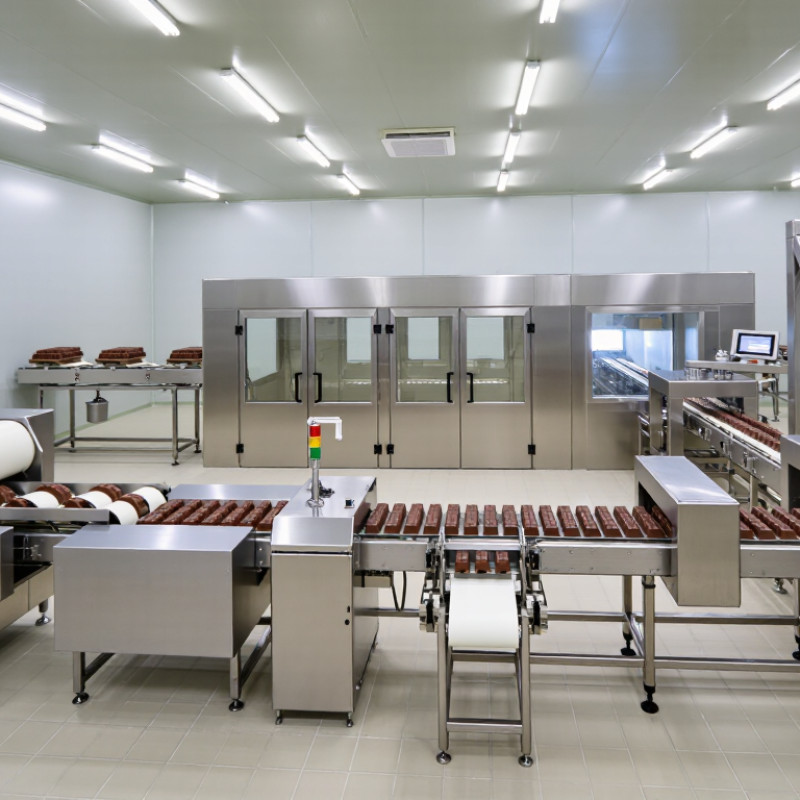
The best Chinese chocolate bar production line is not simply the fastest or cheapest option. It is a balanced system built for stable output, food safety, and practical maintenance. In real production, chocolate moves through melting, refining, tempering, depositing, cooling, and demolding. Each stage must remain synchronized. A small temperature error can create dull surfaces, weak snaps, or uneven fillings. That matters.
Strong equipment design also includes precise temperature control and a responsive PLC system. Operators should adjust recipes without complicated procedures. Stainless steel contact parts should support hygienic cleaning. Clear access points reduce cleaning time and inspection risks. A reliable supplier provides drawings, electrical diagrams, spare-parts lists, and commissioning support. These documents show professional accountability, not just sales confidence.
The best line should fit the factory, product range, workforce, and future capacity. A compact line may suit seasonal production, while a continuous system supports higher volume. Buyers should request trial samples using their actual chocolate and packaging format. Measured results should include weight accuracy, cooling time, energy use, and changeover performance. No line is perfect. Sometimes a cheaper configuration creates higher labor costs later. That assumption can fail. Experienced buyers inspect welds, observe cleaning access, and ask how faults are diagnosed during night shifts. Independent testing and clear warranty terms add another layer of trust. Even impressive output figures deserve careful verification before installation.
What Is the Best Chocolate Bar Production Line from China?
A strong bean-to-bar line should control heat, not simply increase it. During roasting, cocoa beans commonly reach 110–140°C, while chocolate mass later reaches 45–50°C for dark chocolate melting. This range helps dissolve cocoa butter crystals and supports smooth refining. The International Cocoa Organization estimated 2023/24 global cocoa grindings at about 4.855 million tonnes. That scale shows why stable processing matters. Small temperature changes can affect viscosity, flavor, and molding performance. In real production, a line should include cleaning, roasting, cracking, winnowing, grinding, refining, conching, tempering, molding, and cooling equipment.
The best Chinese production line is not always the fastest one. It should offer accurate sensors, jacketed tanks, adjustable refining gaps, and hygienic contact surfaces. A 45–50°C melting stage needs steady heating, not sudden thermal shocks. Dark chocolate may tolerate this range, but milk and white chocolate usually require lower working temperatures. Codex guidance supports careful control of chocolate composition and handling, yet factory conditions still vary. That is the part worth questioning. A machine specification cannot replace testing with your own cocoa origin, recipe, and batch size.
Tips: Check temperature records at three points, not one. Ask for trial production with your formula. Measure particle size, viscosity, and tempering results. Review the cooling tunnel carefully; uneven cooling can create dull surfaces and thick bar edges. Confectionery industry reports from Grand View Research also identify automation and process consistency as major investment drivers, but practical operator training remains easy to underestimate.
The chart shows representative temperature ranges used in bean-to-bar chocolate processing. Cocoa roasting commonly occurs at approximately 120–140°C, while grinding, refining, conching, and melting are generally controlled around 45–60°C. The 45–50°C range is commonly used to fully melt cocoa butter and chocolate mass before tempering. Actual settings vary according to cocoa bean characteristics, chocolate formulation, batch size, and equipment design.
Selecting the best chocolate bar production line from China requires more than checking output speed. Tempering control is usually the real test. The line must maintain a stable crystal structure while handling changing chocolate loads. In practical production, chocolate is commonly cooled to 27–28°C. This encourages stable cocoa butter crystals to form. The mass is then warmed to 31–32°C during the working stage. That controlled reheating removes unstable crystals without destroying the useful structure. Small deviations matter. At 33°C, the chocolate may lose the crystal balance needed for a clean snap and glossy surface.
On a Chinese line, jacket temperature, scraper movement, pump speed, and residence time must work together. A powerful chiller alone cannot correct poor mixing. I have seen operators adjust temperatures too quickly when chocolate thickens. The surface looked smooth, but the bars released poorly after cooling. That result was a useful warning. Tempering should be verified with a calibrated thermometer and a quick temper test, not only the screen display. Room temperature also changes results. A warm workshop can reduce working stability even when the machine shows 31°C.
Reliable equipment should provide separate temperature zones, adjustable holding time, and accessible cleaning points. Sensors need routine calibration. The cooling tunnel should hold bars evenly, without cold spots or sudden airflow changes. I would also request trial data using the buyer’s actual recipe. Dark, milk, and compound formulas do not respond identically. This is where many equipment comparisons become incomplete. Output capacity matters, but stable tempering protects texture, appearance, and production consistency. Even experienced teams should leave room for testing.
What Is the Best Chocolate Bar Production Line from China?
How 100–2,000 kg/h Capacity Shapes Chocolate Line Selection
Capacity should follow demand, not sales claims. A 100 kg/h line suits regional production, seasonal launches, and frequent recipe changes. At eight hours daily, its theoretical output reaches 800 kg. Real production is lower after heating, cleaning, mold changes, and short stoppages. A practical utilization rate may be 70–85%.
A 2,000 kg/h line can produce up to 16 tonnes per eight-hour shift. It requires stronger cooling capacity, larger chocolate tanks, stable utilities, and disciplined material handling. The capital cost rises quickly. Grand View Research valued the global chocolate market at about USD 119 billion in 2023, showing strong demand, but market growth does not guarantee local sales. Capacity must match confirmed orders, warehouse space, and labor skills.
The middle range is often safer. A 500–1,000 kg/h system can support several bar sizes while limiting excessive overcapacity. Check tempering accuracy, cooling tunnel residence time, deposit weight variation, and changeover minutes. Request factory acceptance testing with real chocolate and target molds. PMMI’s packaging industry reports repeatedly highlight automation, uptime, and flexible formats as major investment drivers. Still, reports cannot replace a production trial.
One detail is easy to miss. Nominal capacity may assume one product, ideal viscosity, and uninterrupted operation. That assumption is imperfect. Specify performance at your actual cocoa butter ratio, inclusions, room temperature, and shift pattern. Require documented energy use, spare-part lists, food-contact certificates, and service response terms before comparing quotations.
| Target Output | Typical Production Profile | Suitable Chocolate Products | Tempering Unit Capacity | Moulding and Cooling Configuration | Typical Cooling Tunnel Length | Approximate Installed Power | Estimated Floor Space | Typical Staffing | Best Selection Rationale |
|---|---|---|---|---|---|---|---|---|---|
| 100–200 kg/h | Small-batch or entry-level continuous production; frequent product changes are practical. | Plain bars, filled bars, mini bars, praline pieces and seasonal moulded products. | 120–250 kg/h | Compact automatic depositor, interchangeable moulds and a short cooling tunnel. | 6–10 m | Approximately 15–30 kW | Approximately 80–150 m², excluding warehouse areas | 3–5 operators per shift | Best for market testing, regional distribution and a wide product range with moderate volumes. |
| 200–400 kg/h | Small commercial line with improved continuity and higher mould utilization. | Standard chocolate bars, filled bars, nut bars and small compound-chocolate products. | 250–500 kg/h | Automatic mould loading, vibration table, cooling tunnel and demoulding section. | 8–14 m | Approximately 25–45 kW | Approximately 120–220 m², excluding storage | 4–6 operators per shift | A balanced option for small factories that need consistent output without a large production footprint. |
| 400–600 kg/h | Medium-scale continuous line designed for regular daily production. | Tablets, filled tablets, inclusion bars, wafer-coated bars and premium moulded pieces. | 500–750 kg/h | Continuous moulding line with automatic mould circulation, cooling and bar discharge. | 12–18 m | Approximately 40–70 kW | Approximately 180–300 m², excluding raw-material storage | 5–8 operators per shift | Often the most flexible capacity range for growing domestic and export-oriented manufacturers. |
| 600–1,000 kg/h | Large commercial line with higher automation and reduced manual handling. | High-volume bars, filled products, nut and cereal bars, and multiple standard formats. | 750–1,200 kg/h | High-speed moulding, automatic mould preheating, multi-zone cooling tunnel and automatic stacking. | 16–24 m | Approximately 60–110 kW | Approximately 250–450 m², excluding packaging and warehousing | 6–10 operators per shift | Suitable when demand is predictable and the cost per kilogram must be reduced through automation. |
| 1,000–1,400 kg/h | Industrial-scale production with long operating cycles and limited product changeovers. | Large-volume moulded bars, private-label products and standardized retail formats. | 1,200–1,600 kg/h | High-speed automatic moulding, continuous cooling, robotic or automatic product transfer and integrated line controls. | 20–30 m | Approximately 90–160 kW | Approximately 400–650 m², excluding finished-goods storage | 8–12 operators per shift | Best when the factory has stable orders, sufficient utilities and a reliable packaging operation. |
| 1,400–1,700 kg/h | High-throughput operation intended for extended production runs and limited format variation. | High-volume tablets, standard bars, filled bars and contract manufacturing products. | 1,600–2,000 kg/h | Multi-lane moulding system, extended cooling tunnel, automatic demoulding and synchronized discharge. | 24–36 m | Approximately 130–220 kW | Approximately 550–850 m², excluding warehouse and distribution areas | 10–15 operators per shift | Appropriate for large orders where line utilization is expected to remain high throughout the year. |
| 1,700–2,000 kg/h | Very high-capacity industrial line requiring coordinated tempering, moulding, cooling and packaging systems. | Standardized mass-market bars and high-volume products with limited recipe and mould changes. | 2,000–2,400 kg/h | Multi-lane automatic moulding, long multi-zone cooling tunnel, automatic transfer and centralized monitoring. | 30–45 m | Approximately 180–300 kW | Approximately 700–1,100 m², excluding raw-material and finished-product warehouses | 12–18 operators per shift | Best only when demand, power supply, cooling capacity, packaging speed and warehouse logistics can support continuous high output. |
The best chocolate bar production line is not defined by speed alone. Export-ready performance depends on disciplined HACCP and ISO 22000 controls. A reliable factory should map each process, from cocoa receiving to final packing. Hazard analysis must cover allergens, foreign materials, microbial risks, and chemical contamination. Raw materials need approved suppliers, clear specifications, and batch identification.
Critical control points may include roasting, cooling, metal detection, and temperature management. Operators should record actual values, not estimated figures. Calibrated thermometers and metal detectors support dependable decisions. Separate tools and controlled scheduling can reduce allergen cross-contact. Cleaning records should show who cleaned, what was cleaned, and when. Small details matter here.
ISO 22000 adds structure beyond individual checkpoints. It connects prerequisite programs, traceability, staff training, supplier evaluation, and internal audits. Every chocolate batch should link to ingredients, operators, equipment, and shipping records. A mock recall can reveal weak links before an importer finds them. That is uncomfortable, but useful. Corrective actions must address causes, not only visible defects. No system is perfect. Even a strong line can fail through rushed verification, incomplete records, or poor communication. Export confidence grows when the factory proves control with evidence, repeatable procedures, and honest review.
„Thanks to the LUVIR technology, the solder resist process could be switched directly from the previously used mask exposure to direct exposure. As an outstanding digital solution on the market, this technology has been able to demonstrate fast process times and superior quality on our certified conventional ink in production. This allowed us to fully digitize the solder mask process at low cost – without process or ink adjustments. An excellent benefit to our production in Rot am See.“
Ralf Göhringer (Head of Production WE Rot am See)
I would definitely recommend the Limata machine and team for a future company purchase
Michael Greenaway
Compunetics Inc.
“The Limata ldi has been amazing!! Best thing we did was buy this machine”
Richard Brady
GM
Circuitlabs
“Since 2019, we have been running the Limata X1000 LDI system (including LUVIR for solder mask imaging) in daily production as an addition to our current process with film. The machine was capable of properly exposing Taiyo PSR-4000 BN (DI) solder mask types on normal to high-copper boards using a new and unique direct imaging process. The machine operating interface is very user friendly which allowed for a quick technical training curve. The pre-registration processing reduced several seconds of production time at every print. Limata support and service staff is incomparable. They supported our team every step of the way at basically any time of the day or night, with literally, an immediate response time, customizing the software interface to best fit our Operations and needs.
We have exposed more than 8,000 prints since end of October, on various solder mask colors and some resist film panels. Limata, has proven to be very capable and innovative. They are a strong contender in the industry.
We have very much enjoyed this project, and working with the team!
Thank you Limata for the continued support and being a part of our growth.”
Bill Sezate
Vice President, GM
Summit Interconnect
As a replacement to our current contact exposure process with film, the LIMATA X2000 system including LUVIR-Technology was capable of properly exposing non-LDI solder mask types using a direct imaging process. The machine offers cutting edge software with a very intuitive operating interface which allowed for quick technician training curve. The dual drawer system combined with pre-registration processing reduced several seconds of production time at every machine cycle. Limata support and service staff is world class. They added software patches to keep production running at shortest possible response times, customized the software interface to best fit our in-house Operations system, and even wrote a step-by-step machine processing manual. As a result of the project, we have exposed more than 16,000 times on various product types and solder mask brands/colors. Limata, in a very short timeframe as a company, has definitely shown they are truly innovative and will be challenging the industry of direct imaging for the top spot.
Kevin Beattie
Process Engineer
TTM Technologies
Forest Grove Division