China has a broad manufacturing base for equipment used in plastics, coatings, textiles, and other color-sensitive production. This guide introduces leading Color Dosing Machine manufacturers and the practical factors buyers can use to compare them. A dosing system may meter masterbatch, pigment, or liquid colorant, but its suitability depends on the material and production process.
Look beyond a product photo. Ask about dosing accuracy, output range, material compatibility, calibration, and how the unit connects with existing equipment. Details matter. A clear specification sheet and a witnessed test can help confirm whether a machine performs as described. Request sample results using your own material when possible, and check what cleaning and maintenance involve. Small design choices can affect daily operation.
Manufacturer comparisons should also cover customization, spare-parts availability, technical support, delivery arrangements, and communication during installation. Not every line needs the same setup. A machine designed for one resin or production speed may not suit another. That takes patience. Buyers should verify claims directly with the supplier and review drawings, manuals, and test records before making a decision. I would still treat any shortlist as a starting point, not a guarantee; operating conditions can change the results. The sections ahead explain what to assess when comparing Chinese suppliers, so purchasing decisions can rest on evidence rather than a polished catalogue alone.
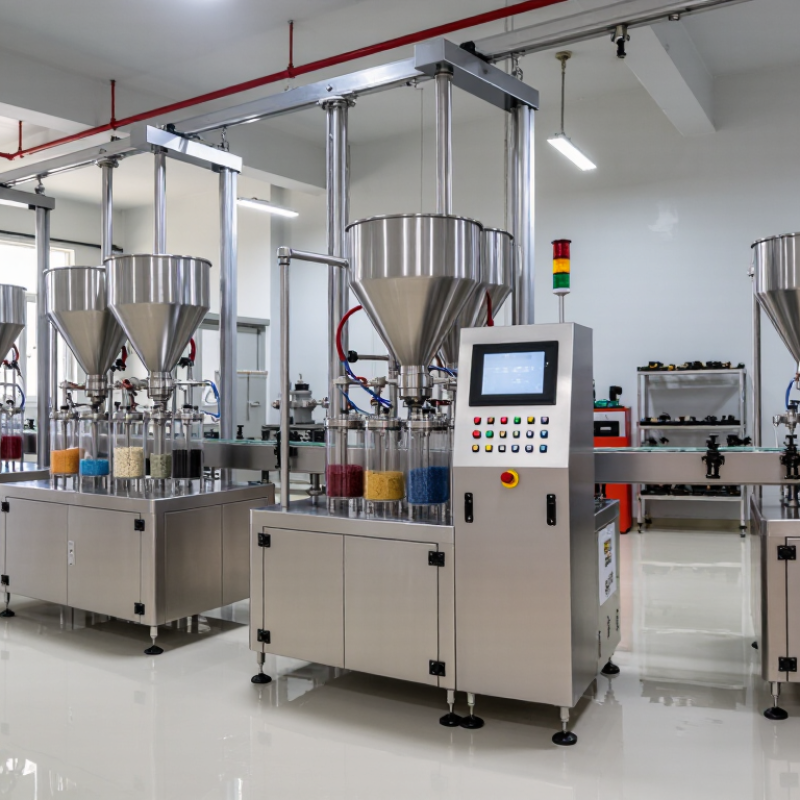
Color dosing machines meter concentrated pigment, or masterbatch, into base polymer before extrusion or injection molding. Their job is precise: keep color consistent without wasting concentrate. Plastics Europe’s 2024 report, Plastics – the Fast Facts, estimates that global plastics production reached 413.8 million tonnes in 2023. That scale makes repeatable material control important, although each production line needs its own settings.
A volumetric unit feeds colorant with a rotating screw at a set speed. It is simple, but assumes the material flows evenly. A gravimetric unit uses load cells to track weight loss and adjust feed rate against the resin throughput. In practice, operators set a recipe, check the feeder, then confirm the blend at the machine. The target may be only a small percentage of the resin flow.
Calibration matters. A dusty hopper, bridging pellets, or leftover color in a feed throat can shift the result. Small details count. A feeder can display the right rate while the molded part still shows streaks. That gap is easy to underestimate. Regular weigh checks and trial parts help reveal it, but color matching also depends on resin, temperature, mixing, and lighting during inspection.
Color dosing machines meter pigments or masterbatch into a polymer stream during production. The main types are volumetric feeders and gravimetric feeders. Volumetric units use a screw or rotating disc to deliver a set volume per cycle. They are often compact and straightforward to operate. However, changing bulk density can affect the actual color dose.
Gravimetric machines measure material by weight, often using load cells or loss-in-weight control. This helps maintain a consistent dosing ratio when resin flow or pigment density varies. In injection molding, a small feeder mounted above the machine may dose color directly into the throat. Extrusion lines can use continuous dosing to keep color steady along a long product run. The setup matters. Poor calibration can still cause streaks.
Liquid color dosing systems pump concentrated color into the resin stream. They can suit processes where liquid pigments disperse well and dust control is a concern. Some plants also use batch dosing equipment for pre-mixing larger quantities before production. Each type has trade-offs in cleaning time, accuracy, throughput, and material compatibility. A practical selection starts with the polymer, required color tolerance, and production rate. Operators should test the dose during a real run; lab settings do not always match the factory floor.
One detail is easy to miss: a feeder may meter accurately while the final color still varies because mixing is uneven.
Choosing a supplier requires more than comparing brochure accuracy or quoted cycle time. Ask how accuracy was measured, with which resin and concentrate, and whether the test was repeatable. Request a sample run using your own material. Watch the hopper, screw, and control screen during startup; bridging or unstable feeding can distort a short trial. Keep the test record.
Review engineering fit, not just specifications. Confirm the machine suits your molding or extrusion line, required throughput, and available floor space. Ask for calibration steps, spare-part lead times, wiring diagrams, and support hours. A capable manufacturer should explain how bulk density, pellet shape, or color loading affects dosing. Vague answers matter. So does service.
Look for evidence of quality controls, such as inspection sheets, component traceability, and documented acceptance tests. If possible, speak with a customer whose process resembles yours and ask about downtime after installation. Compare warranty exclusions carefully. Some details hide in plain sight. A factory visit may help, but it cannot replace a witnessed test under realistic conditions. Leave room for doubt: color consistency also depends on material handling, operator habits, and process settings. Put performance limits and test conditions in writing before purchase.
Leading color dosing machine manufacturers in China are best judged by how clearly they handle real production requirements. A reliable supplier should explain dosing accuracy, repeatability, hopper capacity, and compatibility with the customer’s raw materials. Ask how calibration is performed and what happens when pigment flow changes. Consistency matters. Practical demonstrations using similar materials can reveal more than a polished specification sheet.
Manufacturing quality also depends on details such as sealed connections, accessible cleaning points, and stable control settings. Request inspection records, component information, and examples of commissioning support before comparing prices. Ask for evidence. A supplier’s response to a difficult technical question can show how its engineering team works.
Not always. Some differences only become clear after installation, so clarify spare-part availability and troubleshooting procedures in writing. Buyers should check whether the machine fits their line speed and batch size, rather than choosing the largest or most automated model.
Even careful testing has limits: material behavior may vary between trials and full production. A candid manufacturer will discuss those uncertainties instead of promising perfect results.
Best Color Dosing Machine Manufacturers in China
Color dosing systems meter pigments and additives into plastics during injection molding, extrusion, film production, and fiber spinning. Accurate feeding helps maintain shade consistency when resin batches or production speeds change. Plastics Europe’s Plastics—The Fast Facts 2024 reports that global plastics production reached 413.8 million tonnes in 2023, underscoring the scale of processing where repeatable dosing matters. On a factory floor, operators still need to check screw feeding, hopper flow, and calibration; a precise controller cannot fix material bridging.
A clear trend is gravimetric dosing paired with recipe control, which adjusts feed rates as output changes. Systems are also being adapted for recycled feedstock, where bulk density and color can vary. The OECD’s Global Plastics Outlook reports that 353 million tonnes of plastic waste were generated in 2019, and only 9% was ultimately recycled. Better dosing can support more consistent blends, but it cannot remove variation in incoming material. Not a cure-all. Closed-loop checks and regular trials remain important.
Tips: Test the actual pigment and resin together before full production. Record dose settings, line speed, and color readings for each batch. Recheck after material or temperature changes.
„Thanks to the LUVIR technology, the solder resist process could be switched directly from the previously used mask exposure to direct exposure. As an outstanding digital solution on the market, this technology has been able to demonstrate fast process times and superior quality on our certified conventional ink in production. This allowed us to fully digitize the solder mask process at low cost – without process or ink adjustments. An excellent benefit to our production in Rot am See.“
Ralf Göhringer (Head of Production WE Rot am See)
I would definitely recommend the Limata machine and team for a future company purchase
Michael Greenaway
Compunetics Inc.
“The Limata ldi has been amazing!! Best thing we did was buy this machine”
Richard Brady
GM
Circuitlabs
“Since 2019, we have been running the Limata X1000 LDI system (including LUVIR for solder mask imaging) in daily production as an addition to our current process with film. The machine was capable of properly exposing Taiyo PSR-4000 BN (DI) solder mask types on normal to high-copper boards using a new and unique direct imaging process. The machine operating interface is very user friendly which allowed for a quick technical training curve. The pre-registration processing reduced several seconds of production time at every print. Limata support and service staff is incomparable. They supported our team every step of the way at basically any time of the day or night, with literally, an immediate response time, customizing the software interface to best fit our Operations and needs.
We have exposed more than 8,000 prints since end of October, on various solder mask colors and some resist film panels. Limata, has proven to be very capable and innovative. They are a strong contender in the industry.
We have very much enjoyed this project, and working with the team!
Thank you Limata for the continued support and being a part of our growth.”
Bill Sezate
Vice President, GM
Summit Interconnect
As a replacement to our current contact exposure process with film, the LIMATA X2000 system including LUVIR-Technology was capable of properly exposing non-LDI solder mask types using a direct imaging process. The machine offers cutting edge software with a very intuitive operating interface which allowed for quick technician training curve. The dual drawer system combined with pre-registration processing reduced several seconds of production time at every machine cycle. Limata support and service staff is world class. They added software patches to keep production running at shortest possible response times, customized the software interface to best fit our in-house Operations system, and even wrote a step-by-step machine processing manual. As a result of the project, we have exposed more than 16,000 times on various product types and solder mask brands/colors. Limata, in a very short timeframe as a company, has definitely shown they are truly innovative and will be challenging the industry of direct imaging for the top spot.
Kevin Beattie
Process Engineer
TTM Technologies
Forest Grove Division
