Global buyers rarely choose a Coupler Fitting by appearance alone. They compare pressure ratings, sealing materials, thread standards, flow capacity, and replacement availability.
Grand View Research estimates that the global hydraulic equipment market reached approximately USD 49.7 billion in 2023. Its report also projects continued growth through 2030, supported by construction, agriculture, manufacturing, and energy equipment. That expansion increases demand for dependable connection components. It also creates more room for confusing specifications.
A quick coupler may look compact on a warehouse shelf. Inside, its valve design, surface finish, and seal compound determine performance under pressure. Parker Hannifin’s technical guidance repeatedly emphasizes matching connectors with operating pressure, temperature, media, and environmental exposure. Eric Lanke, president and CEO of the National Fluid Power Association, has described fluid power as “the hidden technology that makes modern life possible.” That hidden role deserves careful product selection.
This guide examines 10 Coupler Fitting options for international purchasers. It considers ISO, SAE, BSP, and NPT compatibility, along with corrosion resistance and maintenance requirements. The selection also reflects practical buying concerns, including documentation, minimum order quantities, and supplier support.
Not every popular fitting suits every machine. That is the uncomfortable part. A low price can become expensive when leakage stops production or forces an urgent import. Some comparisons remain imperfect because manufacturers publish different test conditions. Buyers should verify certificates, dimensions, and application data before ordering. Small details matter.
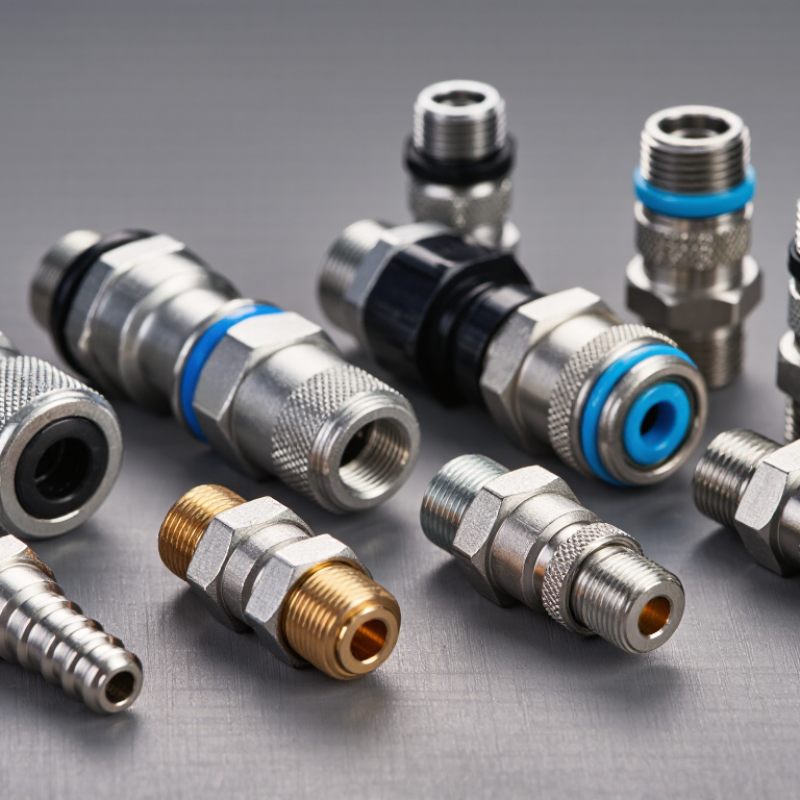
Coupler fittings are mechanical connectors for hoses, pipes, and equipment. They create secure pathways for air, water, oil, or approved process fluids. A coupler may use threads, quick-release sleeves, flanges, or push-to-connect ends. Its selection depends on pressure, temperature, media, connection size, and operating frequency.
Global buyers need coupler fittings because equipment rarely uses identical connection standards. A suitable fitting can bridge metric and imperial systems. It can also reduce maintenance delays when replacement parts cross borders. Buyers should confirm material compatibility, sealing method, flow direction, and corrosion resistance. Stainless steel suits harsh environments, while engineered polymers may reduce weight. Technical documents matter more than attractive product photos.
Reliable sourcing includes checking test reports, dimensional drawings, traceability, and packaging protection. Ask for working pressure, not only burst pressure. Verify thread profiles with gauges before placing large orders. One overlooked detail can delay clearance or stop an assembly line. No checklist is perfect. Field conditions often expose assumptions missed during purchasing. A small sample order may reveal leakage, poor tolerances, or unclear labels before full shipment.
How Are Coupler Fittings Classified by Design and Application?
Coupler fittings are commonly classified by their connection design, locking method, and flow path. Threaded couplers provide strong, stable connections for high-pressure systems. Push-to-connect models allow faster installation with limited tools. Cam-lock couplers use hinged arms and suit frequent connections, especially in fluid transfer lines. Flat-face couplers reduce fluid loss and help limit contamination during equipment changes. Breakaway designs separate under excessive pulling force, protecting hoses and machinery.
Application creates another useful classification. Hydraulic couplers handle high pressure in excavators, lifts, and agricultural equipment. Pneumatic couplers support compressed-air tools and factory automation. Low-pressure fluid couplers serve water, coolant, and chemical-transfer systems. Instrumentation couplers are smaller and demand accurate sealing. Material selection also changes by service: carbon steel offers strength, stainless steel resists corrosion, and brass works well in many moderate-pressure applications.
The best choice depends on pressure, temperature, media, flow rate, and connection frequency. Check seal compatibility carefully. A fitting rated for water may fail with oil or aggressive chemicals. Thread standards can also differ between markets, so verify dimensions rather than trusting appearance. Practical inspections often reveal a common mistake: buyers compare only size and price. That approach is incomplete. I would also review pressure spikes, hose movement, maintenance access, and replacement availability. The classification is not always clean; one coupler may fit several applications, but its seal and locking design still set the real limits.
Coupler fittings connect hydraulic or pneumatic lines, but their performance depends on material and standard selection. Stainless steel resists moisture, salt spray, and many cleaning chemicals. It suits outdoor equipment and demanding fluid systems. Carbon steel offers strength and cost control, but it needs suitable surface protection. Brass works well in lower-pressure air and water applications. Seal chemistry also matters. Nitrile suits many oils, while fluorocarbon handles higher temperatures and aggressive fluids. Small details matter.
Standards make product comparisons more reliable. ISO 7241 covers many hydraulic quick couplers, while ISO 16028 addresses flat-face designs. Pneumatic systems may follow ISO 4414 principles for safety and system design. However, a standard number does not guarantee perfect field performance. Buyers should confirm pressure ratings, flow capacity, temperature limits, and connection profiles. Thread form is critical across regions. An adapter may fit physically but still create leakage or reduced flow. Testing should include repeated connection cycles, pressure holding, and contamination exposure. Visual checks alone are insufficient.
Tips: Ask suppliers for material certificates, seal details, dimensional drawings, and test records. Match the coupler with the hose, valve, and working fluid. Do not select stainless steel automatically; it may be unnecessary or poorly matched to the seal. Check the actual operating pressure, not only the advertised maximum. A small mismatch can become an expensive failure. Specification reviews can feel slow, but rushed selection often creates avoidable maintenance problems.
Evaluating the ten best coupler fittings for global use starts with application details, not popularity. Identify the working fluid, pressure range, temperature, flow rate, and connection size. A fitting for clean air may fail with hydraulic oil. Confirm the thread profile, such as BSP, NPT, or metric, before ordering. Similar-looking threads are not interchangeable. They can leak.
Material selection deserves practical attention. Stainless steel suits corrosive environments, while plated steel may reduce cost in controlled conditions. Check seal compatibility with the fluid and temperature. Inspect locking sleeves, valves, and release mechanisms for easy operation with gloves. In field maintenance, small parts matter. A stiff sleeve can delay repairs. The ten strongest options should also provide reliable pressure ratings, cycle data, and documented leak testing. Do not accept vague claims.
Global evaluation includes supply and compliance evidence. Request dimensional drawings, material certificates, batch traceability, and test records from the supplier. Confirm packaging protects threads during long transport and storage. Check whether replacement seals and spare couplers are available locally. A low purchase price may become expensive after repeated downtime. I have found that polished product sheets can hide installation limits, so independent testing remains valuable. No selection is perfect. Recheck performance after vibration, temperature changes, and repeated connection cycles.
10 Best Coupler Fittings for Global Buyers?
Before importing coupler fittings, verify more than price and appearance. Confirm the connection type, thread size, operating pressure, temperature range, and intended fluid. A fitting for compressed air may fail in hydraulic service. Material also matters. Stainless steel, carbon steel, and engineered polymers behave differently under corrosion, vibration, and repeated coupling.
Ask the supplier for dimensional drawings, material certificates, pressure-test records, and inspection procedures. Check whether the documents match the actual production batch. Request samples before placing a large order. Measure the sample with calibrated tools, especially thread pitch, sealing surfaces, and locking depth. Confirm the applicable technical standards and import documents for your destination market. Packaging deserves attention too. Dust, moisture, and impact can damage sealing components during a long voyage.
Tips: Build a verification sheet with photographs and exact tolerances. Compare supplier claims with independent test results when possible. Confirm carton markings, spare seals, and traceability codes. Never assume “universal” means compatible. One small thread mismatch can stop an entire installation. A perfect checklist does not exist, and I have seen buyers overlook packaging while focusing heavily on certificates. Recheck the details that seem obvious.
Buyer verification priority by coupler fitting type. The score reflects the number of critical checks typically required before importing: interface compatibility, pressure rating, material, sealing system, dimensional accuracy, corrosion resistance, test evidence, and traceability.
A higher score indicates greater verification complexity, not product quality or market share. Buyers should confirm thread or flange standards, maximum working pressure, temperature range, seal material, test reports, inspection records, and applicable import requirements before placing an order.
„Thanks to the LUVIR technology, the solder resist process could be switched directly from the previously used mask exposure to direct exposure. As an outstanding digital solution on the market, this technology has been able to demonstrate fast process times and superior quality on our certified conventional ink in production. This allowed us to fully digitize the solder mask process at low cost – without process or ink adjustments. An excellent benefit to our production in Rot am See.“
Ralf Göhringer (Head of Production WE Rot am See)
I would definitely recommend the Limata machine and team for a future company purchase
Michael Greenaway
Compunetics Inc.
“The Limata ldi has been amazing!! Best thing we did was buy this machine”
Richard Brady
GM
Circuitlabs
“Since 2019, we have been running the Limata X1000 LDI system (including LUVIR for solder mask imaging) in daily production as an addition to our current process with film. The machine was capable of properly exposing Taiyo PSR-4000 BN (DI) solder mask types on normal to high-copper boards using a new and unique direct imaging process. The machine operating interface is very user friendly which allowed for a quick technical training curve. The pre-registration processing reduced several seconds of production time at every print. Limata support and service staff is incomparable. They supported our team every step of the way at basically any time of the day or night, with literally, an immediate response time, customizing the software interface to best fit our Operations and needs.
We have exposed more than 8,000 prints since end of October, on various solder mask colors and some resist film panels. Limata, has proven to be very capable and innovative. They are a strong contender in the industry.
We have very much enjoyed this project, and working with the team!
Thank you Limata for the continued support and being a part of our growth.”
Bill Sezate
Vice President, GM
Summit Interconnect
As a replacement to our current contact exposure process with film, the LIMATA X2000 system including LUVIR-Technology was capable of properly exposing non-LDI solder mask types using a direct imaging process. The machine offers cutting edge software with a very intuitive operating interface which allowed for quick technician training curve. The dual drawer system combined with pre-registration processing reduced several seconds of production time at every machine cycle. Limata support and service staff is world class. They added software patches to keep production running at shortest possible response times, customized the software interface to best fit our in-house Operations system, and even wrote a step-by-step machine processing manual. As a result of the project, we have exposed more than 16,000 times on various product types and solder mask brands/colors. Limata, in a very short timeframe as a company, has definitely shown they are truly innovative and will be challenging the industry of direct imaging for the top spot.
Kevin Beattie
Process Engineer
TTM Technologies
Forest Grove Division
