The demand for high-quality duvet covers continues to rise in the textile industry. According to the Global Home Textile Market Report, the market is projected to reach $120 billion by 2026. This growth emphasizes the importance of efficient manufacturing solutions. A reliable Duvet Cover Machine is essential for meeting this demand swiftly and effectively.
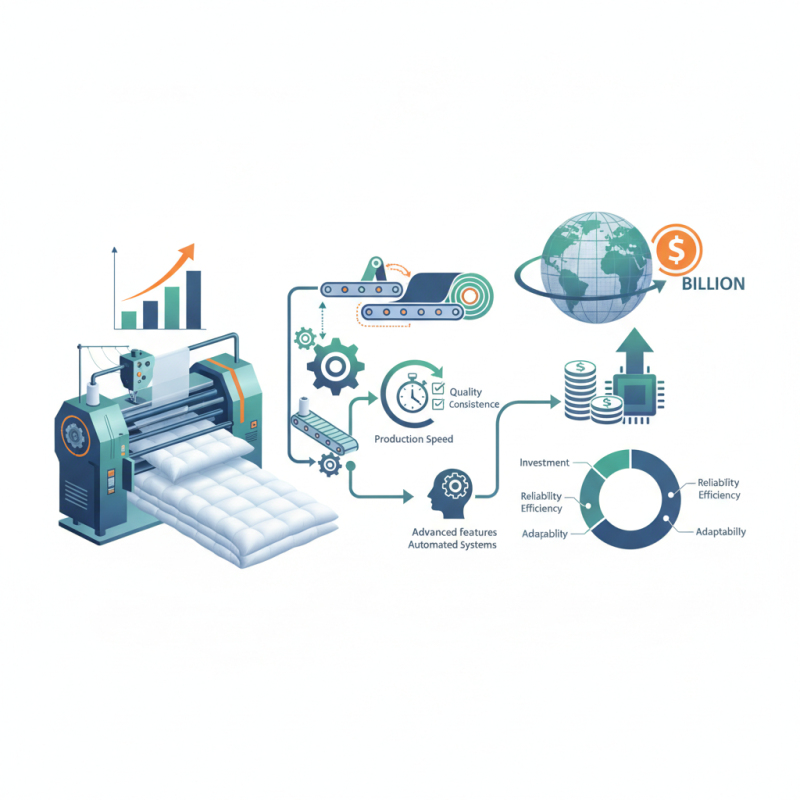
In today's competitive landscape, manufacturers face challenges like production speed and quality consistency. Advanced Duvet Cover Machines offer innovative features that enhance output while maintaining fabric integrity. Data from recent industry surveys show that automated systems can increase productivity by over 30%. Yet, investing in the right equipment remains a complex decision. Manufacturers must consider both cost and technology.
While some machines promise quick solutions, not all perform as expected. Continuous improvement is necessary to optimize these manufacturing processes. Identifying and investing in the best Duvet Cover Machine can significantly influence a company's success in this expanding market. As manufacturers reflect on their equipment choices, they should prioritize reliability, efficiency, and adaptability.
Duvet covers play a crucial role in the manufacturing of bedding products. They contribute to both comfort and aesthetics. According to a recent industry report, the global bedding market is projected to reach $80 billion by 2025. This indicates a growing demand for high-quality duvet covers. Manufacturers are focusing on designs that appeal to diverse customer preferences.
The material used in duvet covers significantly impacts manufacturing efficiency. For instance, cotton and microfiber are popular due to their durability and ease of cleaning. A study showed that 70% of consumers prefer breathable materials. This preference drives manufacturers to invest heavily in fabric technology. However, many factories still struggle with waste management during the cutting process. This can lead to increased costs and environmental concerns.
Investing in advanced duvet cover machines can enhance productivity. Automated systems reduce labor costs and minimize errors. Despite these benefits, many manufacturers hesitate to upgrade their equipment. A lack of knowledge about machine capabilities can hinder efficiency. Understanding these factors is vital for staying competitive in a rapidly evolving market. It is essential for manufacturers to reflect on their processes and adapt to changing consumer demands.
When selecting a duvet cover machine, several key features should be prioritized. Speed is crucial. A machine that can quickly sew or cut fabric increases overall productivity. Look for options that offer adjustable speed settings. This allows customization based on fabric type. A robust motor ensures consistent performance, even during high-volume runs.
Ease of use is another important factor. User-friendly controls enhance efficiency. Operators should comfortably switch modes and settings. An intuitive interface minimizes training time. Additionally, consider the machine's maintenance requirements. A machine that demands extensive upkeep can disrupt production. Opt for models with accessible parts to facilitate repairs.
Lastly, versatility in fabric handling is essential. The best machines can work with different materials, from cotton to synthetics. This flexibility is vital for manufacturers aiming for diverse product lines. However, not all machines perform equally well with every fabric. Testing various materials before finalizing a purchase can prevent costly mistakes.
When selecting a duvet cover machine for manufacturing, efficiency is key. Manufacturers require devices that minimize production time while maintaining quality. The right machine can streamline fabric handling, cutting, and sewing processes. Choosing a model that offers automation features can improve workflow and reduce labor dependency. Additionally, look for machines with easy maintenance to ensure long-term reliability and minimize downtime.
Several brands offer impressive models designed to enhance production efficiency. Focus on automation capabilities, such as automatic threading and programmable stitching patterns. Some machines come equipped with sensors to adjust tension and speed based on fabric type. Such features contribute to seamless operation. Still, finding the best solution requires consideration of specific production needs and fabric types.
Despite advancements, challenges remain. High-speed machines may lead to quality issues if operators are not fully trained. Regular training sessions can mitigate risks. Balancing speed and quality is crucial and requires continual assessment. Consider feedback from operators to identify areas for improvement. The quest for the ideal duvet cover machine is ongoing, and adaptability is vital.
| Model | Fabric Compatibility | Production Speed (units/hour) | Efficiency Rating (1-10) | Energy Consumption (kW) |
|---|---|---|---|---|
| Model A | Cotton, Polyester | 150 | 9 | 2.5 |
| Model B | Silk, Linen | 120 | 8 | 2.0 |
| Model C | Cotton, Blends | 180 | 10 | 3.0 |
| Model D | Wool, Synthetic | 140 | 7 | 2.8 |
| Model E | Polyester, Cotton Blend | 160 | 9 | 2.2 |
When evaluating duvet cover production, a comparative analysis of manual and automated processes reveals significant differences. Manual production often relies on skilled artisans who take great pride in their craft. They can handle intricate designs and provide a personal touch. However, this method can be slow and prone to human error. Quality can vary, and scaling production may be challenging.
On the other hand, automated production lines utilize advanced technology to enhance efficiency. While these systems can handle large volumes quickly, they may lack the finesse of manual work. Certain details, like unique stitching or custom patterns, can be lost in a fully automated process. This raises important questions about the trade-off between speed and quality. Can machines fully replicate the artistry involved in fabric production?
As the industry evolves, striking a balance becomes essential. Manufacturers must consider their target market's needs. High-end customers may favor manual production for its uniqueness. In contrast, those seeking affordability may prefer automated options. Each method has its strengths and weaknesses. Ultimately, the best approach depends on the specific goals and resources of the manufacturer.
The duvet cover manufacturing industry is evolving rapidly. Advanced technology is reshaping production methods. Automation plays a crucial role, increasing efficiency and precision. Machines can now cut fabric with extreme accuracy, reducing waste significantly. This innovation allows manufacturers to use resources more wisely.
Sustainability is another key focus. Eco-friendly materials are becoming more popular. Many factories are exploring organic textiles. This not only appeals to consumers but also promotes responsible manufacturing. However, transitioning to sustainable practices can be challenging. The initial costs may deter some producers.
Another trend involves digital printing techniques. They offer vibrant designs with minimal setup time. Manufacturers can quickly adapt to market demands. Yet, the quality of prints must be carefully monitored. Achieving the right balance between speed and quality requires ongoing assessment. Companies must continually evaluate their processes. Future advancements will likely bring new challenges and opportunities in this competitive landscape.
„Thanks to the LUVIR technology, the solder resist process could be switched directly from the previously used mask exposure to direct exposure. As an outstanding digital solution on the market, this technology has been able to demonstrate fast process times and superior quality on our certified conventional ink in production. This allowed us to fully digitize the solder mask process at low cost – without process or ink adjustments. An excellent benefit to our production in Rot am See.“
Ralf Göhringer (Head of Production WE Rot am See)
I would definitely recommend the Limata machine and team for a future company purchase
Michael Greenaway
Compunetics Inc.
“The Limata ldi has been amazing!! Best thing we did was buy this machine”
Richard Brady
GM
Circuitlabs
“Since 2019, we have been running the Limata X1000 LDI system (including LUVIR for solder mask imaging) in daily production as an addition to our current process with film. The machine was capable of properly exposing Taiyo PSR-4000 BN (DI) solder mask types on normal to high-copper boards using a new and unique direct imaging process. The machine operating interface is very user friendly which allowed for a quick technical training curve. The pre-registration processing reduced several seconds of production time at every print. Limata support and service staff is incomparable. They supported our team every step of the way at basically any time of the day or night, with literally, an immediate response time, customizing the software interface to best fit our Operations and needs.
We have exposed more than 8,000 prints since end of October, on various solder mask colors and some resist film panels. Limata, has proven to be very capable and innovative. They are a strong contender in the industry.
We have very much enjoyed this project, and working with the team!
Thank you Limata for the continued support and being a part of our growth.”
Bill Sezate
Vice President, GM
Summit Interconnect
As a replacement to our current contact exposure process with film, the LIMATA X2000 system including LUVIR-Technology was capable of properly exposing non-LDI solder mask types using a direct imaging process. The machine offers cutting edge software with a very intuitive operating interface which allowed for quick technician training curve. The dual drawer system combined with pre-registration processing reduced several seconds of production time at every machine cycle. Limata support and service staff is world class. They added software patches to keep production running at shortest possible response times, customized the software interface to best fit our in-house Operations system, and even wrote a step-by-step machine processing manual. As a result of the project, we have exposed more than 16,000 times on various product types and solder mask brands/colors. Limata, in a very short timeframe as a company, has definitely shown they are truly innovative and will be challenging the industry of direct imaging for the top spot.
Kevin Beattie
Process Engineer
TTM Technologies
Forest Grove Division
