Choosing the best China-based manufacturer of an Explosion Proof Emergency Light requires more than comparing price or brightness. In oil, gas, chemical, and mining sites, emergency lighting must remain dependable when normal power fails. It also needs a suitable protection concept, clear product documentation, and construction matched to the actual hazardous area. Small details matter: battery autonomy, operating temperature, cable entries, mounting position, and the visibility of safety markings.
The International Energy Agency’s Global Methane Tracker 2024 estimates that fossil-fuel operations emitted nearly 120 million tonnes of methane in 2023. This figure describes emissions, not explosions or emergency-light demand. Still, it reflects the scale of industrial environments where careful hazard controls matter. For buyers, a useful comparison should examine applicable IEC 60079 documentation, independent test evidence, quality controls, and after-sales support—not just a certificate image. There is no shortcut here. A polished catalogue can still leave questions about real operating performance. Ask how each model was tested, whether its battery runtime was verified, and how production consistency is monitored. The sections ahead assess Chinese manufacturers through these practical checks, while recognizing that the “best” choice depends on site conditions and project requirements.
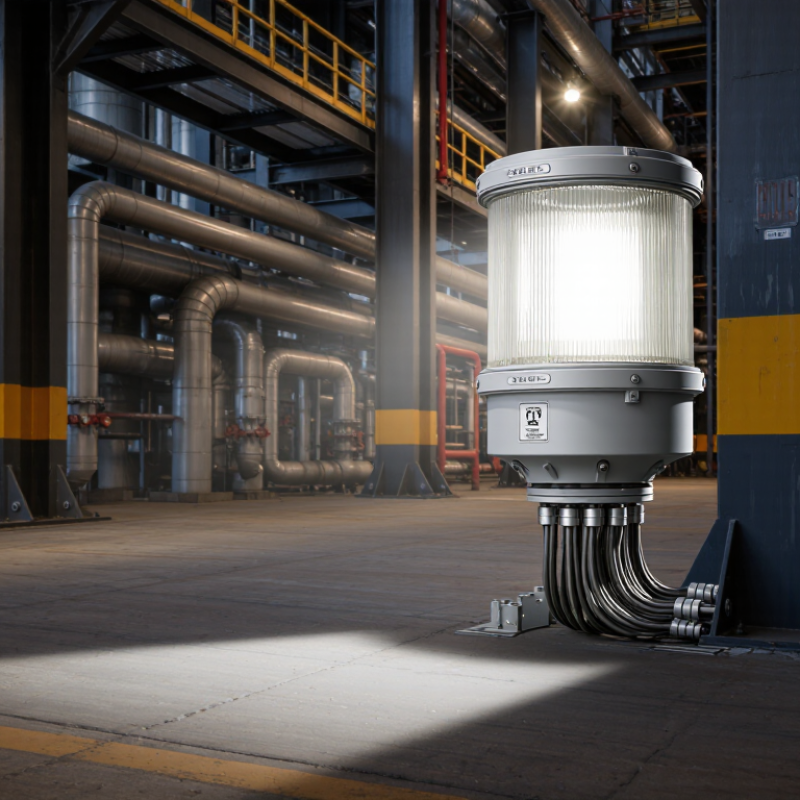
What Is an Explosion-Proof Emergency Light?
An explosion-proof emergency light provides illumination during a power failure in areas where flammable gas, vapor, or combustible dust may be present. Its enclosure is designed to contain an internal ignition and prevent flames from reaching the surrounding atmosphere. The emergency circuit uses a battery or backup supply, so escape routes and work areas remain visible when normal power stops. Not just a backup bulb.
The risk is real. The U.S. Chemical Safety Board’s 2006 Combustible Dust Hazard Study recorded 281 combustible-dust incidents in the United States from 1980 to 2005, causing 119 deaths and 718 injuries. This figure is not specific to lighting, but it shows why ignition control matters. A common specification mistake is treating “explosion-proof” and “weatherproof” as interchangeable. They are not.
Choose a light according to the site’s gas or dust classification, temperature limits, required emergency runtime, and mounting location. Check the certification and markings against applicable IEC 60079 standards and local requirements. Also confirm battery performance and illumination coverage; a compliant fixture in the wrong position can still leave a stairwell or exit route dim. Appearance alone tells you little. Verify the details.
OSHA specifies emergency egress illumination of at least 1.0 foot-candle (about 10.8 lux) on average initially, with a 0.1 foot-candle (about 1.1 lux) minimum. At the end of 90 minutes, the levels must be at least 0.6 foot-candle (about 6.5 lux) on average and 0.06 foot-candle (about 0.65 lux) minimum. These are U.S. workplace egress-lighting requirements, not explosion-protection ratings; hazardous-location suitability must be assessed separately.
Source: OSHA 29 CFR 1910.37(b)(6).
Hazardous-area ratings show where a light may be installed and which ignition risks it is designed to address. Gas zones and dust zones use different classifications. For example, Zones 1 and 2 describe places where explosive gas may occur; dust areas have separate zone numbers. A rating must match the site’s actual hazard, not just the product’s appearance. Small details matter.
Check the gas or dust group, temperature class, ambient-temperature range, and protection method on the certificate and product label. The temperature class indicates the equipment’s maximum surface temperature, which must stay below the ignition temperature of the surrounding material. An IP rating describes resistance to dust and water. It does not, by itself, prove explosion protection. Easy to confuse.
Certifications such as IECEx or ATEX relate to defined standards and approval schemes, but requirements depend on the installation location. Verify that the certificate covers the exact model, battery configuration, and mounting arrangement being purchased. A product family name is not enough. Emergency-light performance matters too: check rated duration, output, and how the battery performs at the site’s expected temperature. Even a careful checklist can miss a mismatch, so compare the documents with the area classification prepared for the facility.
Explosion-proof emergency lights are used where flammable gases, vapors, or combustible dust may be present. Common settings include refineries, chemical plants, fuel handling areas, paint rooms, and grain-processing facilities. They provide visibility if normal power fails, helping workers find exit routes, stairs, and safety equipment. Visibility can collapse fast.
In a processing area, an emergency light may need to illuminate a narrow walkway beside pipes or a doorway near a mixing room. In a grain facility, settled dust and airborne particles can affect equipment selection and maintenance. Dust changes everything. The exact risks vary by room, task, and materials handled, so a fixture suitable for one zone may not suit another. Check the area classification, temperature range, ingress protection, and required emergency runtime against the site’s engineering specifications and applicable standards.
Installation matters as much as the fixture. Keep signs and escape paths visible, avoid placing lights behind machinery, and test backup operation on a documented schedule. A label alone does not prove suitability for every hazardous location. Confirm ratings with qualified electrical and safety personnel, and revisit the layout when processes change. A missed corner is easy to overlook—and worth checking.
Evaluating a Chinese explosion-proof emergency light manufacturer starts with evidence, not polished catalog photos. Ask for current certificates and test reports for the exact model, then check that protection markings match your site conditions. A warehouse with combustible dust differs from a solvent-processing area. Confirm ambient temperature limits, ingress protection, emergency duration, and battery type. Small details matter. A certificate for a similar product is not enough.
Tips: Request sample labels, wiring diagrams, and battery test data. Ask how each unit is checked before shipment. Compare the stated emergency runtime with a timed test. Keep answers in writing.
Review production controls as well as product documents. Ask how the manufacturer tracks components, handles failed tests, and verifies battery charging after assembly. If possible, inspect a sample under realistic conditions, including a power-loss test and a check of indicator lights. A specification sheet can look complete and still leave gaps. I would pause if answers stay vague, even when the price is attractive. The process may feel slower, but traceable evidence makes comparison more reliable.
It provides backup illumination during a power failure in hazardous areas. Its enclosure is designed to contain an internal ignition. Not just a backup bulb.
A battery or backup supply keeps escape routes and work areas visible. Check that the light covers stairs, exits, and nearby walkways. A compliant fixture can still leave dark spots.
No. Weather resistance alone does not establish protection against ignition hazards. Check the actual certification and markings. Appearance can mislead.
Match its rating to the site’s gas or dust classification. Also check temperature limits, emergency runtime, and mounting location. Small details matter.
Gas zones and dust zones use different classifications. The rating must match the hazard expected at the installation site. Do not guess from appearance.
Review the gas or dust group, temperature class, ambient-temperature range, and protection method. Compare these details with the facility’s area classification. It is easy to miss one.
No. An IP rating describes resistance to dust and water, not explosion protection by itself. Easy to confuse.
Check rated duration, light output, battery configuration, and performance at expected site temperatures. Confirm the certificate covers the exact model and mounting arrangement. Paperwork can still be overlooked.
„Thanks to the LUVIR technology, the solder resist process could be switched directly from the previously used mask exposure to direct exposure. As an outstanding digital solution on the market, this technology has been able to demonstrate fast process times and superior quality on our certified conventional ink in production. This allowed us to fully digitize the solder mask process at low cost – without process or ink adjustments. An excellent benefit to our production in Rot am See.“
Ralf Göhringer (Head of Production WE Rot am See)
I would definitely recommend the Limata machine and team for a future company purchase
Michael Greenaway
Compunetics Inc.
“The Limata ldi has been amazing!! Best thing we did was buy this machine”
Richard Brady
GM
Circuitlabs
“Since 2019, we have been running the Limata X1000 LDI system (including LUVIR for solder mask imaging) in daily production as an addition to our current process with film. The machine was capable of properly exposing Taiyo PSR-4000 BN (DI) solder mask types on normal to high-copper boards using a new and unique direct imaging process. The machine operating interface is very user friendly which allowed for a quick technical training curve. The pre-registration processing reduced several seconds of production time at every print. Limata support and service staff is incomparable. They supported our team every step of the way at basically any time of the day or night, with literally, an immediate response time, customizing the software interface to best fit our Operations and needs.
We have exposed more than 8,000 prints since end of October, on various solder mask colors and some resist film panels. Limata, has proven to be very capable and innovative. They are a strong contender in the industry.
We have very much enjoyed this project, and working with the team!
Thank you Limata for the continued support and being a part of our growth.”
Bill Sezate
Vice President, GM
Summit Interconnect
As a replacement to our current contact exposure process with film, the LIMATA X2000 system including LUVIR-Technology was capable of properly exposing non-LDI solder mask types using a direct imaging process. The machine offers cutting edge software with a very intuitive operating interface which allowed for quick technician training curve. The dual drawer system combined with pre-registration processing reduced several seconds of production time at every machine cycle. Limata support and service staff is world class. They added software patches to keep production running at shortest possible response times, customized the software interface to best fit our in-house Operations system, and even wrote a step-by-step machine processing manual. As a result of the project, we have exposed more than 16,000 times on various product types and solder mask brands/colors. Limata, in a very short timeframe as a company, has definitely shown they are truly innovative and will be challenging the industry of direct imaging for the top spot.
Kevin Beattie
Process Engineer
TTM Technologies
Forest Grove Division
