Choosing a Hydraulic Cutting Machine is less about buying the biggest press and more about matching its working range to your daily jobs. A shop trimming gasket sheets needs different force, bed dimensions, and tooling than a plant cutting layered rubber or composite panels. Start with material type and maximum thickness. Then compare required cutting force, usable table area, stroke, and cycle speed against actual production samples. Ask suppliers to demonstrate with your own material, not only clean showroom stock. A rough edge on a real sample can reveal more than a polished brochure. Small details matter.
The right machine should also fit staffing, floor space, power supply, and maintenance capacity. Check guarding, two-hand controls or other applicable safety features, service access, spare-part availability, and operator training in the documented specifications. Ask how force is rated and whether quoted output changes with tooling, material hardness, or operating conditions. These questions help prevent under-sizing, wasted capacity, and avoidable downtime. Still, a specification sheet cannot predict every production issue. Material batches vary, operators develop habits, and a machine that looks ideal on paper may feel awkward after a full shift. Not always. This guide compares machine types and practical selection criteria, helping you weigh performance, cost, reliability, and supplier support before making a purchase.
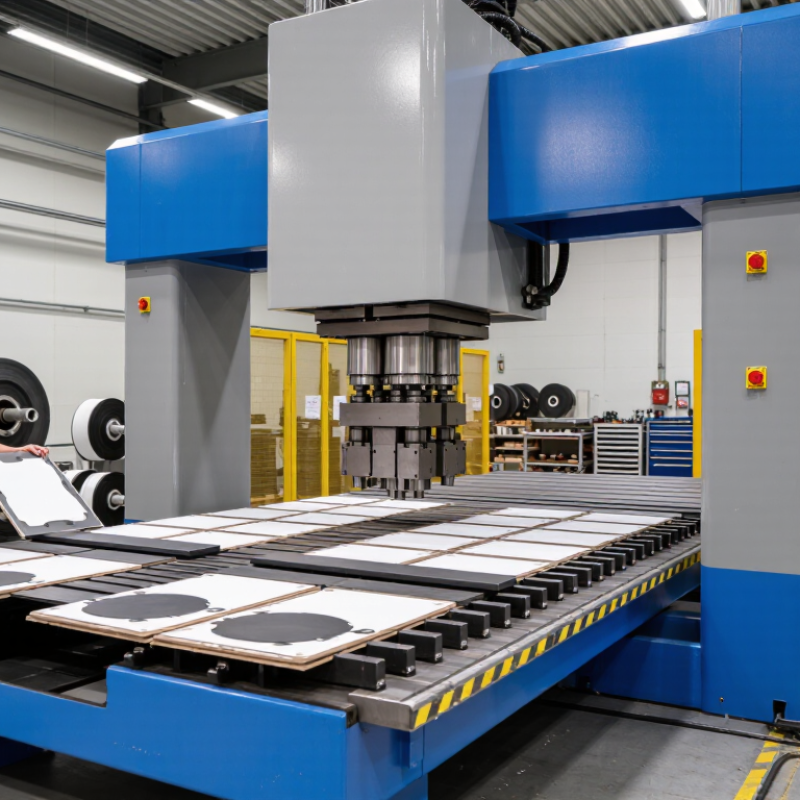
A hydraulic cutting machine uses fluid pressure to drive a blade or platen through sheet material. An electric motor runs a pump, which moves oil into a cylinder. Pressure pushes a piston, converting hydraulic force into a controlled cutting stroke. Depending on the design, the machine may use a moving blade, a press plate, or a shaped die. It can cut materials such as leather, rubber, foam, gasket stock, and some plastics. The right setup depends on thickness, hardness, and cut shape. It is not a one-setting tool.
During a typical cycle, an operator positions the material on the bed, aligns the die or cutting line, and activates the controls. The cylinder advances, the blade applies force, and the ram retracts. A consistent cut depends on more than pressure: blade condition, bed support, alignment, and material placement all matter. Small details matter. A dull edge may compress foam instead of cutting it cleanly, while uneven stacks can produce mismatched parts. Guards and emergency stops help reduce exposure to moving components, but they do not replace training or safe work procedures. Maintenance often includes checking hoses for leaks, monitoring fluid condition, and keeping the cutting surface level. Pressure alone is insufficient. In a busy workshop, setup can take longer than expected, and that trade-off is easy to underestimate.
Choosing a hydraulic cutter starts with the material, not the machine’s advertised capacity. A sheet-metal shop cutting mild steel has different needs from a workshop trimming rubber gaskets, leather, or layered composites. Check material type, maximum thickness, sheet size, hardness, and required edge quality. Then match the tooling and cutting force to the toughest regular job, not an occasional best-case sample. Small detail, big consequences.
World Steel Association’s World Steel in Figures 2024 reports that global crude steel output reached 1,892.2 million tonnes in 2023, with the United States producing 81.4 million tonnes. These figures do not predict your workload, but they show steel’s scale in manufacturing. For sheet work, compare rated capacity by material and thickness; “maximum capacity” alone can mislead. A hydraulic shear may suit straight cuts, while a press-style cutter with matched dies may better handle repeat shapes or softer sheet materials.
List the actual tasks: straight cuts, blanking, trimming, or repeated parts. Record daily volume and the tightest tolerance. A clean cut on a thin test piece proves little. Ask for a trial using your own material, including its thickest or most variable batch. If edges deform, burrs need extra finishing, or setup takes too long, the machine may not fit—even if its tonnage looks impressive. And yes, the sample can be awkward. That is useful evidence.
How to Compare Machine Types, Capacity, and Key Specifications
The best machine depends on your material, cutting area, and daily workload. Swing-arm models suit smaller pieces and flexible positioning. Travelling-head machines can cover larger sheets without moving the material as often. Flatbed presses may fit repeat jobs with fixed layouts. Compare these types using your actual work: a stack of foam, rubber, or gasket sheet behaves differently under the blade. I still find machine comparisons easy to overcomplicate.
Check cutting force, usable bed size, stroke, and daylight—the space available for material and tooling. Force must match material thickness and tool shape; more tonnage is not automatically better. Ask for capacity guidance using your densest routine material, not just a thin sample. Also compare cycle time, adjustment range, guarding, and service access. A fast machine that is awkward to load can slow a real shift. Confirm that listed specifications match your intended setup.
Tips: Bring a sample sheet and your largest cutting pattern when requesting a demonstration. Measure the finished pieces, note edge quality, and check how easily the operator positions material. Leave room for future jobs, but avoid paying for capacity you may never use. A little uncertainty in forecasts is normal.
A suitable hydraulic cutting machine should match your materials, production volume, and available floor space. Before comparing models, check the maximum cutting force, bed size, and material thickness your jobs actually require. A machine that is too large can waste power and valuable workspace. One that is undersized may slow production or produce inconsistent cuts. Measure doorways and access routes too; delivery clearance is easy to overlook. That matters daily.
Safety features deserve close inspection. Look for guarding around moving parts, accessible emergency stops, and clear operating instructions. Ask how routine maintenance is performed, and whether the machine can be safely isolated during service. Consider who will operate it and what training they need. Specifications are useful, but they do not replace a site-specific risk assessment.
Tips: Measure the proposed footprint, including room for loading, unloading, and maintenance access. Request a full operating-cost estimate that covers energy use, hydraulic fluid, replacement parts, and service. Compare expected costs with your real workload, not an ideal production schedule. Estimates can miss small recurring expenses, so leave room for surprises.
Match the machine to the work, not the biggest number on its specification sheet. Record your common material types, maximum thickness, cut length, and daily batch size. Then compare these with the machine’s rated cutting force, bed size, stroke, and cycle time. Not just tonnage. A machine may have enough force but still struggle with a long cut or frequent, thick-stock cycles. Check how quickly operators can load sheets and remove finished parts, too.
Tips: Run a sample job before purchase. Measure cut quality, cycle time, and setup effort on your own material. Include blade changes and routine maintenance in the estimate. A spreadsheet helps, but it can miss awkward handling around a real shop floor.
Plan for reliable production, not an ideal day. Deloitte and MAPI’s 2024 Smart Manufacturing and Operations Survey found that 86% of surveyed manufacturers viewed smart manufacturing as a key competitiveness driver over the next five years. For a cutting operation, this supports tracking practical measures such as downtime, cycle time, and scrap—not buying automation by default. Ask whether the machine can record useful production data and fit your existing workflow. Leave some capacity for likely growth, but verify that the added capacity justifies its cost. A cautious trial run may change the plan.
„Thanks to the LUVIR technology, the solder resist process could be switched directly from the previously used mask exposure to direct exposure. As an outstanding digital solution on the market, this technology has been able to demonstrate fast process times and superior quality on our certified conventional ink in production. This allowed us to fully digitize the solder mask process at low cost – without process or ink adjustments. An excellent benefit to our production in Rot am See.“
Ralf Göhringer (Head of Production WE Rot am See)
I would definitely recommend the Limata machine and team for a future company purchase
Michael Greenaway
Compunetics Inc.
“The Limata ldi has been amazing!! Best thing we did was buy this machine”
Richard Brady
GM
Circuitlabs
“Since 2019, we have been running the Limata X1000 LDI system (including LUVIR for solder mask imaging) in daily production as an addition to our current process with film. The machine was capable of properly exposing Taiyo PSR-4000 BN (DI) solder mask types on normal to high-copper boards using a new and unique direct imaging process. The machine operating interface is very user friendly which allowed for a quick technical training curve. The pre-registration processing reduced several seconds of production time at every print. Limata support and service staff is incomparable. They supported our team every step of the way at basically any time of the day or night, with literally, an immediate response time, customizing the software interface to best fit our Operations and needs.
We have exposed more than 8,000 prints since end of October, on various solder mask colors and some resist film panels. Limata, has proven to be very capable and innovative. They are a strong contender in the industry.
We have very much enjoyed this project, and working with the team!
Thank you Limata for the continued support and being a part of our growth.”
Bill Sezate
Vice President, GM
Summit Interconnect
As a replacement to our current contact exposure process with film, the LIMATA X2000 system including LUVIR-Technology was capable of properly exposing non-LDI solder mask types using a direct imaging process. The machine offers cutting edge software with a very intuitive operating interface which allowed for quick technician training curve. The dual drawer system combined with pre-registration processing reduced several seconds of production time at every machine cycle. Limata support and service staff is world class. They added software patches to keep production running at shortest possible response times, customized the software interface to best fit our in-house Operations system, and even wrote a step-by-step machine processing manual. As a result of the project, we have exposed more than 16,000 times on various product types and solder mask brands/colors. Limata, in a very short timeframe as a company, has definitely shown they are truly innovative and will be challenging the industry of direct imaging for the top spot.
Kevin Beattie
Process Engineer
TTM Technologies
Forest Grove Division