When searching for the best Jaw Crusher Plate Price, buyers face numerous options. This critical component of crushing machinery significantly influences operations in mining, construction, and recycling. Understanding Jaw Crusher Plate Price helps buyers make informed choices.
Quality and durability are paramount. However, prices can vary widely. Factors such as material quality, manufacturing processes, and brand reputation play key roles. Buyers must weigh these aspects against their budget. While lower prices may be tempting, they can lead to frequent replacements and higher long-term costs.
It’s essential to find a balance between cost and quality. Some manufacturers claim to offer premium plates at lower prices. However, are they meeting industry standards? Buyers should seek reviews and testimonials. Engaging with professionals in the field can also provide valuable insights. Reflecting on these considerations ensures that buyers achieve the best value for their investment in Jaw Crusher Plates.
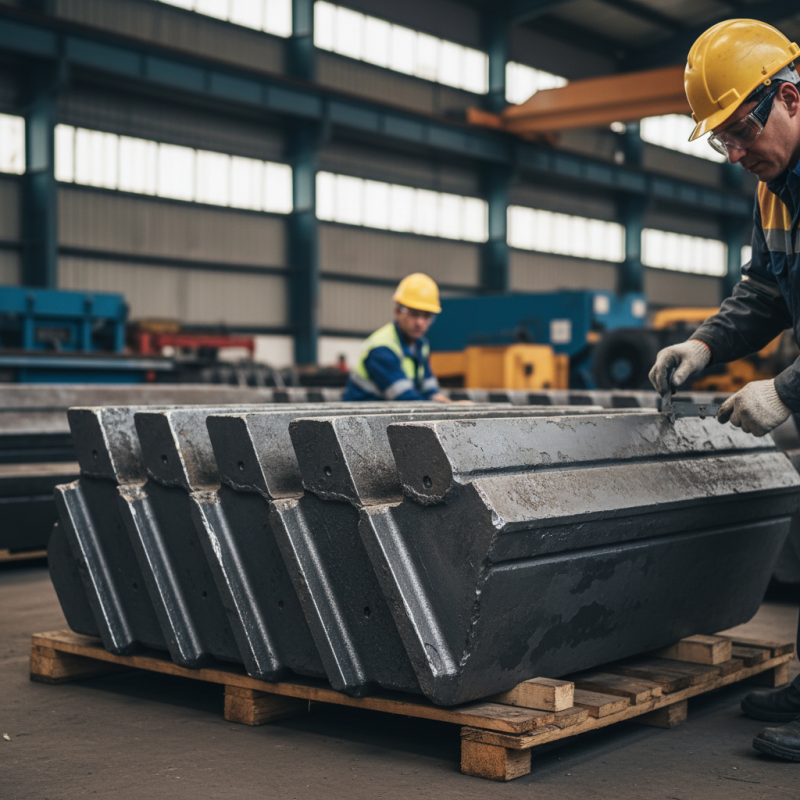
Jaw crusher plate prices fluctuate significantly in the global market. The cost is influenced by several key factors. Material quality is paramount. High-grade manganese steel often drives up prices. According to industry reports, premium materials can increase costs by 20% to 30%.
Production methods also impact pricing. Advanced technologies yield better durability but require higher investment. Manufacturers using casting and forging techniques may offer superior products. However, these processes can escalate costs by 15% to 25%.
Additionally, market demand plays a crucial role. Economic conditions affect construction and mining activities. A surge in demand can lead to price increases, while oversupply may drive prices down. Recent data indicates that global demand for jaw crusher plates will rise by 5% annually. Monitoring these trends is essential for buyers seeking competitive prices.
When evaluating jaw crusher plate prices, regional differences play a significant role. A recent industry analysis indicates that price variations can reach up to 30% between regions. Countries with high raw material costs, like the US and Canada, often present higher prices. Meanwhile, regions with abundant resources, such as parts of Asia, tend to offer more competitive rates.
Furthermore, the quality of steel and manufacturing processes impacts pricing. In Europe, advanced production techniques lead to longer-lasting plates, justifying higher costs. However, buyers should be cautious. Investing in lower-priced products may lead to rapid wear and increased replacement frequency, negating initial savings.
Tip: Always consider long-term value over short-term costs. Evaluating suppliers' credibility is crucial. Look for reviews and performance data when choosing a supplier. Seeking plates with a proven track record can lead to better returns.
In addition, local market conditions can influence availability and lead times, thereby affecting price. Potential buyers must conduct thorough research and possibly consult industry reports before making decisions. Understanding these dynamics ensures more informed purchasing choices.
When exploring the market for jaw crusher plates, it's essential to understand the pricing strategies employed by top manufacturers. These companies focus on quality, materials, and design to meet the diverse demands of their clients worldwide. A common approach involves offering various options based on durability and performance levels. This allows buyers to choose a product that fits their specific needs and budget.
Price fluctuations can reflect changes in raw material costs and technological advancements. Some manufacturers might reduce prices by optimizing production processes. Others may opt for premium pricing strategies, emphasizing the longevity and reliability of their products. This could lead to a significant price gap in the market. For customers, it’s crucial to weigh these factors against their operational requirements.
Not every buyer finds the best deal easily. Some struggle with the decision of whether to prioritize cost over quality. Others may end up purchasing a plate that does not suit their equipment well. Researching multiple manufacturers and comparing their offerings can lead to better purchasing decisions. By staying informed, buyers can navigate the complexities of this market.
The global market for jaw crusher plates is experiencing significant shifts. Recent data indicates a surge in demand, fueled by the increasing construction and mining activities worldwide. According to a market analysis report by Grand View Research, the jaw crusher market is projected to grow at a CAGR of roughly 6.2% from 2023 to 2030. This growth is driven by rising investments in infrastructure.
Simultaneously, supply dynamics are being affected by disruptions in manufacturing and logistics. Many suppliers face challenges in sourcing materials, leading to longer lead times. The current average price for jaw crusher plates has seen an increase of about 15% compared to last year, reflecting these supply chain constraints. This rise can impact project budgets and timelines, emphasizing the importance of strategic sourcing.
Buyers should remain vigilant about market fluctuations. Understanding regional differences in supply and demand is crucial. While prices may spike in some areas, others may offer stability. This variability requires careful planning and assessment. Engaging with multiple suppliers could provide leverage in negotiations. In this evolving environment, awareness and adaptability are key.
When negotiating the best price for jaw crusher plates, gather as much information as possible. Research different suppliers and their offerings. Compare prices, materials used, and warranties. Having multiple options gives you leverage during discussions. Understand market trends and average prices for similar products; this knowledge is crucial.
Don’t hesitate to ask for a breakdown of costs. What do you pay for materials? Is shipping included? Asking these questions can reveal opportunities for negotiation. Some suppliers may have hidden fees, so be vigilant.
Sometimes, a lower price might mean lower quality. It’s essential to consider the long-term value. Cheaper plates may wear out faster, leading to higher overall costs. Reflect on your choices before making a decision. Quality and reliability should never be compromised in favor of saving a few dollars upfront.
| Material | Price per Unit (USD) | Durability (HRc) | Quantity Available | Lead Time (Weeks) |
|---|---|---|---|---|
| High Manganese Steel | $250 | Hadfield Steel, 22 HRc | 500 Units | 4 Weeks |
| Alloy Steel | $300 | 18-22 HRc | 300 Units | 6 Weeks |
| Ceramic Composite | $400 | 24 HRc | 150 Units | 8 Weeks |
| Manganese Alloy | $280 | 22-24 HRc | 600 Units | 5 Weeks |
| Chromium Steel | $350 | 20-22 HRc | 400 Units | 7 Weeks |
„Thanks to the LUVIR technology, the solder resist process could be switched directly from the previously used mask exposure to direct exposure. As an outstanding digital solution on the market, this technology has been able to demonstrate fast process times and superior quality on our certified conventional ink in production. This allowed us to fully digitize the solder mask process at low cost – without process or ink adjustments. An excellent benefit to our production in Rot am See.“
Ralf Göhringer (Head of Production WE Rot am See)
I would definitely recommend the Limata machine and team for a future company purchase
Michael Greenaway
Compunetics Inc.
“The Limata ldi has been amazing!! Best thing we did was buy this machine”
Richard Brady
GM
Circuitlabs
“Since 2019, we have been running the Limata X1000 LDI system (including LUVIR for solder mask imaging) in daily production as an addition to our current process with film. The machine was capable of properly exposing Taiyo PSR-4000 BN (DI) solder mask types on normal to high-copper boards using a new and unique direct imaging process. The machine operating interface is very user friendly which allowed for a quick technical training curve. The pre-registration processing reduced several seconds of production time at every print. Limata support and service staff is incomparable. They supported our team every step of the way at basically any time of the day or night, with literally, an immediate response time, customizing the software interface to best fit our Operations and needs.
We have exposed more than 8,000 prints since end of October, on various solder mask colors and some resist film panels. Limata, has proven to be very capable and innovative. They are a strong contender in the industry.
We have very much enjoyed this project, and working with the team!
Thank you Limata for the continued support and being a part of our growth.”
Bill Sezate
Vice President, GM
Summit Interconnect
As a replacement to our current contact exposure process with film, the LIMATA X2000 system including LUVIR-Technology was capable of properly exposing non-LDI solder mask types using a direct imaging process. The machine offers cutting edge software with a very intuitive operating interface which allowed for quick technician training curve. The dual drawer system combined with pre-registration processing reduced several seconds of production time at every machine cycle. Limata support and service staff is world class. They added software patches to keep production running at shortest possible response times, customized the software interface to best fit our in-house Operations system, and even wrote a step-by-step machine processing manual. As a result of the project, we have exposed more than 16,000 times on various product types and solder mask brands/colors. Limata, in a very short timeframe as a company, has definitely shown they are truly innovative and will be challenging the industry of direct imaging for the top spot.
Kevin Beattie
Process Engineer
TTM Technologies
Forest Grove Division
