Choosing the best Nozzle Hydrant for 2026 is not just a matter of picking the largest outlet. Fire crews need dependable flow, secure connections, clear access, and equipment that suits local water systems. A nozzle that looks robust on a catalog page may still be awkward with gloves or poorly matched to existing hose couplings. Small details matter.
The scale of the need is clear. The National Fire Protection Association’s report, Fire Loss in the United States During 2023, estimated 1.39 million fires and $23.2 billion in direct property damage. Those figures describe a broad national challenge, not hydrant performance alone. Still, they underline why reliable water delivery deserves careful attention. NFPA 291 offers guidance for hydrant flow testing and marking, while AWWA’s M17 manual addresses fire hydrant installation, maintenance, and field testing. These references help buyers ask better questions about flow, pressure, inspection, and compatibility. They do not name one universally best nozzle.
That sounds simple. It isn’t. Real conditions vary: a municipal crew may need fast coupling access, while an industrial site may prioritize corrosion resistance and routine inspection. In this guide, “best” means a nozzle hydrant that fits its intended system, performs consistently, and can be maintained without guesswork. We will compare practical design features, materials, connection options, and verification points. No single specification guarantees performance; local testing and qualified review still matter. The aim is a clear, evidence-informed shortlist—not a promise that one model suits every street, station, or facility.
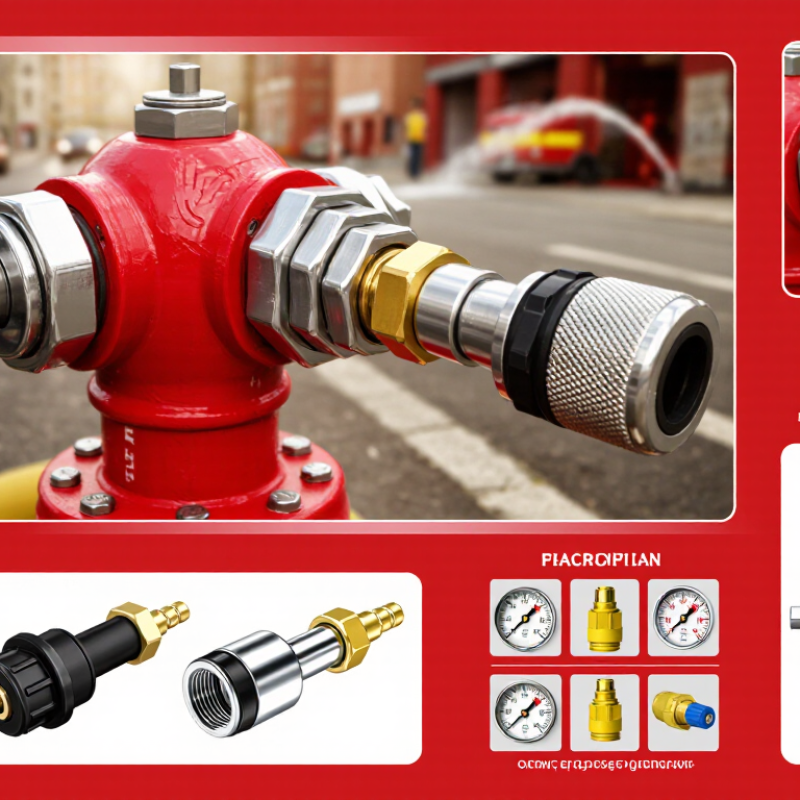
A “nozzle hydrant” generally means a hydrant fitted with one or more outlets for attaching hoses or water-delivery equipment. The term can vary between suppliers and regions, so check the outlet specification rather than relying on the label alone. Common connections include threaded hose outlets, large-diameter outlets, and quick-connect couplings. They are not automatically interchangeable.
The main components are the body or barrel, operating nut, stem, main valve, outlet nozzles, and protective caps. Turning the operating nut moves the stem and opens or closes the valve. In a dry-barrel hydrant, the main valve sits below ground level; after shutoff, water drains from the barrel. A wet-barrel hydrant remains pressurized and typically has a separate valve at each outlet. It sounds simple. But the internal arrangement matters during freezing weather and routine maintenance.
When assessing an outlet, inspect the cap, gasket, threads, and surrounding metal for wear, corrosion, or damage. A cap that looks secure may still conceal a worn gasket. Outlet size and connection type should match the intended hose and water system, and flow testing should follow the equipment maker’s instructions and local procedures. Not every mismatch is obvious at a glance. Keep that in mind.
A dependable hydrant nozzle starts with the job it must do. Common outlets include 2.5-inch hose connections and larger 4.5-inch outlets, but sizes and thread forms vary by system. Match the outlet to the hose, pump, and local connection specification. A mismatch can waste precious setup time. Small detail, big consequence. For materials, check the pressure-rated assembly, not just the visible nozzle. Hydrant bodies are commonly ductile iron, while outlet connections may use brass or bronze. Corrosion resistance matters where water remains in the barrel or coastal air attacks exposed threads. Stainless components can help, though they are not automatically the best value.
Standards help narrow the choices. AWWA C502 covers dry-barrel fire hydrants, while AWWA C503 addresses wet-barrel types. NFPA 1960 covers fire hose connections, nozzles, and related appliances; confirm the applicable edition and local thread requirements before purchase. NFPA’s U.S. Fire Loss in 2022 report estimated 1,504,500 fires nationwide, a reminder that reliable water access is operationally important. That figure does not prove one nozzle size is superior. For flow expectations, use documented hydrant testing practices such as NFPA 291, and compare pressure loss, rated pressure, and connection compatibility. I would still verify fit in person: drawings can miss a stubborn cap, worn thread, or cramped wrench clearance.
Nominal outlet diameter comparison (inches and millimetres)
These are common nominal outlet configurations, not a universal specification: actual outlet types, connection threads, and sizes depend on the hydrant and local fire-service requirements. NFPA 1963 addresses fire hose connections; AWWA C502 and C503 cover dry-barrel and wet-barrel fire hydrants, respectively. Confirm connection compatibility and applicable local standards before selection.
A “best” nozzle hydrant is not defined by appearance or outlet size alone. Fire-flow capacity depends on measured flow and residual pressure during a controlled test. NFPA 291, Recommended Practice for Water Flow Testing and Marking of Hydrants, rates hydrants at a standard residual pressure of 20 psi. Its bands are practical: Class AA delivers at least 1,500 gallons per minute (gpm); Class A, 1,000–1,499 gpm; Class B, 500–999 gpm; and Class C, below 500 gpm. These thresholds make comparisons clearer. They do not replace a site-specific assessment.
A field crew records static pressure, residual pressure while water flows, and nozzle or outlet measurements. NFPA 291 uses these readings to estimate flow available at 20 psi, rather than treating a single pitot reading as the final rating. A Class A result, for example, signals stronger capacity than Class B, but it cannot guarantee adequate supply for every building. Pipe condition, elevation, nearby simultaneous demand, and test setup all matter. Small errors count. A partly opened valve or an imperfect nozzle measurement can distort the estimate. Test conditions should be documented, and unusual results deserve a repeat test. Real-world readings are rarely perfect; that uncertainty should stay visible in the report.
A “best” nozzle hydrant in 2026 is the one that delivers usable flow at the site’s actual pressure. NFPA 291’s hydrant flow-testing guidance uses 20 psi residual pressure as a common reference for estimating available fire flow. Treat it as a benchmark, not a guarantee: network demand, pipe size, and elevation can change results. Test under realistic conditions.
Durability shows up in ordinary details. Inspect the nozzle threads, caps, seals, operating nut, and drain for corrosion or damage. AWWA Manual M17 covers hydrant installation, field testing, and maintenance; its guidance supports checking the whole assembly, not just the outlet. Look for materials and coatings suited to local water chemistry and climate. Freezing sites need reliable drainage. Small parts matter.
Fit the hydrant to the site before choosing an outlet configuration. Confirm connection type, clearance for hose handling, vehicle exposure, and room for maintenance access. Compare pressure ratings with measured static and residual pressures, then document flow-test results for future checks. NFPA 291 provides a consistent testing approach, but local system data still decides suitability. I would not choose by maximum advertised flow alone. It sounds decisive, but can mislead.
What Is the Best Nozzle Hydrant for 2026?
Choose a 2026 Nozzle Hydrant for Demand, Flow, and System Fit
The best nozzle hydrant is the one that meets the site’s measured fire-flow demand and connects cleanly to its water system. Start with a recent flow test, not a catalog’s maximum-flow figure. NFPA 291 (2022) describes rating hydrant flow at a residual pressure of 20 psi, giving engineers a consistent reference point. Record static and residual pressures, test location, and date. A reading from a quiet morning may not represent peak-demand conditions. Fit matters. Check inlet size, outlet configuration, connection type, operating pressure, and clearance for hoses and maintenance tools. Confirm these against local specifications and the installed piping.
Then compare the required flow with the available supply and expected pressure loss through the network. A hydrant with large outlets cannot compensate for undersized mains or weak system pressure. AWWA Manual M17 provides professional guidance on fire hydrant installation, maintenance, and testing; use it alongside current project requirements. Inspect the actual site, too: pavement levels, drainage, vehicle access, and room to turn operating equipment can affect usability. One imperfect step is relying on old test data because it is convenient. That can make a technically suitable hydrant a poor choice in practice. Choose only after the flow evidence and connection details agree.
„Thanks to the LUVIR technology, the solder resist process could be switched directly from the previously used mask exposure to direct exposure. As an outstanding digital solution on the market, this technology has been able to demonstrate fast process times and superior quality on our certified conventional ink in production. This allowed us to fully digitize the solder mask process at low cost – without process or ink adjustments. An excellent benefit to our production in Rot am See.“
Ralf Göhringer (Head of Production WE Rot am See)
I would definitely recommend the Limata machine and team for a future company purchase
Michael Greenaway
Compunetics Inc.
“The Limata ldi has been amazing!! Best thing we did was buy this machine”
Richard Brady
GM
Circuitlabs
“Since 2019, we have been running the Limata X1000 LDI system (including LUVIR for solder mask imaging) in daily production as an addition to our current process with film. The machine was capable of properly exposing Taiyo PSR-4000 BN (DI) solder mask types on normal to high-copper boards using a new and unique direct imaging process. The machine operating interface is very user friendly which allowed for a quick technical training curve. The pre-registration processing reduced several seconds of production time at every print. Limata support and service staff is incomparable. They supported our team every step of the way at basically any time of the day or night, with literally, an immediate response time, customizing the software interface to best fit our Operations and needs.
We have exposed more than 8,000 prints since end of October, on various solder mask colors and some resist film panels. Limata, has proven to be very capable and innovative. They are a strong contender in the industry.
We have very much enjoyed this project, and working with the team!
Thank you Limata for the continued support and being a part of our growth.”
Bill Sezate
Vice President, GM
Summit Interconnect
As a replacement to our current contact exposure process with film, the LIMATA X2000 system including LUVIR-Technology was capable of properly exposing non-LDI solder mask types using a direct imaging process. The machine offers cutting edge software with a very intuitive operating interface which allowed for quick technician training curve. The dual drawer system combined with pre-registration processing reduced several seconds of production time at every machine cycle. Limata support and service staff is world class. They added software patches to keep production running at shortest possible response times, customized the software interface to best fit our in-house Operations system, and even wrote a step-by-step machine processing manual. As a result of the project, we have exposed more than 16,000 times on various product types and solder mask brands/colors. Limata, in a very short timeframe as a company, has definitely shown they are truly innovative and will be challenging the industry of direct imaging for the top spot.
Kevin Beattie
Process Engineer
TTM Technologies
Forest Grove Division
