Choosing the best pcb manufacturing machine in China is not a brand-name contest. It is a production-fit decision. A compact desktop system may suit prototypes, while a high-volume factory needs stable throughput, precise alignment, and dependable service. The right choice depends on board complexity, expected output, available floor space, and operator skill. Small details matter: a clean drill table, repeatable camera registration, and accessible spare parts can shape everyday results.
John Mitchell, former IPC president and CEO, has emphasized the role of skilled people and disciplined processes in electronics manufacturing. A careful paraphrase of that principle is: “Equipment performs only as well as the process and people behind it.” That is not a machine specification, but it is a useful test. A fast line can still produce scrap if setup, maintenance, or inspection is weak. Not just speed.
This guide compares the main machine categories used in PCB production, including drilling, imaging, etching, solder-mask, and inspection equipment. It also considers Chinese suppliers through practical measures: stated accuracy, test documentation, installation support, training, and parts availability. Ask for sample boards made to your design. Check the results under magnification. Request a clear service response time, too. No single machine is best for every factory, and published specifications can hide trade-offs. The answer should fit your process, not merely look impressive in a brochure.
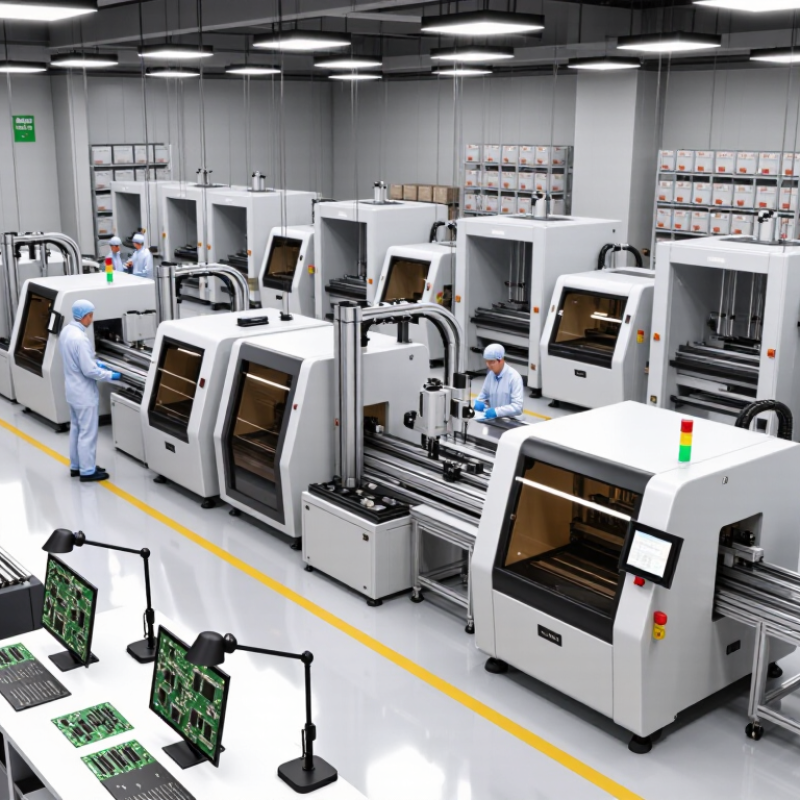
What Defines the Best PCB Manufacturing Machine in China?
The best machine is the one that holds process capability across your actual board mix, not just a fast production rate. Check drilling accuracy, copper thickness consistency, registration, and inspection results on real production panels. A tiny misalignment around a fine-pitch pad can cause costly rework. Ask for measured yield and repeatability, not only brochure specifications.
Fortune Business Insights estimated the global PCB market at USD 73.6 billion in 2023 in its PCB market report. That scale points to demanding production needs, but market growth alone does not identify the right equipment. Evaluate uptime, changeover time, energy use, spare-parts access, and operator training. A high-speed machine can still be the wrong purchase. I would test it with your own materials and tolerances; that is easy to overlook.
Tips: Request a sample run using your board design. Record cycle time, defect rate, and inspection findings. Compare results across shifts, too. Ask how calibration is documented. A neat demo is useful, but it may not reflect a busy factory floor.
A practical framework for comparing equipment—not a ranking of brands or a survey of manufacturers.
How to read this chart: The percentages are illustrative buyer-assigned weights, not measured market data. Compare documented process capability, precision, throughput, uptime and operating costs against your board design and production needs. The best machine is the one that meets your required tolerances and output reliably at an acceptable total cost.
PCB production relies on several machine types, and each handles a different stage. The right choice depends on board layers, required tolerances, and production volume. It depends.
CNC drilling machines create holes for component leads and plated connections. For fine-pitch boards, laser drilling can make smaller microvias, though it requires careful process control. Imaging equipment transfers circuit patterns onto copper-clad panels. Etching systems then remove unwanted copper, while plating equipment builds conductive layers inside holes and across selected surfaces. These steps must align closely; a slight registration error can affect later assembly.
Lamination presses bond copper and insulating materials into multilayer boards using controlled heat and pressure. Solder-mask printing and curing machines protect exposed copper, while surface-finishing equipment prepares pads for soldering. Automated optical inspection checks for visible defects, such as broken traces or shorts.
Useful, but not perfect. Inspection settings and operator review still matter. In a Chinese PCB factory, a high-speed machine may suit large, repeat orders, while a flexible setup can be more practical for prototypes. A fast line can still waste panels if setup data or material handling is wrong.
Choosing a PCB manufacturing machine in China starts with the process, not the brochure speed. Match the line to board type, layer count, panel size, and monthly product mix. Prismark’s 2024 global PCB industry report put 2023 production value at about US$73.6 billion, down roughly 15% year over year. That contraction makes total cost important, but a low purchase price can hide scrap, setup time, and service delays. Check registration accuracy, drilling repeatability, spindle life, and performance across your thinnest and thickest copper stacks. Ask for measured results using your own panel files.
Inspect more than a demonstration cycle. Run a sustained trial and record first-pass yield, downtime, tool changes, and operator intervention. For imaging and inspection, test fine traces and deliberately placed defects. For drilling, inspect hole position and wall quality after plating. Test the basics. Review calibration records, spare-part lead times, training, and local technician coverage. I may still miss a detail: shift changes can expose weak training. Do not treat peak speed as proof of output; it ignores changeovers and stoppages. Request a written acceptance test tied to your board tolerances, not a generic sample.
China’s leading PCB machine manufacturers often specialize in different stages of production rather than offering one universally superior machine. Some are known for drilling and routing equipment, where spindle stability and accurate positioning matter. Others focus on exposure systems, plating lines, or automated optical inspection. The best choice depends on the board design, production volume, and factory workflow. There is no single winner.
For multilayer boards, drilling accuracy can affect later alignment and yield. Buyers should compare hole diameter ranges, positioning tolerances, tool-change time, and maintenance access. A useful test is to run representative panels, then inspect hole walls and registration—not just review a specification sheet. Details matter. Exposure equipment deserves similar scrutiny: check image consistency across the panel and ask how calibration is managed over time.
Chinese suppliers can offer strong local engineering support, configurable equipment, and shorter service-response times within the region. Their strengths vary, though, and a polished demonstration may not reflect a full production shift. Ask for references from factories with similar materials and output targets. Review spare-part availability, operator training, and software updates. These points are easy to overlook. I would also compare energy use and changeover time; the cheaper machine can become costly when schedules are tight. Some claims may sound convincing, but measurable acceptance criteria make the comparison fairer.
Choosing the right PCB manufacturing machine in China starts with your actual production process, not a headline speed. A prototype workshop may need flexible drilling and routing, while a high-volume line may prioritize stable cycle times and repeatable positioning. Define your board size, layer count, material, copper thickness, and required tolerances before comparing equipment. Measure twice. These details affect whether a machine can handle your panels without extra handling or rework.
Review the machine’s specifications against a real sample board. Ask for a trial run, and inspect hole placement, edge quality, registration, and processing time. Request details on setup, operator training, spare parts, and local technical support. A low purchase price can become costly if common components take weeks to replace. That matters. Also check whether the equipment integrates with your existing workflow, such as imaging, drilling, inspection, or finishing. Avoid choosing by one impressive number alone; advertised throughput may not reflect changeovers or complex designs. I would still leave room for uncertainty: supplier demonstrations rarely reproduce every production condition. Compare documented test results, clarify service terms in writing, and speak with current users when possible.


„Thanks to the LUVIR technology, the solder resist process could be switched directly from the previously used mask exposure to direct exposure. As an outstanding digital solution on the market, this technology has been able to demonstrate fast process times and superior quality on our certified conventional ink in production. This allowed us to fully digitize the solder mask process at low cost – without process or ink adjustments. An excellent benefit to our production in Rot am See.“
Ralf Göhringer (Head of Production WE Rot am See)
I would definitely recommend the Limata machine and team for a future company purchase
Michael Greenaway
Compunetics Inc.
“The Limata ldi has been amazing!! Best thing we did was buy this machine”
Richard Brady
GM
Circuitlabs
“Since 2019, we have been running the Limata X1000 LDI system (including LUVIR for solder mask imaging) in daily production as an addition to our current process with film. The machine was capable of properly exposing Taiyo PSR-4000 BN (DI) solder mask types on normal to high-copper boards using a new and unique direct imaging process. The machine operating interface is very user friendly which allowed for a quick technical training curve. The pre-registration processing reduced several seconds of production time at every print. Limata support and service staff is incomparable. They supported our team every step of the way at basically any time of the day or night, with literally, an immediate response time, customizing the software interface to best fit our Operations and needs.
We have exposed more than 8,000 prints since end of October, on various solder mask colors and some resist film panels. Limata, has proven to be very capable and innovative. They are a strong contender in the industry.
We have very much enjoyed this project, and working with the team!
Thank you Limata for the continued support and being a part of our growth.”
Bill Sezate
Vice President, GM
Summit Interconnect
As a replacement to our current contact exposure process with film, the LIMATA X2000 system including LUVIR-Technology was capable of properly exposing non-LDI solder mask types using a direct imaging process. The machine offers cutting edge software with a very intuitive operating interface which allowed for quick technician training curve. The dual drawer system combined with pre-registration processing reduced several seconds of production time at every machine cycle. Limata support and service staff is world class. They added software patches to keep production running at shortest possible response times, customized the software interface to best fit our in-house Operations system, and even wrote a step-by-step machine processing manual. As a result of the project, we have exposed more than 16,000 times on various product types and solder mask brands/colors. Limata, in a very short timeframe as a company, has definitely shown they are truly innovative and will be challenging the industry of direct imaging for the top spot.
Kevin Beattie
Process Engineer
TTM Technologies
Forest Grove Division
