Choosing the best Pure Water Machine in 2026 is not simply a matter of buying the most expensive model. The right choice depends on source-water quality, household demand, maintenance habits, and the contaminants that actually need removal. Tap water may look clear while carrying dissolved minerals, chlorine, heavy metals, or microbial risks. A laboratory report gives better direction than attractive packaging.
Dr. Joseph Cotruvo, a respected water-quality scientist and former U.S. Environmental Protection Agency adviser, offers a practical warning: “No single treatment removes every contaminant.” That principle should guide every comparison. Reverse osmosis can reduce many dissolved pollutants, but it often wastes water and may remove beneficial minerals. Distillation produces highly purified water, yet it can consume considerable electricity. Ultraviolet systems can target microorganisms, but they do not remove chemicals. Carbon filters improve taste and chlorine levels, although their performance depends heavily on timely replacement.
This guide compares these technologies through measurable criteria. We examine filtration performance, certification evidence, flow rate, storage capacity, energy use, filter costs, and installation needs. We also consider real kitchen conditions, such as a crowded counter, low water pressure, and a forgotten replacement date. Small details matter.
There is no perfect machine.
Some recommendations may change after testing local water. That is an important limitation. A reliable decision should combine manufacturer data, independent certification, professional advice, and personal usage experience. The best Pure Water Machine is therefore the one that solves a specific water problem consistently, safely, and affordably.
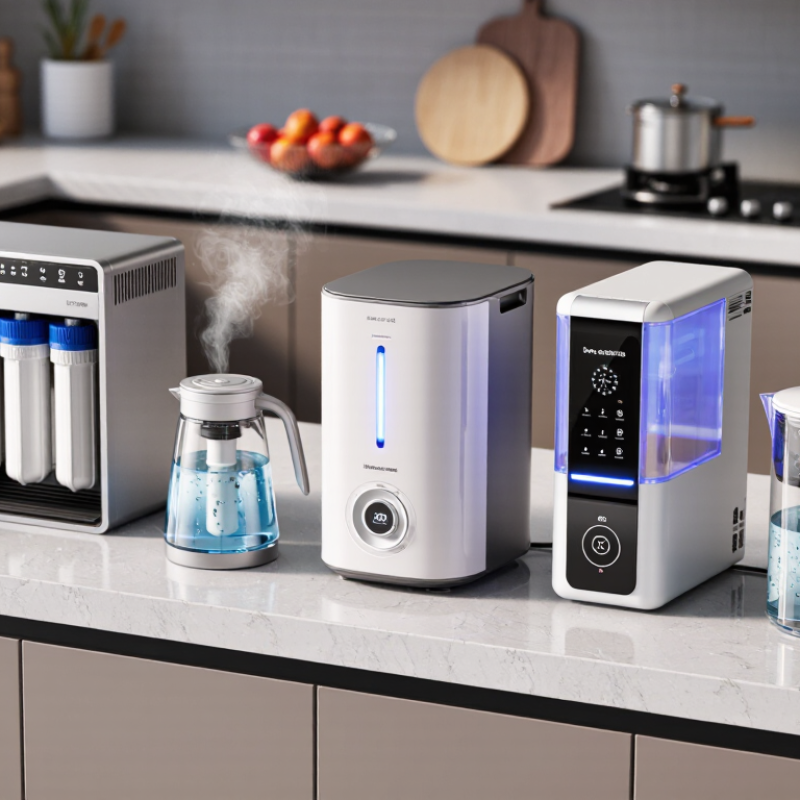
A pure water machine is a household treatment system designed to reduce unwanted substances in drinking water. It usually combines sediment filtration, activated carbon, and reverse osmosis. Some models also use ultraviolet light or a final polishing filter. The exact design matters, because “pure water” is a convenient term, not a scientific guarantee.
Water first passes through a sediment filter. This stage catches visible particles, such as sand or rust flakes. Activated carbon can reduce chlorine, odors, and some organic chemicals. The reverse osmosis membrane then pushes water through extremely small pores under pressure. Dissolved salts, certain metals, and many other impurities remain in the reject stream. Cleaner water moves into a storage tank or directly to the faucet.
The process is not magic.
A good machine needs steady pressure and timely filter replacement. In my experience, neglected filters can produce slow flow, unpleasant taste, or microbial growth inside poorly cleaned parts. A low TDS reading also does not prove that every possible contaminant is absent. Testing the incoming water gives a more reliable basis for choosing treatment stages. Hard water may require extra attention, while chlorinated municipal water often benefits from carbon filtration before the membrane. Wastewater is another practical issue; reverse osmosis systems commonly discharge more water than they produce. Installation quality, sanitation, certification, and maintenance records deserve as much attention as the machine’s advertised purification rate.
In 2026, pure water machines fall into several practical categories, each designed for different water conditions and household habits. Reverse osmosis (RO) systems use pressure to push water through a semipermeable membrane. They can reduce dissolved salts, metals, and many contaminants effectively. Most include sediment and carbon prefilters. They need regular filter changes and produce wastewater. That trade-off matters in small kitchens.
Ultrafiltration (UF) machines use a fine physical barrier but usually retain dissolved minerals. They suit users who want cleaner water without strong mineral removal. Ultraviolet (UV) units target microorganisms with light, although they cannot remove sediment or chemicals. Distillation boils water and condenses the vapor, producing very low-mineral water. It can consume considerable electricity and may taste flat. Gravity-fed ceramic systems work without power, but flow is slower and cartridge quality varies.
Some machines combine RO, UV, carbon filtration, remineralization, or smart monitoring. Combination systems can help, yet extra stages increase replacement costs and possible failure points. Professional assessment should begin with source-water testing. A TDS meter alone cannot prove safety. Check independent performance data, maintenance access, filter availability, and sanitation design. I would not choose based on “pure” as a slogan. Verified claims matter more. Even then, household habits can defeat good technology; neglected filters quietly reduce protection.
Comparing purification performance starts with the contaminant, not the machine’s label. Reverse osmosis can reduce many dissolved salts, metals, and selected chemical contaminants. Its results depend on membrane condition, pressure, and maintenance. Activated carbon improves taste and can reduce chlorine and some organic compounds, but ordinary carbon does not reliably remove microbes. Ultraviolet treatment can inactivate bacteria, viruses, and parasites, yet it cannot remove sediment or dissolved chemicals. The CDC notes that filters with an absolute pore size of 1 micron or smaller can reduce many parasites, while smaller microbial targets require stronger controls.
Water quality also needs local evidence. The WHO reports that total dissolved solids below 600 mg/L are generally considered palatable, while levels above 1,000 mg/L may become unacceptable. Taste is not safety. A low reading can still hide microbial contamination or specific chemicals. The 2023 WHO/UNICEF Joint Monitoring Programme report estimated that 2.2 billion people lacked safely managed drinking water in 2022, showing why source testing matters before selecting equipment.
Look for independently verified reduction claims, flow rate, wastewater ratio, and replacement intervals. Test inlet and outlet water when possible. TDS meters are useful for checking membrane performance, but they cannot detect every health concern. That limitation is easy to miss. A practical comparison may favor a combined system, though more stages also create more maintenance points. A neglected filter can undermine excellent engineering.
The best pure water machine depends on water quality, household demand, and available installation space. An under-sink reverse osmosis system usually costs less to install. It needs a cold-water connection, a drain saddle, and a power outlet if it includes a pump. Tight cabinets can increase labor time. Older pipes may also require replacement fittings. A whole-house system needs more planning. Installers may need a prefilter, pressure tank, bypass valve, and a suitable floor drain.
Maintenance costs depend heavily on incoming water. Sediment-heavy water can block filters quickly. Hard water can shorten membrane life and damage valves. Most prefilters need replacement every six to twelve months. Membranes often last two to five years, but actual performance varies. Ultraviolet units need lamp replacement and regular sleeve cleaning. Testing the treated water with an accredited laboratory provides stronger evidence than relying on taste alone. That small step is often overlooked.
Operating cost includes electricity, replacement cartridges, service visits, and rejected water. Reverse osmosis may waste several liters for each liter produced, especially with low pressure. A booster pump can improve production but adds energy use and another failure point. Gravity systems use little power, yet they may produce water slowly. I once underestimated cabinet space during a planning review. The unit fit, but filter changes became awkward. Measuring clearance, pressure, daily consumption, and drain access before purchase prevents that mistake. Local plumbing rules may also affect labor and permit costs.
Choosing a pure water machine in 2026 starts with your household’s water report, not a fashionable feature. A reverse osmosis system suits families concerned about dissolved salts, certain metals, or unpleasant taste. It usually needs electricity, filter changes, and a storage tank beneath the sink. Its wastewater ratio can also matter in dry regions. Not perfect here.
Ultrafiltration keeps many particles and microorganisms out while retaining some minerals. It can fit apartments with limited space and moderate water concerns. However, it may not remove every dissolved contaminant, so independent water testing remains important.
Ultraviolet treatment can address microbes, but it does not remove sediment or chemicals. That distinction is easy to miss. Homes using private wells need more caution. Test the water.
For a newborn, an elderly resident, or someone following medical dietary guidance, stable purification and regular maintenance deserve priority. Check replacement costs, flow rate, noise, and service records before buying. Look for independently tested performance against stated contaminants, rather than vague claims about “pure” water. I would also leave space around the unit for filter access. A cramped cabinet turns simple maintenance into postponed maintenance. Water taste may improve, yet taste alone cannot prove safety.
„Thanks to the LUVIR technology, the solder resist process could be switched directly from the previously used mask exposure to direct exposure. As an outstanding digital solution on the market, this technology has been able to demonstrate fast process times and superior quality on our certified conventional ink in production. This allowed us to fully digitize the solder mask process at low cost – without process or ink adjustments. An excellent benefit to our production in Rot am See.“
Ralf Göhringer (Head of Production WE Rot am See)
I would definitely recommend the Limata machine and team for a future company purchase
Michael Greenaway
Compunetics Inc.
“The Limata ldi has been amazing!! Best thing we did was buy this machine”
Richard Brady
GM
Circuitlabs
“Since 2019, we have been running the Limata X1000 LDI system (including LUVIR for solder mask imaging) in daily production as an addition to our current process with film. The machine was capable of properly exposing Taiyo PSR-4000 BN (DI) solder mask types on normal to high-copper boards using a new and unique direct imaging process. The machine operating interface is very user friendly which allowed for a quick technical training curve. The pre-registration processing reduced several seconds of production time at every print. Limata support and service staff is incomparable. They supported our team every step of the way at basically any time of the day or night, with literally, an immediate response time, customizing the software interface to best fit our Operations and needs.
We have exposed more than 8,000 prints since end of October, on various solder mask colors and some resist film panels. Limata, has proven to be very capable and innovative. They are a strong contender in the industry.
We have very much enjoyed this project, and working with the team!
Thank you Limata for the continued support and being a part of our growth.”
Bill Sezate
Vice President, GM
Summit Interconnect
As a replacement to our current contact exposure process with film, the LIMATA X2000 system including LUVIR-Technology was capable of properly exposing non-LDI solder mask types using a direct imaging process. The machine offers cutting edge software with a very intuitive operating interface which allowed for quick technician training curve. The dual drawer system combined with pre-registration processing reduced several seconds of production time at every machine cycle. Limata support and service staff is world class. They added software patches to keep production running at shortest possible response times, customized the software interface to best fit our in-house Operations system, and even wrote a step-by-step machine processing manual. As a result of the project, we have exposed more than 16,000 times on various product types and solder mask brands/colors. Limata, in a very short timeframe as a company, has definitely shown they are truly innovative and will be challenging the industry of direct imaging for the top spot.
Kevin Beattie
Process Engineer
TTM Technologies
Forest Grove Division
