In today's rapidly evolving technology landscape, selecting the right RF cable is crucial. RF cables play a key role in telecommunications, broadcasting, and various electronic applications. According to industry reports, improper cable selection can result in signal loss and degraded performance, significantly affecting data transmission.
Understanding the types of RF cables available is essential. For instance, the choice between coaxial and twin-lead cables can drastically influence the efficiency of your system. Data shows that coaxial cables are widely preferred for their durability and lower attenuation rates, making them suitable for long-distance applications. Yet, many users often overlook these details, leading to suboptimal performance.
Moreover, environmental factors and specific applications dictate the most effective RF cable choice. With various materials and connectors available, it's easy to feel overwhelmed. It's important to consult with industry professionals and conduct thorough research. This will ensure you make informed decisions that align with your needs and maximize performance.
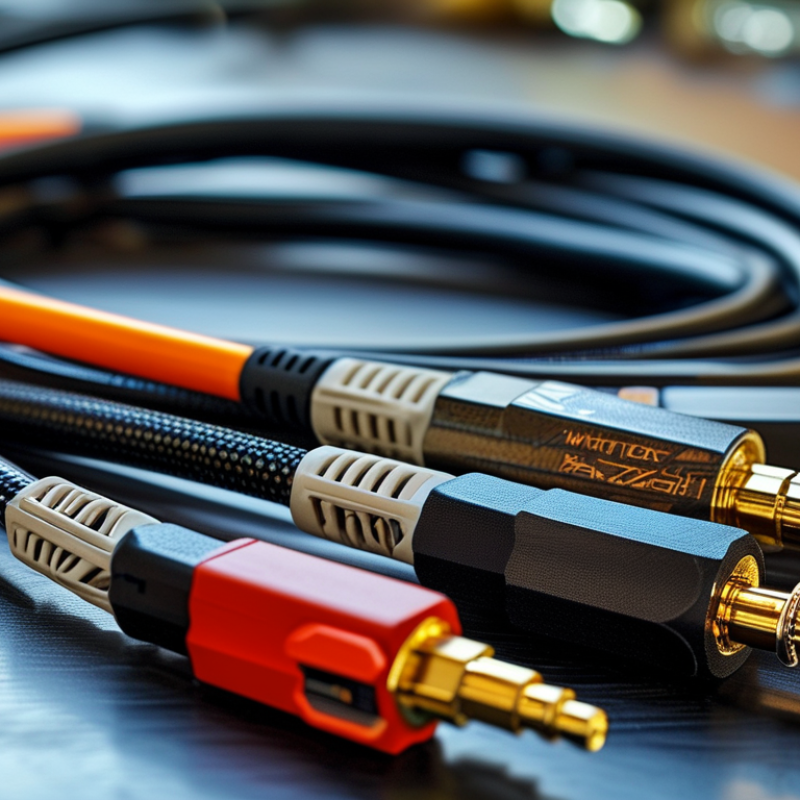
When selecting RF cables, understanding the different types is crucial. Coaxial cables, known for their solid shielding, are widely used in television and internet connections. Their design minimizes signal loss, making them reliable for various applications. It’s important to consider the frequency range needed for your setup. Cables like RG-6 serve well in residential areas, while RG-11 is better suited for longer distances.
Another option is flat cables, which are easy to run along walls and ceilings. These are beneficial in tight spaces and can simplify installations. However, they may not provide the same shielding effectiveness as traditional coaxial cables. Consider the environment where you’ll use the cables. Indoor applications may have different requirements than outdoor ones. Weather-resistant cables are essential for outdoor use.
RF cables should fit the specific needs of your project. Evaluate factors such as length, flexibility, and durability. Remember that the lower the quality, the more susceptible the cable is to interference. If you're unsure, seeking advice from professionals can help. It's okay to ask questions and seek opinions based on experiences. Choosing the right RF cable means balancing performance with budget considerations.
Choosing the right RF cable can greatly impact your signal quality. When selecting an RF cable, consider factors such as frequency range, cable length, and connector types. The frequency range ensures that the cable can handle the specific signals you need. For instance, a cable designed for low frequencies may not perform well with high-frequency signals.
Cable length also plays a critical role. Longer cables can lead to signal loss, so it’s vital to find a balance. Sometimes, shorter cables can be more effective, saving you from unnecessary signal degradation. Connector types must match your equipment. Mismatched connectors can create issues and hinder performance.
Don’t forget about the construction quality. A well-constructed cable reduces interference and enhances reliability. Look for materials that resist wear. At the same time, be cautious about over-investing in high-end cables that might not suit your needs. Reflect on how often you use RF cables. For occasional use, a modest option might suffice. Choosing the right RF cable involves weighing multiple factors to ensure optimal performance tailored to your requirements.
When selecting the right RF cable, performance and specifications are crucial. RF cables play a vital role in signal transmission. They connect devices like antennas and receivers, making their quality essential. Poor cable quality can lead to signal loss. Studies show that even a slight increase in loss can decrease the overall system performance significantly.
The specifications of RF cables include impedance, frequency range, and shielding effectiveness. For example, a typical 50-ohm cable has less signal loss at higher frequencies, making it suitable for most communication applications. According to industry data, cables with better shielding can reduce interference by up to 90%. This is critical in environments with multiple signal sources.
However, it's important to note that not all applications require the highest quality cable. Sometimes, a basic cable may suffice, especially in low-interference areas. Evaluating your specific needs is essential. Not every situation demands optimal performance. Understanding these nuances can help in making an informed choice.
| Cable Type | Frequency Range (GHz) | Impedance (Ohms) | Loss per 100ft (dB) | Max Power (Watts) |
|---|---|---|---|---|
| RG-6 | 0.1 - 1.5 | 75 | 3.0 | 60 |
| RG-58 | 0.1 - 6.0 | 50 | 3.5 | 100 |
| LMR-400 | 0.1 - 6.0 | 50 | 2.5 | 200 |
| RG-11 | 0.1 - 2.0 | 75 | 2.0 | 75 |
| RG-213 | 0.1 - 10.0 | 50 | 1.0 | 500 |
When choosing RF cables, the connector types play a critical role in performance. Understanding the range of connector types can significantly impact your setup. Common connectors include SMA, N-type, and BNC. Each type serves different purposes. For example, SMA connectors are compact yet robust, making them suitable for applications like microwave systems.
Data from industry reports indicate that the choice of connector can affect signal loss by as much as 20%. This highlights the importance of selecting the right type. N-type connectors, though larger, are preferred for high-frequency applications due to their superior performance. However, they can be more challenging to install. This trade-off must be carefully considered based on your technical skill.
Additionally, improper connector choices can lead to reflections that degrade signal integrity. A study from a telecom industry group found that 30% of system failures can be traced back to faulty connectors. Users should focus on the specific requirements of their systems. Evaluating factors such as frequency range and environmental conditions is crucial. Each connector type has its strengths and weaknesses, which can shape your overall performance.
Proper installation and maintenance of RF cables are essential for optimal performance. When laying out your cables, ensure they are not bent sharply or placed near sources of interference. Sharp bends can lead to signal loss. Use cable ties or clips to secure them neatly. Avoid excessive force while handling cables to prevent internal damage. This might seem trivial, but neglect can result in significant issues later.
Routine maintenance checks are crucial. Inspect cables for visible wear and tear. Look for cracks, frays, or exposed wires. Any signs of damage mean it’s time for replacement. Ensure connections are tight, as loose connections can create noise or signal degradation. Remember to test the cable with appropriate tools. This helps diagnose issues early on, saving time and resources down the line.
Documentation is another often overlooked aspect. Keep records of installation dates, locations, and any maintenance performed. This not only aids in tracking performance over time but also facilitates quicker troubleshooting. Reflect on the installation process and take notes on what worked well and what could improve. Learning from past experiences cultivates a more reliable setup in the future.
„Thanks to the LUVIR technology, the solder resist process could be switched directly from the previously used mask exposure to direct exposure. As an outstanding digital solution on the market, this technology has been able to demonstrate fast process times and superior quality on our certified conventional ink in production. This allowed us to fully digitize the solder mask process at low cost – without process or ink adjustments. An excellent benefit to our production in Rot am See.“
Ralf Göhringer (Head of Production WE Rot am See)
I would definitely recommend the Limata machine and team for a future company purchase
Michael Greenaway
Compunetics Inc.
“The Limata ldi has been amazing!! Best thing we did was buy this machine”
Richard Brady
GM
Circuitlabs
“Since 2019, we have been running the Limata X1000 LDI system (including LUVIR for solder mask imaging) in daily production as an addition to our current process with film. The machine was capable of properly exposing Taiyo PSR-4000 BN (DI) solder mask types on normal to high-copper boards using a new and unique direct imaging process. The machine operating interface is very user friendly which allowed for a quick technical training curve. The pre-registration processing reduced several seconds of production time at every print. Limata support and service staff is incomparable. They supported our team every step of the way at basically any time of the day or night, with literally, an immediate response time, customizing the software interface to best fit our Operations and needs.
We have exposed more than 8,000 prints since end of October, on various solder mask colors and some resist film panels. Limata, has proven to be very capable and innovative. They are a strong contender in the industry.
We have very much enjoyed this project, and working with the team!
Thank you Limata for the continued support and being a part of our growth.”
Bill Sezate
Vice President, GM
Summit Interconnect
As a replacement to our current contact exposure process with film, the LIMATA X2000 system including LUVIR-Technology was capable of properly exposing non-LDI solder mask types using a direct imaging process. The machine offers cutting edge software with a very intuitive operating interface which allowed for quick technician training curve. The dual drawer system combined with pre-registration processing reduced several seconds of production time at every machine cycle. Limata support and service staff is world class. They added software patches to keep production running at shortest possible response times, customized the software interface to best fit our in-house Operations system, and even wrote a step-by-step machine processing manual. As a result of the project, we have exposed more than 16,000 times on various product types and solder mask brands/colors. Limata, in a very short timeframe as a company, has definitely shown they are truly innovative and will be challenging the industry of direct imaging for the top spot.
Kevin Beattie
Process Engineer
TTM Technologies
Forest Grove Division
