Choosing a Sewer Line Cleaning Machine is not just a matter of buying the largest motor or longest cable. The right machine must suit the pipe diameter, access point, blockage, and crew’s experience. A compact drum machine can be easier to position in a narrow basement. A sectional machine may offer more control on longer runs, while a water jetter can help remove grease and loose debris. Each has limits. That matters in the field.
Licensed plumber and plumbing educator Roger Wakefield often stresses that the job should guide the tool choice. A practical summary of that advice is: “Match the equipment to the line, the obstruction, and the access point.” This is a working principle, not a substitute for inspecting the pipe or following the machine maker’s instructions.
This guide compares seven professional options by capacity, cable or hose design, portability, controls, and serviceability. It also considers details crews notice quickly: whether a machine fits through a doorway, how steadily it feeds cable, and how easy it is to clean after a messy call. Small things count. Still, specifications do not tell the whole story. A powerful unit may be awkward in tight spaces, and a lighter one may struggle with demanding work. The comparisons are a starting point, not a promise that any model suits every job. Verify ratings and compatibility before purchase, and reflect on what your crew actually handles each week.
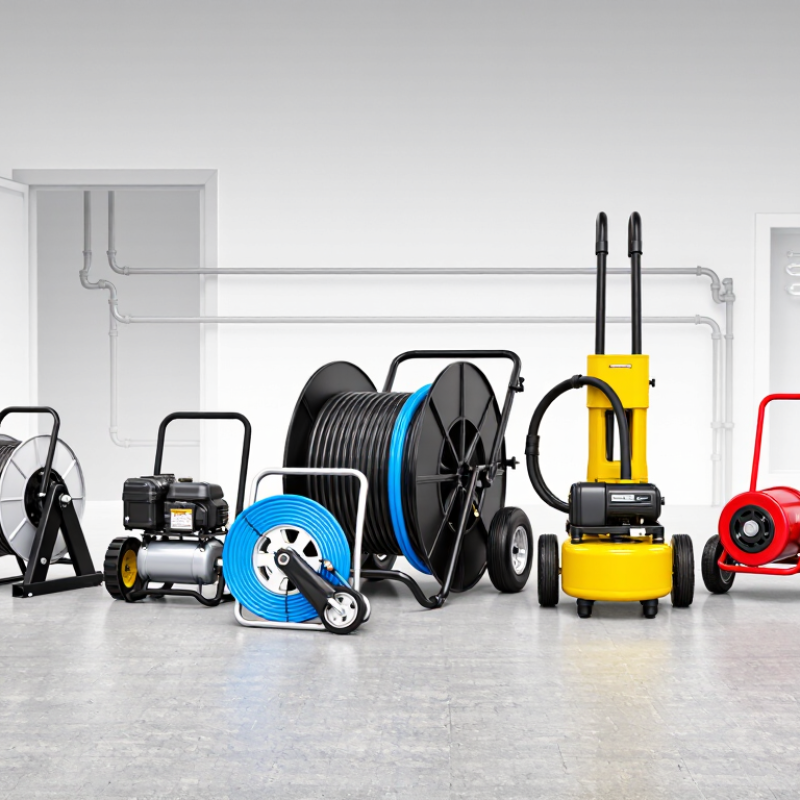
Professional sewer-cleaning machines suit different pipe diameters, blockage types, and access conditions. For 2–4-inch lines, compact sectional machines offer cable control in tight indoor spaces. Drum machines are often practical for 3–6-inch drains, where grease, roots, or soft obstructions need a rotating cable. They can be heavy to move. That matters on stairs.
For 4–10-inch pipes, larger cable machines or sectional systems can provide the reach and torque needed for tougher deposits. Choose cutters carefully: an aggressive head may damage fragile or already compromised pipe. Water jetters can also serve many 2–10-inch applications when matched with suitable nozzles and flow settings. Pipe material, bends, and the blockage itself should guide selection—not diameter alone. A cleanout is not a diagnosis.
The U.S. Environmental Protection Agency’s 2004 Report to Congress estimated 23,000–75,000 sanitary sewer overflows occur annually in the United States. That figure underscores the value of routine maintenance, but cleaning equipment cannot confirm pipe condition by itself. After clearing a stubborn blockage, a camera inspection can reveal remaining roots, cracks, or displaced joints. Sometimes the first pass misses something. Operators should verify flow and document what they find, especially before choosing a more aggressive tool.
Cable diameter signals what a machine can handle, but it does not guarantee a better cleanout. A 3/8-inch cable is easier to maneuver through tight bends and smaller household lines, often around 1½ to 3 inches. It suits lighter, shorter runs. The trade-off is less stiffness and torque for heavy deposits. Small and nimble.
A 1/2-inch cable offers a useful middle ground for many 3- to 4-inch building drains. It can push through tougher obstructions while remaining manageable in moderate bends. A 5/8-inch cable is generally intended for larger lines and demanding work, where extra stiffness helps carry cutting heads. It can bind more readily in tight turns, though. Check the machine’s approved cable diameter, length, and cutter range; capacity varies by model.
The stakes extend beyond one blocked drain. EPA’s 2022 Clean Watersheds Needs Survey estimated $630.1 billion in U.S. wastewater infrastructure needs over 20 years. That figure covers broad public-system investments, not residential cleaning, but it underscores the value of suitable equipment and careful maintenance. Match cable size to pipe diameter, obstruction, access, and bend count. A larger cable is not automatically the safer or faster choice; I would treat this as a job-specific decision, not a rule.
When comparing professional sewer line cleaning machines, treat flow rate and pressure as a pair. Pressure, measured in PSI, helps the nozzle break through grease and compacted deposits. Flow, usually measured in gallons per minute, carries loosened material toward the access point. A 4,000-PSI rating can look impressive, but it does not guarantee faster cleaning. Match both figures to pipe size, blockage type, and line condition.
Many sewer jetters operate within 1,000–4,000 PSI, but the right setting depends on the job. Older clay pipes, damaged sections, and uncertain connections call for extra caution. Start conservatively and watch how debris moves; increase pressure only when the pipe and equipment allow it. More water may improve flushing, yet excess flow can overwhelm a small drain. Numbers need context. Field conditions vary.
Tips: Check the rated flow at working pressure, not just the machine’s maximum figures. Use a compatible nozzle and hose, and inspect fittings before each run. Record pressure, flow, and results to spot a mismatch. I still verify pipe condition whenever possible; it is easy to skip, and worth reconsidering.
Rank 1, the sectional cable machine, offers a strong balance of reach, interchangeable cutters, and manageable setup. Its cables suit many building drains, though tight bends can slow progress. Rank 2, the drum machine, contains cable mess and sets up quickly. Setup is quick. Its bulk and cable handling still deserve attention. Rank 3, the compact water jetter, clears grease and soft deposits with less cutter contact. It needs a reliable water supply and careful pressure control. Rank 4, the flex-shaft machine, is nimble for smaller lines and chain tools. It may struggle with heavy roots or hard obstructions.
Rank 5, the trailer jetter, reaches long outdoor runs and carries substantial water capacity. But it takes more room and preparation. Rank 6, the chain-knocker machine, strips scale and roots effectively, yet needs careful sizing to protect fragile pipe. Rank 7, the sectional rodder, can reach far through larger lines, but demands skilled handling. This order is imperfect: pipe condition and access can change the best choice.
EPA’s 2022 Clean Watersheds Needs Survey estimated $630.1 billion in wastewater infrastructure needs over 20 years. That scale makes reliable maintenance equipment important, not automatically interchangeable. NIOSH’s confined-space alert reports that would-be rescuers account for over 60% of confined-space fatalities. OSHA entry procedures, atmospheric testing, and trained attendants matter around manholes. A machine’s safety features help, but they do not replace a site-specific hazard check.
Typical professional-use capability ratings for reach, cutting-tool versatility, setup simplicity, and safety provisions.
Ratings use a relative 1–5 scale, where 5 indicates stronger typical capability. They compare common machine classes, not specific models; actual reach, included cutters, setup requirements, and safety equipment vary by configuration. Confirm specifications and safe operating procedures before selecting equipment.
Pipe diameter sets the machine’s safe working range. For small branch lines, a compact cable unit is easier to maneuver through tight indoor access. Larger mains may need a heavier sectional machine or a water jetter. Check the machine’s rated pipe range, cable size, and access opening before choosing. Diameter comes first. The U.S. EPA’s 2022 Clean Watersheds Needs Survey estimated $630.1 billion in wastewater infrastructure needs over 20 years. That scale makes durable, serviceable equipment worth considering for contractors handling recurring municipal work.
Match the cutter or cleaning method to the blockage. Grease and soft sediment often respond well to jetting; roots and hardened deposits may require a compatible mechanical cutter. A camera inspection can help confirm the cause and reveal fragile pipe sections. It is not a perfect safeguard. A fast machine can still be the wrong one. For frequent jobs, compare motor duty cycle, cable replacement cost, transport weight, and setup time—not just purchase price. ASCE’s 2021 Report Card gave U.S. wastewater infrastructure a D+ and estimated $434 billion in needs over 20 years. For occasional calls, portability may matter more than maximum power; for daily use, downtime can quietly erase the savings.
| Machine Type | Typical Pipe Diameter | Cleaning Method | Best-Suited Blockages | Typical Reach or Capacity | Best Job Frequency | Key Selection Consideration |
|---|---|---|---|---|---|---|
| Compact handheld cable machine | About 1¼–3 in (32–76 mm) | Flexible rotating cable, commonly ¼–⅜ in (6–10 mm) | Hair, soap buildup, and soft obstructions in small drains | Short indoor runs; cable length and diameter vary by configuration | Occasional service calls or light-duty maintenance | Portable and easy to maneuver, but generally unsuitable for long building sewers or heavy roots. |
| Drum-style cable machine | About 2–6 in (50–150 mm) | Rotating cable stored in a drum; interchangeable cutters may be used | Grease, sludge, minor root intrusion, and common branch-line obstructions | Often configured with roughly ⅜–⅝ in (10–16 mm) cable; reach depends on cable length | Regular residential and light commercial work | A contained drum helps manage cable handling; select cable size to suit the pipe and the machine. |
| Sectional cable machine | About 2–10 in (50–250 mm), depending on setup | Short, connectable cable sections with interchangeable cutting heads | Roots, scale, and tougher obstructions in branch lines and small sewers | Common cable diameters range from about ½–⅞ in (13–22 mm); sections can be added as needed | Frequent professional service and varied site access | Sections are easier to transport through buildings than one long cable, but require careful coupling and cable control. |
| Heavy-duty large-drum sewer machine | About 3–10 in (75–250 mm), depending on cable and cutter | Powered drum carrying larger-diameter cable and heavy-duty cutting tools | Dense root masses, heavy deposits, and persistent obstructions in larger lines | Often uses cable around ⅝–⅞ in (16–22 mm); usable reach varies by machine and cable | High-volume sewer and drain service | Check machine weight, access route, cable torque, and the pipe’s condition before use. |
| Compact water-jetter cart | About 1½–4 in (38–100 mm) | High-pressure water through a flexible hose and interchangeable nozzle | Grease, soft deposits, and loose sediment; suitable for routine flushing | Common professional configurations are roughly 1,000–2,000 psi and 1.5–4 gpm; specifications vary | Regular indoor, residential, and light commercial cleaning | Flow rate, pressure, hose length, nozzle choice, and safe drainage all affect cleaning performance. |
| Trailer-mounted sewer jetter | About 3–12 in (75–300 mm), depending on flow, pressure, and nozzle | High-volume water jetting with a long hose and forward- or rear-facing nozzles | Grease, sediment, and soft-to-moderate deposits in longer sewer runs | Professional units commonly span approximately 2,000–4,000 psi and 10–30 gpm; ratings vary widely | Frequent municipal, commercial, or large-property work | Higher flow can move more debris; confirm water supply, access, recovery needs, and pipe condition. |
| Combination jetter and vacuum truck | Typically used on larger mains, often 6 in (150 mm) and above | Water jetting combined with vacuum collection of loosened debris and liquid | Heavy sediment, debris accumulation, and demanding maintenance or cleaning jobs | Truck-mounted systems are configured for job requirements; tank, pump, and hose capacities vary | Daily municipal, industrial, or large-scale contractor operations | Provides integrated cleaning and debris collection, but has high purchase, operating, and site-access requirements. |
„Thanks to the LUVIR technology, the solder resist process could be switched directly from the previously used mask exposure to direct exposure. As an outstanding digital solution on the market, this technology has been able to demonstrate fast process times and superior quality on our certified conventional ink in production. This allowed us to fully digitize the solder mask process at low cost – without process or ink adjustments. An excellent benefit to our production in Rot am See.“
Ralf Göhringer (Head of Production WE Rot am See)
I would definitely recommend the Limata machine and team for a future company purchase
Michael Greenaway
Compunetics Inc.
“The Limata ldi has been amazing!! Best thing we did was buy this machine”
Richard Brady
GM
Circuitlabs
“Since 2019, we have been running the Limata X1000 LDI system (including LUVIR for solder mask imaging) in daily production as an addition to our current process with film. The machine was capable of properly exposing Taiyo PSR-4000 BN (DI) solder mask types on normal to high-copper boards using a new and unique direct imaging process. The machine operating interface is very user friendly which allowed for a quick technical training curve. The pre-registration processing reduced several seconds of production time at every print. Limata support and service staff is incomparable. They supported our team every step of the way at basically any time of the day or night, with literally, an immediate response time, customizing the software interface to best fit our Operations and needs.
We have exposed more than 8,000 prints since end of October, on various solder mask colors and some resist film panels. Limata, has proven to be very capable and innovative. They are a strong contender in the industry.
We have very much enjoyed this project, and working with the team!
Thank you Limata for the continued support and being a part of our growth.”
Bill Sezate
Vice President, GM
Summit Interconnect
As a replacement to our current contact exposure process with film, the LIMATA X2000 system including LUVIR-Technology was capable of properly exposing non-LDI solder mask types using a direct imaging process. The machine offers cutting edge software with a very intuitive operating interface which allowed for quick technician training curve. The dual drawer system combined with pre-registration processing reduced several seconds of production time at every machine cycle. Limata support and service staff is world class. They added software patches to keep production running at shortest possible response times, customized the software interface to best fit our in-house Operations system, and even wrote a step-by-step machine processing manual. As a result of the project, we have exposed more than 16,000 times on various product types and solder mask brands/colors. Limata, in a very short timeframe as a company, has definitely shown they are truly innovative and will be challenging the industry of direct imaging for the top spot.
Kevin Beattie
Process Engineer
TTM Technologies
Forest Grove Division
