Choosing the 2026 best Silicone Universal Lid requires more than trusting a catchy product label. A lid may cover bowls, pans, jars, and containers, yet “universal” rarely means perfect for everything. Real usefulness depends on stretch, rim design, thickness, and temperature resistance. A lid should grip firmly without collapsing into food. It should also release smoothly, without pulling a glass bowl across the counter.
This guide examines Silicone Universal Lid options through practical kitchen needs. We consider food-contact materials, odor retention, cleaning effort, storage, and compatibility with different container shapes. Transparent silicone can make leftovers easier to identify. A reinforced edge may improve handling, especially when covering a warm dish. However, thicker silicone is not always better. It can feel stable, but may resist fitting smaller containers. Small details matter.
Safety claims still require careful reading. Buyers should check manufacturer instructions, temperature limits, microwave or oven guidance, and dishwasher suitability. Regional food-contact requirements can differ, so a trusted manufacturer should provide clear material information. Do not assume every colorful silicone lid has identical quality. That would be careless.
We also address common failures. Some lids lose their seal on wet rims. Others collect grease around textured edges. A few work well on smooth glass but slide from lightweight plastic. These limitations deserve attention, not marketing language. The best choice balances flexibility, reliable coverage, simple cleaning, and honest performance across everyday containers. Our recommendations remain practical, but no single lid can solve every kitchen problem.
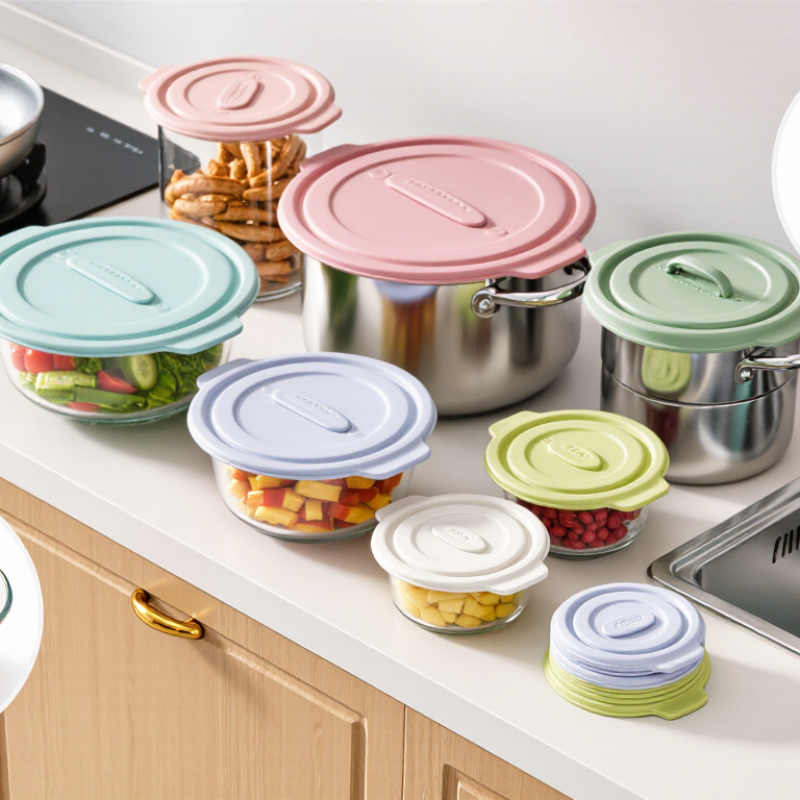
A silicone universal lid is a flexible cover designed to fit many container shapes. It can stretch across bowls, cups, jars, and some cut fruit. Unlike rigid lids, it adapts to different diameters. The silicone creates a close seal when pressed evenly around the rim. It is practical for leftovers, meal preparation, and refrigerator storage. I find the best fit comes from a clean, dry edge.
Material quality matters. Food-grade silicone should remain flexible without a strong chemical odor. It should also tolerate the temperatures stated by the manufacturer. Some lids are suitable for microwaves or freezers, but not every lid supports both uses. Check the product instructions carefully. Heat can weaken an uneven seal. Steam may also build pressure under the cover.
A universal lid is not magic. It cannot seal cracked rims or sharp edges safely. I once stretched a lid too far over a wide container, and one side lifted overnight. That small failure changed my routine. Now I check the rim and press the center gently before storing food. Hand washing can help preserve flexibility, although some lids are dishwasher-safe. A silicone universal lid works best when its limits match your containers and daily habits.
A good silicone universal lid should adapt without pretending every container is identical. Its stretch depends on diameter, rim shape, and surface texture. A 12-centimeter lid may seal a bowl with a smooth, rounded edge, yet slip from a sharp glass rim. Square containers are more difficult. The corners can pull silicone unevenly.
In practical testing, place the lid centrally, then press from the middle outward. This removes trapped air and improves contact. Keep the rim dry. Oil, crumbs, and condensation can weaken the seal. Many lids fit openings within a stated size range, but that range is not a guarantee. Measure the container’s outside rim, not its base. The word universal is imperfect.
The UNEP Food Waste Index Report 2024 estimated 1.05 billion tonnes of food were wasted worldwide in 2022. Household storage choices cannot solve that problem, but tighter covers may protect leftovers longer. The U.S. EPA’s Sustainable Materials Management report also identified containers and packaging as a major municipal waste category. Reusable lids can reduce dependence on disposable covers, though silicone recycling remains limited in many regions.
Look for flexible silicone with a stable, grippable edge. Check the lid after washing; some surfaces become less tacky. Heat tolerance matters too, but “heat-resistant” does not mean oven-safe. I would test one lid with a bowl, a jar, and a rectangular container before buying a full set. Fit claims need real kitchens.
A dependable universal lid starts with the silicone itself. Food-grade silicone should be platinum-cured or thoroughly tested for repeated food contact, with documented migration results. The U.S. FDA’s 21 CFR 177.2600 sets extractives limits for reusable rubber articles, so a supplier should provide compliance records, not vague “non-toxic” claims. The German Federal Institute for Risk Assessment also evaluates silicone kitchenware under Recommendation XV. Ask for test conditions, including heat, food type, and contact time. Marketing language is not evidence.
Design determines whether the lid works beyond a product photograph. A flexible sealing rim should overlap the container by at least a few millimeters, while a central stretch zone helps cover bowls, jars, and cut fruit. Small details matter. A visible size guide reduces guesswork. A pull tab prevents fingernail damage, and a vent hole helps release pressure during microwave use.
However, “microwave-safe” still requires the maker’s temperature limit. The FDA Food Code 2022 requires cold-held time-sensitive food at 5°C (41°F) or below; a lid cannot replace refrigeration.
Industry market analysis estimated the global silicone market at about 20.7 billion U.S. dollars in 2023, according to Grand View Research. That growth may increase material choices, but it does not guarantee better safety. During testing, inspect the rim after stretching, washing, and contact with oily foods. Some lids look perfect, yet loosen after repeated use.
How to Choose the Best Silicone Universal Lid in 2026
Choosing a silicone universal lid starts with measuring your containers. Check the rim diameter, shape, and surface condition. A flexible lid needs enough overlap to create reliable contact. It should not stretch excessively. I once bought a lid that covered a bowl but slipped after condensation formed. That small failure changed how I test lids.
Look for thick, food-contact silicone with a stable, smooth surface. Independent food-contact documentation adds useful confidence. Avoid lids with strong chemical odors, sticky textures, or uneven edges. Transparency also helps when checking stored food. A firm pull tab makes removal easier, especially after refrigeration. Test the seal with a light sideways push. If air enters quickly, the fit may be too loose.
Heat resistance deserves careful attention. Read the manufacturer’s temperature range, and keep the lid away from direct flames, sharp edges, and broiler heat. Some lids tolerate microwaving, but venting remains important. Steam needs an escape route. For cleaning, choose a design without deep grooves that trap oil. Dishwasher compatibility can save time, although repeated high heat may shorten its life. My preference is a lid that seals well on glass and ceramic, yet I still check each container individually. “Universal” is useful wording, but it rarely means perfect. A simple water test can reveal more than attractive packaging.
A universal silicone lid earns its place through daily maintenance, not clever packaging.
After each use, wash it with warm water, mild dish soap, and a soft sponge. The FDA Food Code 2022 emphasizes cleaning food-contact surfaces so they remain clean to sight and touch. Avoid rough scouring pads. They can create tiny scratches that trap oily residue and odors.
Inspect the sealing rim after washing. Crumbs often hide there. Remove them with a soft brush, then let the lid air-dry fully before stacking it. Do not stretch the silicone around sharp container edges. That habit can weaken the seal.
I have found that storing lids flat prevents curling, although crowded drawers may still distort them. Heat exposure also deserves caution. Follow the product’s stated temperature limits, and avoid direct contact with heating elements or open flames.
Everyday uses extend beyond covering leftovers.
A flexible lid can protect cut fruit, cover a mixing bowl, or reduce splashing during microwave reheating when ventilation is appropriate. The UNEP Food Waste Index Report 2024 estimated that households wasted 631 million tonnes of food in 2022.
A secure cover cannot solve food waste, but it can make leftovers easier to identify and store. Labeling the date helps more. USDA guidance commonly places refrigerated leftovers within three to four days, yet household habits vary.
Silicone also absorbs smells sometimes. A baking-soda paste may help, but replacing the lid might be wiser when odors persist.
„Thanks to the LUVIR technology, the solder resist process could be switched directly from the previously used mask exposure to direct exposure. As an outstanding digital solution on the market, this technology has been able to demonstrate fast process times and superior quality on our certified conventional ink in production. This allowed us to fully digitize the solder mask process at low cost – without process or ink adjustments. An excellent benefit to our production in Rot am See.“
Ralf Göhringer (Head of Production WE Rot am See)
I would definitely recommend the Limata machine and team for a future company purchase
Michael Greenaway
Compunetics Inc.
“The Limata ldi has been amazing!! Best thing we did was buy this machine”
Richard Brady
GM
Circuitlabs
“Since 2019, we have been running the Limata X1000 LDI system (including LUVIR for solder mask imaging) in daily production as an addition to our current process with film. The machine was capable of properly exposing Taiyo PSR-4000 BN (DI) solder mask types on normal to high-copper boards using a new and unique direct imaging process. The machine operating interface is very user friendly which allowed for a quick technical training curve. The pre-registration processing reduced several seconds of production time at every print. Limata support and service staff is incomparable. They supported our team every step of the way at basically any time of the day or night, with literally, an immediate response time, customizing the software interface to best fit our Operations and needs.
We have exposed more than 8,000 prints since end of October, on various solder mask colors and some resist film panels. Limata, has proven to be very capable and innovative. They are a strong contender in the industry.
We have very much enjoyed this project, and working with the team!
Thank you Limata for the continued support and being a part of our growth.”
Bill Sezate
Vice President, GM
Summit Interconnect
As a replacement to our current contact exposure process with film, the LIMATA X2000 system including LUVIR-Technology was capable of properly exposing non-LDI solder mask types using a direct imaging process. The machine offers cutting edge software with a very intuitive operating interface which allowed for quick technician training curve. The dual drawer system combined with pre-registration processing reduced several seconds of production time at every machine cycle. Limata support and service staff is world class. They added software patches to keep production running at shortest possible response times, customized the software interface to best fit our in-house Operations system, and even wrote a step-by-step machine processing manual. As a result of the project, we have exposed more than 16,000 times on various product types and solder mask brands/colors. Limata, in a very short timeframe as a company, has definitely shown they are truly innovative and will be challenging the industry of direct imaging for the top spot.
Kevin Beattie
Process Engineer
TTM Technologies
Forest Grove Division
