Choosing a Sinker Edm Machining service is not just a price comparison. A buyer must weigh accuracy, tooling knowledge, delivery consistency, and communication across time zones. A deep cavity with sharp internal corners may look simple on a drawing. In production, electrode wear, flushing, and setup choices can change the result. Small details matter.
W. Edwards Deming, a respected manufacturing quality expert, wrote, “Quality comes not from inspection, but from improvement of the production process.” His words are not EDM-specific, but they offer a useful lens for evaluating machining suppliers. Ask how a shop controls repeatability, verifies dimensions, and handles problems—not only whether it owns modern machines. A polished capability list is useful. Process evidence is better.
This guide examines seven Sinker EDM machining services for global buyers, with attention to technical range, quality practices, lead times, and support. The strongest provider depends on the part, material, tolerance, and production volume. A shop suited to a one-off mold insert may not fit a recurring medical-device component. And rankings cannot replace a careful review of drawings, inspection reports, and sample results. No comparison can promise a perfect fit. That is worth remembering. Use these profiles as a starting point, then confirm each supplier’s capabilities directly before placing an order.
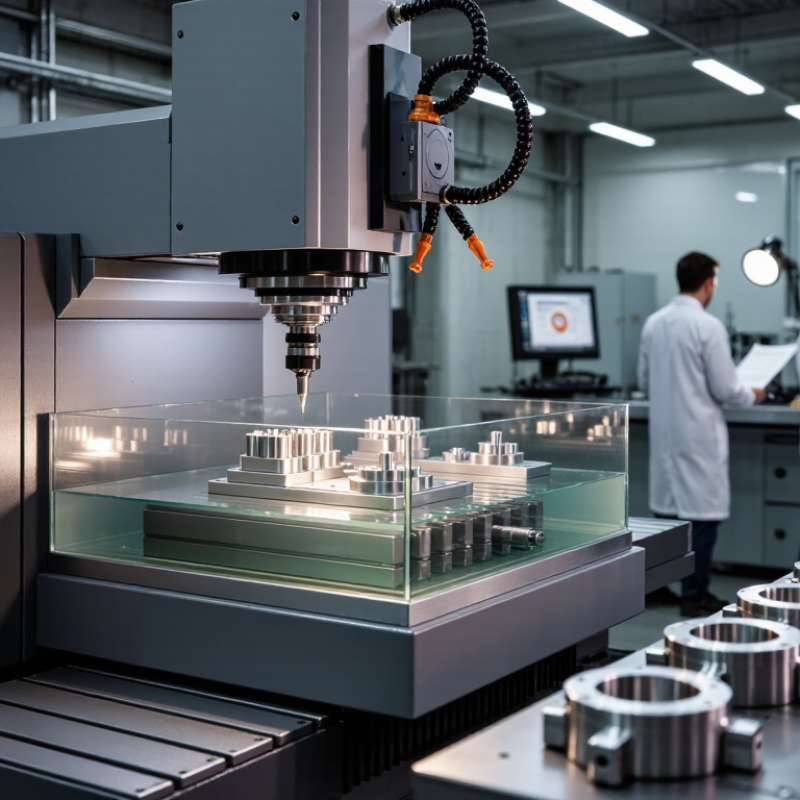
Sinker EDM, also called ram EDM, removes conductive material through controlled electrical discharges. A shaped electrode gradually forms a matching cavity in the workpiece, which sits in dielectric fluid. Because the electrode does not press a cutting edge against the part, the process can machine hard metals with little cutting force. It is useful for deep cavities, narrow ribs, and intricate details that conventional tools may struggle to reach. Common applications include injection molds, forging dies, and precision components for industrial equipment.
The method still has limits: electrode wear, slower removal rates, and surface finish requirements can affect cost and lead time. Small details matter.
Tips
Share the material, cavity dimensions, required tolerances, and finish expectations before requesting a quote. Ask how the shop manages electrode wear and inspects deep features. A clear drawing helps, but a real part or sample can reveal details the drawing misses. I would not assume every sharp corner is achievable; EDM can reproduce fine geometry, yet electrode shape and access still matter. For buyers comparing machining services, discuss inspection records and realistic delivery schedules alongside price.
When assessing a sinker EDM provider for a global project, look beyond the machine list. Ask whether the team has handled your material, cavity depth, and tolerance requirements before. A steel sample with a deep, narrow pocket can reveal more than a polished capability sheet. Request inspection records and ask how electrode wear is monitored during production.
Communication matters. Confirm who will review drawings, how quickly engineering questions receive answers, and whether updates include clear measurements or just general progress notes. For overseas shipments, clarify packaging, inspection documents, lead-time assumptions, and responsibility for export paperwork. Small details matter. A missed drawing revision can cost more time than a slow machine.
Compare suppliers using the same part data and acceptance criteria. Ask for a trial component when risk or geometry justifies it, then inspect surface finish, corner detail, and dimensional results. A strong sample is still only a sample; repeatability across a batch needs evidence. I would leave room for another review, because drawings rarely capture every production concern. Time-zone differences and language gaps can also expose weak processes, so test the working relationship before committing to a long schedule.
Suggested allocation of 100 evaluation points for global projects. The percentages are a practical scoring framework, not measured market data; adjust them to fit your part, tolerances, and delivery requirements.
International buyers often need more than a sinker EDM machine and a quoted hourly rate. Useful service options include precision cavity sinking, electrode design, electrode fabrication, deep-rib machining, micro-feature EDM, large-die machining, and prototype or low-volume production. Some suppliers also provide inspection reports and export-ready packaging, which can simplify cross-border orders. Ask how they manage drawing revisions, metric units, and time-zone communication. Small gaps in these details can cause real delays.
Tips: Send a 3D model and a drawing with tolerances, material, and surface-finish requirements. Ask for sample inspection data and a realistic lead time. Confirm who pays for shipping and how parts are protected. Ask early.
A practical supplier should explain electrode material choices, flushing access, and how tight corners may affect machining time. For example, a narrow cavity with deep ribs may need several electrodes and staged inspection. Request a review of difficult features before approving production. This helps reveal trade-offs, though the review may not catch every issue. Buyers should also clarify whether quoted tolerances apply across the full cavity or only selected dimensions. A clear process matters. So does honest feedback when a design needs adjustment.
For global buyers, the best sinker EDM service is not always the one with the newest machine. Compare CNC control, axis travel, generator capability, and electrode-making capacity against your part geometry. Deep ribs, sharp internal corners, and thin walls can change both machining time and achievable finish. Ask for a sample inspection report, not just a tolerance claim.
Precision needs evidence. Request stated tolerances, surface-finish results, and the inspection method used on similar parts. ISO 230-2 provides methods for assessing machine-tool positioning accuracy; it is a useful reference, but it does not certify a finished component. The ISO Survey 2022 recorded roughly 1.27 million valid ISO 9001 certificates worldwide. Certification can indicate a quality system, not flawless parts. I would still review recent process records. Lead-time quotes should include electrode production, first-article inspection, and shipping. Compare total cost, including setup, recuts, and finishing—not only the hourly rate.
Tips: Send a 3D model, material grade, critical dimensions, and required finish with your request. Ask suppliers to separate setup time from cutting time. A low quote may omit details; confirm them before comparing. Short email answers are not enough. Request a dated schedule and written acceptance criteria.
A cross-border sinker EDM project runs more smoothly when the quote starts with clear technical information. Send a current 3D model, a dimensioned drawing, material grade, and required quantity. Identify critical cavities, corner radii, surface-finish targets, and tolerance zones. If a feature is flexible, say so; otherwise, a supplier may price unnecessary precision. Small details matter.
Ask the machining provider to confirm electrode strategy, inspection methods, and what the quoted price includes. Clarify whether tooling, sample parts, packaging, and freight are included. Agree on units, drawing revision, payment milestones, and the delivery address before production. A written review of these points can prevent costly misunderstandings across time zones. This step is easy to underestimate.
For delivery planning, request a realistic schedule with checkpoints for material preparation, machining, inspection, and dispatch. Build in time for sample approval and transport, especially when parts must meet a fixed assembly date. Ask how inspection results will be shared, such as a dimensional report with measured features clearly identified. Also confirm protective packaging for delicate cavity edges. No schedule is perfect. A late drawing change can reset the timeline, so record approvals and revisions in one shared document.
„Thanks to the LUVIR technology, the solder resist process could be switched directly from the previously used mask exposure to direct exposure. As an outstanding digital solution on the market, this technology has been able to demonstrate fast process times and superior quality on our certified conventional ink in production. This allowed us to fully digitize the solder mask process at low cost – without process or ink adjustments. An excellent benefit to our production in Rot am See.“
Ralf Göhringer (Head of Production WE Rot am See)
I would definitely recommend the Limata machine and team for a future company purchase
Michael Greenaway
Compunetics Inc.
“The Limata ldi has been amazing!! Best thing we did was buy this machine”
Richard Brady
GM
Circuitlabs
“Since 2019, we have been running the Limata X1000 LDI system (including LUVIR for solder mask imaging) in daily production as an addition to our current process with film. The machine was capable of properly exposing Taiyo PSR-4000 BN (DI) solder mask types on normal to high-copper boards using a new and unique direct imaging process. The machine operating interface is very user friendly which allowed for a quick technical training curve. The pre-registration processing reduced several seconds of production time at every print. Limata support and service staff is incomparable. They supported our team every step of the way at basically any time of the day or night, with literally, an immediate response time, customizing the software interface to best fit our Operations and needs.
We have exposed more than 8,000 prints since end of October, on various solder mask colors and some resist film panels. Limata, has proven to be very capable and innovative. They are a strong contender in the industry.
We have very much enjoyed this project, and working with the team!
Thank you Limata for the continued support and being a part of our growth.”
Bill Sezate
Vice President, GM
Summit Interconnect
As a replacement to our current contact exposure process with film, the LIMATA X2000 system including LUVIR-Technology was capable of properly exposing non-LDI solder mask types using a direct imaging process. The machine offers cutting edge software with a very intuitive operating interface which allowed for quick technician training curve. The dual drawer system combined with pre-registration processing reduced several seconds of production time at every machine cycle. Limata support and service staff is world class. They added software patches to keep production running at shortest possible response times, customized the software interface to best fit our in-house Operations system, and even wrote a step-by-step machine processing manual. As a result of the project, we have exposed more than 16,000 times on various product types and solder mask brands/colors. Limata, in a very short timeframe as a company, has definitely shown they are truly innovative and will be challenging the industry of direct imaging for the top spot.
Kevin Beattie
Process Engineer
TTM Technologies
Forest Grove Division
