When searching for a slurry pump for sale, understanding your specific needs is crucial. The global slurry pump market was valued at approximately $2.3 billion in 2020, with projected growth in the coming years. This suggests a broad array of options available to industries like mining, construction, and agriculture.
Selecting the right slurry pump involves assessing factors such as the type of slurry, flow rates, and pump material. The wrong choice can lead to inefficiencies and costly downtime. Robust research and expert consultations can help identify which model suits your application best. Nevertheless, common pitfalls persist. Many buyers overlook specific equipment requirements, leading to underperformance.
The present market provides varied designs, each catering to unique operational needs. High-quality manufacturers emphasize durability and efficiency. However, potential buyers must critically evaluate the factors that contribute to a slurry pump’s success. Ensuring proper maintenance and understanding your operational context remain essential.
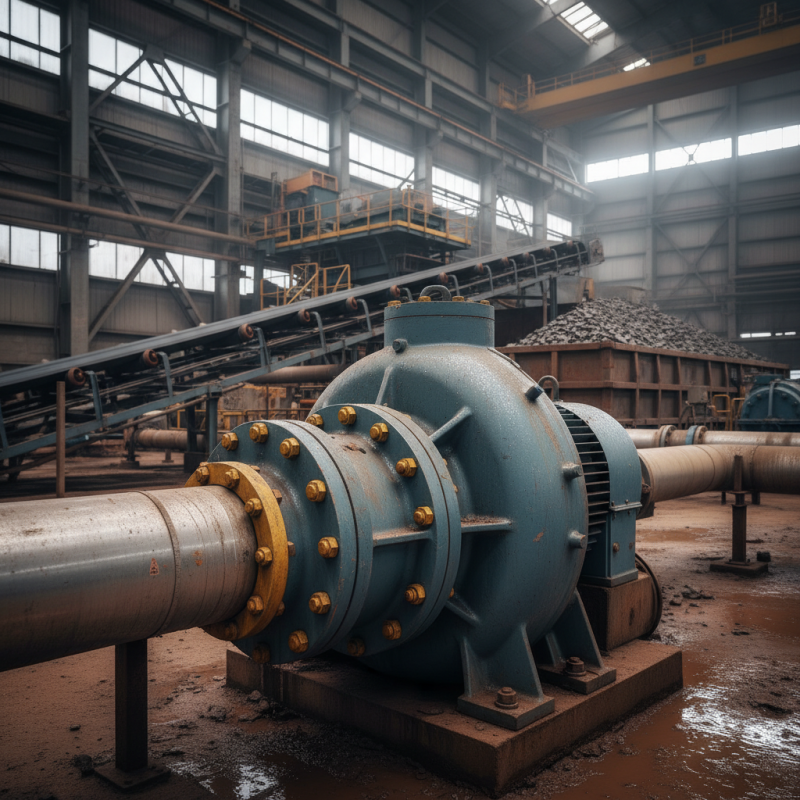
Slurry pumps are essential for industries that handle heavy slurries, such as mining, construction, and waste management. These pumps efficiently transport mixtures of solids and liquids. There are two main types of slurry pumps: centrifugal and positive displacement. Each type serves different applications based on the slurry's characteristics.
Centrifugal pumps work well for low-viscosity slurries. They rely on rotational energy to move the fluid. They are often used in applications like mineral processing, where the slurry contains fine particles. Positive displacement pumps, on the other hand, are ideal for high-viscosity materials. They provide a constant flow regardless of pressure changes, making them suitable for thick slurries in construction projects.
Choosing the right slurry pump is not always straightforward. It requires understanding the specific requirements of your application. Factors to consider include the type of solid particles, viscosity, and flow rate. It’s easy to overlook these details. Yet, doing so can lead to inefficiencies or equipment failure. Therefore, it is crucial to assess your needs thoroughly before making a selection.
Choosing the right slurry pump requires careful thought. One key factor is the type of materials you will be pumping. Slurries can vary from thick, viscous liquids to lighter mixtures. Understanding your specific application is crucial. For example, abrasive materials demand a durable pump. Without this, wear and tear will increase, leading to higher maintenance costs.
Pump capacity is another important aspect. It's not just about size; it's about flow rate and pressure. Calculate your needs based on the job at hand. Underestimating capacity can lead to inefficient operations. Over time, this can result in production delays.
Consider the pump's construction materials too. Metal and rubber options offer different benefits. Rubber can provide better chemical resistance, while metals may handle higher pressures. Each material has its pros and cons. Think about the environment and its effect on the pump. Reflection on these points can lead to a well-informed decision.
When selecting the right slurry pump, consider the specific requirements of your operation. There are various brands and models available, each designed for different applications. The ideal pump balances performance and durability. Many users overlook the importance of pump efficiency, which can significantly impact your operational costs.
Tips: Assess the viscosity and solids content of the slurry. This information helps narrow down the options. Also, check for the pump's maintenance requirements. A reliable pump reduces the risk of unexpected downtime.
Many top-rated models come with unique features. Some offer advanced wear-resistant materials that prolong service life. Others provide easy access for maintenance, which is often underestimated. Choosing a model with a solid warranty can provide peace of mind. Such aspects contribute to a long-term investment.
Maintaining a slurry pump is crucial for its longevity and efficiency. Regular inspection is essential. Check for wear and tear on components like impellers and liners. Even small signs of damage can lead to larger issues. Addressing these early can save costs down the line.
Keep the pump and its surroundings clean. Slurry can build up and cause blockages. Ensure that the discharge lines are free of obstructions. Cleaning can be tedious, but it prevents future problems. Moreover, lubricants should be checked regularly. Proper lubrication minimizes friction and enhances performance.
Overheating is a common issue. Monitor the pump's operating temperature closely. If it exceeds recommended levels, it might indicate a problem. Look into factors like flow rates and viscosity of materials being pumped. Additionally, don't ignore the importance of training staff. A well-informed team can make informed decisions and enhance daily operations.
Choosing the right slurry pump is crucial for optimal performance in various industries. Different applications require specific configurations to ensure efficiency. For instance, in mining and construction, pumps must handle abrasive materials and varying flow rates. A recent industry report indicated that the wear rate on pump components can be reduced by as much as 30% with appropriate material selection. This can significantly enhance pump lifespan and reduce operating costs.
Performance optimization also hinges on proper configuration. Understanding the viscosity and density of the slurry is essential. A pump’s design should accommodate these factors to prevent blockages and inefficiencies. Hydraulic calculations play a pivotal role in selecting the correct pump size and type for specific tasks. Data suggests that up to 20% of energy can be wasted due to misalignments in pump systems. Regular monitoring can uncover such issues, but maintenance can be overlooked in many operations.
Training staff on slurry pump operation is often underemphasized. Knowledgeable personnel can ensure that pumps run at peak performance levels. Simple checks, like verifying seals and bearings, can make a significant difference over time. Yet, many organizations neglect these details, assuming that new equipment will function without issues. Retrospective analysis shows that regular training can prevent up to 15% of pump failures in the field.
„Thanks to the LUVIR technology, the solder resist process could be switched directly from the previously used mask exposure to direct exposure. As an outstanding digital solution on the market, this technology has been able to demonstrate fast process times and superior quality on our certified conventional ink in production. This allowed us to fully digitize the solder mask process at low cost – without process or ink adjustments. An excellent benefit to our production in Rot am See.“
Ralf Göhringer (Head of Production WE Rot am See)
I would definitely recommend the Limata machine and team for a future company purchase
Michael Greenaway
Compunetics Inc.
“The Limata ldi has been amazing!! Best thing we did was buy this machine”
Richard Brady
GM
Circuitlabs
“Since 2019, we have been running the Limata X1000 LDI system (including LUVIR for solder mask imaging) in daily production as an addition to our current process with film. The machine was capable of properly exposing Taiyo PSR-4000 BN (DI) solder mask types on normal to high-copper boards using a new and unique direct imaging process. The machine operating interface is very user friendly which allowed for a quick technical training curve. The pre-registration processing reduced several seconds of production time at every print. Limata support and service staff is incomparable. They supported our team every step of the way at basically any time of the day or night, with literally, an immediate response time, customizing the software interface to best fit our Operations and needs.
We have exposed more than 8,000 prints since end of October, on various solder mask colors and some resist film panels. Limata, has proven to be very capable and innovative. They are a strong contender in the industry.
We have very much enjoyed this project, and working with the team!
Thank you Limata for the continued support and being a part of our growth.”
Bill Sezate
Vice President, GM
Summit Interconnect
As a replacement to our current contact exposure process with film, the LIMATA X2000 system including LUVIR-Technology was capable of properly exposing non-LDI solder mask types using a direct imaging process. The machine offers cutting edge software with a very intuitive operating interface which allowed for quick technician training curve. The dual drawer system combined with pre-registration processing reduced several seconds of production time at every machine cycle. Limata support and service staff is world class. They added software patches to keep production running at shortest possible response times, customized the software interface to best fit our in-house Operations system, and even wrote a step-by-step machine processing manual. As a result of the project, we have exposed more than 16,000 times on various product types and solder mask brands/colors. Limata, in a very short timeframe as a company, has definitely shown they are truly innovative and will be challenging the industry of direct imaging for the top spot.
Kevin Beattie
Process Engineer
TTM Technologies
Forest Grove Division
