Choosing among the 10 Best Steel Slotted Angle Suppliers Worldwide requires more than comparing prices. A dependable supplier should provide consistent hole spacing, accurate angle dimensions, and traceable steel grades. Coating quality matters too. Galvanized surfaces should resist warehouse moisture, handling damage, and ordinary site exposure. Clear load tables are equally important. They help engineers and installers select suitable profiles without guessing.
Steel-framing specialist Charles J. Carter emphasizes a practical principle: “Good steel design begins with a clear load path.” That idea applies directly to Steel Slotted systems. Every shelf, brace, connector, and fastener must transfer force predictably. Suppliers deserve attention when they publish tolerances, coating thickness, testing methods, and installation guidance. Product photographs are useful, but certificates and samples tell more. A neat catalog cannot replace measurable performance.
This guide compares global suppliers through practical criteria. It considers manufacturing experience, regional availability, customization, packaging, technical support, and delivery reliability. Some companies serve heavy industrial projects. Others focus on retail shelving, workshops, or light-duty frames. Their strengths are not identical. No ranking is perfect. Buyer priorities change with location, budget, corrosion risk, and project scale. Even an excellent supplier may disappoint when communication is slow or replacement parts are unavailable. That weakness deserves attention. The best choice is the supplier whose documentation matches real site conditions, not merely the one with the lowest quotation. Expect careful checks. Steel Slotted construction looks simple, yet small dimensional errors can create visible instability, difficult assembly, and avoidable rework.
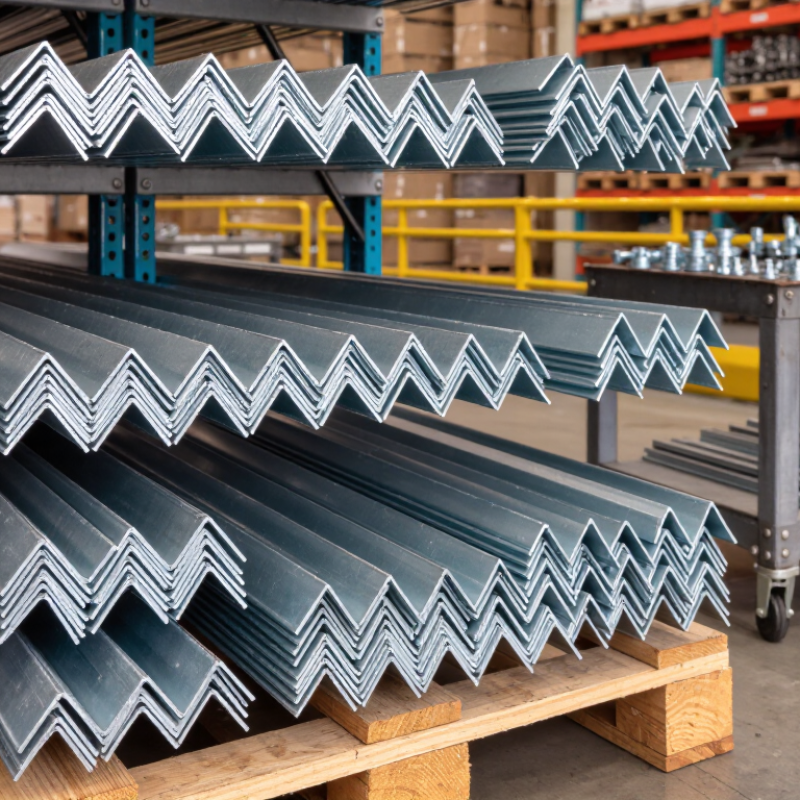
Steel slotted angle is a cold-formed steel section with an L-shaped profile and regularly punched holes. These slots allow bolts, nuts, and brackets to connect without welding. Galvanized finishes resist moisture, while painted steel suits cleaner indoor environments. The material is available in different widths, thicknesses, and hole patterns. Those details affect strength.
In practical workshops, slotted angle is used for storage racks, workbenches, machine guards, partition frames, and light equipment supports. It can also create temporary display structures or adjustable maintenance platforms. Assembly is simple. Measure twice.
A reliable installer checks the intended load, span, connection spacing, and floor condition before building. Shelves holding boxed tools need different reinforcement from shelves holding paper goods. Diagonal bracing often prevents unwanted sway. I have seen users focus on steel thickness while ignoring loose bolts and uneven floors. That approach can weaken an otherwise sound frame. Slotted angle should not replace engineered structural steel where people, vehicles, or heavy machinery create serious risks. Corrosive locations also require suitable coatings and regular inspection. A small rust spot around a slot may deserve attention before it spreads.
Choosing among the 10 best steel slotted angle suppliers worldwide requires more than comparing prices. In practical projects, material consistency matters most. Ask for the steel grade, thickness tolerance, surface treatment, and slot dimensions. A reliable supplier should provide test reports and clear batch traceability. Samples can reveal sharp edges, uneven holes, or weak coatings before a large order arrives.
Load performance deserves careful attention. Request tested load tables, connection guidance, and details about corner joints. Some suppliers publish impressive figures without explaining test conditions. That is a warning sign. The strongest supplier may not be the cheapest one. Review production capacity, tooling control, and quality inspections at each manufacturing stage. Factory photos help, but an independent audit provides stronger evidence.
Delivery reliability also affects the final evaluation. Check standard production times, packaging methods, replacement procedures, and communication during delays. Bundled angles should arrive dry, labeled, and protected from bending. I have found that small details, such as readable labels and consistent bundle weights, often show operational discipline. Still, no evaluation is perfect. A supplier may pass technical checks yet struggle with changing demand. Leave room for a trial order, realistic feedback, and one uncomfortable question: how does the company respond when something goes wrong?
The top ten steel slotted angle suppliers worldwide are usually judged by more than price. Experienced buyers inspect steel grade, slot accuracy, surface finish, and load performance. Reliable suppliers provide mill certificates, dimensional reports, and clear production records. Their factories should handle standard angles and custom lengths without unstable tolerances.
Strong candidates include regional steel service centers, modular storage manufacturers, structural hardware producers, and export-focused fabrication plants. The best suppliers maintain consistent hole spacing across long batches. They also protect bundled angles with edge guards and moisture-resistant wrapping. This matters when containers cross humid ports. A supplier with responsive engineering support can recommend thicker sections for shelving, work platforms, or light frames.
Independent testing adds credibility. Ask for coating thickness data, tensile results, and recent inspection samples. Payment terms and delivery promises deserve equal attention. Some suppliers quote attractive prices but exclude tooling, packing, or inland transport. That weakness can appear late. No global ranking stays perfect because capacity, freight costs, and steel prices change. I would also examine complaint handling, not only polished catalogs. A dependable partner explains a failed batch honestly and offers measurable corrective action. That practical transparency often matters more than a small discount.
Choosing among the 10 best steel slotted angle suppliers worldwide requires more than comparing prices. Review their product range, manufacturing standards, and customization options closely. Reliable suppliers usually offer different widths, thicknesses, hole patterns, and load capacities. Common finishes include pre-galvanized steel, hot-dip galvanized steel, and powder coating. Each suits different environments.
Manufacturing evidence matters. Look for documented quality systems, material traceability, dimensional checks, and published load data. Certifications such as ISO 9001 can support confidence, but certification alone proves little without consistent inspection records. Ask whether the supplier tests slot alignment, coating thickness, and bending strength. Small errors can make shelves wobble. I have found that clear drawings often prevent more problems than impressive catalog language.
Customization may include cut-to-length sections, unusual hole spacing, special coatings, embossed markings, and pre-packed kits. Confirm tolerances before ordering. A custom profile that fits perfectly on paper may fail after coating thickness is added. Suppliers should provide samples, technical drawings, and realistic lead times. Their engineers should explain limitations plainly, not promise everything.
Tips: Request a recent material certificate and a sample piece. Compare actual steel thickness with the stated gauge. Check packaging quality, especially for long angles shipped overseas. Ask how replacements are handled when dimensions are incorrect. A low quotation can hide weak documentation, inconsistent coating, or expensive freight. Evaluate the complete supply process, not just the steel.
Choosing the right steel slotted angle supplier requires more than comparing prices. Check the steel grade, thickness, hole spacing, and load data before requesting a quotation. For example, a 40 × 40 × 4 mm angle may suit light shelving but fail under long spans. Ask for mill certificates, inspection records, and clear tolerances. Reliable suppliers should explain their testing process without vague claims.
Tips: Request a small sample first. Measure hole alignment, edge finish, coating quality, and straightness. Confirm whether the quoted price includes cutting, packing, and delivery. Review production capacity, minimum order quantities, and realistic lead times. A supplier with consistent documentation is usually safer than one offering the lowest figure. Communication matters, too. Slow or unclear replies can become costly during installation.
Consider your project environment carefully. Indoor storage may need basic zinc coating, while humid areas require stronger corrosion protection. Ask how the supplier handles damaged bundles and replacement parts. It also helps to compare at least three written quotations using the same specifications. Even experienced buyers can miss packaging details or assume every slot pattern is compatible. I have found that a cheaper angle often becomes expensive after rework, though this is not always true. Leave room for that possibility. Select a supplier that combines technical evidence, stable quality, and dependable service.
„Thanks to the LUVIR technology, the solder resist process could be switched directly from the previously used mask exposure to direct exposure. As an outstanding digital solution on the market, this technology has been able to demonstrate fast process times and superior quality on our certified conventional ink in production. This allowed us to fully digitize the solder mask process at low cost – without process or ink adjustments. An excellent benefit to our production in Rot am See.“
Ralf Göhringer (Head of Production WE Rot am See)
I would definitely recommend the Limata machine and team for a future company purchase
Michael Greenaway
Compunetics Inc.
“The Limata ldi has been amazing!! Best thing we did was buy this machine”
Richard Brady
GM
Circuitlabs
“Since 2019, we have been running the Limata X1000 LDI system (including LUVIR for solder mask imaging) in daily production as an addition to our current process with film. The machine was capable of properly exposing Taiyo PSR-4000 BN (DI) solder mask types on normal to high-copper boards using a new and unique direct imaging process. The machine operating interface is very user friendly which allowed for a quick technical training curve. The pre-registration processing reduced several seconds of production time at every print. Limata support and service staff is incomparable. They supported our team every step of the way at basically any time of the day or night, with literally, an immediate response time, customizing the software interface to best fit our Operations and needs.
We have exposed more than 8,000 prints since end of October, on various solder mask colors and some resist film panels. Limata, has proven to be very capable and innovative. They are a strong contender in the industry.
We have very much enjoyed this project, and working with the team!
Thank you Limata for the continued support and being a part of our growth.”
Bill Sezate
Vice President, GM
Summit Interconnect
As a replacement to our current contact exposure process with film, the LIMATA X2000 system including LUVIR-Technology was capable of properly exposing non-LDI solder mask types using a direct imaging process. The machine offers cutting edge software with a very intuitive operating interface which allowed for quick technician training curve. The dual drawer system combined with pre-registration processing reduced several seconds of production time at every machine cycle. Limata support and service staff is world class. They added software patches to keep production running at shortest possible response times, customized the software interface to best fit our in-house Operations system, and even wrote a step-by-step machine processing manual. As a result of the project, we have exposed more than 16,000 times on various product types and solder mask brands/colors. Limata, in a very short timeframe as a company, has definitely shown they are truly innovative and will be challenging the industry of direct imaging for the top spot.
Kevin Beattie
Process Engineer
TTM Technologies
Forest Grove Division
