As businesses and consumers increasingly embrace digital solutions, the demand for reliable technology grows. Touch Panel PCs have emerged as a versatile tool for various applications, from retail to manufacturing. These devices offer intuitive interfaces, making them user-friendly and efficient.
In 2026, buyers face a myriad of choices in Touch Panel PCs. With brands and configurations shifting rapidly, finding the right option can be challenging. Key factors to consider include performance, compatibility, and display quality. Each buyer's needs vary, making personalized research essential.
While many brands claim to deliver high performance, they may not always meet user expectations. It's important to weigh reviews and expert opinions carefully. Identifying the best Touch Panel PC requires careful thought and critical analysis. Staying informed will help users make confident decisions in this evolving market.
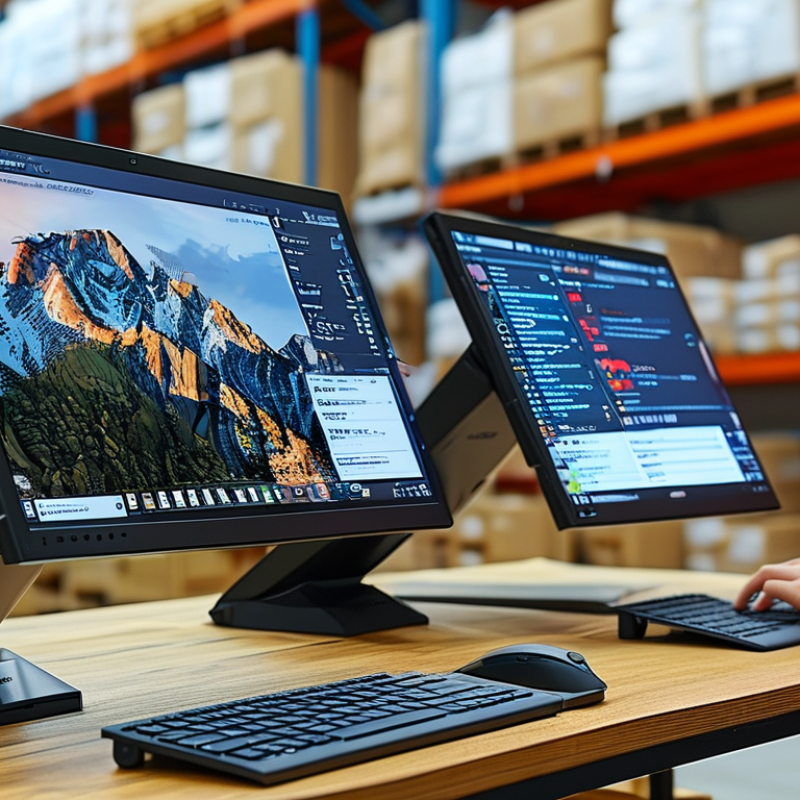
Touch panel PCs have gained significant traction in various industries due to their intuitive interface and versatility. Defined as computers that integrate a touchscreen display, these devices enable users to interact directly with what is displayed. Reports indicate that the global market for touch panel PCs is projected to grow at a CAGR of 6.3% from 2023 to 2028 (Statista, 2023). This growth reflects the demand for streamlined operations in sectors like retail, healthcare, and manufacturing.
Key features of touch panel PCs include their responsive displays, which often utilize capacitive technology for quicker reactions. Enhanced durability is also pivotal, as many models are designed to withstand extreme environments. Notably, the inclusion of multiple connectivity options, such as Bluetooth and Wi-Fi, supports seamless integration into existing systems. However, some touch panel PCs may face challenges related to screen glare and outdoor visibility—a point critics often highlight.
As industries continue to evolve, the need for reliable and efficient touch panel PCs becomes more pressing. User feedback shows that touch sensitivity can vary, leading to inconsistent experiences across different devices. While manufacturers strive to improve these systems, user expectations remain high. Understanding these nuances is essential for potential buyers looking for the best fit for their needs.
This chart illustrates key features of the top 5 touch panel PCs for global buyers in 2026, including screen size, RAM, storage, battery life, and price. The data reflects average specifications to guide purchase decisions.
The touch panel PC market is poised for significant growth in 2026. Industry analysts project an annual growth rate of over 8% from 2023 to 2026. This surge is fueled by the increased demand for interactive displays across various sectors, including retail, education, and healthcare. Companies are investing heavily in research and development to improve the usability and versatility of touch panel PCs.
Emerging brands are gaining traction in this competitive landscape. New players are often introducing innovative features, such as enhanced touchscreen sensitivity and multi-functional capabilities. However, established brands still dominate the market due to their proven reliability. According to recent market reports, a significant percentage of buyers prioritize brand reputation and after-sales service when making purchasing decisions.
Despite the promising growth, challenges remain. Some products struggle with software compatibility and durability. Users report issues with touch responsiveness in certain models. Continuous feedback loops between manufacturers and consumers are crucial for addressing these concerns. As more businesses seek interactive solutions, staying attuned to user experiences will be vital for any brand aiming to lead in the touch panel PC arena.
When choosing a touch panel PC, several key factors come into play. The display size is critical. A larger screen enhances usability, especially for applications requiring detailed interaction. Consider the resolution as well. Higher resolutions provide clearer images and more detail, which can be invaluable for design work or presentations.
Touch sensitivity is another essential factor. Not all touch screens respond equally. Some screens require more pressure, while others detect light taps. This can significantly impact user experience. Battery life is another consideration, particularly for portable devices. A short battery life can hinder productivity during crucial tasks.
Durability is often overlooked but should be a priority. Touch panel PCs may face demanding environments. Resistance to dust and water is vital in industrial settings. Look for materials and designs that withstand heavy use. Assessing these factors can ensure a better fit for your specific needs without falling into common misconceptions about touch panel capabilities.
When evaluating touch panel PCs for global buyers in 2026, specifications and price ranges are critical factors. Recently, a report by MarketsandMarkets highlighted that the touch panel market is projected to grow significantly. By 2026, the market is expected to exceed $40 billion. This growth indicates rising demand for advanced touch solutions across various industries, including retail, healthcare, and manufacturing.
In terms of specifications, key aspects such as screen size, resolution, and response time should be prioritized. For instance, models featuring 1920x1080 resolution are gaining popularity. They provide clarity and enhance user experience. Additionally, touch responsiveness is crucial. Products with under 5 ms response time are becoming the industry standard. However, not all options meet these specifications, leading potential buyers to face challenges.
Price ranges vary widely, influenced by features and design. Entry-level models can start around $300. Meanwhile, high-performance units may exceed $2,000. This range can create confusion for buyers. It's vital to align specifications with budget constraints. Some highly priced models may not offer necessary features, prompting users to reconsider their choices.
| Model | Screen Size | Resolution | Processor | RAM | Storage | Price Range |
|---|---|---|---|---|---|---|
| Model A | 15.6 inches | 1920 x 1080 | Intel i5 | 8 GB | 256 GB SSD | $800 - $1000 |
| Model B | 21.5 inches | 1920 x 1080 | Intel i7 | 16 GB | 512 GB SSD | $1200 - $1500 |
| Model C | 17.3 inches | 2560 x 1440 | AMD Ryzen 5 | 8 GB | 1 TB HDD | $700 - $900 |
| Model D | 10.1 inches | 1280 x 800 | Intel Atom | 4 GB | 64 GB eMMC | $300 - $400 |
The future of touch panel PC technology is exciting and full of potential. One trend is the integration of artificial intelligence. AI can enhance user experiences by personalizing interactions and automating tasks. Users will find their devices smarter, adapting to preferences over time. However, privacy concerns may arise as data is collected for these improvements.
Another key trend is the shift towards more sustainable production methods. Manufacturers are increasingly focused on eco-friendly materials and energy-efficient designs. This is crucial as the tech industry faces pressure to reduce its carbon footprint. Navigating the balance between progress and sustainability remains challenging.
Touch sensitivity is also evolving, with advancements allowing for multi-modal interactions. Users can engage with devices using gestures, voice commands, or even haptic feedback. This evolution may improve accessibility for many individuals. However, the challenge will be ensuring that these systems work seamlessly across different environments. As technology advances, the exploration of these areas is necessary for continuous improvement.
„Thanks to the LUVIR technology, the solder resist process could be switched directly from the previously used mask exposure to direct exposure. As an outstanding digital solution on the market, this technology has been able to demonstrate fast process times and superior quality on our certified conventional ink in production. This allowed us to fully digitize the solder mask process at low cost – without process or ink adjustments. An excellent benefit to our production in Rot am See.“
Ralf Göhringer (Head of Production WE Rot am See)
I would definitely recommend the Limata machine and team for a future company purchase
Michael Greenaway
Compunetics Inc.
“The Limata ldi has been amazing!! Best thing we did was buy this machine”
Richard Brady
GM
Circuitlabs
“Since 2019, we have been running the Limata X1000 LDI system (including LUVIR for solder mask imaging) in daily production as an addition to our current process with film. The machine was capable of properly exposing Taiyo PSR-4000 BN (DI) solder mask types on normal to high-copper boards using a new and unique direct imaging process. The machine operating interface is very user friendly which allowed for a quick technical training curve. The pre-registration processing reduced several seconds of production time at every print. Limata support and service staff is incomparable. They supported our team every step of the way at basically any time of the day or night, with literally, an immediate response time, customizing the software interface to best fit our Operations and needs.
We have exposed more than 8,000 prints since end of October, on various solder mask colors and some resist film panels. Limata, has proven to be very capable and innovative. They are a strong contender in the industry.
We have very much enjoyed this project, and working with the team!
Thank you Limata for the continued support and being a part of our growth.”
Bill Sezate
Vice President, GM
Summit Interconnect
As a replacement to our current contact exposure process with film, the LIMATA X2000 system including LUVIR-Technology was capable of properly exposing non-LDI solder mask types using a direct imaging process. The machine offers cutting edge software with a very intuitive operating interface which allowed for quick technician training curve. The dual drawer system combined with pre-registration processing reduced several seconds of production time at every machine cycle. Limata support and service staff is world class. They added software patches to keep production running at shortest possible response times, customized the software interface to best fit our in-house Operations system, and even wrote a step-by-step machine processing manual. As a result of the project, we have exposed more than 16,000 times on various product types and solder mask brands/colors. Limata, in a very short timeframe as a company, has definitely shown they are truly innovative and will be challenging the industry of direct imaging for the top spot.
Kevin Beattie
Process Engineer
TTM Technologies
Forest Grove Division
