Wireless networks are becoming denser, faster, and harder to troubleshoot. Ericsson’s Mobility Report forecasts global mobile data traffic will reach about 403 exabytes per month by 2029, nearly triple the 2023 level. GSMA Intelligence also reported approximately 1.6 billion 5G connections worldwide by the end of 2023. These figures show why accurate spectrum visibility matters in laboratories, enterprise deployments, and field service work.
A Used Wireless Network Analyzer can provide professional measurement capability without the cost of a new flagship instrument. However, age alone does not determine value. Calibration history, frequency coverage, measurement bandwidth, firmware support, connector condition, and battery health deserve careful inspection. A scratched case may be harmless. A damaged RF input can be expensive.
This guide reviews seven used analyzers commonly considered for sale, including equipment from recognized manufacturers such as Keysight, Rohde & Schwarz, Anritsu, and Tektronix. The selection focuses on practical features: Wi-Fi and cellular support, real-time spectrum analysis, channel power accuracy, demodulation options, portability, and service availability. Manufacturer specifications and established measurement practices provide the technical baseline, while real-world ownership concerns shape the recommendations.
Used equipment requires judgment.
No listing tells the whole story. Some sellers provide complete calibration records; others offer only a power-on photograph. That difference matters. The recommendations here should not replace verification with the manufacturer or an accredited calibration laboratory. A better deal may still become a poor investment if licenses are locked, accessories are missing, or the analyzer cannot cover today’s target bands.
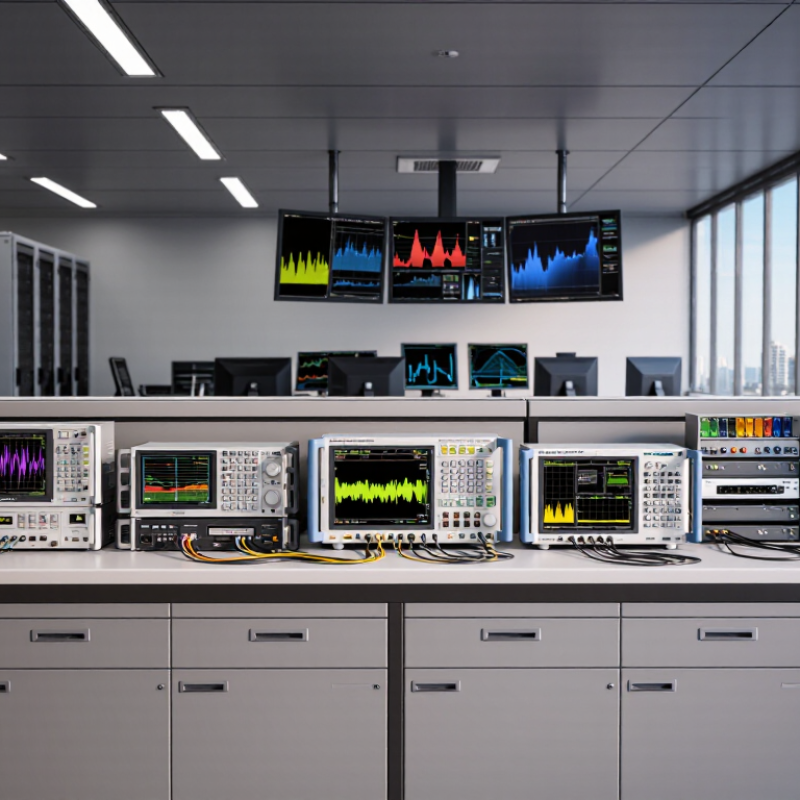
A wireless network analyzer measures the radio conditions behind a connection, not just the speed shown on a phone. It can record signal strength, usually shown as RSSI, and compare it with the background noise to estimate signal-to-noise ratio. It also reveals channel use, interference, channel width, and airtime congestion. A strong signal can still perform poorly when nearby devices crowd the same channel.
Small differences matter. The Wi-Fi Alliance’s 2022 Value of Wi-Fi report estimated Wi-Fi’s global economic contribution at $3.3 trillion in 2021. It projected $4.9 trillion by 2025, underscoring how much work depends on reliable wireless access.
More capable analyzers inspect packet retries, data rates, roaming behavior, and nearby access points. These readings help locate a dead spot, identify a noisy channel, or explain why a laptop slows down near a concrete wall. A used analyzer can provide useful evidence, but its age and supported Wi-Fi generations affect what it can detect.
Check whether its readings update in real time and whether it can capture the bands your network uses. Context is everything. A single scan may miss interference that appears only when an office fills or a microwave runs. I would compare measurements from several locations and times, then verify them with a real client device; analyzer graphs are helpful, but not the whole story.
When comparing used wireless network analyzers, begin with supported frequency bands. A suitable unit should cover 2.4 GHz and 5 GHz networks. Newer environments may also require 6 GHz support. Check whether the analyzer measures channel utilization, signal strength, noise, and interference separately. These readings help distinguish weak coverage from congestion.
Battery condition deserves careful attention. A bright display is useful during ceiling surveys, but it can drain an aging battery quickly. Test charging time, operating duration, buttons, ports, and screen brightness before purchase. Inspect the antenna connectors for looseness or visible damage. Small faults can distort field measurements. They often cost more than expected.
Compare packet capture, spectrum analysis, and site-mapping functions across the seven models. Some devices provide detailed reports, while others rely heavily on desktop software. Confirm that software remains available and that firmware updates support current wireless standards. I also check calibration records when possible, although used equipment rarely has perfect documentation. That uncertainty should affect the price. A rugged case, compatible charger, removable battery, and recent calibration can increase practical value. However, extra accessories do not excuse inaccurate readings. Test the analyzer against a known access point and a quiet channel. Real-world verification matters. Performance claims alone are insufficient.
Check which Wi-Fi frequency bands an analyzer can measure before comparing used models.
How to read this chart: Bars show whether each Wi-Fi generation uses a frequency band. 802.11n can use 2.4 GHz, 5 GHz, or both, depending on its configuration. 6 GHz support is associated with Wi-Fi 6E. This is a standards reference, not a rating of specific analyzers; check each device’s supported bands and options.
A used wireless network analyzer can look clean and still hide expensive problems. Inspect the instrument under bright light. Check the screen for dead pixels, uneven brightness, and deep scratches. Examine ports, buttons, knobs, battery contacts, and casing seams. Loose controls often reveal heavy field use.
Ask the seller for recent test results, calibration records, and a clear serial-number photo. A reliable analyzer should measure known signals consistently across repeated checks. Compare its readings with a trusted reference source, if available. Watch the startup process carefully. Unexpected errors, long boot times, or unstable menus deserve attention. Test every supported frequency range, measurement mode, and connection port. Do not accept vague claims such as “works perfectly.”
Battery condition matters more than many listings admit. Run the analyzer for at least thirty minutes without external power. Note heat near the charging area. Excessive warmth may indicate battery or circuit damage.
I once trusted a clean-looking unit and missed a weak connector. It passed a quick demonstration but failed during extended testing. That mistake changed my inspection routine. I now request continuous-use video, not only powered-on photos.
Check whether the software, accessories, probes, adapters, and protective case match the listing. Missing parts can reduce practical value. Confirm the return period and ask how faults are handled in writing. A fair seller should answer specific questions without pressure. Pay attention to inconsistencies between the photos, test report, and description. Small details often tell the real story.
A vector network analyzer measures cable loss, antenna performance, and impedance across selected frequencies. It needs recent calibration records, but those records may be incomplete. A channel scanner provides a simpler view of occupied channels and signal activity. It suits quick surveys and basic troubleshooting. A portable site-survey analyzer can combine mapping, spectrum views, and access-point detection. Test its wireless adapters before purchasing. They often suffer from worn connectors.
A time-domain reflectometer can reveal cable breaks, poor terminations, and unusual distance faults. It is valuable when physical cabling causes wireless problems. An Ethernet and wireless performance tester can compare throughput, latency, and packet loss under realistic conditions. Inspect the screen, buttons, ports, power supply, and included probes. Ask for a live demonstration, not only product photographs. Used equipment can be excellent, yet older firmware may limit accuracy or compatibility. I would budget for calibration, replacement batteries, and missing accessories. That extra cost is easy to underestimate.
Used wireless network analyzers are easiest to find through specialist test-equipment resellers, certified refurbishers, and industrial auction platforms. Avoid listings showing only one photograph. Ask for the serial number, calibration date, battery condition, included antennas, and a written return period. The Global Economic Value of Wi-Fi 2021–2025 report projects Wi-Fi’s annual economic value will approach 4.9 trillion dollars by 2025. That scale makes reliable diagnostic equipment valuable, but it also encourages weak listings. I would request a live screen recording showing a spectrum scan and saved report export.
Check supported bands carefully. A useful unit should cover 2.4 GHz and 5 GHz; newer deployments may require 6 GHz support. Confirm compatibility with current 802.11 standards, passive surveys, active tests, channel utilization, roaming analysis, and interference detection. Inspect the display for dead pixels and test every connector. Small faults become expensive quickly. The 2024 Data Breach Investigations Report analyzed 30,458 security incidents, including 10,626 confirmed breaches. Therefore, verify firmware history, secure file deletion, user access controls, and whether logs can be exported safely. An old analyzer may still work perfectly, but unsupported software is a serious weakness. Even experienced buyers can miss it. A clean case is not proof of accurate measurements. Calibration records matter more than appearance.
„Thanks to the LUVIR technology, the solder resist process could be switched directly from the previously used mask exposure to direct exposure. As an outstanding digital solution on the market, this technology has been able to demonstrate fast process times and superior quality on our certified conventional ink in production. This allowed us to fully digitize the solder mask process at low cost – without process or ink adjustments. An excellent benefit to our production in Rot am See.“
Ralf Göhringer (Head of Production WE Rot am See)
I would definitely recommend the Limata machine and team for a future company purchase
Michael Greenaway
Compunetics Inc.
“The Limata ldi has been amazing!! Best thing we did was buy this machine”
Richard Brady
GM
Circuitlabs
“Since 2019, we have been running the Limata X1000 LDI system (including LUVIR for solder mask imaging) in daily production as an addition to our current process with film. The machine was capable of properly exposing Taiyo PSR-4000 BN (DI) solder mask types on normal to high-copper boards using a new and unique direct imaging process. The machine operating interface is very user friendly which allowed for a quick technical training curve. The pre-registration processing reduced several seconds of production time at every print. Limata support and service staff is incomparable. They supported our team every step of the way at basically any time of the day or night, with literally, an immediate response time, customizing the software interface to best fit our Operations and needs.
We have exposed more than 8,000 prints since end of October, on various solder mask colors and some resist film panels. Limata, has proven to be very capable and innovative. They are a strong contender in the industry.
We have very much enjoyed this project, and working with the team!
Thank you Limata for the continued support and being a part of our growth.”
Bill Sezate
Vice President, GM
Summit Interconnect
As a replacement to our current contact exposure process with film, the LIMATA X2000 system including LUVIR-Technology was capable of properly exposing non-LDI solder mask types using a direct imaging process. The machine offers cutting edge software with a very intuitive operating interface which allowed for quick technician training curve. The dual drawer system combined with pre-registration processing reduced several seconds of production time at every machine cycle. Limata support and service staff is world class. They added software patches to keep production running at shortest possible response times, customized the software interface to best fit our in-house Operations system, and even wrote a step-by-step machine processing manual. As a result of the project, we have exposed more than 16,000 times on various product types and solder mask brands/colors. Limata, in a very short timeframe as a company, has definitely shown they are truly innovative and will be challenging the industry of direct imaging for the top spot.
Kevin Beattie
Process Engineer
TTM Technologies
Forest Grove Division
